Loading...
Harsha vs Ibn Tumart
Harsha leads by 5.4 pts · 2 figures compared
…
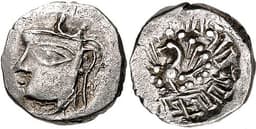
Harsha
Emperor · Medieval
61.0Total
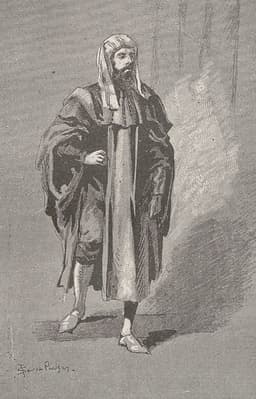
Ibn Tumart
Emperor · Medieval
55.6Total
Basic Information
Born
590
1080
Died
647
1130
Era
Medieval
Medieval
Nationality
India
Almohad Caliphate
Occupation
Emperor
Emperor
Civilization
Indian
Middle Eastern
Score Comparison
Military (10%)
61.7
55.0
Political (20%)
45.0
61.3
Influence (20%)
68.0
58.3
Legacy (20%)
58.0
56.0
Leadership (15%)
66.0
47.3
Strategy (15%)
66.3
52.5
TOTAL
61.0
55.6
Harsha — Complete Timeline
606 AD
Accession to the Throne of ThanesarPolitical Action
Harsha succeeded his father Prabhakaravardhana as ruler of Thanesar (in present-day Haryana). He was 16 years old and soon faced the challenge of avenging his brother-in-law's death and expanding his kingdom.
ThanesarSuccessionHarsha
Impact: regional
612 AD
Conquest of KannaujWar◆ Major
Harsha captured the city of Kannauj after defeating the Maukhari ruler Grahavarman's enemies. He made Kannauj his capital and established the Vardhana dynasty's control over the Gangetic plain, becoming the dominant power in northern India.
KannaujVardhana DynastyNorthern India
Impact: regional
620 AD
Campaigns in Eastern IndiaWar◆ Major
Harsha led military campaigns into Bengal and Odisha, defeating the Shashanka king of Gauda. He extended his empire eastward to the Bay of Bengal, though his control over these regions was not permanent.
BengalOdishaShashanka
Impact: regional
630 AD
Conflict with the Chalukya King Pulakeshin IIWar◆ Major
Harsha attempted to expand southward but was defeated by the Chalukya king Pulakeshin II on the banks of the Narmada River. This battle halted Harsha's southern expansion and established the Narmada as the boundary between the two empires.
ChalukyaPulakeshin IINarmada
Impact: regional
640 AD
Patronage of Buddhism and the Nalanda UniversityCultural◆ Major
Harsha was a patron of Buddhism and supported the Nalanda University, a major center of Buddhist learning. He convened a grand Buddhist council at Kannauj attended by monks from across Asia, and built monasteries and stupas.
BuddhismNalandaCouncil of Kannauj
Impact: regionalconstructive
643 AD
Visit of the Chinese Pilgrim XuanzangCultural
The Chinese Buddhist monk Xuanzang visited Harsha's court and spent time in the empire. Xuanzang's detailed accounts describe Harsha's administration, military, and religious tolerance, providing a key historical source for the period.
XuanzangChinese PilgrimBuddhism
Impact: regionalconstructive
Ibn Tumart — Complete Timeline
1121 AD
Proclamation as MahdiCultural
Ibn Tumart proclaimed himself the Mahdi, the guided one, after returning from the East. He began preaching a strict reformist message, condemning the Almoravids for their perceived religious laxity and calling for a return to the Quran and Sunnah.
Impact: regional
Establishment of the Almohad MovementPolitical Action◆ Major
Ibn Tumart founded the Almohad movement (al-Muwahhidun) in the Atlas Mountains of Morocco. He organized his followers into a disciplined religious and military community, rejecting the Almoravid interpretation of Islam and advocating for tawhid (strict monotheism).
Impact: regionalconstructive
1125 AD
Compilation of the Almohad DoctrineCultural
Ibn Tumart compiled his teachings into a book titled 'A'azz ma Yutlab' (The Most Precious of What is Sought). This work outlined the Almohad doctrine, emphasizing the unity of God and rejecting anthropomorphism, and became the foundation of the movement's ideology.
Impact: regionalconstructive
1130 AD
Battle of al-BuhayraWar◆ Major
Ibn Tumart's Almohad forces were defeated by the Almoravids at the Battle of al-Buhayra near Marrakech. This setback prevented the Almohads from capturing the Almoravid capital and forced them to retreat to the mountains.
Impact: regional
Death of Ibn TumartOther◆ Major
Ibn Tumart died shortly after the Battle of al-Buhayra, possibly from wounds or illness. His death was kept secret by his successor Abd al-Mu'min, who continued the Almohad movement and eventually overthrew the Almoravids.
Impact: regionaltragic
Expert Analysis
Ibn Tumart vs Harsha
### The Mahdi and the Monarch: Two Paths to Power in the Medieval World
In the year 643, a Chinese Buddhist monk named Xuanzang sat in the court of Emperor Harsha, marveling at the splendor of Kannauj. Harsha, a patron of learning and a unifier of northern India, presided over a festival of Buddhist philosophy, showering gifts on monks and scholars. Less than a century later, in the rugged Atlas Mountains of Morocco, a different kind of leader was rising. Ibn Tumart, a Berber preacher, gathered his followers in a cave, proclaiming himself the Mahdi—the guided one—and demanding a return to the pure, unyielding worship of one God. Harsha ruled through consensus, culture, and conquest; Ibn Tumart through revelation, revolution, and the sword. Both men sought to reshape their worlds, but the paths they chose—and the worlds they left behind—could not have been more different.
### Origins
Harsha was born in 590 into the Pushyabhuti dynasty of Thanesar, a kingdom in present-day Haryana. His father, Prabhakaravardhana, was a warrior-king, and his brother, Rajyavardhana, was a promising heir. But Harsha’s childhood was marked by violence: his brother was murdered, his sister was threatened, and at the age of sixteen, he was thrust onto the throne in 606. He inherited a fractured political landscape, where rival kingdoms vied for control of the fertile Gangetic plain. Harsha was a product of India’s classical age, steeped in the traditions of Hinduism, Buddhism, and courtly culture.
Ibn Tumart, born in 1080 in the Sous Valley of southern Morocco, came from a Berber tribe that had long chafed under the rule of the Almoravids, a dynasty of strict Sunni Muslims. He traveled east to study in Baghdad, where he encountered the radical teachings of al-Ghazali and the Ash’ari school of theology. But Ibn Tumart was no passive student. He returned to North Africa in 1118, a firebrand who denounced the Almoravids for what he saw as their laxity, idolatry, and anthropomorphism. He saw himself as a purifier, not a prince. His era was one of religious ferment, where the question of who rightly interpreted Islam was a matter of life and death.
### Rise to Power
Harsha’s rise was a story of relentless military campaigning. After securing Thanesar, he set his sights on Kannauj, the great city of the north. In 612, he captured it from the heirs of the Maukhari dynasty, making it his capital. He then turned east, invading Bengal and Odisha in 620, defeating the aggressive Shashanka, king of Gauda. By 630, Harsha controlled a vast arc of territory from the Punjab to the Bay of Bengal. But his ambition met its limit on the banks of the Narmada River, where he was defeated by the Chalukya king Pulakeshin II. This check in 630 defined the southern boundary of his empire.
Ibn Tumart’s rise was not a conquest but a conversion. In 1121, after years of preaching, he proclaimed himself the Mahdi in the village of Tinmel, high in the Atlas Mountains. His message was simple and terrifying: the Almoravids were heretics, and only his followers—the Almohads, or “Unitarians”—would be saved. He organized his disciples into a tight-knit community, with a strict hierarchy of tribes and a military council. He compiled his teachings into a book, *A’azz ma Yutlab* (“The Most Precious of What is Sought”), which became the Almohad catechism. He did not seize a throne; he built a movement.
### Leadership & Governance
Harsha’s leadership was a blend of military might and cultural patronage. He was a capable administrator, known for his justice and his generosity. According to Xuanzang, he convened a great assembly at Kannauj in 643, where he hosted thousands of monks, built monasteries, and personally distributed alms. He supported Nalanda University, the greatest center of Buddhist learning in Asia. Yet he was also a pragmatist: his empire was a confederation of tributary kings, and he ruled more through alliance than through bureaucracy. His strategy was one of expansion through diplomacy and war, but he lacked the institutional depth of a true empire.
Ibn Tumart was a revolutionary theologian, not an administrator. He governed through the Almohad council of fifty elders, and his rule was based on ideological purity. He demanded that his followers pray in a specific way, reject all forms of ornamentation, and accept his infallible guidance. His military strategy was fanatical: he believed that victory came from God, not from numbers. At the Battle of al-Buhayra in 1130, his forces were crushed by the Almoravids near Marrakech. He died shortly after, possibly from wounds. His movement seemed broken.
### Triumph & Tragedy
Harsha’s greatest triumph was the unification of northern India under a single, relatively peaceful rule. His patronage of Buddhism and literature created a golden age of culture. But his tragedy was that his empire did not outlast him. He had no strong successor, and after his death in 647, the kingdom fragmented. The Chinese pilgrim Xuanzang had left years earlier, and with Harsha gone, the north returned to warring states.
Ibn Tumart’s greatest triumph was not in his lifetime. His death in 1130 was kept secret by his followers for years, a testament to the discipline of his movement. His successor, Abd al-Mu’min, rose from the ranks and completed the conquest of the Almoravids, establishing the Almohad Caliphate that would rule North Africa and Spain for the next half-century. Ibn Tumart’s tragedy was that he never saw his vision realized. He died a failure, a prophet without a kingdom.
### Character & Destiny
Harsha was a man of his age: cultured, ambitious, and generous, but also a product of a world where kingship was personal and fragile. He wrote plays, patronized poets, and sought the approval of both Hindu and Buddhist elites. His character was one of synthesis—he tried to hold together a diverse realm through charm and force. His destiny was to be remembered as a great king, but not as a founder of a dynasty.
Ibn Tumart was a man of absolute conviction. He was harsh, uncompromising, and willing to excommunicate even his own family. He saw himself as the Mahdi, the infallible guide, and he demanded total obedience. His character was one of rupture—he sought to tear down the old order and build a new one from scratch. His destiny was to be a catalyst, not a ruler. He lit a fire that others would feed.
### Legacy
Harsha’s legacy is that of a cultural icon. He is remembered in Indian history as a just and enlightened ruler, a patron of Nalanda, and a figure who embodied the cosmopolitanism of classical India. His reign is a benchmark for the study of early medieval Indian history, thanks largely to Xuanzang’s detailed accounts. But his empire was ephemeral, and his political achievements did not endure.
Ibn Tumart’s legacy is more complex. He is honored as the founder of the Almohad movement, which reshaped North African and Andalusian history. His strict monotheism influenced Islamic theology for centuries. But he is also a controversial figure—a zealot whose movement was marked by intolerance and violence. He is remembered not as a king, but as a Mahdi, a figure who dared to claim divine guidance in a world of mortal rulers.
### Conclusion
Harsha and Ibn Tumart stand at opposite ends of the medieval spectrum. Harsha built a kingdom through war and culture, but his world was one of accommodation and pluralism. Ibn Tumart built a movement through faith and revolution, but his world was one of purity and absolutism. Harsha’s empire died with him; Ibn Tumart’s movement outlived him. One left a legacy of books and monuments; the other left a legacy of doctrine and dynasty. Their stories remind us that power can be won in many ways—by the sword, by the pen, or by the word of God—but that what endures is not always what was intended.
Rankings
🥇
HarshaLeader
Mil: 61.7Pol: 45.0Inf: 68.0
61.0
🥈
Ibn Tumart
Mil: 55.0Pol: 61.3Inf: 58.3
55.6
+5.4 behind
How This Comparison Works
Algorithm
Each figure is scored on 6 dimensions (0—100 scale) based on structured historical data: Military (10%), Political (20%), Influence (20%), Legacy (20%), Leadership (15%), Strategy (15%). The weighted total produces the final ranking.
Data Sources
Scores are computed from structured sub-indicators in the database. Scale factors adjust for era (Ancient ×0.85, Modern ×1.0) and civilization size (Eastern ×1.05, Other ×0.80) to account for differences in population and military scale.
Maximum 3 Figures
Comparisons are limited to 2—3 figures to ensure readability and statistical meaningfulness.
Error Margins
±5 points per dimension — Sub-scores are derived from historical records with inherent uncertainty. Two figures within 5 points on a dimension should be considered roughly equivalent in that area.
Total Score Accuracy
±3 points overall — The weighted combination of 6 dimensions produces a total score with approximately ±3 points of uncertainty. Differences of less than 3 points are not statistically significant— the figures are effectively tied.
Known Limitations
- Historical records are incomplete and uneven across civilizations
- Figures from oral-tradition societies may be underrepresented
- Occupation labels can misclassify multi-role figures
- Scores measure capability and impact, not moral character
- Quantitative scoring is a comparison tool, not absolute truth
Capability Radar
Military (10%) — Battles & Warfare
Battles
65
30
Win Rate
70
35
Expansion
70
40
Political (20%) — Governance & Reform
Reform
60
80
Diplomacy
70
30
Economy
65
20
Influence (20%) — Cultural & Global Reach
Cultural
65
60
Global
50
50
Legacy (20%) — Historical Impact
Historical
60
65
Longevity
55
55
Leadership (15%) — Power & Stability
Tenure
75
25
Stability
60
20
Strategy (15%) — Tactics & Innovation
Strategy
65
45
Tactics
60
40
Reform
50
70
Similar Comparisons
Comments & Discussion
刻舟求剑6/16/2026
拿七世纪的玄奘日记对比十二世纪的柏柏尔圣战,这根本是关公战秦琼。Harsha在曲女城办佛教法会时,阿拉伯帝国的骑兵还没冲出半岛呢。Ibn Tumart那套马赫迪理论,放在印度只会被人种姓制度碾成粉末。一个靠帝国余晖维持的表面统一,一个用沙漠苦行点燃的宗教狂热,怎么比较?
ClassicsScholar426/16/2026
Harsha’s Nalanda patronage alone dwarfs Ibn Tumart’s legacy—he built monasteries that housed ten thousand monks, fostering the very intellectual exchange that Xuanzang immortalized. The Mahdi’s iconoclasm was cultural vandalism; he burned books and smashed statues. India’s unifier protected Buddhism when it was fading elsewhere. Who left a richer tradition? The emperor who commissioned the *Harshacharita* or the zealot whose followers later banned music?
红脸白脸6/16/2026
Harsha是印度版的怀柔远人,三十六年间不杀一人,靠联姻和封赏稳住北印;Ibn Tumart是极端原教旨的鼻祖,逼信徒连遮面纱都要统一。一个用佛教慈悲消化矛盾,一个用天谴论制造敌人。表面看Harsha更文明,但这种宽容的代价是死后帝国立刻碎成渣——而穆瓦希德王朝撑了两百年。专制vs.妥协,到底谁才是真务实?
Historian1386/16/2026
Ibn Tumart was the real deal—a fire-breathing revolutionary who didn’t just preach purity, he built an army of fanatics from mountain tribes that crushed the Almoravids at the Battle of al-Buhayra in 1130. Harsha? A courtly patron playing philosopher-king with monks. One forged a dynasty that reshaped North Africa; the other held a fleeting empire that crumbled within decades. Give me the Mahdi’s zeal over a monarch’s pageantry any day.