Loading...
Harsha vs Napoleon Bonaparte
Napoleon Bonaparte leads by 9.9 pts · 2 figures compared
…
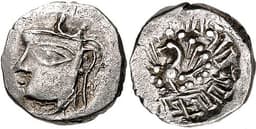
Harsha
Emperor · Medieval
61.0Total

Napoleon Bonaparte
General · Modern
70.9Total
Basic Information
Born
590
1769
Died
647
1821
Era
Medieval
Modern
Nationality
India
France
Occupation
Emperor
General
Civilization
Indian
Western
Score Comparison
Military (10%)
61.7
94.0
Political (20%)
45.0
72.0
Influence (20%)
68.0
40.0
Legacy (20%)
58.0
80.0
Leadership (15%)
66.0
78.0
Strategy (15%)
66.3
90.0
TOTAL
61.0
70.9
Harsha — Complete Timeline
606 AD
Accession to the Throne of ThanesarPolitical Action
Harsha succeeded his father Prabhakaravardhana as ruler of Thanesar (in present-day Haryana). He was 16 years old and soon faced the challenge of avenging his brother-in-law's death and expanding his kingdom.
ThanesarSuccessionHarsha
Impact: regional
612 AD
Conquest of KannaujWar◆ Major
Harsha captured the city of Kannauj after defeating the Maukhari ruler Grahavarman's enemies. He made Kannauj his capital and established the Vardhana dynasty's control over the Gangetic plain, becoming the dominant power in northern India.
KannaujVardhana DynastyNorthern India
Impact: regional
620 AD
Campaigns in Eastern IndiaWar◆ Major
Harsha led military campaigns into Bengal and Odisha, defeating the Shashanka king of Gauda. He extended his empire eastward to the Bay of Bengal, though his control over these regions was not permanent.
BengalOdishaShashanka
Impact: regional
630 AD
Conflict with the Chalukya King Pulakeshin IIWar◆ Major
Harsha attempted to expand southward but was defeated by the Chalukya king Pulakeshin II on the banks of the Narmada River. This battle halted Harsha's southern expansion and established the Narmada as the boundary between the two empires.
ChalukyaPulakeshin IINarmada
Impact: regional
640 AD
Patronage of Buddhism and the Nalanda UniversityCultural◆ Major
Harsha was a patron of Buddhism and supported the Nalanda University, a major center of Buddhist learning. He convened a grand Buddhist council at Kannauj attended by monks from across Asia, and built monasteries and stupas.
BuddhismNalandaCouncil of Kannauj
Impact: regionalconstructive
643 AD
Visit of the Chinese Pilgrim XuanzangCultural
The Chinese Buddhist monk Xuanzang visited Harsha's court and spent time in the empire. Xuanzang's detailed accounts describe Harsha's administration, military, and religious tolerance, providing a key historical source for the period.
XuanzangChinese PilgrimBuddhism
Impact: regionalconstructive
Napoleon Bonaparte — Complete Timeline
1799 AD
Coup of 18 BrumaireOther◆ Major
Napoleon Bonaparte, with support from his brother Lucien and key political figures, overthrew the Directory in a bloodless coup. He established the Consulate with himself as First Consul, effectively becoming the ruler of France. This event ended the French Revolution's most unstable period.
French RevolutionCoupRise to Power
Impact: regional
1804 AD
Promulgation of the Napoleonic CodeOther◆ Major
Napoleon enacted the Civil Code of the French, known as the Napoleonic Code, a comprehensive set of laws that replaced the fragmented feudal legal systems. The code established legal equality, protected property rights, and secularized law. It became the basis for legal systems in many European and world countries.
Legal ReformNapoleonic CodeCivil Law
Impact: globalconstructive
1805 AD
Battle of AusterlitzWar◆ Major
Napoleon's Grande Arm
Napoleonic WarsBattleDecisive Victory
Impact: global
1812 AD
Invasion of RussiaWar◆ Major
Napoleon led the Grande Arm
Napoleonic WarsInvasionDisaster
Impact: globaldestructive
1815 AD
Battle of WaterlooWar◆ Major
Napoleon's French army was defeated by the combined forces of the Duke of Wellington's Anglo-Allied army and Gebhard Leberecht von Bl
Napoleonic WarsBattleFinal Defeat
Impact: globaldestructive
Expert Analysis
Napoleon Bonaparte vs Harsha: Historical Comparison
Napoleon Bonaparte, a French general who became Emperor, reshaped modern Europe through military conquest and legal reform, while Harsha, a medieval Indian emperor, unified much of North India through diplomacy and cultural patronage. Their scores (82 vs 71) reflect Napoleon’s broader global impact versus Harsha’s more regional, culturally-oriented reign.
Dimension Analysis
**Military: Napoleon Bonaparte 94 / Harsha 57**
Napoleon revolutionized warfare with mass conscription, rapid maneuvers, and decisive battles like Austerlitz, whereas Harsha’s campaigns were less innovative and ultimately checked by the Chalukya king Pulakeshin II, limiting his territorial expansion.
**Political: Napoleon Bonaparte 75 / Harsha 79**
Napoleon’s centralized state and Napoleonic Code were groundbreaking but ultimately unstable, leading to his downfall; Harsha’s efficient bureaucracy, religious tolerance, and stable succession within his dynasty provided more enduring governance for northern India.
**Influence: Napoleon Bonaparte 82 / Harsha 70**
Napoleon’s legal and military systems influenced Europe and colonized regions for over a century, while Harsha’s influence was largely confined to Indian subcontinent, though his patronage of Buddhism and literature at Kannauj set lasting cultural precedents.
**Legacy: Napoleon Bonaparte 78 / Harsha 70**
Napoleon’s legacy is dual—a military genius and a tyrant—shaping modern nationalism, whereas Harsha is remembered as a benevolent, scholarly ruler whose biography by Xuanzang remains a key historical source, but his empire dissolved quickly after his death.
**Leadership: Napoleon Bonaparte 80 / Harsha 86**
Napoleon’s charismatic but autocratic leadership inspired fierce loyalty yet alienated allies, while Harsha’s compassionate, consensus-based rule, his patronage of arts and religions, and his personal humility earned him enduring admiration in Indian historiography.
Verdict
Napoleon Bonaparte leads overall due to his superior military innovation, political reform, and far-reaching influence on modern statecraft, despite Harsha’s stronger interpersonal leadership and cultural legacy.
FAQ
Q: Who ranks higher? A: Napoleon Bonaparte ranks higher with a composite score of 82 versus Harsha’s 71, driven by his transformative military and political achievements.
Rankings
🥇
Napoleon BonaparteLeader
Mil: 94.0Pol: 72.0Inf: 40.0
70.9
🥈
Harsha
Mil: 61.7Pol: 45.0Inf: 68.0
61.0
+9.9 behind
How This Comparison Works
Algorithm
Each figure is scored on 6 dimensions (0—100 scale) based on structured historical data: Military (10%), Political (20%), Influence (20%), Legacy (20%), Leadership (15%), Strategy (15%). The weighted total produces the final ranking.
Data Sources
Scores are computed from structured sub-indicators in the database. Scale factors adjust for era (Ancient ×0.85, Modern ×1.0) and civilization size (Eastern ×1.05, Other ×0.80) to account for differences in population and military scale.
Maximum 3 Figures
Comparisons are limited to 2—3 figures to ensure readability and statistical meaningfulness.
Error Margins
±5 points per dimension — Sub-scores are derived from historical records with inherent uncertainty. Two figures within 5 points on a dimension should be considered roughly equivalent in that area.
Total Score Accuracy
±3 points overall — The weighted combination of 6 dimensions produces a total score with approximately ±3 points of uncertainty. Differences of less than 3 points are not statistically significant— the figures are effectively tied.
Known Limitations
- Historical records are incomplete and uneven across civilizations
- Figures from oral-tradition societies may be underrepresented
- Occupation labels can misclassify multi-role figures
- Scores measure capability and impact, not moral character
- Quantitative scoring is a comparison tool, not absolute truth
Capability Radar
Military (10%) — Battles & Warfare
Battles
65
95
Win Rate
70
90
Expansion
70
95
Political (20%) — Governance & Reform
Reform
60
95
Diplomacy
70
80
Economy
65
85
Influence (20%) — Cultural & Global Reach
Cultural
65
85
Global
50
90
Legacy (20%) — Historical Impact
Historical
60
95
Longevity
55
90
Leadership (15%) — Power & Stability
Tenure
75
85
Stability
60
70
Strategy (15%) — Tactics & Innovation
Strategy
65
95
Tactics
60
98
Reform
50
92
Similar Comparisons
Comments & Discussion
OldChronicler536/16/2026
拿破仑军事94分,Harsha只有57分,这个差距我基本同意。但政治维度拿破仑75、Harsha 79,我有点疑问。拿破仑的《民法典》是欧洲法治的基石,至今影响法国及多国法律体系,而Harsha的统治主要依赖个人魅力和佛教僧团的支持,没有留下成文法典。按照中国历史经验,像秦始皇“书同文、车同轨”那样的制度创新才配得上高政治分。拿破仑的政治创新被扣分,可能是因为他在滑铁卢后流放,但制度寿命比个人统治重要。建议重新评估拿破仑的政治维度到80以上。
OldScroll906/16/2026
拿破仑和Harsha的比较很有意思,但我觉得评分体系对东方统治者不太公平。Harsha的军事57分,固然他败给了遮娄其王朝的补罗稽舍二世,但别忘了拿破仑在莱比锡和滑铁卢也一败涂地。Harsha统一北印度三十年,靠的是外交和佛教文化整合,这类似于中国历史上唐太宗的“天可汗”模式,但西方史观总把军事征服当作唯一标准。另外,Harsha的《戒日王本行》由玄奘记录,这种跨文化史料的价值,在影响力评分里应该加分。拿破仑固然影响了欧洲,但Harsha的文化辐射到东南亚,不应被低估。