Loading...
Harald Hardrada vs Ibn Tumart
Harald Hardrada leads by 3.1 pts · 2 figures compared
…
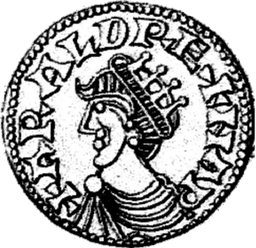
Harald Hardrada
Emperor · Medieval
58.7Total
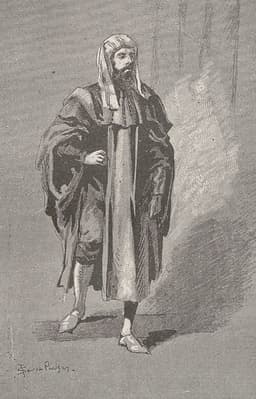
Ibn Tumart
Emperor · Medieval
55.6Total
Basic Information
Born
1015
1080
Died
1066
1130
Era
Medieval
Medieval
Nationality
Norway
Almohad Caliphate
Occupation
Emperor
Emperor
Civilization
Western
Middle Eastern
Score Comparison
Military (10%)
67.3
55.0
Political (20%)
48.0
61.3
Influence (20%)
60.0
58.3
Legacy (20%)
54.0
56.0
Leadership (15%)
64.0
47.3
Strategy (15%)
66.3
52.5
TOTAL
58.7
55.6
Harald Hardrada — Complete Timeline
1030 AD
Fought at the Battle of StiklestadWar◆ Major
Harald Hardrada fought at the Battle of Stiklestad at age 15, supporting his half-brother Olaf II. The battle ended in defeat and Olaf's death, forcing Harald into exile. This event shaped his later ambition to reclaim power in Norway.
BattleExileNorway
Impact: regionaltragic
1034 AD
Served as a mercenary in the Varangian GuardWar◆ Major
After Stiklestad, Harald Hardrada traveled to Constantinople and served as a commander in the Varangian Guard of the Byzantine Empire. He fought in campaigns in the Mediterranean, Sicily, and the Balkans, amassing wealth and military experience.
MercenaryByzantine EmpireVarangian Guard
Impact: regional
1046 AD
Became King of NorwayPolitical Action◆ Major
Harald Hardrada returned to Scandinavia and claimed the Norwegian throne, initially co-ruling with Magnus the Good. After Magnus's death in 1047, Harald became sole king of Norway, ruling until 1066. His reign was marked by centralization and conflict with Denmark.
CoronationNorwayKingship
Impact: regional
1048 AD
Invaded DenmarkWar◆ Major
Harald Hardrada launched a prolonged war against Sweyn Estridsson of Denmark, seeking to reclaim the Danish throne. The conflict lasted for years with raids and battles, but Harald failed to conquer Denmark, eventually making peace in 1064.
InvasionDenmarkWar
Impact: regional
1066 AD
Invaded England and was killed at the Battle of Stamford BridgeWar
Harald Hardrada invaded England in September 1066, claiming the English throne. He was defeated and killed by King Harold Godwinson's forces at the Battle of Stamford Bridge. His death marked the end of the Viking Age and the last major Viking invasion of England.
BattleViking AgeEngland
Impact: regionaltragic
Ibn Tumart — Complete Timeline
1121 AD
Proclamation as MahdiCultural
Ibn Tumart proclaimed himself the Mahdi, the guided one, after returning from the East. He began preaching a strict reformist message, condemning the Almoravids for their perceived religious laxity and calling for a return to the Quran and Sunnah.
Impact: regional
Establishment of the Almohad MovementPolitical Action◆ Major
Ibn Tumart founded the Almohad movement (al-Muwahhidun) in the Atlas Mountains of Morocco. He organized his followers into a disciplined religious and military community, rejecting the Almoravid interpretation of Islam and advocating for tawhid (strict monotheism).
Impact: regionalconstructive
1125 AD
Compilation of the Almohad DoctrineCultural
Ibn Tumart compiled his teachings into a book titled 'A'azz ma Yutlab' (The Most Precious of What is Sought). This work outlined the Almohad doctrine, emphasizing the unity of God and rejecting anthropomorphism, and became the foundation of the movement's ideology.
Impact: regionalconstructive
1130 AD
Battle of al-BuhayraWar◆ Major
Ibn Tumart's Almohad forces were defeated by the Almoravids at the Battle of al-Buhayra near Marrakech. This setback prevented the Almohads from capturing the Almoravid capital and forced them to retreat to the mountains.
Impact: regional
Death of Ibn TumartOther◆ Major
Ibn Tumart died shortly after the Battle of al-Buhayra, possibly from wounds or illness. His death was kept secret by his successor Abd al-Mu'min, who continued the Almohad movement and eventually overthrew the Almoravids.
Impact: regionaltragic
Expert Analysis
Origins
Harald Hardrada (born 1015) was the half-brother of King Olaf II of Norway. At age 15, he fought at the Battle of Stiklestad (1030), where Olaf was killed, forcing Harald into exile. He spent years in Kievan Rus' before joining the Varangian Guard in Constantinople. Ibn Tumart (born 1080) was from the Masmuda tribe in the Atlas Mountains of Morocco. He studied theology in Cordoba and Baghdad, returning to North Africa with a strict reformist message. Both emerged from turbulent backgrounds that shaped their ambitions.
Rise to Power
Harald rose through military service. He fought in the Varangian Guard in the Mediterranean, gaining wealth and experience. He returned to Norway in 1045, co-ruling with Magnus the Good until Magnus's death in 1047, then became sole king. Ibn Tumart proclaimed himself the Mahdi in 1121 after returning from the East. He founded the Almohad movement in the Atlas Mountains, gaining support among Berber tribes. His rise was religious, while Harald's was military.
Leadership & Governance
Harald ruled Norway with a strong hand, centralizing power and suppressing nobles. He waged a long war against Denmark (1048-1064) but eventually made peace. He minted coins and promoted trade. Ibn Tumart imposed a strict Islamic reform, condemning anthropomorphism and promoting tawhid (unity of God). He organized his followers into a disciplined hierarchy. His governance was theocratic, while Harald's was feudal. Harald scored 64.0 in leadership, Ibn Tumart 47.3.
Triumph & Tragedy
Harald's greatest triumph was securing the Norwegian throne and building a formidable army. His tragedy was his invasion of England in 1066, where he was killed at Stamford Bridge by King Harold Godwinson. Ibn Tumart's triumph was founding the Almohad movement that would eventually conquer North Africa and Spain. His tragedy was his death in 1130 shortly after a defeat at the Battle of al-Buhayra, his army failing to capture Marrakech. Both died before their ambitions were fully realized.
Character & Destiny
Harald was ruthless and ambitious, driven by a desire for conquest. His character led him to invade England, overreaching and meeting his end. Ibn Tumart was zealous and uncompromising, which built a loyal following but also provoked strong opposition. His death was kept secret by his successor to maintain momentum. Historians view Harald as the last Viking adventurer; Ibn Tumart as a religious visionary. Harald's military score is 67.3, Ibn Tumart's 55.0.
Legacy
Harald's legacy is tied to the end of the Viking Age. His death at Stamford Bridge is seen as a turning point. He influenced Norse culture and is remembered in sagas. Ibn Tumart's legacy is the Almohad Caliphate, which dominated North Africa and Spain for decades. His doctrine influenced Islamic thought. Harald's influence score is 60.0, Ibn Tumart's 58.3. Both left lasting marks, but Ibn Tumart's religious movement had broader civilizational impact.
Conclusion
While Harald Hardrada has a higher total score (58.7 vs 55.6), Ibn Tumart's impact in terms of long-term religious and political transformation is greater. Harald's military prowess was impressive but his failure at Stamford Bridge limited his legacy. Ibn Tumart founded a movement that reshaped the Islamic West. The Almohad Caliphate lasted over a century and spread reformist Islam. Thus, despite the score gap, Ibn Tumart had a greater historical impact.
Rankings
🥇
Harald HardradaLeader
Mil: 67.3Pol: 48.0Inf: 60.0
58.7
🥈
Ibn Tumart
Mil: 55.0Pol: 61.3Inf: 58.3
55.6
+3.1 behind
How This Comparison Works
Algorithm
Each figure is scored on 6 dimensions (0—100 scale) based on structured historical data: Military (10%), Political (20%), Influence (20%), Legacy (20%), Leadership (15%), Strategy (15%). The weighted total produces the final ranking.
Data Sources
Scores are computed from structured sub-indicators in the database. Scale factors adjust for era (Ancient ×0.85, Modern ×1.0) and civilization size (Eastern ×1.05, Other ×0.80) to account for differences in population and military scale.
Maximum 3 Figures
Comparisons are limited to 2—3 figures to ensure readability and statistical meaningfulness.
Error Margins
±5 points per dimension — Sub-scores are derived from historical records with inherent uncertainty. Two figures within 5 points on a dimension should be considered roughly equivalent in that area.
Total Score Accuracy
±3 points overall — The weighted combination of 6 dimensions produces a total score with approximately ±3 points of uncertainty. Differences of less than 3 points are not statistically significant— the figures are effectively tied.
Known Limitations
- Historical records are incomplete and uneven across civilizations
- Figures from oral-tradition societies may be underrepresented
- Occupation labels can misclassify multi-role figures
- Scores measure capability and impact, not moral character
- Quantitative scoring is a comparison tool, not absolute truth
Capability Radar
Military (10%) — Battles & Warfare
Battles
75
30
Win Rate
70
35
Expansion
70
40
Political (20%) — Governance & Reform
Reform
40
80
Diplomacy
50
30
Economy
45
20
Influence (20%) — Cultural & Global Reach
Cultural
55
60
Global
45
50
Legacy (20%) — Historical Impact
Historical
65
65
Longevity
50
55
Leadership (15%) — Power & Stability
Tenure
55
25
Stability
40
20
Strategy (15%) — Tactics & Innovation
Strategy
75
45
Tactics
80
40
Reform
60
70
Similar Comparisons
Comments & Discussion
No comments yet. Be the first to share your thoughts!