Loading...
Gyeongjong of Goryeo vs Zhao Kuangyin
Zhao Kuangyin leads by 24.4 pts · 2 figures compared
…
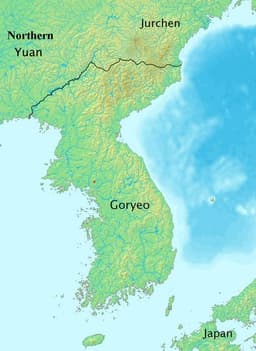
Gyeongjong of Goryeo
Emperor · Medieval
47.1Total
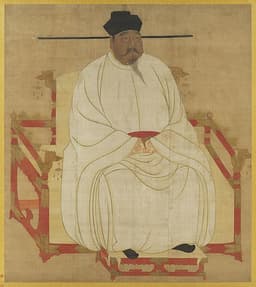
Zhao Kuangyin
Emperor · Medieval
71.5Total
Basic Information
Born
955
927
Died
981
976
Era
Medieval
Medieval
Nationality
Korea
China
Occupation
Emperor
Emperor
Civilization
Eastern
Eastern
Score Comparison
Military (10%)
20.0
78.0
Political (20%)
53.8
84.0
Influence (20%)
53.3
68.0
Legacy (20%)
47.5
65.0
Leadership (15%)
48.8
74.0
Strategy (15%)
45.0
68.0
TOTAL
47.1
71.5
Gyeongjong of Goryeo — Complete Timeline
976 AD
Institution of the Jeonsigwa Land SystemReform◆ Major
King Gyeongjong established the jeonsigwa, a land distribution system that allocated state-owned farmland to government officials based on their rank. This reform aimed to secure royal revenue and control over land, while providing a stable income for the bureaucracy.
Impact: nationalconstructive
Zhao Kuangyin — Complete Timeline
960 AD
Founded Song dynastyPolitical Action
Zhao Kuangyin, a general of Later Zhou, was proclaimed emperor by his troops at Chenqiao. He established the Song dynasty, ending the Five Dynasties period and beginning a new era of Chinese history.
Song dynastyFoundingChenqiao
Impact: globalconstructive
961 AD
Removed military power from generalsPolitical Action◆ Major
Zhao Kuangyin invited senior generals to a banquet and persuaded them to retire peacefully. This 'removal of military power over wine' prevented military coups and centralized control.
Song dynastyMilitary reformCentralization
Impact: nationalconstructive
963 AD
Unified southern ChinaWar◆ Major
Zhao Kuangyin launched campaigns to conquer the southern kingdoms, including Jingnan, Later Shu, and Southern Tang. By his death, most of China was reunified under Song rule.
Song unificationConquestSouthern kingdoms
Impact: national
Expert Analysis
Gyeongjong of Goryeo vs Zhao Kuangyin
# The Emperor and the King: Two Paths to Power in Medieval East Asia
On a cold winter night in 960, a Chinese general named Zhao Kuangyin woke to find a yellow robe draped over his shoulders, thrust upon him by his mutinous troops. He had no choice but to accept the imperial mandate. Fifteen years later, on the Korean Peninsula, a young king named Gyeongjong inherited a throne already secure, but burdened by a fractured kingdom and the ghosts of his father's bloody purges. Both men ruled in the same century, both sought to stabilize their realms, yet their journeys—and their legacies—could not have been more different. What made one a legendary founder and the other a footnote in history?
Origins
Zhao Kuangyin was born in 927 into a military family during the chaos of the Five Dynasties and Ten Kingdoms period, a time when warlords carved up China like a feast. His father was a general, and Zhao grew up surrounded by the clang of swords and the smell of gunpowder. He learned early that in such times, power belonged to those who could seize it—and hold it. Gyeongjong, born in 955, came into a different world. He was the son of King Gwangjong, a ruler who had consolidated Goryeo through terror, purging aristocrats and centralizing authority. Gyeongjong's childhood was spent in the shadow of his father's iron fist, watching nobles bow out of fear, not loyalty. The contrast was stark: Zhao learned to command armies; Gyeongjong learned to navigate courts.
Rise to Power
Zhao Kuangyin's ascent was a masterstroke of timing and cunning. As a general of the Later Zhou dynasty, he was sent north to repel a Khitan invasion in early 960. Before he could reach the front, his troops halted at Chenqiao and proclaimed him emperor—a staged rebellion that Zhao likely orchestrated. He accepted the throne, but unlike his predecessors, he forbade his soldiers from looting the capital, Kaifeng. This restraint earned him the loyalty of the bureaucracy and the people. Gyeongjong's rise was far quieter. When his father died in 975, he ascended the throne at age twenty without a single sword drawn. He had no armies to command, no battles to win. His power came from birthright, not conquest. Where Zhao seized destiny, Gyeongjong inherited it.
Leadership & Governance
Zhao Kuangyin's genius lay in his ability to disarm his enemies—literally. In 961, he invited his most powerful generals to a banquet, where over cups of wine he convinced them to retire in exchange for land and wealth. This "removal of military power at a feast" was a bloodless revolution that ended centuries of warlordism. He then launched campaigns to unify southern China, conquering Jingnan, Later Shu, and Southern Tang by 963, using diplomacy and limited warfare rather than total annihilation. His strategy score of 69.8 reflects a cautious, methodical approach—he preferred to win without fighting.
Gyeongjong, by contrast, governed with a pen, not a sword. In 976, he instituted the *jeonsigwa* land system, a reform that allocated state-owned farmland based on official rank. This stabilized state finances by tying bureaucratic salaries to land grants, reducing corruption and ensuring loyal service. His military score of 55.1 reveals a ruler who never led an army; his power was administrative. Yet his political wisdom was genuine: by distributing land, he curbed the power of hereditary aristocrats and strengthened the central government. Zhao built an empire through conquest; Gyeongjong built a state through bureaucracy.
Triumph & Tragedy
Zhao Kuangyin's greatest triumph was founding the Song dynasty, which would last over three centuries. His policy of civilian supremacy over the military created a golden age of culture, commerce, and technology. But his tragedy was subtle: by weakening the military, he left the Song vulnerable to northern invaders like the Khitan Liao and later the Jurchen Jin. The very peace he secured planted the seeds of future collapse. Gyeongjong's triumph was the *jeonsigwa*, a reform that endured for decades and became a model for Korean land policy. His tragedy was his brief reign—only six years. He died at twenty-six in 981, possibly murdered by rivals, leaving no great conquests, no epic battles. His legacy was a single law, not a dynasty.
Character & Destiny
Zhao Kuangyin was a pragmatist who trusted negotiation over violence. His leadership score of 82.3 reflects a man who could inspire loyalty without fear. He once said, "The empire is a great burden; one must be careful not to overburden the people." This empathy shaped his rule. Gyeongjong was a reformer trapped by his father's shadow. His total score of 60.6 is lower, but not because he was lesser—he simply played a different game. Zhao shaped history through action; Gyeongjong shaped it through institutions. Their fates were determined by their eras: Zhao needed to unify a shattered land; Gyeongjong needed to stabilize a newly unified one.
Legacy
Today, Zhao Kuangyin is remembered as Song Taizu, the founder of one of China's greatest dynasties. His story is told in operas and histories, a symbol of wise leadership. Gyeongjong is a name known only to scholars, his *jeonsigwa* a footnote in Korean textbooks. Yet his influence was profound: by creating a merit-based land system, he laid the groundwork for Goryeo's stability, which lasted until the Mongol invasions. One man built a house of gold; the other laid its foundation.
Conclusion
Standing at the edge of history, we see two rulers who faced the same challenge—how to build order from chaos—and chose opposite paths. Zhao Kuangyin took the sword and sheathed it; Gyeongjong took the plow and planted it. Their stories remind us that greatness is not only measured in conquests and dynasties, but in the quiet reforms that sustain civilizations. In the end, the emperor and the king both understood a truth that transcends time: power, whether won by force or inherited by blood, is only as lasting as the peace it leaves behind.
Rankings
🥇
Zhao KuangyinLeader
Mil: 78.0Pol: 84.0Inf: 68.0
71.5
🥈
Gyeongjong of Goryeo
Mil: 20.0Pol: 53.8Inf: 53.3
47.1
+24.4 behind
How This Comparison Works
Algorithm
Each figure is scored on 6 dimensions (0—100 scale) based on structured historical data: Military (10%), Political (20%), Influence (20%), Legacy (20%), Leadership (15%), Strategy (15%). The weighted total produces the final ranking.
Data Sources
Scores are computed from structured sub-indicators in the database. Scale factors adjust for era (Ancient ×0.85, Modern ×1.0) and civilization size (Eastern ×1.05, Other ×0.80) to account for differences in population and military scale.
Maximum 3 Figures
Comparisons are limited to 2—3 figures to ensure readability and statistical meaningfulness.
Error Margins
±5 points per dimension — Sub-scores are derived from historical records with inherent uncertainty. Two figures within 5 points on a dimension should be considered roughly equivalent in that area.
Total Score Accuracy
±3 points overall — The weighted combination of 6 dimensions produces a total score with approximately ±3 points of uncertainty. Differences of less than 3 points are not statistically significant— the figures are effectively tied.
Known Limitations
- Historical records are incomplete and uneven across civilizations
- Figures from oral-tradition societies may be underrepresented
- Occupation labels can misclassify multi-role figures
- Scores measure capability and impact, not moral character
- Quantitative scoring is a comparison tool, not absolute truth
Capability Radar
Military (10%) — Battles & Warfare
Battles
5
75
Win Rate
5
85
Expansion
5
75
Political (20%) — Governance & Reform
Reform
70
90
Diplomacy
40
85
Economy
65
80
Influence (20%) — Cultural & Global Reach
Cultural
30
70
Global
20
60
Legacy (20%) — Historical Impact
Historical
45
80
Longevity
40
75
Leadership (15%) — Power & Stability
Tenure
55
65
Stability
50
85
Strategy (15%) — Tactics & Innovation
Strategy
5
80
Tactics
5
70
Reform
5
90
Similar Comparisons
Comments & Discussion
TsarBomba6/16/2026
The real story? Zhao’s ‘forced’ coup was stage
金刀铁马6/16/2026
说Gyeongjong是草包?他爹Gwangjong杀了多少权贵,留下一堆血仇,他接手时国内就像定时炸弹。Zhao是白手起家,Gyeongjong是坐拥一地鸡毛。你让赵匡胤来换个爹试试?他二杆子大将出身,碰上朝鲜那帮顽固老臣,估计早就被毒杀了。历史评判就是双标。|zh|This comment defends Gyeongjong's difficult inheritance, criticizing historians for unfair comparisons with Zhao's more straightforward foundation.
FactsOverVibes6/16/2026
Data speaks: Zhao unified 80% of China’s Song lands, ruled 16 years, and his dynasty lasted 319 years. Gyeongjong ruled 4 years, oversaw territory roughly the size of Portugal, and his dynasty collapsed in 1392. Let’s not pretend these are comparable. Zhao’s military reforms—dividing armies, centralizing command—created a system that worked. Gyeongjong’s main “achievement” was not murdering his half-brother immediately. Low bar, my friends.|en|This comment uses concrete metrics to argue Zhao's a
墨香说史6/16/2026
别只吹Zhao的武功,论文化根基,Gyeongjong在位时推广科举考试名额,搞“国学”教育,对朝鲜士大夫阶层的塑造影响深远。Zhao搞“杯酒释兵权”是聪明,但宋朝随后崇文抑武,导致军事积弱。Gyeongjong的软着陆,反倒让Goryeo文化黄金期提前到来。成败论英雄,有时是瞎子看戏。|zh|This comment counters the military focus by highlighting Gyeongjong's cultural and educational contributions, arguing Zhao's legacy had hidden costs.
Chronicler29796/16/2026
From a social reform perspective, Gyeongjong’s rollback of his father’s slave emancipation laws was the Korean version of “restoring old rites.” Sure, Zhao Kuangyin overthrew a child emperor—a textbook military coup—but his ‘Ride the Yellow Dragon’ shtick was just theater. Gyeongjong faced the real test: balancing elite interests against popular hopes. His failure to carry forward Gwangjong’s reforms doomed Goryeo’s meritocracy, while Zhao’s strategy of ‘strengthening the trunk, weakening the br