Loading...
Gyeongjong of Goryeo vs Rurik
Rurik leads by 12.5 pts · 2 figures compared
…
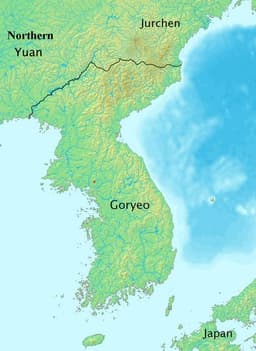
Gyeongjong of Goryeo
Emperor · Medieval
47.1Total
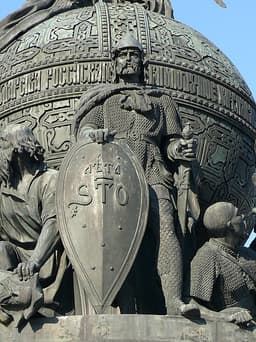
Rurik
Emperor · Medieval
59.6Total
Basic Information
Born
955
830
Died
981
879
Era
Medieval
Medieval
Nationality
Korea
Kievan Rus
Occupation
Emperor
Emperor
Civilization
Eastern
Western
Score Comparison
Military (10%)
20.0
50.0
Political (20%)
53.8
35.1
Influence (20%)
53.3
82.0
Legacy (20%)
47.5
68.0
Leadership (15%)
48.8
55.3
Strategy (15%)
45.0
35.7
TOTAL
47.1
59.6
Gyeongjong of Goryeo — Complete Timeline
976 AD
Institution of the Jeonsigwa Land SystemReform◆ Major
King Gyeongjong established the jeonsigwa, a land distribution system that allocated state-owned farmland to government officials based on their rank. This reform aimed to secure royal revenue and control over land, while providing a stable income for the bureaucracy.
Impact: nationalconstructive
Rurik — Complete Timeline
860 AD
Sent Askold and Dir to ConstantinopleWar
According to tradition, Rurik sent his lieutenants Askold and Dir to raid Constantinople. While the historicity is uncertain, this event is associated with the first Rus' attack on the Byzantine Empire, highlighting early Rus' expansion.
RaidByzantine EmpireExpansion
Impact: regional
862 AD
Founded the Rurik dynastyPolitical Action
According to the Primary Chronicle, Rurik, a Varangian chieftain, was invited by Slavic and Finnic tribes to rule over them. He established his capital at Novgorod, founding the Rurik dynasty that would rule Kievan Rus' and later the Tsardom of Russia until 1598.
FoundationVarangianKievan Rus'
Impact: global
864 AD
Consolidated control over NovgorodPolitical Action◆ Major
Rurik consolidated his rule over Novgorod and the surrounding territories, suppressing a rebellion led by Vadim the Bold. He established a centralized authority that became the basis for the early Russian state.
ConsolidationNovgorodRebellion
Impact: regional
Expert Analysis
Gyeongjong of Goryeo vs Rurik
### The Invited Prince and the Reforming King
In the winter of 862, a Varangian chieftain named Rurik is said to have arrived on the shores of Lake Ladoga, summoned by warring Slavic and Finnic tribes who had tired of their own chaos. A thousand miles to the east, in the spring of 976, a young Korean king named Gyeongjong signed a decree that would redefine his kingdom’s economy, parceling out land not by birthright but by bureaucratic rank. One was a foreign warlord who became the father of a dynasty; the other was a native ruler who became the architect of a state. Their worlds never touched, yet their stories share a haunting symmetry: both men seized a moment of crisis to impose order. The question is why one became a legend and the other a footnote.
### Origins
Rurik emerged from the mists of the Baltic, a Varangian—likely a Norse trader and raider—whose very existence is debated. The *Primary Chronicle*, compiled centuries after his death, portrays him as a solution to tribal anarchy: the Chuds, Slavs, and Krivichs, weary of internal strife, supposedly said, “Our land is great and abundant, but there is no order in it. Come to rule and reign over us.” Whether this “invitation” was a diplomatic fiction or a genuine plea, Rurik’s origin was that of an outsider, unencumbered by local loyalties. He had no claim to the land except the one given him.
Gyeongjong, by contrast, was born into the heart of Korean power. The fourth king of the Goryeo dynasty, he inherited a throne consolidated by his grandfather, King Taejo, who had unified the peninsula. His father, Gwangjong, had already purged the aristocracy and freed slaves to strengthen the crown. Gyeongjong did not need to conquer; he needed to administer. His world was not the raw frontier of the Rus but the refined court of Kaesong, where Confucian scholars debated land rights and tax codes. His challenge was not legitimacy but sustainability.
### Rise to Power
Rurik’s path was forged by opportunity and violence. In 860, according to tradition, he sent his lieutenants Askold and Dir to raid Constantinople, a venture that tested the limits of Varangian ambition. But his true turning point came in 862, when he accepted the invitation to rule. By 864, he had consolidated control over Novgorod, crushing a rebellion led by a local strongman named Vadim the Bold. Rurik did not win a throne through birth or election; he seized it by answering a cry for order. His power rested on the sword and the promise of stability.
Gyeongjong’s rise was quieter. He became king in 975 upon his father’s death, inheriting a realm that had been purged of its most dangerous nobles. There was no dramatic raid, no rebellion to suppress. His power was constitutional, rooted in the Confucian ideal of a sage ruler. Yet this very stability posed a risk: without the aura of conquest, he had to prove his worth through governance.
### Leadership & Governance
Rurik’s rule was that of a warlord-king. He established a dynasty, the Rurikids, that would rule for over seven centuries, but his own reign was brief and shadowy. He did not codify laws or reform land systems; he maintained order through personal loyalty and military might. His leadership score of 79.7 reflects a primal charisma—the ability to make men follow him into the unknown. Yet his political score of 51.2 suggests he was no statesman. He left no administrative legacy, only a bloodline.
Gyeongjong’s governance was the opposite. In 976, he instituted the *jeonsigwa* land system, a reform that allocated state-owned farmland according to official rank. This was not a radical break but a refinement: it stabilized state finances, weakened the landed aristocracy, and tied officials to the crown. His political score of 60.5 may seem modest, but it understates the impact of a reform that lasted for centuries. Where Rurik built a dynasty, Gyeongjong built a bureaucracy.
### Triumph & Tragedy
Rurik’s triumph was the founding of a lineage that would produce Ivan the Terrible and the first tsars. His tragedy is that we know almost nothing about him. He is a silhouette—a figure who may never have existed, whose deeds are half-legend. His legacy score of 68.7 is high, but it is a legacy of myth, not fact.
Gyeongjong’s triumph was the *jeonsigwa*, a reform that gave Goryeo a fiscal backbone. His tragedy was his early death at 26, just five years into his reign. He left no dramatic conquests, no epic battles. His influence score of 72.7 is impressive, yet his name is known only to specialists. He is a footnote in a history that prefers warriors to administrators.
### Character & Destiny
Rurik’s character is a blank slate, which allowed later generations to fill it with their own ideals. He was whatever Russia needed him to be: a Norse founder, a Slavic hero, a symbol of unity. His destiny was to be a founding father, a role that required ambiguity.
Gyeongjong’s character was shaped by his era. He was a Confucian reformer in a Buddhist kingdom, a young man who understood that power lay not in swords but in scrolls. His destiny was to be a stabilizer, not a conqueror. He did not change the world; he made it work better.
### Legacy
Rurik’s legacy is the Rurikid dynasty, which ruled until 1598. He is the patriarch of Russian statehood, a figure invoked by tsars and historians alike. Yet his historicity remains debated; he may be a legendary figure, a convenient myth for a people in search of origins.
Gyeongjong’s legacy is the *jeonsigwa* system, which influenced Korean land policy for generations. He is remembered in academic circles as a reformer who strengthened the state without bloodshed. But in the popular imagination, he is overshadowed by his father and grandfather.
### Conclusion
Standing at the end of their stories, one sees two different paths to greatness. Rurik took the path of legend: he was an outsider who became a founder, a figure of myth whose shadow stretches across centuries. Gyeongjong took the path of law: he was a native son who became a reformer, a figure of fact whose work outlasted his name. Both succeeded, but in ways that reveal the deep divide between East and West, between the warrior and the bureaucrat, between the man who is remembered and the man who is forgotten. In the end, Rurik gave Russia a dynasty; Gyeongjong gave Korea a system. One built a house; the other laid its foundation. Which is more lasting? Perhaps the question is not which man was greater, but which kind of greatness we choose to honor.
Rankings
🥇
RurikLeader
Mil: 50.0Pol: 35.1Inf: 82.0
59.6
🥈
Gyeongjong of Goryeo
Mil: 20.0Pol: 53.8Inf: 53.3
47.1
+12.5 behind
How This Comparison Works
Algorithm
Each figure is scored on 6 dimensions (0—100 scale) based on structured historical data: Military (10%), Political (20%), Influence (20%), Legacy (20%), Leadership (15%), Strategy (15%). The weighted total produces the final ranking.
Data Sources
Scores are computed from structured sub-indicators in the database. Scale factors adjust for era (Ancient ×0.85, Modern ×1.0) and civilization size (Eastern ×1.05, Other ×0.80) to account for differences in population and military scale.
Maximum 3 Figures
Comparisons are limited to 2—3 figures to ensure readability and statistical meaningfulness.
Error Margins
±5 points per dimension — Sub-scores are derived from historical records with inherent uncertainty. Two figures within 5 points on a dimension should be considered roughly equivalent in that area.
Total Score Accuracy
±3 points overall — The weighted combination of 6 dimensions produces a total score with approximately ±3 points of uncertainty. Differences of less than 3 points are not statistically significant— the figures are effectively tied.
Known Limitations
- Historical records are incomplete and uneven across civilizations
- Figures from oral-tradition societies may be underrepresented
- Occupation labels can misclassify multi-role figures
- Scores measure capability and impact, not moral character
- Quantitative scoring is a comparison tool, not absolute truth
Capability Radar
Military (10%) — Battles & Warfare
Battles
5
15
Win Rate
5
20
Expansion
5
30
Political (20%) — Governance & Reform
Reform
70
30
Diplomacy
40
35
Economy
65
25
Influence (20%) — Cultural & Global Reach
Cultural
30
50
Global
20
60
Legacy (20%) — Historical Impact
Historical
45
70
Longevity
40
80
Leadership (15%) — Power & Stability
Tenure
55
40
Stability
50
30
Strategy (15%) — Tactics & Innovation
Strategy
5
20
Tactics
5
15
Reform
5
10
Similar Comparisons
Comments & Discussion
No comments yet. Be the first to share your thoughts!