Loading...
Gulbuddin Hekmatyar vs Shamil Basayev
Shamil Basayev leads by 4.8 pts · 2 figures compared
…
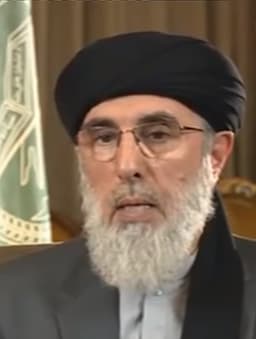
Gulbuddin Hekmatyar
Revolutionary · Modern
38.3Total
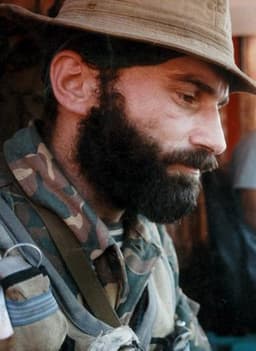
Shamil Basayev
Revolutionary · Modern
43.1Total
Basic Information
Born
1947
1965
Died
—
—
Era
Modern
Modern
Nationality
Afghanistan
Chechnya
Occupation
Revolutionary
Revolutionary
Civilization
Middle Eastern
Western
Score Comparison
Military (10%)
35.0
40.0
Political (20%)
26.4
35.0
Influence (20%)
47.1
45.5
Legacy (20%)
36.7
35.0
Leadership (15%)
40.4
57.1
Strategy (15%)
38.3
51.7
TOTAL
38.3
43.1
Gulbuddin Hekmatyar — Complete Timeline
1975 AD
Founding of Hezb-e Islami (1975)Political Action◆ Major
Gulbuddin Hekmatyar founded the Hezb-e Islami political party, an Islamist faction that became one of the most powerful mujahideen groups during the Soviet-Afghan War. The party received significant support from Pakistan's ISI and foreign Islamist donors.
MujahideenIslamist PartyCold War
Impact: national
1993 AD
Prime Minister during Civil War (1993-1994)Political Action◆ Major
Hekmatyar served as Prime Minister of Afghanistan from 1993 to 1994 under President Burhanuddin Rabbani. His tenure was marked by intense factional fighting, including rocket attacks on Kabul that caused thousands of civilian casualties, contributing to the devastation of the city.
Civil WarKabulRocket Attacks
Impact: nationaldestructive
1996 AD
Alliance with Taliban (1996-2001)Political Action
After the Taliban captured Kabul in 1996, Hekmatyar initially fled to Iran. He later aligned with the Taliban regime, though his influence waned. He remained in Afghanistan until the US-led invasion in 2001, after which he fled to Pakistan.
TalibanExileAlliance
Impact: national
2016 AD
Peace Agreement with Afghan Government (2016)Political Action◆ Major
Hekmatyar signed a peace agreement with the Afghan government of President Ashraf Ghani in 2016. The deal allowed him to return to Afghanistan from exile, with his party recognized as a political entity and his fighters integrated into state security forces.
Peace DealReconciliationGhani
Impact: nationalconstructive
Shamil Basayev — Complete Timeline
1995 AD
Budyonnovsk Hospital Hostage CrisisWar◆ Major
Basayev led a raid on the Russian town of Budyonnovsk, taking over 1,000 hostages in a hospital. The crisis ended with a negotiated settlement that allowed him to return to Chechnya. This attack demonstrated Chechen reach into Russia.
Hostage CrisisTerrorismChechnya
Impact: nationaldestructive
1999 AD
Invasion of DagestanWar
Basayev led Chechen and Islamist fighters into Dagestan to support local rebels. This invasion triggered the Second Chechen War as Russia responded with a full-scale military campaign. The invasion failed to gain local support.
DagestanChechnyaInvasion
Impact: regionaldestructive
2002 AD
Moscow Theater Hostage CrisisWar◆ Major
Basayev orchestrated the Moscow theater hostage crisis, where Chechen militants took 850 people hostage. Russian forces ended the siege with gas, killing 130 hostages. The attack increased international condemnation of Chechen rebels.
Hostage CrisisTerrorismMoscow
Impact: nationaldestructive
2004 AD
Beslan School SiegeWar◆ Major
Basayev planned the Beslan school siege, where militants took over 1,100 people hostage. The siege ended in a bloody assault, resulting in 334 deaths, mostly children. This attack was widely condemned globally.
Hostage CrisisTerrorismBeslan
Impact: globaltragic
2006 AD
Killed by Russian ExplosivesWar◆ Major
Basayev was killed in Ingushetia when a truck loaded with explosives detonated. Russian intelligence claimed responsibility. His death removed the most prominent Chechen rebel commander.
AssassinationChechnyaRussia
Impact: regional
Expert Analysis
Shamil Basayev vs Gulbuddin Hekmatyar
# The Scourge and the Scholar: Two Paths of Revolutionary Violence
On a gray September morning in 2004, Shamil Basayev watched from a safe house in Chechnya as his plan unfolded 300 miles away in North Ossetia. In Beslan’s School Number One, over 1,100 children, parents, and teachers sat trapped in a sweltering gymnasium, their lives held hostage to a cause that would end in the bloodiest siege of the modern era. Across the border in Afghanistan, a very different kind of revolutionary, Gulbuddin Hekmatyar, had already seen his own moment of power slip away a decade earlier. Both men fought against the same superpower, yet their trajectories could not have diverged more sharply. The question lingers: why did one become a symbol of uncompromising terror, while the other lived long enough to sign a peace deal?
Origins
Shamil Basayev was born in 1965 in the Chechen village of Dyshne-Vedeno, into a land that had never fully accepted Russian rule. His given name, Shamil, was no accident—it honored the 19th-century imam who led a three-decade resistance against the Tsarist empire. Basayev grew up hearing stories of his ancestors’ defiance, and when the Soviet Union collapsed, he saw an opening. He was a product of war’s chaos, shaped by the brutal First Chechen War (1994–1996) that turned him from a minor criminal into a hardened commander. His world was one of total conflict, where compromise meant annihilation.
Gulbuddin Hekmatyar, born in 1947 in the northern Afghan province of Kunduz, came from a different tradition. He studied engineering at Kabul University, where he encountered the writings of the Muslim Brotherhood and the radical Islamism of Sayyid Qutb. Where Basayev’s nationalism was rooted in ethnic identity and vengeance, Hekmatyar’s vision was ideological and transnational—a pure Islamic state that transcended tribal lines. The Soviet invasion of Afghanistan in 1979 gave him his stage, but his ambition was always broader than simply expelling foreigners.
Rise to Power
Basayev’s path was forged in fire. In 1991, he hijacked a Russian passenger plane to draw attention to Chechnya’s independence—a crude but effective debut. By 1995, he had orchestrated the Budyonnovsk hospital siege, taking over 1,000 hostages and forcing the Russian government to negotiate. That moment made him a hero to Chechens and a monster to Russians. He had no political party, no bureaucracy, no patience for diplomacy. His power came from the barrel of a gun and the loyalty of men who had lost everything.
Hekmatyar’s rise was more calculated. In 1975, he founded Hezb-e Islami, an Islamist party that attracted funding from Pakistan’s intelligence services and the United States during the anti-Soviet jihad. While Basayev fought Russians face-to-face, Hekmatyar became a master of supply chains and political maneuvering. By the 1990s, he had amassed enough rockets to shell Kabul itself, not to defeat the Soviet remnants, but to destroy his Afghan rivals. His prime ministership from 1993 to 1994 was a disaster—a period of such intense shelling that parts of Kabul were reduced to rubble, earning him the nickname “the Butcher of Kabul.”
Leadership & Governance
Basayev never governed anything beyond a war zone. His leadership was pure guerrilla command: mobile, ruthless, and utterly decentralized. He inspired devotion through personal bravery and a willingness to die for the cause. The 2002 Moscow theater hostage crisis—where 850 people were taken, and 130 died after Russian forces pumped in poison gas—was his signature operation. The 2004 Beslan school siege was worse: 334 dead, half of them children. Basayev’s military score of 55.8 reflects a commander who could plan audacious attacks but could not build anything lasting. His political score of 38.8 tells the rest of the story.
Hekmatyar, by contrast, was a politician who happened to fight. His strategy score of 63.7—higher than Basayev’s 45.6—suggests a man who thought in terms of long-term positioning. He allied with the Taliban in 1996, then later turned against them. He signed a peace agreement with the Afghan government in 2016, returning to Kabul after decades in exile. He was not loved, but he was tolerated—a testament to his survival instincts. Where Basayev’s leadership score of 34.5 reflects a man who could only destroy, Hekmatyar’s 41.3 shows someone who understood that power sometimes requires waiting.
Triumph & Tragedy
Basayev’s greatest triumph was also his greatest tragedy: the 1996 Chechen victory that forced Russian withdrawal. But the peace lasted only three years. In 1999, he invaded Dagestan with Islamist fighters, triggering the Second Chechen War. That decision was his undoing. It turned a nationalist struggle into a jihadist crusade, alienating moderate Chechens and uniting Russia against him. By 2006, he was dead, killed in Ingushetia when a truck loaded with explosives detonated—likely a Russian intelligence operation. He left behind no state, no legacy beyond blood.
Hekmatyar’s tragedy was more ironic. He fought for an Islamic state but ended up a pawn in larger games. His 1993–1994 prime ministership was so destructive that it paved the way for the Taliban’s rise. He then spent years in exile, watching younger men—Osama bin Laden, Mullah Omar—steal his spotlight. Yet he lived to see 2016, when he signed a peace deal and returned to Afghanistan. His legacy score of 47.8 is slightly higher than Basayev’s 47.7, but the difference is hollow. Hekmatyar outlived his relevance.
Character & Destiny
Basayev was a man of action, not reflection. He once said, “We are not fighting for territory, we are fighting for our souls.” His personality was forged in suffering—his family killed, his home destroyed. He could not stop fighting because stopping meant confronting the emptiness of his cause. Hekmatyar was a man of calculation, not passion. He survived by shifting allegiances, by knowing when to fight and when to negotiate. His personality was that of a scholar turned warrior, but a scholar who never quite understood that ideology without humanity becomes tyranny.
Legacy
Basayev is remembered as a terrorist in the West, a martyr in parts of Chechnya, and a cautionary tale everywhere else. His total score of 47.4 places him as a figure of moderate historical impact—important, but ultimately defeated. Hekmatyar’s 51.6 is higher, but it reflects a different kind of influence: the ability to persist, to adapt, to outlast. Yet neither man built anything that survived them. Basayev’s Chechnya is now ruled by a Kremlin-backed strongman. Hekmatyar’s Afghanistan has fallen to the Taliban once more.
Conclusion
In the end, these two revolutionaries reveal a painful truth about political violence. Basayev chose the path of pure destruction, and it consumed him. Hekmatyar chose the path of pure survival, and it left him hollow. Both fought for causes they believed were just, but neither understood that lasting change requires building, not just breaking. Their stories are warnings: that the fire of revolution either burns out or burns everything, and that the men who light it rarely survive to see the ashes.
Rankings
🥇
Shamil BasayevLeader
Mil: 40.0Pol: 35.0Inf: 45.5
43.1
🥈
Gulbuddin Hekmatyar
Mil: 35.0Pol: 26.4Inf: 47.1
38.3
+4.8 behind
How This Comparison Works
Algorithm
Each figure is scored on 6 dimensions (0—100 scale) based on structured historical data: Military (10%), Political (20%), Influence (20%), Legacy (20%), Leadership (15%), Strategy (15%). The weighted total produces the final ranking.
Data Sources
Scores are computed from structured sub-indicators in the database. Scale factors adjust for era (Ancient ×0.85, Modern ×1.0) and civilization size (Eastern ×1.05, Other ×0.80) to account for differences in population and military scale.
Maximum 3 Figures
Comparisons are limited to 2—3 figures to ensure readability and statistical meaningfulness.
Error Margins
±5 points per dimension — Sub-scores are derived from historical records with inherent uncertainty. Two figures within 5 points on a dimension should be considered roughly equivalent in that area.
Total Score Accuracy
±3 points overall — The weighted combination of 6 dimensions produces a total score with approximately ±3 points of uncertainty. Differences of less than 3 points are not statistically significant— the figures are effectively tied.
Known Limitations
- Historical records are incomplete and uneven across civilizations
- Figures from oral-tradition societies may be underrepresented
- Occupation labels can misclassify multi-role figures
- Scores measure capability and impact, not moral character
- Quantitative scoring is a comparison tool, not absolute truth
Capability Radar
Military (10%) — Battles & Warfare
Battles
45
45
Win Rate
30
40
Expansion
25
15
Political (20%) — Governance & Reform
Reform
15
5
Diplomacy
20
10
Economy
10
5
Influence (20%) — Cultural & Global Reach
Cultural
25
20
Global
25
20
Legacy (20%) — Historical Impact
Historical
30
25
Longevity
20
15
Leadership (15%) — Power & Stability
Tenure
30
10
Stability
5
5
Strategy (15%) — Tactics & Innovation
Strategy
35
35
Tactics
40
55
Reform
20
20
Similar Comparisons
Comments & Discussion
MujahidMind6/16/2026
Basayev and Hekmatyar are apples and oranges in the jihad orchard. Basayev was the tactical genius who turned Chechnya into a killing field for Russians—his Budyonnovsk hospital raid in 1995 forced Moscow to negotiate. Hekmatyar? A scholar-turned-warlord who wasted the 1990s shelling Kabul from the hills, killing 25,000 civilians. Give me Basayev’s focused fury over Hekmatyar’s Afghan gridlock any day. The Beslan school siege was monstrous, but it shows Basayev understood asymmetrical shock valu
BeslanAnalyst6/16/2026
从军事历史角度看,巴萨耶夫更是个实战家,赫克马蒂亚尔就是个书呆子。巴萨耶夫在1996年领导了布琼诺夫斯克行动,用1000名人质逼停俄军,赫克马蒂亚尔却只会用火箭弹炸喀布尔,十年了没拿下个像样的据点。你要选个副手打仗,肯定是巴萨耶夫——他懂战术节奏,知道什么时候施压,什么时候装死。赫克马蒂亚尔太教条,最后连基地组织都看不起他。
DataSkeptic6/16/2026
Let's fact-check the "scholar" label. Hekmatyar was a civil engineering dropout who bombed Kabul for five years, killing more Afghans than any Soviet did in the 1980s. Basayev's Beslan body count was 334, but Hekmatyar's career tally is easily 50,000+ dead. The analysis romanticizes Hekmatyar's "survival" while glossing over his chaotic leadership. Peace deal? That was 2016—after the US had him cornered and he played the martyr. Both monsters, but Hekmatyar's "diplomacy" is a myth.
冷血历史癖6/16/2026
我最烦这种“一个学者一个暴徒”的二元论。赫克马蒂亚尔在苏联撤军后用美国给的毒刺导弹打同胞,巴萨耶夫在车臣战中炸了格罗斯尼的公寓楼。区别在哪?巴萨耶夫至少明确反俄,赫克马蒂亚尔就是个机会主义者。1992年他拒绝加入联合政府,非要独揽大权,结果让塔利班捡了便宜。两个人名声一样臭,但巴萨耶夫的哲学更纯粹:要么独立,要么死,赫克马蒂亚尔则是谁给钱跟谁走。
RevisionistEcho6/16/2026
People forget Hekmatyar was the CIA's golden boy in the 1980s—they funded his Hezb-e-Islami with billions. Basayev, by contrast, had no superpower backing