Loading...
Gulbuddin Hekmatyar vs Pushpa Kamal Dahal
Pushpa Kamal Dahal leads by 11.7 pts · 2 figures compared
…
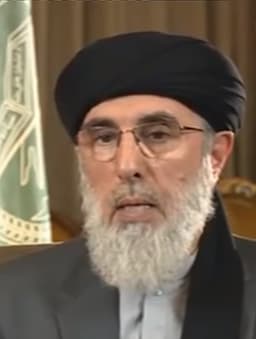
Gulbuddin Hekmatyar
Revolutionary · Modern
38.3Total
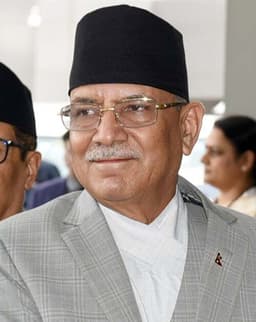
Pushpa Kamal Dahal
Revolutionary · Modern
50.0Total
Basic Information
Born
1947
1954
Died
—
—
Era
Modern
Modern
Nationality
Afghanistan
Nepal
Occupation
Revolutionary
Revolutionary
Civilization
Middle Eastern
Indian
Score Comparison
Military (10%)
35.0
35.0
Political (20%)
26.4
54.7
Influence (20%)
47.1
51.0
Legacy (20%)
36.7
40.8
Leadership (15%)
40.4
62.0
Strategy (15%)
38.3
60.0
TOTAL
38.3
50.0
Gulbuddin Hekmatyar — Complete Timeline
1975 AD
Founding of Hezb-e Islami (1975)Political Action◆ Major
Gulbuddin Hekmatyar founded the Hezb-e Islami political party, an Islamist faction that became one of the most powerful mujahideen groups during the Soviet-Afghan War. The party received significant support from Pakistan's ISI and foreign Islamist donors.
MujahideenIslamist PartyCold War
Impact: national
1993 AD
Prime Minister during Civil War (1993-1994)Political Action◆ Major
Hekmatyar served as Prime Minister of Afghanistan from 1993 to 1994 under President Burhanuddin Rabbani. His tenure was marked by intense factional fighting, including rocket attacks on Kabul that caused thousands of civilian casualties, contributing to the devastation of the city.
Civil WarKabulRocket Attacks
Impact: nationaldestructive
1996 AD
Alliance with Taliban (1996-2001)Political Action
After the Taliban captured Kabul in 1996, Hekmatyar initially fled to Iran. He later aligned with the Taliban regime, though his influence waned. He remained in Afghanistan until the US-led invasion in 2001, after which he fled to Pakistan.
TalibanExileAlliance
Impact: national
2016 AD
Peace Agreement with Afghan Government (2016)Political Action◆ Major
Hekmatyar signed a peace agreement with the Afghan government of President Ashraf Ghani in 2016. The deal allowed him to return to Afghanistan from exile, with his party recognized as a political entity and his fighters integrated into state security forces.
Peace DealReconciliationGhani
Impact: nationalconstructive
Pushpa Kamal Dahal — Complete Timeline
1996 AD
Launch of People's WarWar
Prachanda, as leader of the Communist Party of Nepal (Maoist), initiated a armed insurgency against the Nepalese state. The People's War began with attacks on police posts and government offices, escalating into a decade-long civil war.
InsurgencyCivil WarMaoist
Impact: nationaldestructive
2006 AD
Signing of Comprehensive Peace AccordPolitical Action◆ Major
Prachanda signed the Comprehensive Peace Accord with Prime Minister Girija Prasad Koirala, ending the civil war. The agreement committed the Maoists to lay down arms and join mainstream politics in exchange for integration into state institutions.
Peace TreatyCivil WarNepal
Impact: nationalconstructive
2008 AD
Election as Prime MinisterPolitical Action◆ Major
Following the Maoist victory in the Constituent Assembly elections, Prachanda became the first prime minister of the Federal Democratic Republic of Nepal. His tenure focused on integrating former Maoist combatants into the national army.
ElectionGovernmentRepublic
Impact: national
2009 AD
Resignation as Prime MinisterPolitical Action
Prachanda resigned as prime minister after a dispute with President Ram Baran Yadav over the dismissal of the army chief. The crisis highlighted tensions between the Maoists and the established political order.
ResignationPoliticsCrisis
Impact: national
Expert Analysis
Gulbuddin Hekmatyar vs Pushpa Kamal Dahal
# The Revolutionary’s Dilemma: Prachanda and Hekmatyar
In the spring of 2008, Pushpa Kamal Dahal—known to the world as Prachanda—stood in Kathmandu’s parliament, the former guerrilla leader now taking the oath as Prime Minister of Nepal. Half a world away and a decade earlier, Gulbuddin Hekmatyar had watched from exile as the Taliban swept into Kabul, his own prime ministerial tenure a bitter memory of chaos and failure. Both men had led armed insurgencies against their governments. Both had claimed to speak for the dispossessed. But their paths diverged in ways that reveal the deepest truths about revolution, power, and the cruel arithmetic of history.
Origins
Prachanda was born in 1954 into a poor Brahmin family in the hills of western Nepal. His father, a former soldier, struggled to feed seven children. The young Dahal walked miles to school, and later, as a teacher in rural classrooms, he saw firsthand the feudal oppression that defined Nepal’s monarchy—landlords who owned entire villages, a king who ruled as a living god, and a population mired in illiteracy and poverty. The Maoist ideology he embraced was not an abstract import but a lens that made sense of his world: class war, land reform, and the violent overthrow of a system that had crushed millions.
Hekmatyar, born in 1947 in Kunduz, northern Afghanistan, came from a different soil. His father was a landowner, and the young Gulbuddin studied engineering at Kabul University—a path that placed him at the crossroads of Afghanistan’s turbulent modernity. There, he encountered the ideas of the Muslim Brotherhood and the writings of Sayyid Qutb. For Hekmatyar, the enemy was not feudalism but secularism, not the monarchy alone but the Soviet influence that threatened to erase Islam itself. His revolution would be fought in the name of God, not class.
The difference in their origins was not merely ideological. Nepal in the 1990s was a Hindu kingdom with a weak state and a population desperate for change. Afghanistan in the 1970s was a powder keg of Cold War rivalries, ethnic fractures, and a society being torn apart by modernization. Prachanda’s revolution grew from economic grievance; Hekmatyar’s from religious and nationalist fury.
Rise to Power
Prachanda’s ascent was methodical and underground. He joined the Communist Party of Nepal in the 1980s, rising through its fractious factions until he emerged as the leader of the Maoist wing. On February 13, 1996, he launched the “People’s War” with a series of coordinated attacks on police posts and government offices. The insurgency was brutal—killings, abductions, and forced recruitment—but it was also strategic. Prachanda built a parallel state in the hills, with courts, schools, and land redistribution. By 2005, the Maoists controlled much of rural Nepal.
Hekmatyar’s rise was more spectacular and more violent. He founded Hezb-e Islami in 1975, a party that combined Islamism with ruthless organization. During the Soviet-Afghan War (1979–1989), Hekmatyar received more CIA and Pakistani funding than any other mujahideen commander. But he used that firepower not just against Soviets but against rival Afghan factions. He shelled Kabul in the 1990s, killing thousands of civilians, in a bid for power that earned him the nickname “the Butcher of Kabul.” Where Prachanda built a disciplined movement, Hekmatyar built a personal militia.
The key turning point came in 2001. After the 9/11 attacks, the United States invaded Afghanistan and toppled the Taliban. Hekmatyar fled to Iran, his movement shattered. Prachanda, by contrast, saw the global war on terror as a warning. He realized that a Maoist victory through pure military means was impossible. In 2006, he signed the Comprehensive Peace Accord with Prime Minister Girija Prasad Koirala, ending a decade of war. Hekmatyar fought until he had no choice but to negotiate; Prachanda negotiated before he had no choice.
Leadership & Governance
Prachanda’s leadership score of 75.7 reflects a man who could pivot from guerrilla commander to prime minister. As Nepal’s first Maoist premier in 2008, he faced an impossible task: governing a country where his own party’s cadres were still armed, where the monarchy had just been abolished, and where the army remained hostile. He lasted nine months before resigning over a dispute with the president. Yet he returned twice more, in 2016 and 2022, a testament to his political survival. His governance was chaotic, marked by infighting and corruption, but it was governance nonetheless.
Hekmatyar’s leadership score of 41.3 tells a darker story. As prime minister from 1993 to 1994, he presided over a government that could not control even Kabul. His rockets rained down on the city while he negotiated from a bunker. He had no vision for reconstruction, only for victory. When the Taliban emerged in 1994, Hekmatyar allied with them briefly, then fled. His political score of 45.9 reflects a man who could destroy but not build.
The difference lies in strategy. Prachanda’s score of 53.6 is modest, but he understood timing—when to fight, when to talk. Hekmatyar’s strategy score of 63.7 suggests tactical brilliance in war, but he lacked the wisdom to know that war must end. He was a revolutionary who never learned to be a statesman.
Triumph & Tragedy
Prachanda’s greatest moment was the signing of the 2006 peace accord. He walked into a room with his former enemies and agreed to disarm his army, join the political process, and accept a democratic constitution. It was a gamble that paid off: Nepal abolished its monarchy and became a federal republic. His tragedy came later—the failure to deliver land reform, the corruption scandals, the sense that the revolution had been betrayed by its own leaders.
Hekmatyar’s triumph was the Soviet withdrawal from Afghanistan in 1989, a victory he helped achieve. But his tragedy was that victory itself. Without a common enemy, the mujahideen turned on each other, and Hekmatyar became one of the worst perpetrators of the civil war that followed. His legacy is a country in ruins and a reputation as a man who loved war more than peace.
Character & Destiny
Prachanda was a pragmatist in revolutionary clothing. He could be ruthless—his insurgency killed thousands—but he also knew when to compromise. His personality was shaped by the smallness of Nepal: a country where everyone knows everyone, where deals are made in back rooms, and where absolute victory is impossible. Hekmatyar was an ideologue, rigid and uncompromising. He believed that power came from the barrel of a gun, and when the gun failed, he had nothing left.
Their destinies reflect their choices. Prachanda died in office (as of this writing, he is still alive, but his political career has outlasted many predictions) as a former rebel who became prime minister three times. Hekmatyar signed a peace agreement in 2016 and returned to Kabul, a shadow of his former self, a warlord turned pensioner. One adapted; the other did not.
Legacy
Prachanda’s legacy score of 54.7 is modest but real. He is remembered as the man who ended Nepal’s monarchy and brought Maoists into the mainstream. But his revolution’s promises remain unfulfilled, and many Nepalis see him as just another politician. Hekmatyar’s legacy score of 47.8 reflects a figure who is more symbol than substance—a reminder of Afghanistan’s endless wars, a man whose name evokes not hope but horror.
Conclusion
The difference between Prachanda and Hekmatyar is not one of ideology but of context and character. Both were revolutionaries who rose from the margins to challenge the state. But Prachanda’s Nepal was small enough to be transformed; Hekmatyar’s Afghanistan was too fractured to be saved. One learned that revolution must end in compromise; the other believed it must end in annihilation. History judges them accordingly: not by the wars they started, but by the peace they made—or failed to make. In the end, the revolutionary’s dilemma is always the same: when the fighting stops, what do you build? Prachanda built a flawed democracy. Hekmatyar built nothing at all.
Rankings
🥇
Pushpa Kamal DahalLeader
Mil: 35.0Pol: 54.7Inf: 51.0
50.0
🥈
Gulbuddin Hekmatyar
Mil: 35.0Pol: 26.4Inf: 47.1
38.3
+11.7 behind
How This Comparison Works
Algorithm
Each figure is scored on 6 dimensions (0—100 scale) based on structured historical data: Military (10%), Political (20%), Influence (20%), Legacy (20%), Leadership (15%), Strategy (15%). The weighted total produces the final ranking.
Data Sources
Scores are computed from structured sub-indicators in the database. Scale factors adjust for era (Ancient ×0.85, Modern ×1.0) and civilization size (Eastern ×1.05, Other ×0.80) to account for differences in population and military scale.
Maximum 3 Figures
Comparisons are limited to 2—3 figures to ensure readability and statistical meaningfulness.
Error Margins
±5 points per dimension — Sub-scores are derived from historical records with inherent uncertainty. Two figures within 5 points on a dimension should be considered roughly equivalent in that area.
Total Score Accuracy
±3 points overall — The weighted combination of 6 dimensions produces a total score with approximately ±3 points of uncertainty. Differences of less than 3 points are not statistically significant— the figures are effectively tied.
Known Limitations
- Historical records are incomplete and uneven across civilizations
- Figures from oral-tradition societies may be underrepresented
- Occupation labels can misclassify multi-role figures
- Scores measure capability and impact, not moral character
- Quantitative scoring is a comparison tool, not absolute truth
Capability Radar
Military (10%) — Battles & Warfare
Battles
45
35
Win Rate
30
40
Expansion
25
25
Political (20%) — Governance & Reform
Reform
15
40
Diplomacy
20
50
Economy
10
35
Influence (20%) — Cultural & Global Reach
Cultural
25
40
Global
25
35
Legacy (20%) — Historical Impact
Historical
30
45
Longevity
20
30
Leadership (15%) — Power & Stability
Tenure
30
55
Stability
5
30
Strategy (15%) — Tactics & Innovation
Strategy
35
50
Tactics
40
45
Reform
20
30
Similar Comparisons
Comments & Discussion
No comments yet. Be the first to share your thoughts!