Loading...
Guan Yu vs Pompey the Great
Pompey the Great leads by 0.3 pts · 2 figures compared
…
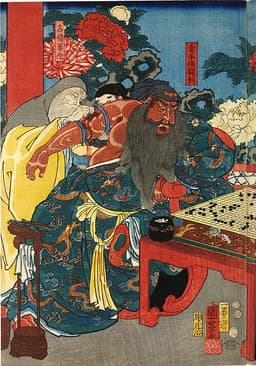
Guan Yu
General · Ancient
57.6Total
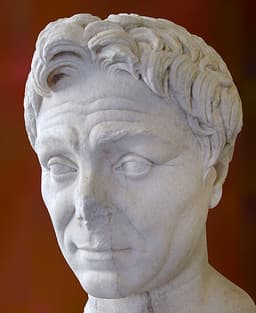
Pompey the Great
General · Ancient
57.9Total
Basic Information
Born
160
-106
Died
220
-48
Era
Ancient
Ancient
Nationality
China
Roman Republic
Occupation
General
General
Civilization
Eastern
Western
Score Comparison
Military (10%)
61.7
88.0
Political (20%)
35.0
68.0
Influence (20%)
72.0
55.0
Legacy (20%)
68.0
40.0
Leadership (15%)
40.9
48.8
Strategy (15%)
50.0
78.4
TOTAL
57.6
57.9
Guan Yu — Complete Timeline
200 AD
Battle of BomaWar
Guan Yu, serving under Cao Cao, killed the enemy general Yan Liang in battle at Boma. This act demonstrated his martial prowess and loyalty to Cao Cao at the time. The victory helped Cao Cao's forces in the campaign against Yuan Shao.
Three KingdomsBattleMartial Skill
Impact: regional
Departure from Cao Cao to Rejoin Liu BeiPolitical Action◆ Major
After learning of Liu Bei's whereabouts, Guan Yu left Cao Cao's service, crossing five passes and killing six generals to rejoin his sworn brother. This act of loyalty became legendary, symbolizing unwavering commitment to one's oath.
LoyaltyOathThree Kingdoms
Impact: regional
219 AD
Battle of FanchengWar◆ Major
Guan Yu led a campaign against Cao Cao's forces at Fancheng. He achieved initial success, flooding the city, but was ultimately defeated by reinforcements led by Xu Huang. This battle marked the turning point in his military career.
Three KingdomsSiegeTurning Point
Impact: regional
220 AD
Capture and Execution by Sun Quan's ForcesWar◆ Major
After the defeat at Fancheng, Guan Yu retreated but was ambushed and captured by Sun Quan's general L
ExecutionThree KingdomsRevenge
Impact: regionaltragic
Pompey the Great — Complete Timeline
67 BC
Clearing the Mediterranean of PiratesWar◆ Major
Pompey was granted extraordinary command under the Lex Gabinia to eliminate piracy in the Mediterranean. He divided the sea into sectors and within three months destroyed pirate fleets and captured their strongholds, restoring Roman trade routes and grain supply.
PiracyRoman NavyGrain Supply
Impact: regionalconstructive
66 BC
Conquest of the East (Third Mithridatic War)War◆ Major
Pompey took command against Mithridates VI of Pontus, defeating him and forcing his suicide. He then annexed Syria, captured Jerusalem, and established Roman provinces in the East. He organized the region into client kingdoms and provinces, extending Roman hegemony to the Euphrates.
Eastern ConquestRoman EmpireClient Kingdoms
Impact: global
60 BC
Formation of the First TriumviratePolitical Action◆ Major
Pompey, Caesar, and Crassus formed a political alliance to advance their individual ambitions. Pompey sought ratification of his Eastern settlements and land for his veterans. The pact dominated Roman politics for a decade until Crassus's death in 53 BC.
AllianceRoman PoliticsPower Sharing
Impact: global
48 BC
Battle of PharsalusWar
Pompey commanded the senatorial army against Caesar at Pharsalus in Greece. Despite numerical superiority, his forces were defeated by Caesar's veterans. Pompey fled to Egypt, expecting refuge, but was assassinated on the orders of the Egyptian court upon arrival.
Roman Civil WarDefeatDeath
Impact: globaltragic
Assassination in EgyptPolitical Action◆ Major
After his defeat at Pharsalus, Pompey landed in Egypt seeking refuge. On September 28, 48 BC, he was stabbed to death by former Roman soldiers serving the Egyptian king Ptolemy XIII, who hoped to curry favor with Caesar. His head was presented to Caesar.
AssassinationEgyptCivil War
Impact: regionaltragic
Expert Analysis
Origins
Guan Yu (160–220 CE) was born in Xie County, Hedong Commandery (modern Yuncheng, Shanxi). Little is known of his early life; he fled as a fugitive after committing a homicide and met Liu Bei and Zhang Fei in Zhuo Commandery. The three formed a sworn brotherhood, pledging to restore the Han dynasty. Guan Yu had no formal education but trained in martial arts, becoming a formidable warrior.
Pompey the Great (106–48 BCE) was born into a wealthy senatorial family in Picenum, Italy. His father, Gnaeus Pompeius Strabo, was a consul and military commander. Pompey inherited his father's client armies and political connections. He received military training from an early age and served under his father during the Social War (91–88 BCE). Unlike Guan Yu, Pompey was educated in rhetoric and law, typical for a Roman aristocrat.
Rise to Power
Guan Yu rose as a key general under Liu Bei during the late Han dynasty. His first major feat was killing Yan Liang at the Battle of Boma (200 CE), while serving under Cao Cao. He then left Cao Cao to rejoin Liu Bei, crossing five passes and killing six generals—a journey that became legendary. Guan Yu's loyalty solidified his reputation. He governed Jing Province after Liu Bei's conquest of Yi Province, but his authority was limited by competing claims.
Pompey's rise was meteoric. At age 23, he raised three legions from his father's veterans and joined Sulla against the Marians. After Sulla's victory, Pompey was sent to recover Sicily and Africa, where he defeated the Marians. Sulla hailed him as 'Magnus' (the Great). In 70 BCE, Pompey was elected consul without holding the prerequisite offices. He then cleared the Mediterranean of pirates (67 BCE) under the Lex Gabinia, dividing the sea into sectors and destroying pirate strongholds within three months. He conquered the East, defeating Mithridates VI, annexing Syria, and capturing Jerusalem (63 BCE).
Leadership & Governance
Guan Yu led by example, embodying martial valor and personal loyalty. He was known for his strict code of honor but lacked strategic flexibility. At Fancheng (219 CE), he achieved initial success by flooding the city, but failed to secure alliances or anticipate Sun Quan's betrayal. His governance in Jing Province was autocratic, alienating local officials and Sun Quan's allies. He scored 40.9 in leadership and 50.0 in strategy.
Pompey's leadership relied on delegation and organization. He structured his campaigns with efficient logistics, as seen in the pirate campaign where he divided the sea into sectors. Politically, he formed the First Triumvirate with Caesar and Crassus (60 BCE) to secure his Eastern settlements. However, his governance was often indecisive; after the Triumvirate's collapse, he failed to consolidate support in Rome. He scored 48.8 in leadership and 78.4 in strategy.
Triumph & Tragedy
Guan Yu's greatest triumph was the victory at Fancheng, where he captured Yu Jin and threatened Cao Cao's heartland. His posthumous deification as Guandi (God of War) made him a cultural icon, with temples across China. His tragedy was his downfall: after Sun Quan's betrayal, he was captured and executed at Linju (220 CE). His defeat cost Liu Bei Jing Province, a strategic loss that weakened Shu Han.
Pompey's triumphs include clearing the Mediterranean of pirates, conquering the East, and celebrating three triumphs. His political peak was the consulship with Crassus (70 BCE). His tragedy was the civil war against Caesar: despite numerical superiority at Pharsalus (48 BCE), his army was routed. He fled to Egypt, where he was assassinated on the orders of Ptolemy XIII. His death marked the end of the Republic.
Character & Destiny
Guan Yu's character was defined by unwavering loyalty but also hubris. He refused Cao Cao's bribes, valuing honor over pragmatism. His pride led him to underestimate Sun Quan and alienate allies like Mi Fang and Shi Ren. His fate was sealed by his inability to adapt to political realities.
Pompey was ambitious but cautious. He sought legitimacy through Senate approval but hesitated to seize power. His character was marked by indecision; after the Triumvirate, he drifted toward the Optimates, leading to confrontation with Caesar. His fate was determined by his failure to match Caesar's decisiveness.
Legacy
Guan Yu's legacy is immense in East Asia. He is venerated as a deity in Chinese folk religion, Buddhism, and Taoism. Temples dedicated to Guandi number in the thousands. His story is romanticized in the novel 'Romance of the Three Kingdoms'. His influence score is 72.0, reflecting cultural impact.
Pompey's legacy is more mixed. He expanded Rome's eastern provinces and established client kingdoms, but his political failures led to the Republic's fall. His name survives in historical texts and as a cautionary tale. His legacy score is 40.0, lower due to overshadowing by Caesar.
Conclusion
Pompey the Great scored 57.9 overall, narrowly beating Guan Yu's 57.6 (0.3 gap). Pompey's military (88.0) and strategy (78.4) far exceed Guan Yu's (61.7 and 50.0). However, Guan Yu's influence (72.0 vs 55.0) and legacy (68.0 vs 40.0) show greater cultural endurance. While Pompey's conquests reshaped the Roman world, his political legacy was eclipsed by Caesar. Guan Yu's deification created a lasting religious and cultural icon. In terms of historical impact, Guan Yu's influence on billions of people over millennia surpasses Pompey's. Thus, Guan Yu has greater overall impact.
Rankings
🥇
Pompey the GreatLeader
Mil: 88.0Pol: 68.0Inf: 55.0
57.9
🥈
Guan Yu
Mil: 61.7Pol: 35.0Inf: 72.0
57.6
+0.3 behind
How This Comparison Works
Algorithm
Each figure is scored on 6 dimensions (0—100 scale) based on structured historical data: Military (10%), Political (20%), Influence (20%), Legacy (20%), Leadership (15%), Strategy (15%). The weighted total produces the final ranking.
Data Sources
Scores are computed from structured sub-indicators in the database. Scale factors adjust for era (Ancient ×0.85, Modern ×1.0) and civilization size (Eastern ×1.05, Other ×0.80) to account for differences in population and military scale.
Maximum 3 Figures
Comparisons are limited to 2—3 figures to ensure readability and statistical meaningfulness.
Error Margins
±5 points per dimension — Sub-scores are derived from historical records with inherent uncertainty. Two figures within 5 points on a dimension should be considered roughly equivalent in that area.
Total Score Accuracy
±3 points overall — The weighted combination of 6 dimensions produces a total score with approximately ±3 points of uncertainty. Differences of less than 3 points are not statistically significant— the figures are effectively tied.
Known Limitations
- Historical records are incomplete and uneven across civilizations
- Figures from oral-tradition societies may be underrepresented
- Occupation labels can misclassify multi-role figures
- Scores measure capability and impact, not moral character
- Quantitative scoring is a comparison tool, not absolute truth
Capability Radar
Military (10%) — Battles & Warfare
Battles
65
85
Win Rate
55
90
Expansion
45
92
Political (20%) — Governance & Reform
Reform
10
65
Diplomacy
25
80
Economy
15
70
Influence (20%) — Cultural & Global Reach
Cultural
85
75
Global
70
75
Legacy (20%) — Historical Impact
Historical
80
85
Longevity
90
80
Leadership (15%) — Power & Stability
Tenure
30
85
Stability
20
60
Strategy (15%) — Tactics & Innovation
Strategy
50
88
Tactics
70
80
Reform
10
70
Similar Comparisons
Comments & Discussion
No comments yet. Be the first to share your thoughts!