Loading...
Pompey the Great vs Qin Shi Huang
Qin Shi Huang leads by 27.3 pts · 2 figures compared
…
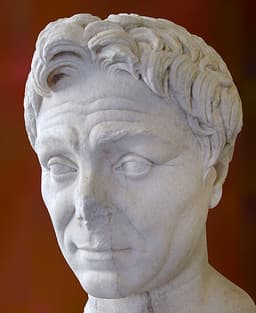
Pompey the Great
General · Ancient
57.9Total
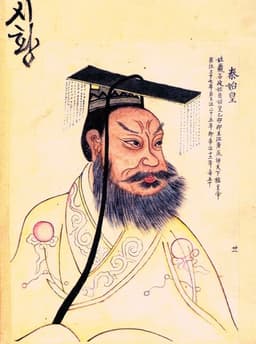
Qin Shi Huang
Emperor · Ancient
85.2Total
Basic Information
Born
-106
-259
Died
-48
-210
Era
Ancient
Ancient
Nationality
Roman Republic
China
Occupation
General
Emperor
Civilization
Western
Eastern
Score Comparison
Military (10%)
88.0
80.0
Political (20%)
68.0
90.0
Influence (20%)
55.0
85.0
Legacy (20%)
40.0
90.0
Leadership (15%)
48.8
78.0
Strategy (15%)
78.4
82.0
TOTAL
57.9
85.2
Pompey the Great — Complete Timeline
67 BC
Clearing the Mediterranean of PiratesWar◆ Major
Pompey was granted extraordinary command under the Lex Gabinia to eliminate piracy in the Mediterranean. He divided the sea into sectors and within three months destroyed pirate fleets and captured their strongholds, restoring Roman trade routes and grain supply.
PiracyRoman NavyGrain Supply
Impact: regionalconstructive
66 BC
Conquest of the East (Third Mithridatic War)War◆ Major
Pompey took command against Mithridates VI of Pontus, defeating him and forcing his suicide. He then annexed Syria, captured Jerusalem, and established Roman provinces in the East. He organized the region into client kingdoms and provinces, extending Roman hegemony to the Euphrates.
Eastern ConquestRoman EmpireClient Kingdoms
Impact: global
60 BC
Formation of the First TriumviratePolitical Action◆ Major
Pompey, Caesar, and Crassus formed a political alliance to advance their individual ambitions. Pompey sought ratification of his Eastern settlements and land for his veterans. The pact dominated Roman politics for a decade until Crassus's death in 53 BC.
AllianceRoman PoliticsPower Sharing
Impact: global
48 BC
Battle of PharsalusWar
Pompey commanded the senatorial army against Caesar at Pharsalus in Greece. Despite numerical superiority, his forces were defeated by Caesar's veterans. Pompey fled to Egypt, expecting refuge, but was assassinated on the orders of the Egyptian court upon arrival.
Roman Civil WarDefeatDeath
Impact: globaltragic
Assassination in EgyptPolitical Action◆ Major
After his defeat at Pharsalus, Pompey landed in Egypt seeking refuge. On September 28, 48 BC, he was stabbed to death by former Roman soldiers serving the Egyptian king Ptolemy XIII, who hoped to curry favor with Caesar. His head was presented to Caesar.
AssassinationEgyptCivil War
Impact: regionaltragic
Qin Shi Huang — Complete Timeline
246 BC
Construction of the Mausoleum and Terracotta ArmyOther◆ Major
Qin Shi Huang commissioned a vast mausoleum complex near Xi'an, guarded by thousands of life-sized terracotta soldiers, horses, and chariots. The project employed hundreds of thousands of workers and reflected his obsession with immortality and imperial power.
Impact: global
230 BC
Conquest of the Six Warring StatesWar
From 230 to 221 BCE, Ying Zheng led the Qin state in a series of campaigns that conquered the Han, Zhao, Wei, Chu, Yan, and Qi states. This unified China under a single ruler for the first time, ending the Warring States period.
Impact: global
221 BC
Standardization of Writing, Currency, and MeasurementsReform◆ Major
Qin Shi Huang ordered the standardization of Chinese script, currency, and weights and measures across the unified empire. This facilitated administration, trade, and cultural integration, laying a foundation for future dynasties.
Impact: globalconstructive
Proclamation of the Qin DynastyPolitical Action
After conquering the last independent state, Ying Zheng declared himself Shi Huangdi (First Emperor), founding the Qin Dynasty. He adopted a new title to signify his supreme authority and initiated centralized imperial rule.
Impact: global
214 BC
Initiation of the Great Wall ConstructionOther◆ Major
Qin Shi Huang ordered the connection and extension of existing northern fortifications to create a unified defensive wall against nomadic Xiongnu raids. This project involved massive conscripted labor and became the precursor to the later Great Wall.
Impact: regional
213 BC
Burning of Books and Burying of ScholarsPolitical Action◆ Major
On the advice of Li Si, Qin Shi Huang ordered the burning of historical records and philosophical texts not aligned with Legalist doctrine. He also had 460 Confucian scholars buried alive to suppress dissent and consolidate ideological control.
Impact: nationaldestructive
Expert Analysis
pompey-the-great-vs-qin-shi-huang
# The First Emperor and the Last Republican: Two Paths to Power, Two Ends of Fate
On a September morning in 48 BC, a fifty-eight-year-old Roman general stepped onto a small boat off the coast of Egypt. He had just lost the greatest battle of his life. He was fleeing the man who had once been his ally, his son-in-law, his rival. As the boat pushed away from the shore, his wife and son watched from the galley, perhaps already sensing what he refused to see. The men beside him drew their daggers. Gnaeus Pompeius Magnus, called Pompey the Great, died with his toga pulled over his head, a gesture of dignity that could not mask the indignity of his end.
One hundred and sixty-two years earlier and half a world away, a different kind of ruler had met a different kind of end. Qin Shi Huang, the First Emperor of China, died in 210 BC during an imperial tour of his domain. His body was placed in a carriage filled with salted fish to mask the smell of decay, and his death was kept secret for weeks while his younger son and a eunuch plotted to seize the throne. Both men died in transit. Both deaths were hidden. But one had built an empire that would define China for two millennia, while the other had presided over the final act of a republic that had already begun to die.
Origins
Ying Zheng was born in 259 BC, the son of a Qin prince who had been a hostage in the state of Zhao. His childhood was spent in the shadow of political intrigue, his father's absence a constant reminder of the brutal game of power among the Warring States. When he ascended the throne of Qin at thirteen, he inherited a state that had already been reformed by Legalist ministers into a ruthless war machine—centralized, efficient, and hungry for conquest. The boy king grew up surrounded by advisors who taught him that the world was a place of enemies, that mercy was weakness, and that unity could only be achieved through force.
Pompey, by contrast, was born in 106 BC into the dying days of the Roman Republic, a world that still believed in its traditions. His father, Gnaeus Pompeius Strabo, was a consul and a general, but also a man hated by the people for his cruelty. Young Pompey learned early that popularity was a currency more valuable than birth. He watched his father's reputation crumble and resolved to build his own on different foundations—on military glory, on the loyalty of his soldiers, and on the careful cultivation of public favor.
The difference in their origins was not merely personal. Qin Shi Huang grew up in a world of absolute monarchy, where the state was the extension of the ruler's will. Pompey grew up in a republic, where power was supposed to be shared among the Senate, the assemblies, and the magistrates. But by Pompey's time, that republic was already cracking under the weight of its own success. The question for both men was the same: how do you rule when the old order is breaking apart?
Rise to Power
Qin Shi Huang's path was direct. From 230 to 221 BC, he led a series of campaigns that systematically crushed the six other warring states. The conquest was methodical, brutal, and complete. When the last independent king surrendered, Ying Zheng did not simply declare himself king of a larger territory. He invented a new title—Shi Huangdi, the First Emperor—and with it, a new conception of what China could be. He was not just a conqueror. He was a revolutionary who intended to remake the world.
Pompey's rise was more complicated. He first made his name by raising three legions from his father's veterans and joining Sulla's civil war. By his mid-twenties, he had already shown the skill that would define his career: the ability to win battles and the instinct to claim credit for them. In 67 BC, the Senate granted him extraordinary command under the Lex Gabinia to clear the Mediterranean of pirates. He did so in three months. The next year, he took command of the war against Mithridates of Pontus and, with a combination of military pressure and diplomatic cunning, forced the king's suicide. He annexed Syria, captured Jerusalem, and established Roman control over the entire eastern Mediterranean. He was thirty-eight years old and had conquered more territory than any Roman since Alexander.
But here is the crucial difference. Qin Shi Huang conquered as a king, and his conquests became the foundation of a unified empire. Pompey conquered as a general of a republic, and his conquests became the foundation of his personal prestige—and the source of the envy and fear that would eventually destroy him.
Leadership and Governance
Qin Shi Huang's genius was not military but administrative. After unification, he standardized writing, currency, and weights and measures across his empire. He built roads, dug canals, and linked the northern fortifications into what would become the Great Wall. He imposed a single legal code and a single system of taxation. He was, in effect, inventing the very idea of a centralized Chinese state.
His methods were harsh. In 213 BC, on the advice of his chancellor Li Si, he ordered the burning of historical records and philosophical texts that did not align with Legalist doctrine. Scholars who resisted were buried alive. The First Emperor believed that unity required uniformity, that the past was a threat to the present, and that the only way to secure the future was to erase all alternatives.
Pompey's approach to governance was entirely different. He was not an administrator. He was a patron, a network-builder, a man who ruled through personal relationships rather than institutions. As the dominant figure in the First Triumvirate, formed in 60 BC with Caesar and Crassus, he secured land for his veterans and ratification of his eastern settlements. But he never sought to restructure the state. He wanted to be the first man in Rome, not the destroyer of Rome.
This was both his strength and his fatal weakness. He understood the old system and knew how to work within it. But he did not see that the old system was dying. While Qin Shi Huang was building a new world, Pompey was trying to preserve one that had already begun to rot.
Triumph and Tragedy
Qin Shi Huang's greatest triumph was the unification itself—the creation of an empire that, despite periodic collapses, would endure in its essential form for over two thousand years. His greatest failure was perhaps his obsession with immortality. He sent expeditions in search of the elixir of life, consumed mercury pills prescribed by alchemists, and built a mausoleum of staggering ambition, guarded by the thousands of life-sized terracotta soldiers that would not be discovered until 1974. He died at fifty, possibly from mercury poisoning, his quest for eternal life having achieved precisely the opposite.
Pompey's greatest triumph was his conquest of the East. He had pacified the Mediterranean, toppled kingdoms, and brought immense wealth to Rome. His triumph in 61 BC was the most spectacular the city had ever seen. But his tragedy came at Pharsalus in 48 BC. He commanded an army that outnumbered Caesar's, yet his forces were routed. The man who had never lost a battle lost the only one that mattered. He fled to Egypt, expecting refuge, and found assassins instead.
Character and Destiny
Qin Shi Huang was a man of absolute certainty. He believed in his own divinity, in the righteousness of his methods, and in the necessity of his rule. This certainty allowed him to do what no Chinese ruler had done before. But it also blinded him to the suffering he caused and the instability he created. The Qin Dynasty collapsed within three years of his death, consumed by the very forces of rebellion his harsh rule had bred.
Pompey was a man of calculation, not conviction. He wanted power, but he wanted legitimacy too. He wanted to be the greatest man in Rome, but he wanted Rome to remain what it was. He could not see that those two desires were incompatible. When Caesar crossed the Rubicon, Pompey chose to defend the Senate and the Republic. But he had spent his entire career undermining the very institutions he now claimed to protect. His tragedy was that he believed in a system he had already helped to destroy.
Legacy
Qin Shi Huang's legacy is written into the DNA of China. The standardization he imposed became the foundation of Chinese civilization. The Great Wall, though rebuilt many times, remains his symbol. The Terracotta Army has made him the most famous ancient Chinese ruler in the world. He is remembered as a tyrant and a unifier, a destroyer and a creator—a figure so immense that later Chinese rulers, even those who condemned his methods, could not escape his shadow.
Pompey's legacy is more ambiguous. His name survives in history books and in the title "Magnus," but he is remembered primarily as the man who lost to Caesar. His conquests were absorbed into the empire that Caesar's heir, Augustus, would create. He was the last great general of the Republic, but his greatness was measured by the old standards, and the old standards were already obsolete.
Conclusion
Standing at the edge of the Terracotta Army's pits, watching the silent ranks of soldiers stare out across two millennia, one feels the weight of Qin Shi Huang's ambition. He wanted to conquer death itself, and in a way, he succeeded. His name, his image, his vision of China—all of it survives. Pompey's bones lie somewhere unknown, perhaps scattered, perhaps lost. His name is known, but his face is gone, his voice silent.
The difference between these two men is not simply a matter of success and failure. It is a matter of vision. Qin Shi Huang saw a world that did not exist and built it. Pompey saw a world that was disappearing and tried to hold it together. One created the future. The other was crushed by it. And perhaps that is the hardest lesson of history: it belongs not to those who defend the old order, but to those who dare to imagine a new one, no matter the cost.
Rankings
🥇
Qin Shi HuangLeader
Mil: 80.0Pol: 90.0Inf: 85.0
85.2
🥈
Pompey the Great
Mil: 88.0Pol: 68.0Inf: 55.0
57.9
+27.3 behind
How This Comparison Works
Algorithm
Each figure is scored on 6 dimensions (0—100 scale) based on structured historical data: Military (10%), Political (20%), Influence (20%), Legacy (20%), Leadership (15%), Strategy (15%). The weighted total produces the final ranking.
Data Sources
Scores are computed from structured sub-indicators in the database. Scale factors adjust for era (Ancient ×0.85, Modern ×1.0) and civilization size (Eastern ×1.05, Other ×0.80) to account for differences in population and military scale.
Maximum 3 Figures
Comparisons are limited to 2—3 figures to ensure readability and statistical meaningfulness.
Error Margins
±5 points per dimension — Sub-scores are derived from historical records with inherent uncertainty. Two figures within 5 points on a dimension should be considered roughly equivalent in that area.
Total Score Accuracy
±3 points overall — The weighted combination of 6 dimensions produces a total score with approximately ±3 points of uncertainty. Differences of less than 3 points are not statistically significant— the figures are effectively tied.
Known Limitations
- Historical records are incomplete and uneven across civilizations
- Figures from oral-tradition societies may be underrepresented
- Occupation labels can misclassify multi-role figures
- Scores measure capability and impact, not moral character
- Quantitative scoring is a comparison tool, not absolute truth
Capability Radar
Military (10%) — Battles & Warfare
Battles
85
85
Win Rate
90
90
Expansion
92
90
Political (20%) — Governance & Reform
Reform
65
95
Diplomacy
80
75
Economy
70
90
Influence (20%) — Cultural & Global Reach
Cultural
75
95
Global
75
85
Legacy (20%) — Historical Impact
Historical
85
95
Longevity
80
95
Leadership (15%) — Power & Stability
Tenure
85
70
Stability
60
65
Strategy (15%) — Tactics & Innovation
Strategy
88
85
Tactics
80
80
Reform
70
95
Similar Comparisons
Comments & Discussion
铁血史官6/17/2026
拿庞培和始皇比?简直是拿土丘比泰山。庞培打过几场胜仗就自封"伟大",最后连家人都保护不了,被手下捅死在沙滩上。始皇呢?书同文车同轨,统一度量衡,修建万里长城。庞培死了罗马照样乱,始皇死了大秦铁律还在影响后世。别被西方中心论骗了,论治国能耐,庞培连给始皇提鞋都不配!
数据控6/17/2026
数据不会撒谎:秦始皇统一六国死了几百万人,秦朝才撑了15年就崩了。庞培平定了地中海海盗、征服东方,虽然最后输给凯撒,但他维持了共和国30年的稳定。一个是靠屠杀堆起来的短命帝国,一个是虽败犹荣的共和国守护者。别被"第一皇帝"的名头骗了,论实际治理时长和人口伤亡比,庞培完胜。
古风学者6/17/2026
你们都被"伟大"二字蒙蔽了。庞培之死是罗马共和国最后的尊严——他的姿势本身就是一场悲剧。而秦始皇呢?徐福
RealmWatcher6/17/2026
Classics Scholar: What a lazy comparison! Pompey embodied the dying Republican virtue of *dignitas*—honor in defeat. He died with his toga over his head, a final act of Roman ritual. Qin Shi Huang terrified his subjects with legalist tyranny, obsessed over immortality elixirs, and died alone in a fish-filled carriage. These represent two civilizations' core values: Rome's acceptance of mortality versus China's desperate denial. Death reveals character. Pompey faced his end with aristocratic comp
MathAndMyth6/17/2026
Archaic Strategist: This comparison is like pitting a tsunami against a wildfire—both destructive, but totally different in scope. Qin Shi Huang unified warring states with iron discipline, creating a centralized bureaucracy that lasted millennia. Pompey? He was a brilliant general who couldn't navigate politics, dying like a coward on a beach. Give me the emperor who built the Great Wall over a republican who couldn't hold his alliance. Military history isn't about popularity contests. Give me
MedievalMind6/17/2026
Data Skeptic: I call statistical bias on this whole setup. You're cherry-picking Pompey's death while ignoring his 30-year military record—three triumphs, command of the Mediterranean against pirates, and conquest of the East. Qin's "empire" collapsed 15 years after his death. So who really built lasting power? Let's compare body counts: Qin's wars killed millions. Pompey's campaigns were relatively precise. If we're judging on efficiency and legacy metrics, give me the Roman who actually stabil