Loading...
Gongsun Zan vs Xiang Yu
Xiang Yu leads by 6.8 pts · 2 figures compared
…
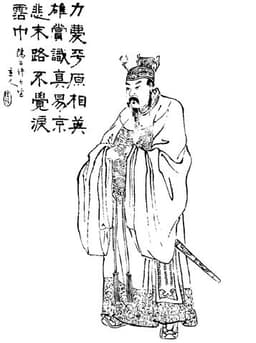
Gongsun Zan
General · Ancient
45.5Total
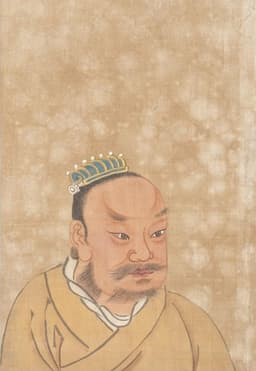
Xiang Yu
General · Ancient
52.3Total
Basic Information
Born
151
-232
Died
199
-202
Era
Ancient
Ancient
Nationality
China
China
Occupation
General
General
Civilization
Eastern
Eastern
Score Comparison
Military (10%)
61.7
77.5
Political (20%)
32.1
35.0
Influence (20%)
50.2
61.0
Legacy (20%)
43.3
52.0
Leadership (15%)
33.5
30.0
Strategy (15%)
60.7
65.4
TOTAL
45.5
52.3
Gongsun Zan — Complete Timeline
191 AD
Battle of JieqiaoWar◆ Major
Gongsun Zan fought Yuan Shao at the Battle of Jieqiao. Despite using his elite White Horse Cavalry, Gongsun Zan was defeated by Yuan Shao's infantry tactics, marking a turning point in their rivalry for control of northern China.
Three KingdomsBattleDefeat
Impact: regionaldestructive
199 AD
Siege of YijingWar◆ Major
Gongsun Zan was besieged in his fortress at Yijing by Yuan Shao's forces. After a prolonged siege, Gongsun Zan committed suicide by setting his palace on fire, ending his rule over the northeast.
Three KingdomsSiegeDeath
Impact: regionaltragic
Xiang Yu — Complete Timeline
207 BC
Battle of JuluWar◆ Major
Xiang Yu led a rebel army against the Qin dynasty at Julu. After ordering his troops to destroy their cooking vessels and boats, they defeated a larger Qin force, breaking the siege and establishing Xiang Yu as the leading rebel commander.
Qin rebellionBattleTurning point
Impact: regional
206 BC
Feast at Hong GatePolitical Action◆ Major
Xiang Yu hosted a banquet for Liu Bang at Hong Gate. During the feast, Xiang Yu's advisor Fan Zeng attempted to have Liu Bang assassinated, but Xiang Yu hesitated. Liu Bang escaped, and the rivalry between the two leaders intensified.
Political intrigueRivalryChu-Han Contention
Impact: regional
202 BC
Battle of GaixiaWar◆ Major
Liu Bang's Han forces surrounded Xiang Yu's army at Gaixia. After a night of psychological warfare with Han soldiers singing Chu songs, Xiang Yu's troops lost morale. Xiang Yu broke out but was cornered, leading to his suicide.
Chu-Han ContentionBattleDefeat
Impact: regionaltragic
Expert Analysis
Origins
Gongsun Zan (c. 160–199 CE) was born into a noble family in Liaoxi commandery during the Eastern Han dynasty. His family had a history of military service, but his mother was of low status, which initially hindered his prospects. He received a formal education and served as a minor official before joining the army. His early career was marked by campaigns against the Wuhuan and Xianbei nomads, where he earned a reputation for bravery and effectiveness.
Xiang Yu (232–202 BCE) was born in Xiaxiang, Chu, during the late Qin dynasty. He was of aristocratic Chu lineage, being a descendant of the Chu general Xiang Yan. He was raised by his uncle Xiang Liang after his father's early death. Xiang Yu was educated in calligraphy and swordsmanship but preferred military strategy. He was reportedly tall and strong, capable of lifting a bronze tripod. His early life was shaped by the fall of Chu and the Qin unification.
Rise to Power
Gongsun Zan rose to prominence as a frontier commander fighting the nomadic tribes. His major breakthrough came in 191 CE when he defeated the Yellow Turban remnants, gaining control over parts of You Province. He formed a powerful cavalry force known as the White Horse Cavalry, named after his white horse. By 192 CE, he controlled much of the northeast, but his ambitions clashed with Yuan Shao, the dominant warlord in the central plains. The turning point was the Battle of Jieqiao in 192 CE.
Xiang Yu's rise began with the rebellion against Qin. In 209 BCE, he joined his uncle Xiang Liang in uprising. After Xiang Liang's death, Xiang Yu took command. His defining moment was the Battle of Julu in 207 BCE, where he defeated a massive Qin army by ordering his troops to destroy their cooking vessels and boats, signaling a fight to the death. This victory made him the de facto leader of the rebel forces. He then entered Xianyang, executed the Qin emperor, and declared himself Hegemon-King of Western Chu in 206 BCE.
Leadership & Governance
Gongsun Zan governed his territories with a focus on military strength. He relied heavily on his cavalry and built a network of fortresses, including Yijing. He was known for harsh discipline and distrust of civilian officials. His governance score of 32.1 reflects his inability to form lasting alliances or administer effectively. He alienated potential allies like Liu Bei and failed to secure support from other warlords.
Xiang Yu's leadership was charismatic but flawed. He rewarded his soldiers generously but was prone to cruelty, such as massacring the Qin imperial family and burying alive 200,000 surrendered Qin troops. He appointed kings to the former Qin territories but mishandled the distribution, causing resentment. His political score of 35.0 indicates his weakness in statecraft. He failed to secure the loyalty of key figures like Han Xin and Chen Ping, who defected to Liu Bang.
Triumph & Tragedy
Gongsun Zan's greatest success was his early military campaigns against the nomads and his establishment of the White Horse Cavalry, which gave him a reputation as a formidable frontier commander. His greatest failure was the Battle of Jieqiao (192 CE), where his cavalry was defeated by Yuan Shao's infantry using crossbows and shields. He was later besieged at Yijing in 199 CE. After a long siege, he committed suicide by setting his palace ablaze, having lost all support.
Xiang Yu's triumph was the Battle of Julu, where he destroyed the main Qin army and ended Qin rule. He also won a series of victories against Liu Bang's forces early in the Chu-Han Contention. His tragedy came at the Battle of Gaixia (202 BCE), where his army was surrounded by Liu Bang's Han forces. After a night of psychological warfare, his troops deserted. He broke out but was cornered at the Wu River, where he famously committed suicide rather than face capture.
Character & Destiny
Gongsun Zan was proud, stubborn, and distrustful. He often alienated his subordinates and failed to adapt his tactics. His reliance on cavalry proved a weakness against disciplined infantry. His character led to his isolation, and his suicide reflected his inability to accept defeat.
Xiang Yu was heroic but impulsive, often acting on emotion rather than strategy. He spared Liu Bang at the Feast at Hong Gate, a decision that cost him the war. He was known for his personal bravery but lacked the diplomatic and political skills to consolidate power. His downfall was sealed by his inability to delegate and his harsh treatment of conquered populations.
Legacy
Gongsun Zan is remembered as a minor warlord of the Three Kingdoms period, notable for his cavalry but ultimately a failure. His military score of 61.7 reflects his tactical skill but strategic shortcomings. He is often overshadowed by Yuan Shao and Cao Cao.
Xiang Yu has a much larger legacy. He is celebrated in Chinese history as a tragic hero, the subject of operas and poems. His military score of 77.5 and influence score of 61.0 reflect his impact. However, his political failures (35.0) meant he lost to Liu Bang, who founded the Han dynasty. Xiang Yu's legacy is that of a brilliant general who could not win a war.
Conclusion
Xiang Yu had greater impact than Gongsun Zan. His total score of 52.3 vs 45.5 reflects his higher military and influence ratings. While both were ultimately defeated, Xiang Yu's actions directly ended the Qin dynasty and shaped the rise of the Han. Gongsun Zan's defeat at Jieqiao and suicide at Yijing were minor events in the broader Three Kingdoms conflict. Xiang Yu's story continues to resonate in Chinese culture, while Gongsun Zan is largely forgotten. Xiang Yu's military brilliance, despite his political flaws, secures his place as a more significant historical figure.
Rankings
🥇
Xiang YuLeader
Mil: 77.5Pol: 35.0Inf: 61.0
52.3
🥈
Gongsun Zan
Mil: 61.7Pol: 32.1Inf: 50.2
45.5
+6.8 behind
How This Comparison Works
Algorithm
Each figure is scored on 6 dimensions (0—100 scale) based on structured historical data: Military (10%), Political (20%), Influence (20%), Legacy (20%), Leadership (15%), Strategy (15%). The weighted total produces the final ranking.
Data Sources
Scores are computed from structured sub-indicators in the database. Scale factors adjust for era (Ancient ×0.85, Modern ×1.0) and civilization size (Eastern ×1.05, Other ×0.80) to account for differences in population and military scale.
Maximum 3 Figures
Comparisons are limited to 2—3 figures to ensure readability and statistical meaningfulness.
Error Margins
±5 points per dimension — Sub-scores are derived from historical records with inherent uncertainty. Two figures within 5 points on a dimension should be considered roughly equivalent in that area.
Total Score Accuracy
±3 points overall — The weighted combination of 6 dimensions produces a total score with approximately ±3 points of uncertainty. Differences of less than 3 points are not statistically significant— the figures are effectively tied.
Known Limitations
- Historical records are incomplete and uneven across civilizations
- Figures from oral-tradition societies may be underrepresented
- Occupation labels can misclassify multi-role figures
- Scores measure capability and impact, not moral character
- Quantitative scoring is a comparison tool, not absolute truth
Capability Radar
Military (10%) — Battles & Warfare
Battles
55
85
Win Rate
45
75
Expansion
55
80
Political (20%) — Governance & Reform
Reform
20
10
Diplomacy
25
30
Economy
30
15
Influence (20%) — Cultural & Global Reach
Cultural
35
70
Global
15
55
Legacy (20%) — Historical Impact
Historical
40
75
Longevity
30
70
Leadership (15%) — Power & Stability
Tenure
40
40
Stability
25
20
Strategy (15%) — Tactics & Innovation
Strategy
50
70
Tactics
60
90
Reform
40
20
Similar Comparisons
Comments & Discussion
No comments yet. Be the first to share your thoughts!