Loading...
Gongsun Zan vs Napoleon Bonaparte
Napoleon Bonaparte leads by 25.4 pts · 2 figures compared
…
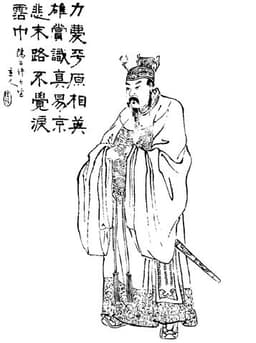
Gongsun Zan
General · Ancient
45.5Total

Napoleon Bonaparte
General · Modern
70.9Total
Basic Information
Born
151
1769
Died
199
1821
Era
Ancient
Modern
Nationality
China
France
Occupation
General
General
Civilization
Eastern
Western
Score Comparison
Military (10%)
61.7
94.0
Political (20%)
32.1
72.0
Influence (20%)
50.2
40.0
Legacy (20%)
43.3
80.0
Leadership (15%)
33.5
78.0
Strategy (15%)
60.7
90.0
TOTAL
45.5
70.9
Gongsun Zan — Complete Timeline
191 AD
Battle of JieqiaoWar◆ Major
Gongsun Zan fought Yuan Shao at the Battle of Jieqiao. Despite using his elite White Horse Cavalry, Gongsun Zan was defeated by Yuan Shao's infantry tactics, marking a turning point in their rivalry for control of northern China.
Three KingdomsBattleDefeat
Impact: regionaldestructive
199 AD
Siege of YijingWar◆ Major
Gongsun Zan was besieged in his fortress at Yijing by Yuan Shao's forces. After a prolonged siege, Gongsun Zan committed suicide by setting his palace on fire, ending his rule over the northeast.
Three KingdomsSiegeDeath
Impact: regionaltragic
Napoleon Bonaparte — Complete Timeline
1799 AD
Coup of 18 BrumaireOther◆ Major
Napoleon Bonaparte, with support from his brother Lucien and key political figures, overthrew the Directory in a bloodless coup. He established the Consulate with himself as First Consul, effectively becoming the ruler of France. This event ended the French Revolution's most unstable period.
French RevolutionCoupRise to Power
Impact: regional
1804 AD
Promulgation of the Napoleonic CodeOther◆ Major
Napoleon enacted the Civil Code of the French, known as the Napoleonic Code, a comprehensive set of laws that replaced the fragmented feudal legal systems. The code established legal equality, protected property rights, and secularized law. It became the basis for legal systems in many European and world countries.
Legal ReformNapoleonic CodeCivil Law
Impact: globalconstructive
1805 AD
Battle of AusterlitzWar◆ Major
Napoleon's Grande Arm
Napoleonic WarsBattleDecisive Victory
Impact: global
1812 AD
Invasion of RussiaWar◆ Major
Napoleon led the Grande Arm
Napoleonic WarsInvasionDisaster
Impact: globaldestructive
1815 AD
Battle of WaterlooWar◆ Major
Napoleon's French army was defeated by the combined forces of the Duke of Wellington's Anglo-Allied army and Gebhard Leberecht von Bl
Napoleonic WarsBattleFinal Defeat
Impact: globaldestructive
Expert Analysis
gongsun-zan-vs-napoleon-bonaparte
# The White Horse and the Eagle
In the winter of 199, a warlord in northern China sat alone in a burning tower, watching his life’s work turn to ash. He had once commanded the finest cavalry in the land, their white horses a terror on the battlefield. Now, with enemies at the gate and his own hand trembling, he cut down his wife and daughters, then turned the blade on himself. Half a world away and sixteen centuries later, another general stood on a hill in Belgium, watching his Imperial Guard break and flee. Napoleon Bonaparte, master of Europe, would spend his final years on a remote Atlantic island, dictating memoirs to a dwindling circle of loyalists. Both men fell from impossible heights, but their arcs could not have been more different—one a shooting star that lit up an entire continent, the other a candle snuffed out in a forgotten corner of the Han Empire.
Origins
Napoleon Bonaparte was born in 1769 on Corsica, an island that had just passed from Genoese to French control. His family was minor nobility, poor enough that young Napoleon wore patched clothes to military school, where his classmates mocked his accent. But France in the 1780s was a world in revolution, a society tearing down old hierarchies and rewarding talent over birth. The Corsican outsider found his opportunity in chaos.
Gongsun Zan, born in 151, came from a very different world. The Han Dynasty was ancient, its bureaucracy ancient, its social order rigid. His family had served as officials for generations, but Gongsun Zan was no aristocrat—he rose through the ranks of the frontier army, earning a reputation fighting northern nomads. His world was one of clan loyalty, regional power, and a crumbling imperial center. Where Napoleon would inherit a revolution, Gongsun Zan inherited a dying empire.
Rise to Power
Napoleon’s ascent was meteoric. In 1793, at just twenty-four, he drove British forces from Toulon and was promoted to brigadier general. By 1796, he commanded the Army of Italy, a ragtag force he turned into a conquering machine. His Italian campaign of 1796-1797 stunned Europe: in a year, he defeated five Austrian armies and dictated peace terms. He was not yet thirty.
Gongsun Zan’s rise was slower, harder. In 191, he met his great rival Yuan Shao at the Battle of Jieqiao. His White Horse Cavalry—elite horsemen mounted on white steeds—charged with terrifying force. But Yuan Shao’s infantry held, and the battle ended in a bloody stalemate. Where Napoleon’s victories multiplied, Gongsun Zan’s stalled. The difference was not courage but context: Napoleon faced fragmented coalitions he could divide and conquer; Gongsun Zan faced a single, well-organized rival who matched him in resources.
Leadership & Governance
Napoleon was a genius of organization and law. His Napoleonic Code of 1804 standardized French law, abolished feudal privileges, and spread across Europe. He reformed education, built roads, and created a centralized state that outlasted his empire. On the battlefield, his speed and adaptability were unmatched: at Austerlitz in 1805, he crushed a larger Austro-Russian army by feigning weakness and striking at the decisive moment.
Gongsun Zan was a fighter, not a builder. He ruled the northeast through terror and loyalty, his power based on his cavalry’s reputation. He built the fortress of Yijing as an impregnable redoubt, but he never created institutions or alliances that could survive his death. His political score of 39.7 reflects this: he was a warlord in an age that demanded statesmen. Napoleon, with a political score of 75, understood that military power alone could not sustain an empire.
Triumph & Tragedy
Napoleon’s greatest triumph was Austerlitz, the “Battle of the Three Emperors,” where his tactical brilliance reached its peak. His greatest tragedy was the invasion of Russia in 1812—a colossal miscalculation that cost him half a million men. He never recovered. By 1814, he was exiled to Elba. He escaped, rallied France, and fell again at Waterloo in 1815, his last gamble failing by a margin of hours.
Gongsun Zan’s triumph was his rise itself—a frontier soldier who became a major power in the chaos of the late Han. His tragedy was the Siege of Yijing in 199. Trapped by Yuan Shao, he sent a desperate message to his son: “Raise a fire and come to my aid.” The fire was lit, but no help came. In his final act, he killed his family and himself—a warrior’s end, but a small one, recorded in a few lines of history.
Character & Destiny
Napoleon was driven by boundless ambition and a belief in his own destiny. “Impossible is a word to be found only in the dictionary of fools,” he said. That confidence built an empire but also destroyed it—he could not stop, could not compromise. Gongsun Zan was proud and paranoid, trusting only his cavalry and his walls. When those failed, he had nothing left.
Their personalities mirrored their fates. Napoleon’s grand vision required a grand stage, and he found it in revolutionary France. Gongsun Zan’s narrow vision limited him to a shrinking corner of a dying dynasty. One expanded his world; the other was consumed by it.
Legacy
Napoleon’s legacy is immense. His legal code, his administrative reforms, his model of meritocracy—these shaped modern Europe. He is remembered as both tyrant and reformer, conqueror and lawgiver. His total score of 82.4 places him among history’s titans.
Gongsun Zan’s legacy is faint, a footnote in the long decline of Han. His White Horse Cavalry became legend, but he is remembered mainly as a cautionary tale—a man who could fight but not govern, who built a fortress but not a future. His total score of 57.5 reflects this: competent, but not transformative.
Conclusion
Standing at the edge of their respective worlds, both men faced the same question: how do you hold power when everything around you is burning? Napoleon answered by trying to set the world on fire himself, and for a decade, he succeeded. Gongsun Zan answered by building walls, and when the fire came to him, he chose to burn with them. One changed the world; the other was changed by it. The difference was not just talent or luck, but the times they lived in—and the size of the stage they dared to command.
Rankings
🥇
Napoleon BonaparteLeader
Mil: 94.0Pol: 72.0Inf: 40.0
70.9
🥈
Gongsun Zan
Mil: 61.7Pol: 32.1Inf: 50.2
45.5
+25.4 behind
How This Comparison Works
Algorithm
Each figure is scored on 6 dimensions (0—100 scale) based on structured historical data: Military (10%), Political (20%), Influence (20%), Legacy (20%), Leadership (15%), Strategy (15%). The weighted total produces the final ranking.
Data Sources
Scores are computed from structured sub-indicators in the database. Scale factors adjust for era (Ancient ×0.85, Modern ×1.0) and civilization size (Eastern ×1.05, Other ×0.80) to account for differences in population and military scale.
Maximum 3 Figures
Comparisons are limited to 2—3 figures to ensure readability and statistical meaningfulness.
Error Margins
±5 points per dimension — Sub-scores are derived from historical records with inherent uncertainty. Two figures within 5 points on a dimension should be considered roughly equivalent in that area.
Total Score Accuracy
±3 points overall — The weighted combination of 6 dimensions produces a total score with approximately ±3 points of uncertainty. Differences of less than 3 points are not statistically significant— the figures are effectively tied.
Known Limitations
- Historical records are incomplete and uneven across civilizations
- Figures from oral-tradition societies may be underrepresented
- Occupation labels can misclassify multi-role figures
- Scores measure capability and impact, not moral character
- Quantitative scoring is a comparison tool, not absolute truth
Capability Radar
Military (10%) — Battles & Warfare
Battles
55
95
Win Rate
45
90
Expansion
55
95
Political (20%) — Governance & Reform
Reform
20
95
Diplomacy
25
80
Economy
30
85
Influence (20%) — Cultural & Global Reach
Cultural
35
85
Global
15
90
Legacy (20%) — Historical Impact
Historical
40
95
Longevity
30
90
Leadership (15%) — Power & Stability
Tenure
40
85
Stability
25
70
Strategy (15%) — Tactics & Innovation
Strategy
50
95
Tactics
60
98
Reform
40
92
Similar Comparisons
Comments & Discussion
白馬義從6/17/2026
這比較簡直是關公戰秦瓊!公孫瓚的「白馬義從」可是專門對抗烏桓、鮮卑的精銳騎兵,靠的是騎射戰術與地形熟悉。拿破崙的胸甲騎兵衝鋒威震歐洲,但面對的敵人是奧地利、俄國等農耕帝國。拿兩個跨時代、跨文化的將領比,歷史學家看著都尷尬。不如說公孫瓚是北方邊境的一匹孤狼,拿破崙則是歐洲的開國皇帝。
NapoleonSkeptic6/17/2026
Two men, two falls—but only one made history books. Gongsun Zan died in a suicide pyre with his family, remembered mostly by Chinese dynastic annals and niche wargamers. Napoleon? His name still commands book deals, movies, and memes. That’s not just scale—it’s about timing and propaganda. Bonaparte had the 19th-century press and Romantic-era mythmakers working for him. Gongsun had Liu Pei and Cao Cao rewriting his story. Context matters more than cavalry count.
The Mapmaker6/17/2026
The key difference isn’t morale or strategy—it’s geography. Gongsun Zan fought in the fractured, over-mountain north of late Han China, where control of a few border prefectures could sustain a warlord for decades. Napoleon fought across a continent with unified armies, coalitions, and supply lines across Poland, Italy, Egypt. Gongsun’s cavalry was deadly in a 50-mile radius; Napoleon’s empire collapsed when his reach exceeded his logistics. Scale changes everything—and Gongsun never had to feed
帝王之殇6/17/2026
一個自焚在幽州城樓,一個囚死在聖赫勒拿島。公孫瓚的墓誌只寫「白馬將軍」,拿破崙的墓在巴黎榮軍院,每天被遊客圍觀。這差別是文明級別的:漢末諸侯爭的是「天下」這個抽象概念,而拿破崙爭的是實實在在的歐陸霸權。公孫瓚至死都是個邊將,拿破崙卻做到了加冕稱帝。最諷刺的是,公孫瓚的女兒們先死於父手,拿破崙的皇后卻求來子嗣繼承王位。歷史對敗者從不公平。