Loading...
Gongsun Zan vs Hannibal Barca
Hannibal Barca leads by 11.7 pts · 2 figures compared
…
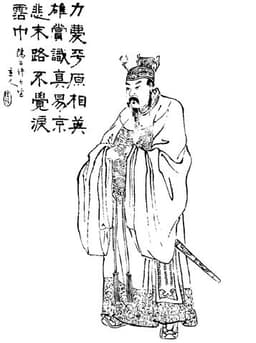
Gongsun Zan
General · Ancient
45.5Total
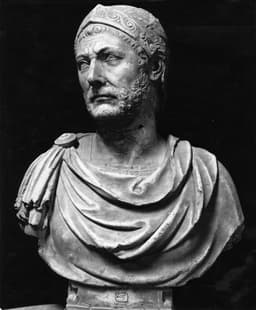
Hannibal Barca
General · Ancient
57.2Total
Basic Information
Born
151
-247
Died
199
-183
Era
Ancient
Ancient
Nationality
China
Carthage
Occupation
General
General
Civilization
Eastern
Middle Eastern
Score Comparison
Military (10%)
61.7
92.0
Political (20%)
32.1
35.0
Influence (20%)
50.2
55.0
Legacy (20%)
43.3
40.0
Leadership (15%)
33.5
68.0
Strategy (15%)
60.7
88.0
TOTAL
45.5
57.2
Gongsun Zan — Complete Timeline
191 AD
Battle of JieqiaoWar◆ Major
Gongsun Zan fought Yuan Shao at the Battle of Jieqiao. Despite using his elite White Horse Cavalry, Gongsun Zan was defeated by Yuan Shao's infantry tactics, marking a turning point in their rivalry for control of northern China.
Three KingdomsBattleDefeat
Impact: regionaldestructive
199 AD
Siege of YijingWar◆ Major
Gongsun Zan was besieged in his fortress at Yijing by Yuan Shao's forces. After a prolonged siege, Gongsun Zan committed suicide by setting his palace on fire, ending his rule over the northeast.
Three KingdomsSiegeDeath
Impact: regionaltragic
Hannibal Barca — Complete Timeline
219 BC
Siege of SaguntumWar◆ Major
Hannibal besieged and captured Saguntum, a Roman ally in Spain. This act violated a treaty with Rome and directly triggered the Second Punic War. The eight-month siege demonstrated Hannibal's determination and military skill, but also his willingness to provoke conflict.
SiegeProvocationWar Start
Impact: regionaldestructive
218 BC
Crossing of the AlpsWar
Hannibal led a Carthaginian army, including war elephants, from Spain across the Alps into Italy. The journey was arduous, with significant losses from terrain, weather, and attacks by mountain tribes. This strategic maneuver surprised the Romans and brought the war to their homeland.
Military CampaignAlpsStrategy
Impact: global
216 BC
Battle of CannaeWar
Hannibal's outnumbered army encircled and annihilated a larger Roman force at Cannae in southern Italy. The Romans suffered up to 70,000 casualties in one day. This battle is considered a masterpiece of tactical encirclement and remains studied in military academies.
BattleTacticsRoman Defeat
Impact: globaldestructive
202 BC
Battle of ZamaWar
Hannibal was defeated by Scipio Africanus at Zama in North Africa. Scipio's tactics neutralized Hannibal's elephants and cavalry, leading to a decisive Roman victory. This battle ended the Second Punic War and forced Carthage to accept harsh peace terms.
BattleDefeatEnd of War
Impact: globaltragic
183 BC
Exile and DeathPolitical Action◆ Major
After the war, Hannibal became a politician in Carthage, but Roman pressure forced him into exile. He fled to the Seleucid court, then to Bithynia. When the Romans demanded his extradition, he committed suicide by poison, ending his life as a fugitive.
ExileSuicideRoman Pursuit
Impact: regionaltragic
Expert Analysis
Origins
Gongsun Zan was born in 184 AD in Liaoning, northeastern China, into a powerful frontier family. His father served as a commandery governor, and Gongsun Zan grew up among the cavalry elite of the steppe. He was educated in Confucian classics but excelled in horsemanship and archery. His early career began as a minor official under the Han dynasty, but he quickly shifted to military roles, leading border defense against the Wuhuan and Xianbei nomads.
Hannibal Barca was born in 247 BC in Carthage (modern Tunisia) into the aristocratic Barcid family. His father, Hamilcar Barca, was a leading general in the First Punic War. Hannibal grew up in a military camp in Spain, where he was trained in warfare and politics. He accompanied his father on campaigns and swore an oath to never be a friend of Rome. His education included Greek military tactics and Numidian cavalry techniques.
Rise to Power
Gongsun Zan rose to prominence during the collapse of the Han dynasty. In 189 AD, he was appointed as the Grand Administrator of Liaodong, commanding frontier forces. He built a reputation as a fierce fighter against the Wuhuan, using his elite White Horse Cavalry—a unit of mounted archers on white horses. In 191 AD, he defeated the Yellow Turban rebels at the Battle of Dongguang, killing tens of thousands. This victory made him a major warlord in the north, controlling four commanderies. He then turned against Yuan Shao, the dominant power in the central plains, triggering a series of conflicts.
Hannibal rose to power after the death of his brother-in-law Hasdrubal in 221 BC. The Carthaginian army in Spain elected him as their commander. He immediately launched campaigns to consolidate Carthaginian control over Iberia. In 219 BC, he besieged Saguntum, a Roman ally, sparking the Second Punic War. His crossing of the Alps in 218 BC with an army of 50,000 infantry, 9,000 cavalry, and 37 war elephants was a logistical masterpiece, though he lost many men and most elephants. He arrived in Italy and won a series of battles, culminating in Cannae.
Leadership & Governance
Gongsun Zan was a charismatic but brutal leader. He maintained strict discipline and rewarded loyalty generously. However, he lacked political acumen: he alienated local gentry by taxing them heavily and executing officials he suspected of disloyalty. His governance was militaristic, with little effort to build civil administration. He relied on his personal prestige and the fear his cavalry inspired. During the Siege of Yijing (199 AD), he built a massive fortress with high walls and towers, but his isolationist strategy failed.
Hannibal was a strategic genius who led by example. He shared hardships with his soldiers, slept on the ground, and ate the same food. He integrated diverse troops—Libyans, Iberians, Gauls, and Numidians—into a cohesive army. Politically, he struggled: after the war, he attempted to reform Carthage's government, reducing the power of the oligarchy, but Roman pressure forced him into exile. His governance in Italy relied on alliances with disaffected Italian cities, but these often proved unreliable.
Triumph & Tragedy
Gongsun Zan's greatest triumph was his victory over the Yellow Turbans at Dongguang in 191 AD, which secured his control over the northeast. He also defeated Yuan Shao's general Qu Yi at the Battle of Jieqiao in 192 AD, though he later lost the decisive phase. His greatest tragedy was his defeat at Jieqiao (192 AD) and subsequent siege at Yijing (199 AD). His elite White Horse Cavalry, once feared, was decimated by Yuan Shao's crossbowmen and infantry. He committed suicide in his burning palace, ending his dynasty.
Hannibal's greatest triumph was the Battle of Cannae (216 BC), where he encircled and destroyed a Roman army of 86,000 men, killing up to 70,000. This remains a classic example of double envelopment. His greatest tragedy was the Battle of Zama (202 BC), where his veteran army was defeated by Scipio Africanus. Hannibal's elephants were panicked by Roman tactics, and his cavalry was outflanked. He escaped but Carthage was forced to accept harsh peace terms. Later, he fled into exile and eventually poisoned himself in Bithynia in 183 BC to avoid capture.
Character & Destiny
Gongsun Zan was proud and ruthless. He once said, "I would rather be a white horse than a slave." His reliance on cavalry and personal bravery made him a formidable field commander, but his inflexibility and paranoia led to his downfall. He executed his own advisors when they advised caution. Historians note that his military score of 61.7 reflects his tactical competence but strategic rigidity. His political score of 32.1 shows his inability to build lasting alliances.
Hannibal was cunning and patient, known for his psychological warfare. He used spies, feigned retreats, and ambushes masterfully. His decision to cross the Alps demonstrated audacity. However, his failure to besiege Rome after Cannae is often criticized. His strategic score of 88.0 is among the highest in history, but his political score of 35.0 limited his ability to secure lasting gains. His character—unyielding hatred of Rome—shaped his destiny of perpetual conflict.
Legacy
Gongsun Zan's legacy is minor: he is remembered as a colorful warlord of the Three Kingdoms era, but his impact on Chinese history is limited. His White Horse Cavalry became a legendary unit, but his defeat accelerated Yuan Shao's rise, which in turn was crushed by Cao Cao. In the Romance of the Three Kingdoms, he is a minor character. His total score of 45.5 reflects his localized influence.
Hannibal's legacy is immense. He is studied in military academies worldwide as a master of tactics. The Battle of Cannae is a byword for tactical perfection. He forced Rome to adapt its military system, leading to the professionalization of the Roman army. His crossing of the Alps remains one of history's greatest feats. However, his total score of 57.2 is dragged down by low political and legacy scores (40.0), because Carthage was destroyed and his strategies were not systematically recorded.
Conclusion
Hannibal Barca had a far greater impact than Gongsun Zan. Hannibal's military score of 92.0 dwarfs Gongsun Zan's 61.7, and his strategic innovations influenced warfare for millennia. While Gongsun Zan was a competent regional warlord, his defeat ended his influence. Hannibal's campaigns reshaped the Mediterranean world, leading to Rome's dominance. In the end, Hannibal's total score of 57.2 versus 45.5 reflects his broader but incomplete success. The Carthaginian general's ability to challenge Rome for 15 years in their own backyard earns him the edge.
Rankings
🥇
Hannibal BarcaLeader
Mil: 92.0Pol: 35.0Inf: 55.0
57.2
🥈
Gongsun Zan
Mil: 61.7Pol: 32.1Inf: 50.2
45.5
+11.7 behind
How This Comparison Works
Algorithm
Each figure is scored on 6 dimensions (0—100 scale) based on structured historical data: Military (10%), Political (20%), Influence (20%), Legacy (20%), Leadership (15%), Strategy (15%). The weighted total produces the final ranking.
Data Sources
Scores are computed from structured sub-indicators in the database. Scale factors adjust for era (Ancient ×0.85, Modern ×1.0) and civilization size (Eastern ×1.05, Other ×0.80) to account for differences in population and military scale.
Maximum 3 Figures
Comparisons are limited to 2—3 figures to ensure readability and statistical meaningfulness.
Error Margins
±5 points per dimension — Sub-scores are derived from historical records with inherent uncertainty. Two figures within 5 points on a dimension should be considered roughly equivalent in that area.
Total Score Accuracy
±3 points overall — The weighted combination of 6 dimensions produces a total score with approximately ±3 points of uncertainty. Differences of less than 3 points are not statistically significant— the figures are effectively tied.
Known Limitations
- Historical records are incomplete and uneven across civilizations
- Figures from oral-tradition societies may be underrepresented
- Occupation labels can misclassify multi-role figures
- Scores measure capability and impact, not moral character
- Quantitative scoring is a comparison tool, not absolute truth
Capability Radar
Military (10%) — Battles & Warfare
Battles
55
95
Win Rate
45
92
Expansion
55
85
Political (20%) — Governance & Reform
Reform
20
30
Diplomacy
25
60
Economy
30
35
Influence (20%) — Cultural & Global Reach
Cultural
35
85
Global
15
85
Legacy (20%) — Historical Impact
Historical
40
95
Longevity
30
90
Leadership (15%) — Power & Stability
Tenure
40
40
Stability
25
25
Strategy (15%) — Tactics & Innovation
Strategy
50
95
Tactics
60
99
Reform
40
70
Similar Comparisons
Comments & Discussion
No comments yet. Be the first to share your thoughts!