Loading...
Gojong of Korea vs Pedro I of Brazil
Gojong of Korea leads by 0.9 pts · 2 figures compared
…
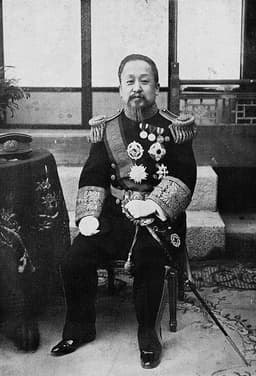
Gojong of Korea
Emperor · Modern
55.5Total
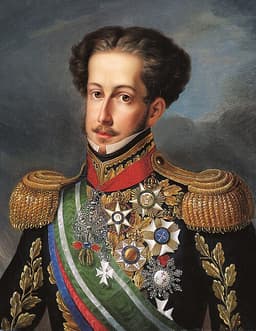
Pedro I of Brazil
Emperor · Modern
54.6Total
Basic Information
Born
1852
1798
Died
1919
1834
Era
Modern
Modern
Nationality
Korea
Brazil
Occupation
Emperor
Emperor
Civilization
Eastern
Western
Score Comparison
Military (10%)
43.3
55.0
Political (20%)
68.0
62.7
Influence (20%)
60.0
59.0
Legacy (20%)
50.0
50.0
Leadership (15%)
53.2
53.2
Strategy (15%)
54.6
45.0
TOTAL
55.5
54.6
Gojong of Korea — Complete Timeline
1897 AD
Proclamation of the Korean EmpirePolitical Action
Gojong declared Korea an empire, assuming the title of Emperor. This was an attempt to assert Korea's sovereignty and equal status with China and Japan, and to modernize the state. The move was partly a response to the assassination of his wife, Empress Myeongseong.
Korean EmpireSovereigntyModernization
Impact: nationalconstructive
1905 AD
Signing of the Japan-Korea Treaty of 1905Political Action
Under Japanese pressure, Gojong's government signed the Eulsa Treaty, making Korea a Japanese protectorate. Gojong did not sign the treaty himself and later attempted to appeal to international powers, but the treaty stripped Korea of its diplomatic sovereignty.
TreatyJapanese ProtectorateLoss of Sovereignty
Impact: nationaltragic
1907 AD
Forced Abdication by JapanPolitical Action◆ Major
Japanese authorities forced Gojong to abdicate in favor of his son, Sunjong, after Gojong sent a secret envoy to the Hague Peace Conference to protest Japanese control. The abdication was part of Japan's consolidation of power over Korea.
AbdicationJapanese ImperialismHague Secret Envoy Affair
Impact: nationaltragic
1919 AD
Death and Funeral of GojongOther
Gojong died suddenly, with rumors of poisoning by Japanese agents. His funeral on March 1, 1919, became a catalyst for the March First Movement, a massive nationwide protest against Japanese rule. The movement was brutally suppressed but galvanized Korean independence efforts.
DeathMarch First MovementKorean Independence
Impact: nationaltragic
Pedro I of Brazil — Complete Timeline
1822 AD
Declaration of Independence of BrazilPolitical Action
Pedro I declared Brazil's independence from Portugal on September 7, 1822, at the Ipiranga River in S
Impact: globalprogressive
Coronation as Emperor of BrazilPolitical Action◆ Major
Pedro I was crowned Emperor of Brazil on December 1, 1822, in Rio de Janeiro. The coronation formalized the new imperial government, with Pedro I as constitutional monarch, though he retained significant executive powers.
Impact: nationalconstructive
1823 AD
War of Independence of BrazilWar◆ Major
Pedro I led Brazilian forces against Portuguese loyalists in the War of Independence. Key battles occurred in Bahia, Maranh
Impact: national
Dissolution of the Constituent AssemblyPolitical Action◆ Major
Pedro I dissolved the Constituent Assembly after conflicts over the constitution's limits on imperial power. He then imposed the 1824 Constitution, which granted the emperor extensive powers, including the Moderating Power, centralizing authority.
Impact: nationaldestructive
1831 AD
Abdication of the Brazilian ThronePolitical Action
Pedro I abdicated the Brazilian throne in favor of his five-year-old son Pedro II on April 7, 1831. He returned to Portugal to claim the Portuguese throne, leaving Brazil under a regency until his son came of age.
Impact: national
Expert Analysis
Pedro I of Brazil vs Gojong of Korea
# The Emperor’s Last Stand
On a warm September morning in 1822, a young prince stood at the banks of the Ipiranga River in São Paulo, tore the Portuguese insignia from his uniform, and shouted a cry that would echo through centuries: “Independence or death!” Pedro I of Brazil had launched a new nation. Less than a century later, on a cold March day in 1919, the funeral procession of Emperor Gojong of Korea wound through the streets of Seoul, igniting a wave of protests that would become the March First Movement for independence from Japan. One emperor created a nation with a shout; the other’s death became a nation’s cry. Why did these two modern emperors, both struggling against imperial powers, meet such different fates?
Origins
Pedro I was born into the chaos of the Napoleonic Wars. In 1807, the Portuguese royal family fled Lisbon just ahead of French troops, sailing to Brazil under British escort. Young Pedro grew up in Rio de Janeiro, a prince in exile who learned to ride horses before he could read Portuguese. His father, King João VI, treated him as a regent-in-training, and by the age of twenty-two, Pedro was acting ruler of Brazil while his father remained in Portugal. He was impulsive, charismatic, and deeply aware that Brazil’s future hung on his decisions.
Gojong came to power under far more constrained circumstances. Born in 1852, he was crowned king of Joseon at age twelve, but real power rested with his father, the regent Heungseon Daewongun. Korea had spent centuries as the “Hermit Kingdom,” deliberately isolating itself from Western influence. By the time Gojong reached adulthood, that isolation was crumbling. Chinese, Russian, and Japanese powers pressed against Korea’s borders like waves against a seawall. Unlike Pedro, who inherited a colony ready for independence, Gojong inherited a kingdom that had never been colonized but was about to be devoured.
Rise to Power
Pedro’s path to power was forged in a single, decisive moment. When the Portuguese parliament demanded his return and attempted to reduce Brazil to colonial status, he refused. On September 7, 1822, his declaration of independence was not the beginning of a long struggle but the culmination of a crisis that had been building for months. Within weeks, he was crowned Emperor of Brazil on December 1, 1822, in Rio de Janeiro. The War of Independence that followed—fought mainly in Bahia, Maranhão, and Pará—was a consolidation, not a revolution. Pedro led Brazilian forces against Portuguese loyalists, and by 1823, the new empire was a reality.
Gojong’s rise was more gradual and far more treacherous. He proclaimed the Korean Empire in 1897, taking the title of Emperor to assert Korea’s equal status with China and Japan. This was a defensive move, an attempt to modernize and strengthen Korea before foreign powers swallowed it whole. He built a Western-style palace, introduced electric lights, and sent students abroad. But his strategy was doomed by timing and geography. Japan had already defeated China in 1895 and Russia in 1905. Korea was the prize, and Gojong was a king trying to build a sandcastle as the tide rose.
Leadership & Governance
Pedro ruled with a mix of charisma and authoritarianism that suited his era. He dissolved the Constituent Assembly in 1823 after conflicts over the constitution’s limits on imperial power, then imposed his own version. This was not democratic—Brazil would not become a republic for another sixty-six years—but it was effective. He centralized authority, maintained the institution of slavery, and kept the landed elite on his side. His military leadership was competent, though not brilliant; his political wisdom was pragmatic, though not visionary. What he had was timing: he seized the moment when Portugal was weak and Brazil was ready.
Gojong, by contrast, was a reformer without an army and a diplomat without allies. His political score of 85 reflects genuine skill in navigating between great powers, but his strategy score of 30 reveals a man who could not outmaneuver Japan. He tried everything: sending secret envoys to the Hague Peace Conference in 1907, appealing to the United States and Russia, even offering Korea as a neutral buffer state. Nothing worked. Japan forced the Eulsa Treaty in 1905, making Korea a protectorate, and when Gojong resisted, they forced his abdication in 1907 in favor of his son Sunjong. Pedro could dissolve a parliament; Gojong could not dissolve an empire.
Triumph & Tragedy
Pedro’s greatest moment was his independence declaration—a triumph of will over circumstance. His greatest failure came in 1831, when he abdicated the Brazilian throne after years of conflict with the legislature, economic crisis, and a failed war with Argentina over Uruguay. He left his five-year-old son, Pedro II, to inherit a nation still fragile. But even this abdication had a strategic logic: he returned to Portugal to fight for his daughter’s claim to the Portuguese throne, a dynastic move that kept his family in power on both sides of the Atlantic.
Gojong’s tragedy was total. His triumph was symbolic: the Korean Empire he proclaimed lasted just thirteen years, but it established a precedent of Korean sovereignty that would outlast Japanese colonization. His forced abdication in 1907 was a humiliation, but his death in 1919—rumored to be poisoning by Japanese agents—became the spark for the March First Movement, a nationwide protest that, though brutally suppressed, kept Korean independence alive in global consciousness. Pedro died in 1834 at age thirty-five, mourned but not martyred. Gojong died at sixty-seven, a martyr without a throne.
Character & Destiny
Pedro was a man of action, not reflection. “Tell the people that I am staying,” he reportedly said when Portuguese authorities demanded his return. He was impulsive, womanizing, and sometimes cruel, but he had the courage of a gambler. His personality shaped his decisions: he declared independence because he could not imagine bowing to Lisbon; he abdicated because he could not bear the constraints of constitutional rule. He was built for revolution, not governance.
Gojong was a man of endurance, not action. He watched his kingdom slip away piece by piece, signing treaties under duress, sending envoys who never arrived, building a modern palace that became a museum of lost hopes. His personality was shaped by Confucian restraint and the weight of a dynasty that had ruled for five centuries. He could not imagine abandoning his throne, so he stayed until Japan forced him out. His tragedy was not that he lacked courage, but that courage alone could not stop an empire.
Legacy
Pedro I is remembered as the father of Brazilian independence, a flawed but essential founder. His statue stands in São Paulo, his shout is taught in every school. His legacy score of 70 reflects a man who created a nation but left it unstable—a nation that would not become a stable republic for generations.
Gojong’s legacy is more complex. He is remembered as the last true king of Joseon, the first emperor of a failed empire, the catalyst for Korean independence. His funeral sparked a movement that eventually led to Korean liberation in 1945. His legacy score of 69.5 is almost identical to Pedro’s, but for opposite reasons: Pedro created something that lasted; Gojong’s failure inspired something that would succeed.
Conclusion
The difference between these two emperors is not one of skill or courage, but of timing and geography. Pedro declared independence at the perfect moment, when Portugal was weak and Brazil was ready. Gojong tried to do the same, but he faced Japan at the height of its imperial power, and Korea was simply too small and too close. One emperor shouted and a nation was born; the other died and a nation was reborn. History remembers both, but it remembers Pedro for what he did and Gojong for what he suffered. In the end, the difference between triumph and tragedy is often just a matter of where you stand when the tide comes in.
Rankings
🥇
Gojong of KoreaLeader
Mil: 43.3Pol: 68.0Inf: 60.0
55.5
🥈
Pedro I of Brazil
Mil: 55.0Pol: 62.7Inf: 59.0
54.6
+0.9 behind
How This Comparison Works
Algorithm
Each figure is scored on 6 dimensions (0—100 scale) based on structured historical data: Military (10%), Political (20%), Influence (20%), Legacy (20%), Leadership (15%), Strategy (15%). The weighted total produces the final ranking.
Data Sources
Scores are computed from structured sub-indicators in the database. Scale factors adjust for era (Ancient ×0.85, Modern ×1.0) and civilization size (Eastern ×1.05, Other ×0.80) to account for differences in population and military scale.
Maximum 3 Figures
Comparisons are limited to 2—3 figures to ensure readability and statistical meaningfulness.
Error Margins
±5 points per dimension — Sub-scores are derived from historical records with inherent uncertainty. Two figures within 5 points on a dimension should be considered roughly equivalent in that area.
Total Score Accuracy
±3 points overall — The weighted combination of 6 dimensions produces a total score with approximately ±3 points of uncertainty. Differences of less than 3 points are not statistically significant— the figures are effectively tied.
Known Limitations
- Historical records are incomplete and uneven across civilizations
- Figures from oral-tradition societies may be underrepresented
- Occupation labels can misclassify multi-role figures
- Scores measure capability and impact, not moral character
- Quantitative scoring is a comparison tool, not absolute truth
Capability Radar
Military (10%) — Battles & Warfare
Battles
5
35
Win Rate
5
40
Expansion
5
30
Political (20%) — Governance & Reform
Reform
40
45
Diplomacy
30
50
Economy
30
30
Influence (20%) — Cultural & Global Reach
Cultural
50
40
Global
40
45
Legacy (20%) — Historical Impact
Historical
60
55
Longevity
40
50
Leadership (15%) — Power & Stability
Tenure
60
55
Stability
20
25
Strategy (15%) — Tactics & Innovation
Strategy
5
35
Tactics
5
30
Reform
10
20
Similar Comparisons
Comments & Discussion
Jaguar of Ipiranga6/16/2026
Pedro I’s “Independence or Death” wasn’t genius—it was a rich brat’s tantrum that worked because Britain had already neutered Portugal. Pedro inherited a massive, cohesive territory thanks to colonial bureaucracy and British naval protection. Gojong’s Korea? Squeezed between China, Russia, and Japan with no allies. Comparing them is like comparing a trust-fund prince who buys a company to a man fighting off a corporate raid with bare hands. Don’t romanticize luck.
数据毒舌6/16/2026
数据不会骗人:1822年巴西人均GDP约680国际元,朝鲜1895年仅510。出生就赢在起跑线上的是佩德罗一世,不是高宗。大君掌权时朝鲜被清日赔款抽干,巴西可没被葡萄牙剪过羊毛。吹什么“独立呼声”?那是靠奴隶经济撑起的泡沫。你问我哪个更惨?高宗手上连像样的税吏都凑不齐,还比什么?
Gladiator of Decay6/16/2026
Gojong’s tragedy wasn’t his failure—it was his success in delaying the inevitable. He modernized Korea’s telegraph, postal system, and even sent students to Japan and the US, yet Western powers and Japan had already carved up the region. Pedro I shouted and got an empire; Gojong whispered reforms and got a Japanese annexation in 1910. History isn’t about who shouts louder—it’s about who controls the sea routes. Korea had none.
古书狂6/16/2026
别被“独立呼声”骗了。佩德罗一世喊的是脱离葡萄牙,高宗守的是五百年朝鲜礼制。你看高宗祭祀用的《常礼举要》,连穿衣都要分九等,这种内阁制度能应对明治维新?根本是拿茶碗接炮弹。佩德罗砍掉葡萄牙徽章就是改革,高宗连剃短发都要藏着掖着。不是对手不同,是脑子停在了崇祯时代。
Redcoat’s Ghost6/16/2026
Pedro I won because Portugal was already a toothless lion after 1808—the royal family literally fled to Brazil. Gojong faced Imperial Japan in its Meiji prime, backed by a modern navy and railway guns. The Portuguese couldn’t even blockade Rio; Japan sank the Russian Baltic Fleet. Calling this a “comparison” is like comparing a toddler’s push to a weightlifter’s bench press. Context is everything—Gojong had none.