Loading...
Gnaeus Julius Agricola vs Napoleon Bonaparte
Napoleon Bonaparte leads by 18.4 pts · 2 figures compared
…
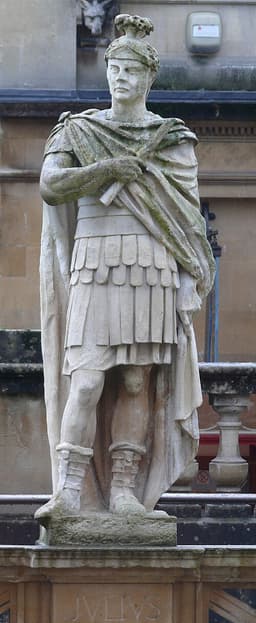
Gnaeus Julius Agricola
General · Ancient
52.5Total

Napoleon Bonaparte
General · Modern
70.9Total
Basic Information
Born
40
1769
Died
93
1821
Era
Ancient
Modern
Nationality
Roman Empire
France
Occupation
General
General
Civilization
Western
Western
Score Comparison
Military (10%)
72.0
94.0
Political (20%)
35.1
72.0
Influence (20%)
54.1
40.0
Legacy (20%)
47.5
80.0
Leadership (15%)
61.1
78.0
Strategy (15%)
55.0
90.0
TOTAL
52.5
70.9
Gnaeus Julius Agricola — Complete Timeline
74 AD
Governorship of AquitaniaPolitical Action
Agricola was appointed governor of Aquitania, a Roman province in Gaul. He administered the province for three years, focusing on legal and financial reforms. This post prepared him for higher command and demonstrated his administrative skills.
Provincial AdministrationGaulCareer
Impact: regionalconstructive
78 AD
Conquest of the OrdovicesWar◆ Major
As governor of Britain, Agricola launched a campaign against the Ordovices tribe in northern Wales. He defeated them and then conquered the island of Anglesey, a stronghold of Druids and resistance, completing the Roman subjugation of Wales.
Roman BritainWalesMilitary Campaign
Impact: regional
83 AD
Battle of Mons GraupiusWar◆ Major
Agricola's army defeated a large Caledonian force led by Calgacus at Mons Graupius in northern Scotland. The Roman victory was decisive, but Agricola did not pursue the defeated tribes into the Highlands, leaving the conquest of Scotland incomplete.
BattleScotlandCaledonia
Impact: regional
Circumnavigation of BritainOther
Agricola ordered a Roman fleet to circumnavigate Britain, proving it was an island. The fleet sailed around the northern coast, encountering the Orkney Islands. This exploration provided valuable geographical knowledge and demonstrated Roman naval power.
ExplorationNavyGeography
Impact: regionalconstructive
Napoleon Bonaparte — Complete Timeline
1799 AD
Coup of 18 BrumaireOther◆ Major
Napoleon Bonaparte, with support from his brother Lucien and key political figures, overthrew the Directory in a bloodless coup. He established the Consulate with himself as First Consul, effectively becoming the ruler of France. This event ended the French Revolution's most unstable period.
French RevolutionCoupRise to Power
Impact: regional
1804 AD
Promulgation of the Napoleonic CodeOther◆ Major
Napoleon enacted the Civil Code of the French, known as the Napoleonic Code, a comprehensive set of laws that replaced the fragmented feudal legal systems. The code established legal equality, protected property rights, and secularized law. It became the basis for legal systems in many European and world countries.
Legal ReformNapoleonic CodeCivil Law
Impact: globalconstructive
1805 AD
Battle of AusterlitzWar◆ Major
Napoleon's Grande Arm
Napoleonic WarsBattleDecisive Victory
Impact: global
1812 AD
Invasion of RussiaWar◆ Major
Napoleon led the Grande Arm
Napoleonic WarsInvasionDisaster
Impact: globaldestructive
1815 AD
Battle of WaterlooWar◆ Major
Napoleon's French army was defeated by the combined forces of the Duke of Wellington's Anglo-Allied army and Gebhard Leberecht von Bl
Napoleonic WarsBattleFinal Defeat
Impact: globaldestructive
Expert Analysis
gnaeus-julius-agricola-vs-napoleon-bonaparte
# The Conqueror and the Governor: Napoleon and Agricola
On a misty morning in June 1815, Napoleon Bonaparte watched his Imperial Guard march toward the ridge of Mont-Saint-Jean, their bearskin caps bobbing above the smoke of battle. Thirty-two years earlier, on a rain-soaked hill in northern Scotland, Gnaeus Julius Agricola stood before his legions as they faced a wall of Caledonian warriors. Both men commanded armies that day. Both won their battles. But while Agricola’s victory at Mons Graupius would fade into the footnotes of empire, Napoleon’s defeat at Waterloo would echo through centuries. Why did one man’s conquests crumble while the other’s became the bedrock of a civilization?
Origins
Napoleon Bonaparte was born in 1769 on the Mediterranean island of Corsica, a territory only recently annexed by France. His family belonged to the minor nobility—poor, proud, and resentful of French rule. As a boy, he spoke Italian-accented French and was mocked by his classmates at military school. This outsider’s fury would fuel his ambition. He emerged from the chaos of the French Revolution, a world where a young artillery officer could rise to the top in a matter of years.
Agricola, by contrast, was born in 40 AD to a senatorial family in the Roman province of Gallia Narbonensis. His father was executed by Emperor Caligula, but the family’s connections remained intact. Agricola grew up in the shadow of the Roman Republic’s long decline into autocracy. He learned to serve the system, not to overthrow it. Where Napoleon saw a world to be remade, Agricola saw an empire to be expanded and administered.
Rise to Power
Napoleon’s ascent was a rocket’s trajectory. In 1793, at age twenty-four, he drove British forces from the port of Toulon. By 1796, he was commanding the Army of Italy, where his lightning campaigns humiliated the Austrians. In 1799, he seized power in a coup d’état, becoming First Consul of France. By 1804, he crowned himself Emperor. His rise was built on war, charisma, and the willingness to break every rule.
Agricola’s path was slower and steadier. He served as a military tribune in Britain, then as quaestor in Asia, then as tribune of the plebs in Rome. In 74 AD, he was appointed governor of Aquitania, a Roman province in Gaul, where he administered for three years with competence and restraint. His great opportunity came in 77 AD, when Emperor Vespasian appointed him governor of Britain. Agricola did not seize power; he was given it. He was a servant of the state, not its master.
Leadership and Governance
Napoleon ruled through sheer force of will. He reorganized France into a centralized bureaucracy, established the Bank of France, and, most enduringly, codified the Napoleonic Code—a legal system that enshrined equality before the law, property rights, and secular governance. On the battlefield, he was a genius of maneuver, winning victories at Austerlitz, Jena, and Wagram through speed, deception, and the devastating use of artillery. His military score of 94.0 reflects this brilliance, as does his strategic rating of 93.0.
Agricola governed differently. In Britain, he combined conquest with civilization. He built roads, forts, and towns. He encouraged the native Britons to adopt Roman customs—Latin, togas, baths—believing that culture was a more lasting weapon than the sword. In 78 AD, he crushed the Ordovices tribe in northern Wales, but he also made peace where possible. At Mons Graupius in 83 AD, his army of 20,000 defeated a Caledonian force of 30,000, but he did not pursue the defeated tribes into the highlands. He knew the limits of empire.
Napoleon’s political score of 75.0 and leadership rating of 80.0 suggest a man who could inspire but not always administer wisely. Agricola’s political score of 52.2 reflects his lesser influence on the imperial stage, but his leadership rating of 72.6 shows a commander who understood that conquest without consolidation is wasted.
Triumph and Tragedy
Napoleon’s greatest moment came in 1805 at Austerlitz, where he destroyed a combined Russian-Austrian army and forced the Holy Roman Empire to dissolve. His worst failure followed in 1812, when he invaded Russia with 600,000 men and returned with fewer than 100,000. The disaster broke his aura of invincibility. Exiled to Elba in 1814, he escaped in 1815, only to be defeated at Waterloo. He died in 1821 on the remote island of Saint Helena, a prisoner of the British.
Agricola’s triumph was Mons Graupius, where his son-in-law Tacitus recorded the Caledonian leader Calgacus’s famous speech: “They make a desert and call it peace.” But Agricola’s tragedy was quieter. After his victory, he was recalled to Rome by Emperor Domitian, who feared his popularity. Agricola accepted the recall without protest. He died in 93 AD, possibly poisoned by the emperor’s agents. His life ended not in exile and defeat, but in quiet submission to a system he could not change.
Character and Destiny
Napoleon was driven by an insatiable hunger for glory. “I love power,” he once said, “as a musician loves his violin.” He could not stop. He rejected all offers of compromise, refused to share authority, and believed in his own star until the end. His personality—brilliant, arrogant, restless—shaped his destiny. He rose because he dared everything; he fell because he dared too much.
Agricola was a different creature. Tacitus described him as a man who “chose to serve rather than to shine.” He was competent, loyal, and moderate. He did not seek supreme power, and he did not overreach. His personality—patient, dutiful, cautious—kept him from greatness but also from catastrophe. He died in his bed, surrounded by his family, while Napoleon died alone, his empire in ashes.
Legacy
Napoleon’s legacy is immense and contradictory. His Napoleonic Code influenced legal systems across Europe and the world. His campaigns reshaped national borders and inspired nationalist movements. His total score of 82.4 and influence rating of 82.0 reflect a man who changed history, for better and for worse.
Agricola’s legacy is quieter but more solid. His conquests secured Roman Britain for another three centuries. His policies of Romanization laid the foundations for British civilization. His total score of 67.3 and legacy rating of 66.7 suggest a man who built, not for himself, but for an empire that would outlast him.
Conclusion
Napoleon and Agricola stand at opposite ends of the imperial experience. One was a meteor, burning bright and vanishing. The other was a cornerstone, unseen but essential. In the end, Napoleon’s story teaches us about the cost of ambition without limits. Agricola’s story reminds us that lasting power is built not on conquest alone, but on the patient work of administration and integration. Both were conquerors. Only one understood that the true art of empire is not winning battles, but building a world that endures.
Rankings
🥇
Napoleon BonaparteLeader
Mil: 94.0Pol: 72.0Inf: 40.0
70.9
🥈
Gnaeus Julius Agricola
Mil: 72.0Pol: 35.1Inf: 54.1
52.5
+18.4 behind
How This Comparison Works
Algorithm
Each figure is scored on 6 dimensions (0—100 scale) based on structured historical data: Military (10%), Political (20%), Influence (20%), Legacy (20%), Leadership (15%), Strategy (15%). The weighted total produces the final ranking.
Data Sources
Scores are computed from structured sub-indicators in the database. Scale factors adjust for era (Ancient ×0.85, Modern ×1.0) and civilization size (Eastern ×1.05, Other ×0.80) to account for differences in population and military scale.
Maximum 3 Figures
Comparisons are limited to 2—3 figures to ensure readability and statistical meaningfulness.
Error Margins
±5 points per dimension — Sub-scores are derived from historical records with inherent uncertainty. Two figures within 5 points on a dimension should be considered roughly equivalent in that area.
Total Score Accuracy
±3 points overall — The weighted combination of 6 dimensions produces a total score with approximately ±3 points of uncertainty. Differences of less than 3 points are not statistically significant— the figures are effectively tied.
Known Limitations
- Historical records are incomplete and uneven across civilizations
- Figures from oral-tradition societies may be underrepresented
- Occupation labels can misclassify multi-role figures
- Scores measure capability and impact, not moral character
- Quantitative scoring is a comparison tool, not absolute truth
Capability Radar
Military (10%) — Battles & Warfare
Battles
65
95
Win Rate
70
90
Expansion
75
95
Political (20%) — Governance & Reform
Reform
45
95
Diplomacy
50
80
Economy
40
85
Influence (20%) — Cultural & Global Reach
Cultural
35
85
Global
30
90
Legacy (20%) — Historical Impact
Historical
55
95
Longevity
40
90
Leadership (15%) — Power & Stability
Tenure
55
85
Stability
50
70
Strategy (15%) — Tactics & Innovation
Strategy
72
95
Tactics
68
98
Reform
30
92
Similar Comparisons
Comments & Discussion
BarbatusLegionis6/17/2026
Agricola wasn't just a governor; he was Rome's organizational genius. Mons Graupius saw 8,000 auxiliaries crush 30,000 Caledonians with minimal casualties—a ratio Napoleon never matched. While Bonaparte burned through France's youth from Moscow to Waterloo, Agricola built roads, forts, and a provincial capital at Eboracum that stood for centuries. Nap's conquests fueled his ego; Agricola's outlasted him by 300 years. Tactics fade; infrastructure endures. Give me a builder over a burner any day.
CorsicanVulcan6/17/2026
拿破仑输了滑铁卢,不是输在兵力,是输在后勤。Agricola在苏格兰修了Gask Ridge防线,从Forth到Clyde的堡垒链,保证补给线不垮;拿破仑呢?俄国一役,30万法军冻死饿死,连靴子都穿不上。他还说"士气决定一切"——可没有面包,士气能顶屁用?Agricola懂治理,拿破仑只懂打仗。征服容易,维持才是真本事。
MonsGraupius6/17/2026
Yeah, but Agricola fought painted barbarians with sharpened sticks; Napoleon faced coalition armies with artillery and nationalistic fervor. At Austerlitz, he destroyed two empires in one day—that's a scale Agricola couldn't fathom. Mons Graupius was a skirmish with maybe 10,000 Caledonians, half of whom fled. Waterloo saw 200,000 men slug it out. And Agricola's Roman machine was centuries old; Napoleon built his grand army from scratch in a decade. Context matters. Don't flatten history.
罗马影子6/17/2026
Agricola最值钱的不是打仗,是他对不列颠的罗马化。Tacitus记载,他教当地贵族拉丁语、穿托加袍、建澡堂,把凯尔特蛮子变成了文明的罗马公民。拿破仑呢?他在意大利和埃及也推法式制度,但全成了殖民地式的压榨,当地人恨他入骨。看看西班牙的游击队就知道。一个同化,一个异化——高下立判。
CaledonianGhost6/17/2026
You're all missing the point: Agricola's son-in-law Tacitus wrote his biography, so we get a sanitized hero. Napoleon had furious enemies scribbling propaganda too. Neither account is honest. Agricola likely exaggerated Caledonian numbers to inflate his victory—30,000 sounds suspiciously round. And Waterloo? Napoleon's own memoirs blamed everyone but himself. History's just a stage, and these two are actors reading scripts written by victors and victims. I don't trust a word of it.