Loading...
Giuseppe Mazzini vs Tupac Amaru II
Giuseppe Mazzini leads by 4.5 pts · 2 figures compared
…
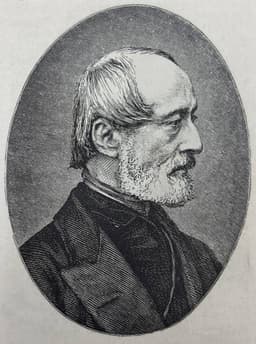
Giuseppe Mazzini
Revolutionary · Modern
50.7Total

Tupac Amaru II
Revolutionary · Modern
46.2Total
Basic Information
Born
1805
1738
Died
1872
1781
Era
Modern
Modern
Nationality
Italy
Peru
Occupation
Revolutionary
Revolutionary
Civilization
Western
Western
Score Comparison
Military (10%)
39.9
45.0
Political (20%)
40.8
29.3
Influence (20%)
60.0
56.4
Legacy (20%)
56.0
48.3
Leadership (15%)
40.9
46.3
Strategy (15%)
54.3
41.7
TOTAL
50.7
46.2
Giuseppe Mazzini — Complete Timeline
1831 AD
Founding of Young ItalyPolitical Action◆ Major
Mazzini founded the secret society Young Italy (Giovine Italia) in Marseille. The organization aimed to achieve Italian unification through popular insurrection and republican government. It recruited thousands of members and inspired uprisings in the 1830s and 1840s.
UnificationRepublicanismSecret Society
Impact: regionalconstructive
1834 AD
Mazzini's Insurrection in SavoyPolitical Action
Mazzini organized an armed invasion of Savoy from Switzerland, intending to spark a republican revolution. The attempt failed due to poor coordination and betrayal, forcing Mazzini into exile. He was sentenced to death in absentia by Piedmontese authorities.
InsurrectionFailureExile
destructive
1849 AD
Roman Republic of 1849Political Action◆ Major
Mazzini became one of the triumvirs governing the short-lived Roman Republic after the pope fled. He implemented progressive reforms including universal male suffrage and freedom of the press. The republic was crushed by French troops in July 1849, and Mazzini returned to exile.
RepublicRevolutionPapal States
Impact: regionalconstructive
1857 AD
Expedition of the SapriPolitical Action
Mazzini organized an ill-fated expedition led by Carlo Pisacane to spark a revolt in the Kingdom of the Two Sicilies. The rebels were quickly defeated and killed by local peasants and Bourbon troops. The failure discredited Mazzini's insurrectionary strategy.
InsurrectionFailureSouthern Italy
tragic
Tupac Amaru II — Complete Timeline
1780 AD
Battle of SangararáWar◆ Major
Tupac Amaru II's forces defeated a Spanish royalist army at Sangarar
BattleRebellionIndigenous Victory
Impact: regional
Proclamation as Inca LeaderPolitical Action
Tupac Amaru II proclaimed himself Inca leader and launched a rebellion against Spanish colonial authorities in Tinta, Peru. He called for the end of forced labor (mita), oppressive taxes, and the abolition of the corregidores system.
RebellionIndigenous RightsAnti-Colonial
Impact: regionalprogressive
Execution of Corregidor ArriagaPolitical Action◆ Major
Tupac Amaru II captured and publicly executed Antonio de Arriaga, the Spanish corregidor of Tinta. This act signaled the start of the rebellion and rallied indigenous and mestizo populations to join the uprising against Spanish rule.
ExecutionRebellionSpanish Authority
Impact: regionaldestructive
1781 AD
Capture and ExecutionPolitical Action
Tupac Amaru II was captured by Spanish forces after betrayal by fellow rebels. He was tortured and executed in Cusco's main square, being drawn and quartered. His family was also executed, but his rebellion inspired later independence movements.
ExecutionSpanish RepressionMartyrdom
Impact: regionaltragic
Expert Analysis
Origins
Giuseppe Mazzini was born on June 22, 1805, in Genoa, then part of the Ligurian Republic under French influence. His father, Giacomo Mazzini, was a university professor and a Jacobin sympathizer, while his mother, Maria Drago, was a devout Catholic with a strong moral compass. Mazzini studied law at the University of Genoa, graduating in 1826, but his true passion lay in literature and politics. He was deeply influenced by the Romantic movement and the ideals of the French Revolution.
Tupac Amaru II, born José Gabriel Condorcanqui on March 19, 1738, in Tinta, Peru, was a descendant of the last Inca emperor, Tupac Amaru I. He was educated by Jesuits and became a cacique (indigenous leader) of three towns, gaining fluency in Spanish, Quechua, and Latin. His mestizo background and noble lineage gave him a unique position between colonial authorities and indigenous communities. He was influenced by Enlightenment ideas and the injustices of the Spanish colonial system, particularly the mita (forced labor) and repartimiento (forced distribution of goods).
Rise to Power
Mazzini's political activism began early: he joined the Carbonari, a secret revolutionary society, in 1827. After being betrayed and arrested in 1830, he was exiled to Marseille. There, in 1831, he founded Young Italy (Giovine Italia), a secret society dedicated to Italian unification through popular insurrection and republican government. The organization quickly gained thousands of members across Italy, using clandestine networks and propaganda. Mazzini's writings, such as the pamphlet "On the Duties of Man," inspired a generation of revolutionaries.
Tupac Amaru II's rise came through legal channels first. For years, he petitioned Spanish authorities to end abuses against indigenous peoples, traveling to Lima and even presenting his case to the Spanish viceroy. When these efforts failed, he turned to rebellion. On November 4, 1780, he captured and executed Antonio de Arriaga, the Spanish corregidor of Tinta, signaling the start of a massive uprising. He proclaimed himself Inca leader, calling for the end of forced labor, unfair taxes, and colonial oppression. His initial success rallied thousands of indigenous and mestizo followers.
Leadership & Governance
Mazzini's leadership was ideological and organizational. He never held territorial power for long, except during the Roman Republic of 1849, where he served as one of three triumvirs. In that brief period, he implemented progressive reforms: universal male suffrage, freedom of the press, abolition of the death penalty, and public education. However, his governance was constrained by military threats from France and Austria. Mazzini's strategic approach relied on insurrectionary cells and propaganda, but he often failed in coordinating military actions, scoring 39.9 in military capability.
Tupac Amaru II's leadership was more direct and military-focused. He organized a large army, issued decrees abolishing the mita and other abuses, and appointed local leaders. He governed liberated territories with a mix of Inca traditions and Spanish administrative structures. His military score of 45.0 reflects his tactical victory at Sangarará, where his forces killed hundreds of Spanish soldiers. However, his political score of 29.3 indicates weaknesses: he failed to secure broad support from creoles and mestizos, and his rebellion was plagued by internal divisions and lack of clear long-term strategy.
Triumph & Tragedy
Mazzini's greatest triumph was his role in inspiring Italian unification. His ideas of a unified Italian republic shaped the Risorgimento, even if the eventual kingdom was a monarchy. The Roman Republic, though short-lived, demonstrated his ability to implement reform. His greatest tragedy was the repeated failure of his insurrections: the Savoy expedition of 1834 and the Sapri expedition of 1857 ended in disaster, with many followers killed or captured. He died in 1872 in Pisa, largely marginalized by the very unification he helped spark.
Tupac Amaru II's triumph was the scale and initial success of his rebellion, which threatened Spanish control over Peru and forced colonial authorities to mobilize significant resources. His execution of Corregidor Arriaga and victory at Sangarará showed his military capability. His tragedy was his capture in 1781 after betrayal by fellow rebels. He was cruelly executed in Cusco: his tongue was cut out, his limbs tied to horses, and his body drawn and quartered. The rebellion collapsed, leading to brutal reprisals against indigenous communities.
Character & Destiny
Mazzini was a fervent idealist, convinced that moral duty and national unity were paramount. He was ascetic, dedicated, and uncompromising, often clashing with other Italian leaders like Cavour and Garibaldi. His refusal to compromise on republicanism isolated him politically. Historian Denis Mack Smith noted that Mazzini's "strength lay in his moral vision, not his practical politics." His destiny was to be the prophet of unification, not its executor.
Tupac Amaru II was a pragmatic leader initially, seeking redress through legal means before turning to war. He was charismatic and able to unite diverse groups, but his reliance on personal authority and Inca symbolism limited his appeal to non-indigenous populations. His decision to execute Arriaga was a calculated risk that paid off initially, but his failure to secure alliances with creoles and his reliance on a decentralized command structure led to his downfall. His destiny was to become a martyr for indigenous rights.
Legacy
Mazzini's legacy is immense: he is considered the "soul of Italy" and a key figure in the unification process. His ideas influenced nationalist movements across Europe and Latin America. The Italian flag and national anthem owe their existence to his vision. However, his republican ideals were not realized until 1946, long after his death. His influence score of 60.0 reflects his impact on political thought.
Tupac Amaru II's legacy is as a symbol of indigenous resistance against colonialism. In Peru and Bolivia, he is celebrated as a precursor to independence and a hero of anti-colonial struggle. His image was used by the Tupac Amaru Revolutionary Movement (MRTA) in the 20th century. However, his rebellion did not achieve its immediate goals, and his legacy is more symbolic than tangible. His influence score of 56.4 is close to Mazzini's, but his political score of 29.3 is lower.
Conclusion
Giuseppe Mazzini had a greater overall impact than Tupac Amaru II. With a total score of 50.7 versus 46.2, Mazzini's ideological and organizational contributions to Italian unification shaped a major European nation. Despite his tactical failures, his vision of a unified Italy became reality within decades. Tupac Amaru II's rebellion, while heroic, was crushed and did not lead to immediate change; his legacy is more as a martyr than a successful revolutionary. Mazzini's political and influence scores (40.8 and 60.0) exceed Tupac Amaru's (29.3 and 56.4), underscoring his greater reach. Thus, Mazzini stands as the more consequential figure in shaping modern history.
Rankings
🥇
Giuseppe MazziniLeader
Mil: 39.9Pol: 40.8Inf: 60.0
50.7
🥈
Tupac Amaru II
Mil: 45.0Pol: 29.3Inf: 56.4
46.2
+4.5 behind
How This Comparison Works
Algorithm
Each figure is scored on 6 dimensions (0—100 scale) based on structured historical data: Military (10%), Political (20%), Influence (20%), Legacy (20%), Leadership (15%), Strategy (15%). The weighted total produces the final ranking.
Data Sources
Scores are computed from structured sub-indicators in the database. Scale factors adjust for era (Ancient ×0.85, Modern ×1.0) and civilization size (Eastern ×1.05, Other ×0.80) to account for differences in population and military scale.
Maximum 3 Figures
Comparisons are limited to 2—3 figures to ensure readability and statistical meaningfulness.
Error Margins
±5 points per dimension — Sub-scores are derived from historical records with inherent uncertainty. Two figures within 5 points on a dimension should be considered roughly equivalent in that area.
Total Score Accuracy
±3 points overall — The weighted combination of 6 dimensions produces a total score with approximately ±3 points of uncertainty. Differences of less than 3 points are not statistically significant— the figures are effectively tied.
Known Limitations
- Historical records are incomplete and uneven across civilizations
- Figures from oral-tradition societies may be underrepresented
- Occupation labels can misclassify multi-role figures
- Scores measure capability and impact, not moral character
- Quantitative scoring is a comparison tool, not absolute truth
Capability Radar
Military (10%) — Battles & Warfare
Battles
5
35
Win Rate
5
30
Expansion
5
30
Political (20%) — Governance & Reform
Reform
60
25
Diplomacy
55
20
Economy
10
10
Influence (20%) — Cultural & Global Reach
Cultural
65
55
Global
55
45
Legacy (20%) — Historical Impact
Historical
70
60
Longevity
60
50
Leadership (15%) — Power & Stability
Tenure
20
15
Stability
10
10
Strategy (15%) — Tactics & Innovation
Strategy
10
45
Tactics
5
40
Reform
15
20
Similar Comparisons
Comments & Discussion
No comments yet. Be the first to share your thoughts!