Loading...
Giuseppe Mazzini vs Napoleon Bonaparte
Napoleon Bonaparte leads by 20.2 pts · 2 figures compared
…
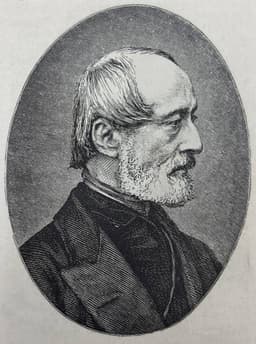
Giuseppe Mazzini
Revolutionary · Modern
50.7Total

Napoleon Bonaparte
General · Modern
70.9Total
Basic Information
Born
1805
1769
Died
1872
1821
Era
Modern
Modern
Nationality
Italy
France
Occupation
Revolutionary
General
Civilization
Western
Western
Score Comparison
Military (10%)
39.9
94.0
Political (20%)
40.8
72.0
Influence (20%)
60.0
40.0
Legacy (20%)
56.0
80.0
Leadership (15%)
40.9
78.0
Strategy (15%)
54.3
90.0
TOTAL
50.7
70.9
Giuseppe Mazzini — Complete Timeline
1831 AD
Founding of Young ItalyPolitical Action◆ Major
Mazzini founded the secret society Young Italy (Giovine Italia) in Marseille. The organization aimed to achieve Italian unification through popular insurrection and republican government. It recruited thousands of members and inspired uprisings in the 1830s and 1840s.
UnificationRepublicanismSecret Society
Impact: regionalconstructive
1834 AD
Mazzini's Insurrection in SavoyPolitical Action
Mazzini organized an armed invasion of Savoy from Switzerland, intending to spark a republican revolution. The attempt failed due to poor coordination and betrayal, forcing Mazzini into exile. He was sentenced to death in absentia by Piedmontese authorities.
InsurrectionFailureExile
destructive
1849 AD
Roman Republic of 1849Political Action◆ Major
Mazzini became one of the triumvirs governing the short-lived Roman Republic after the pope fled. He implemented progressive reforms including universal male suffrage and freedom of the press. The republic was crushed by French troops in July 1849, and Mazzini returned to exile.
RepublicRevolutionPapal States
Impact: regionalconstructive
1857 AD
Expedition of the SapriPolitical Action
Mazzini organized an ill-fated expedition led by Carlo Pisacane to spark a revolt in the Kingdom of the Two Sicilies. The rebels were quickly defeated and killed by local peasants and Bourbon troops. The failure discredited Mazzini's insurrectionary strategy.
InsurrectionFailureSouthern Italy
tragic
Napoleon Bonaparte — Complete Timeline
1799 AD
Coup of 18 BrumaireOther◆ Major
Napoleon Bonaparte, with support from his brother Lucien and key political figures, overthrew the Directory in a bloodless coup. He established the Consulate with himself as First Consul, effectively becoming the ruler of France. This event ended the French Revolution's most unstable period.
French RevolutionCoupRise to Power
Impact: regional
1804 AD
Promulgation of the Napoleonic CodeOther◆ Major
Napoleon enacted the Civil Code of the French, known as the Napoleonic Code, a comprehensive set of laws that replaced the fragmented feudal legal systems. The code established legal equality, protected property rights, and secularized law. It became the basis for legal systems in many European and world countries.
Legal ReformNapoleonic CodeCivil Law
Impact: globalconstructive
1805 AD
Battle of AusterlitzWar◆ Major
Napoleon's Grande Arm
Napoleonic WarsBattleDecisive Victory
Impact: global
1812 AD
Invasion of RussiaWar◆ Major
Napoleon led the Grande Arm
Napoleonic WarsInvasionDisaster
Impact: globaldestructive
1815 AD
Battle of WaterlooWar◆ Major
Napoleon's French army was defeated by the combined forces of the Duke of Wellington's Anglo-Allied army and Gebhard Leberecht von Bl
Napoleonic WarsBattleFinal Defeat
Impact: globaldestructive
Expert Analysis
giuseppe-mazzini-vs-napoleon-bonaparte
# The Revolutionary and the Emperor: Two Paths to Remake Europe
On a spring morning in 1849, a man in a plain black coat stood before the Roman Senate, his voice steady as he declared the restoration of the ancient republic. Giuseppe Mazzini, the prophet of Italian unification, had finally seen his dream take flesh—a Rome free from papal rule, governed by the people. Just thirty-four years earlier, another man had stood in the same city, but he wore a crown. Napoleon Bonaparte had made himself Emperor of the French, and from Rome he had ruled an empire that stretched from Spain to Poland. Two men, separated by a generation, both seeking to reshape Europe. One conquered with armies; the other with ideas. One built an empire that collapsed in a single day; the other planted a seed that would flower decades after his death. What drove them to such different fates?
Origins
Napoleon Bonaparte was born in 1769 on the island of Corsica, a land only recently annexed by France. His family belonged to the minor nobility, but they were poor, and young Napoleon grew up speaking Italian, not French, his accent marking him as an outsider in the schools of mainland France. The world he entered was one of rigid hierarchies—the old regime of kings and nobles, where birth mattered more than ability. Yet the French Revolution, which erupted when he was twenty, shattered that world overnight. In the chaos, a brilliant young artillery officer could rise faster than any prince's son. Napoleon was a child of revolution, but also of ambition—his genius was to harness the energy of the revolution for his own glory.
Giuseppe Mazzini, born in 1805 in Genoa, grew up in a very different Europe. Napoleon had already redrawn the map of Italy, and the old republic of Genoa had been swept away. Mazzini's father was a professor of medicine, a man of modest means but deep learning. As a boy, Mazzini saw French soldiers marching through his city, and he heard his elders speak of the lost freedoms of the past. But by the time he came of age, Napoleon had been defeated, and the old monarchies had returned—the Congress of Vienna in 1815 had restored the patchwork of duchies, kingdoms, and papal states that made Italy a "geographical expression" rather than a nation. Mazzini grew up in an age of reaction, where the very idea of democracy was dangerous. His revolution would be not against kings, but for a dream that had never existed: a united Italian republic.
Rise to Power
Napoleon's rise was a military miracle. In 1793, at the age of twenty-four, he drove the British fleet from the port of Toulon, and by 1796 he was commanding the French army in Italy. There, in a series of lightning campaigns, he defeated the Austrians and carved out a reputation as the most brilliant general of his age. Each victory brought him more power. By 1799, he had overthrown the French government in a coup and made himself First Consul. Five years later, he crowned himself Emperor. His path was forged by cannon fire and the sheer force of his will—he believed that a man of talent could rise as high as his ambition dared.
Mazzini's rise was entirely different. He had no army, no wealth, no political office. In 1831, at the age of twenty-six, he founded a secret society called Young Italy in the French city of Marseille. Its members were students, writers, and exiles—men who carried pistols and printed pamphlets. Mazzini's power came not from victories in battle, but from the force of his moral conviction. He believed that Italy could only be united by a popular uprising, and he spent his life trying to spark that fire. In 1834, he organized an armed invasion of Savoy from Switzerland, hoping to trigger a revolution. It failed miserably—his followers were captured or scattered. But Mazzini never stopped. He wrote, he organized, he inspired. His power was the power of an idea: that a nation could be born from the will of its people.
Leadership & Governance
Napoleon was a master of war and administration. His military genius—scored at 94 in strategy and 93 in overall military ability—was unmatched. He could march an army faster than any enemy, concentrate his forces at the decisive point, and shatter opposing lines with artillery. But he was also a reformer. The Napoleonic Code, which he introduced in 1804, standardized French law and became the foundation of legal systems across Europe. He established the Bank of France, reformed education, and built roads and canals. Yet his governance was autocratic. He centralized power in his own hands, suppressed dissent, and made peace with the Catholic Church only to control it. His empire was efficient, but it was built on his personal ambition—when he fell, the system collapsed with him.
Mazzini governed only once, and briefly. In 1849, when the pope fled Rome, Mazzini became one of the triumvirs who ruled the Roman Republic. For five months, he implemented progressive reforms: freedom of the press, universal male suffrage, the abolition of the death penalty. He governed not by decree, but by persuasion—he spent hours debating with citizens in the streets. His score of 76 in leadership reflects a man who inspired loyalty but struggled with the practical demands of power. The Roman Republic fell to French troops—ironically, sent by Napoleon's nephew, Louis-Napoleon. Mazzini's governance was a glimpse of what might have been: a democratic Italy, united by consent rather than conquest.
Triumph & Tragedy
Napoleon's greatest triumph was the Battle of Austerlitz in 1805, where he destroyed the combined armies of Austria and Russia. For a moment, he was master of Europe. His greatest tragedy was the invasion of Russia in 1812, where he lost half a million men to winter and starvation. He never recovered. By 1814, he was exiled to Elba; by 1815, after his return and final defeat at Waterloo, he was sent to the remote island of Saint Helena, where he died in 1821 at the age of fifty-one.
Mazzini's greatest triumph was the Roman Republic itself—a brief, shining moment when his dream became real. His greatest tragedy was its fall. He spent the rest of his life in exile, watching as Italy was united not by a popular revolution, but by the monarchy of Piedmont-Sardinia and the armies of Giuseppe Garibaldi. In 1857, he organized the Expedition of the Sapri, an ill-fated attempt to spark a revolt in southern Italy. It ended in massacre. Mazzini died in 1872, in Pisa, under a false name, still a wanted man. He never saw the Italy he had dreamed of.
Character & Destiny
Napoleon was driven by an insatiable hunger for glory. "I am not an ordinary man," he once said, and he proved it. His ambition was his strength and his flaw—it carried him to the heights of power, but it also blinded him to his limits. He could not stop, and so he fell.
Mazzini was driven by a different fire: the love of an idea. "Without a country, you have neither name, nor voice, nor rights," he wrote. He was patient, relentless, and pure in his devotion. But he was also impractical, unable to compromise, and often out of touch with the realities of power. His destiny was to be the prophet, not the king.
Legacy
Napoleon left a legacy of law, bureaucracy, and national consciousness. The Napoleonic Code still shapes legal systems in Europe and beyond. He also left a warning: that genius without restraint can destroy what it builds. His legacy score of 78 reflects a figure both admired and feared.
Mazzini left a legacy of inspiration. He taught Italians to dream of unity, and he taught revolutionaries everywhere that ideas could topple empires. His score of 66 in legacy is lower, but it underestimates his influence. Without Mazzini, there might have been no Italian unification at all—and no Gandhi, no Nehru, no Mandela, all of whom were inspired by his vision of peaceful, moral revolution.
Conclusion
Napoleon and Mazzini represent two poles of human ambition. One sought to conquer the world; the other sought to redeem it. One built an empire out of blood and iron; the other built a dream out of words and faith. In the end, Napoleon's empire crumbled, but Mazzini's dream endured. Perhaps that is the deeper truth: that the most lasting revolutions are not won on battlefields, but in the hearts of men and women who dare to imagine a different world.
Rankings
🥇
Napoleon BonaparteLeader
Mil: 94.0Pol: 72.0Inf: 40.0
70.9
🥈
Giuseppe Mazzini
Mil: 39.9Pol: 40.8Inf: 60.0
50.7
+20.2 behind
How This Comparison Works
Algorithm
Each figure is scored on 6 dimensions (0—100 scale) based on structured historical data: Military (10%), Political (20%), Influence (20%), Legacy (20%), Leadership (15%), Strategy (15%). The weighted total produces the final ranking.
Data Sources
Scores are computed from structured sub-indicators in the database. Scale factors adjust for era (Ancient ×0.85, Modern ×1.0) and civilization size (Eastern ×1.05, Other ×0.80) to account for differences in population and military scale.
Maximum 3 Figures
Comparisons are limited to 2—3 figures to ensure readability and statistical meaningfulness.
Error Margins
±5 points per dimension — Sub-scores are derived from historical records with inherent uncertainty. Two figures within 5 points on a dimension should be considered roughly equivalent in that area.
Total Score Accuracy
±3 points overall — The weighted combination of 6 dimensions produces a total score with approximately ±3 points of uncertainty. Differences of less than 3 points are not statistically significant— the figures are effectively tied.
Known Limitations
- Historical records are incomplete and uneven across civilizations
- Figures from oral-tradition societies may be underrepresented
- Occupation labels can misclassify multi-role figures
- Scores measure capability and impact, not moral character
- Quantitative scoring is a comparison tool, not absolute truth
Capability Radar
Military (10%) — Battles & Warfare
Battles
5
95
Win Rate
5
90
Expansion
5
95
Political (20%) — Governance & Reform
Reform
60
95
Diplomacy
55
80
Economy
10
85
Influence (20%) — Cultural & Global Reach
Cultural
65
85
Global
55
90
Legacy (20%) — Historical Impact
Historical
70
95
Longevity
60
90
Leadership (15%) — Power & Stability
Tenure
20
85
Stability
10
70
Strategy (15%) — Tactics & Innovation
Strategy
10
95
Tactics
5
98
Reform
15
92
Similar Comparisons
Comments & Discussion
No comments yet. Be the first to share your thoughts!