Loading...
Giuseppe Mazzini vs Julius Caesar
Julius Caesar leads by 32.1 pts · 2 figures compared
…
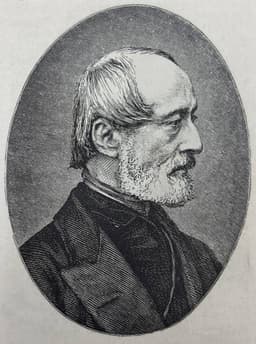
Giuseppe Mazzini
Revolutionary · Modern
50.7Total

Julius Caesar
General · Ancient
82.8Total
Basic Information
Born
1805
-100
Died
1872
-44
Era
Modern
Ancient
Nationality
Italy
Roman Republic
Occupation
Revolutionary
General
Civilization
Western
Western
Score Comparison
Military (10%)
39.9
88.0
Political (20%)
40.8
78.0
Influence (20%)
60.0
85.0
Legacy (20%)
56.0
82.0
Leadership (15%)
40.9
80.0
Strategy (15%)
54.3
85.0
TOTAL
50.7
82.8
Giuseppe Mazzini — Complete Timeline
1831 AD
Founding of Young ItalyPolitical Action◆ Major
Mazzini founded the secret society Young Italy (Giovine Italia) in Marseille. The organization aimed to achieve Italian unification through popular insurrection and republican government. It recruited thousands of members and inspired uprisings in the 1830s and 1840s.
UnificationRepublicanismSecret Society
Impact: regionalconstructive
1834 AD
Mazzini's Insurrection in SavoyPolitical Action
Mazzini organized an armed invasion of Savoy from Switzerland, intending to spark a republican revolution. The attempt failed due to poor coordination and betrayal, forcing Mazzini into exile. He was sentenced to death in absentia by Piedmontese authorities.
InsurrectionFailureExile
destructive
1849 AD
Roman Republic of 1849Political Action◆ Major
Mazzini became one of the triumvirs governing the short-lived Roman Republic after the pope fled. He implemented progressive reforms including universal male suffrage and freedom of the press. The republic was crushed by French troops in July 1849, and Mazzini returned to exile.
RepublicRevolutionPapal States
Impact: regionalconstructive
1857 AD
Expedition of the SapriPolitical Action
Mazzini organized an ill-fated expedition led by Carlo Pisacane to spark a revolt in the Kingdom of the Two Sicilies. The rebels were quickly defeated and killed by local peasants and Bourbon troops. The failure discredited Mazzini's insurrectionary strategy.
InsurrectionFailureSouthern Italy
tragic
Julius Caesar — Complete Timeline
58 BC
Gallic WarsWar◆ Major
Caesar, as proconsul of Gaul, launched a series of campaigns that conquered all of Gaul (modern France, Belgium, and parts of Switzerland). He fought numerous battles, including against the Helvetii, the Belgae, and the Gallic chieftain Vercingetorix. The wars brought immense wealth and a loyal army to Caesar.
Gallic WarsConquestRoman Expansion
Impact: regional
49 BC
Crossing the RubiconPolitical Action◆ Major
Caesar led Legio XIII across the Rubicon River into Italy, defying the Roman Senate's order to disband his army. This act triggered a civil war against Pompey and the Optimates, ultimately leading to Caesar's dictatorship and the end of the Roman Republic.
Roman Civil WarEnd of RepublicPower Struggle
Impact: global
48 BC
Battle of PharsalusWar◆ Major
Caesar's outnumbered army defeated the larger forces of Pompey the Great at Pharsalus in Greece. Caesar's tactical use of a reserve line to counter Pompey's cavalry charge proved decisive. Pompey fled to Egypt, where he was assassinated, leaving Caesar as the undisputed master of the Roman world.
Roman Civil WarBattleDecisive Victory
Impact: regional
44 BC
Appointment as Dictator for LifePolitical Action◆ Major
The Roman Senate appointed Caesar dictator perpetuo (dictator for life), granting him unprecedented personal power. This move concentrated military, legislative, and judicial authority in one person, effectively ending the Roman Republic's traditional system of checks and balances and alarming many senators.
DictatorshipEnd of RepublicPower Consolidation
Impact: regionaldestructive
Assassination on the Ides of MarchPolitical Action◆ Major
A group of Roman senators, led by Marcus Junius Brutus and Gaius Cassius Longinus, stabbed Caesar to death at a meeting of the Senate in the Theatre of Pompey. The assassination was intended to restore the Republic, but instead triggered another civil war that led to the rise of the Roman Empire.
AssassinationRoman PoliticsEnd of Republic
Impact: globaldestructive
Expert Analysis
giuseppe-mazzini-vs-julius-caesar
# The General and the Prophet
On a January morning in 49 BCE, Julius Caesar stood at the banks of the Rubicon River, a small stream that marked the boundary between his province and Italy proper. To cross with his army was treason; to turn back was political oblivion. He hesitated only a moment, then uttered the words that would echo through two millennia: *“Alea iacta est”*—the die is cast. Some eighteen hundred years later, in a cramped Marseille apartment in 1831, a young Italian exile named Giuseppe Mazzini gathered a handful of fellow conspirators and founded a secret society called Young Italy. He possessed no army, no wealth, no political office—only an idea. Yet that idea would prove as powerful as any legion. Two men, two ages, two radically different paths to reshaping the world. How did the conqueror and the prophet each rise to change history so profoundly, and why did their destinies diverge so sharply?
Origins
Caesar was born into the twilight of the Roman Republic, a world of iron discipline and ruthless ambition. His family, the Julii, claimed descent from the goddess Venus, but their political fortunes had waned. Young Gaius watched his uncle Marius and his rival Sulla turn Rome into a battlefield, learning early that power belonged to those willing to seize it. The Republic’s institutions were rotting; its Senate was paralyzed by faction; its armies were loyal to generals, not the state. Caesar absorbed this lesson like a sword absorbing temper.
Mazzini, by contrast, was born in 1805 in Genoa, a city that had once been a proud republic but now lay under French, then Austrian, domination. Italy was a “geographical expression,” as Metternich famously sneered—a patchwork of kingdoms, duchies, and papal states. Mazzini’s father was a physician, his mother a devout Catholic, and the boy grew up reading the romantics and revolutionaries of his age. Where Caesar saw a world to be conquered, Mazzini saw one to be redeemed. His era was the age of nationalism, of peoples awakening to self-determination. He would become their voice.
Rise to Power
Caesar’s path was forged in blood and debt. He fled Rome after Sulla’s proscriptions, served as a young officer in Asia Minor, and returned to climb the political ladder with calculated brilliance. He bought influence with borrowed money, forged alliances with the wealthy Crassus and the popular Pompey, and won command of Gaul in 58 BCE. Over eight years, he conquered a territory larger than Italy itself, slaughtering or enslaving millions, and amassed a fortune that made him the most powerful man in Rome. His Commentaries, written in the third person, turned military butchery into literary legend. By 49 BCE, when the Senate ordered him to disband his army, he chose civil war instead.
Mazzini’s rise was subtler, quieter, and far more desperate. At twenty-six, he joined the Carbonari, a revolutionary secret society, but was quickly betrayed, arrested, and imprisoned. Exiled to Marseille, he founded Young Italy in 1831, calling for a unified, democratic republic. The society spread like wildfire among students, merchants, and artisans. Yet Mazzini never commanded an army; he could barely feed himself. His power was moral, not martial. He spent decades in London, writing pamphlets, organizing uprisings that almost always failed, and watching his followers die in futile gestures. The expedition of the Sapri in 1857 ended with Carlo Pisacane’s band slaughtered by peasants who did not understand their cause. Mazzini wept, but he never stopped writing.
Leadership & Governance
Caesar governed as he fought: decisively, ruthlessly, and with an eye for lasting structures. As dictator, he reformed the calendar, granted citizenship to provincials, initiated public works, and centralized power in his own hands. He pardoned many former enemies, yet his clemency was a weapon, not a virtue. He understood that the Republic was dead and that only monarchy—disguised or not—could hold Rome together. His military genius lay in speed, discipline, and personal courage. At the Battle of Alesia in 52 BCE, he besieged a Gallic fortress while simultaneously facing a relief army; he won both fights through sheer tactical audacity.
Mazzini never held real power except for a few months in 1849, when he served as one of the triumvirs of the short-lived Roman Republic. He implemented progressive reforms: freedom of the press, secular education, the abolition of the Inquisition. But French troops crushed the republic, and Mazzini fled back into exile. His leadership was not of armies but of souls. He inspired Garibaldi, influenced Cavour, and planted the seed of Italian unity that others would harvest. He was a prophet without a sword, and he knew it. “Without Mazzini,” wrote one historian, “Italy might have remained a dream.”
Triumph & Tragedy
Caesar’s greatest triumph was the conquest of Gaul, which added a vast, wealthy province to Rome and made him a legend. His greatest tragedy was his assassination on the Ides of March, 44 BCE, at the foot of Pompey’s statue. He had become too powerful, too permanent, too dangerous to the Senate’s dying order. His murder did not save the Republic; it plunged Rome into another civil war that ended with his adopted heir, Octavian, becoming the first emperor. Caesar’s tragedy was that he could not stop what he had begun.
Mazzini’s triumph came after his death. Italy unified in 1861, and by 1871, Rome was its capital. But the new kingdom was a monarchy, not the republic he had dreamed of. His tragedy was that he lived to see his vision realized in form but betrayed in spirit. He died in 1872, still in exile, still poor, still uncompromising. His last words were reportedly, “I love Italy more than my own soul.”
Character & Destiny
Caesar was a man of action, not reflection. He gambled constantly—crossing the Rubicon, fighting in Egypt, pardoning Brutus—because he believed in his own star. His personality was magnetic, his ambition limitless, his cruelty cold when necessary. He wrote his own history and made sure it survived. Destiny, for Caesar, was something to be seized.
Mazzini was a man of conviction, not calculation. He believed that history was moral and that nations were instruments of divine purpose. His personality was ascetic, his life austere, his faith unshakeable even when every practical plan failed. He wrote endlessly, but his words often outran his deeds. Destiny, for Mazzini, was something to be served.
Legacy
Caesar’s legacy is the Roman Empire, the Latin language, the Western calendar, and the very idea of the dictator as a force for transformation. His name became a title: Kaiser, Tsar. He is remembered as a genius and a tyrant, a builder and a destroyer. His military and political scores—88 and 78 respectively—reflect a man who mastered both war and statecraft.
Mazzini’s legacy is the nation-state as a moral community, the principle of self-determination, and the inspiration for countless liberation movements from India to Ireland. His scores are lower—72 for politics, 36 for military—but his influence on the 19th and 20th centuries was immense. He is remembered as the soul of Italian unification, the man who gave a people their dream.
Conclusion
Standing at the Rubicon, Caesar saw only the next step, the immediate gamble, the tangible prize. Sitting in a London garret, Mazzini saw a future no one else could see. One changed the world by conquering it; the other by imagining it. Both were necessary. The general builds the roads and walls; the prophet builds the dreams. And history, in the end, needs both to march forward.
Rankings
🥇
Julius CaesarLeader
Mil: 88.0Pol: 78.0Inf: 85.0
82.8
🥈
Giuseppe Mazzini
Mil: 39.9Pol: 40.8Inf: 60.0
50.7
+32.1 behind
How This Comparison Works
Algorithm
Each figure is scored on 6 dimensions (0—100 scale) based on structured historical data: Military (10%), Political (20%), Influence (20%), Legacy (20%), Leadership (15%), Strategy (15%). The weighted total produces the final ranking.
Data Sources
Scores are computed from structured sub-indicators in the database. Scale factors adjust for era (Ancient ×0.85, Modern ×1.0) and civilization size (Eastern ×1.05, Other ×0.80) to account for differences in population and military scale.
Maximum 3 Figures
Comparisons are limited to 2—3 figures to ensure readability and statistical meaningfulness.
Error Margins
±5 points per dimension — Sub-scores are derived from historical records with inherent uncertainty. Two figures within 5 points on a dimension should be considered roughly equivalent in that area.
Total Score Accuracy
±3 points overall — The weighted combination of 6 dimensions produces a total score with approximately ±3 points of uncertainty. Differences of less than 3 points are not statistically significant— the figures are effectively tied.
Known Limitations
- Historical records are incomplete and uneven across civilizations
- Figures from oral-tradition societies may be underrepresented
- Occupation labels can misclassify multi-role figures
- Scores measure capability and impact, not moral character
- Quantitative scoring is a comparison tool, not absolute truth
Capability Radar
Military (10%) — Battles & Warfare
Battles
5
95
Win Rate
5
92
Expansion
5
97
Political (20%) — Governance & Reform
Reform
60
90
Diplomacy
55
85
Economy
10
82
Influence (20%) — Cultural & Global Reach
Cultural
65
88
Global
55
94
Legacy (20%) — Historical Impact
Historical
70
95
Longevity
60
96
Leadership (15%) — Power & Stability
Tenure
20
75
Stability
10
60
Strategy (15%) — Tactics & Innovation
Strategy
10
94
Tactics
5
96
Reform
15
88
Similar Comparisons
Comments & Discussion
No comments yet. Be the first to share your thoughts!