Loading...
Giuseppe Garibaldi vs Sitiveni Rabuka
Giuseppe Garibaldi leads by 3.3 pts · 2 figures compared
…
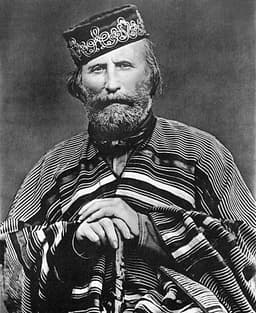
Giuseppe Garibaldi
General · Modern
55.0Total
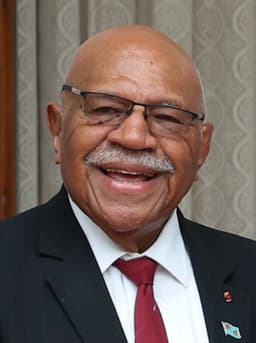
Sitiveni Rabuka
General · Modern
51.7Total
Basic Information
Born
1807
1948
Died
1882
—
Era
Modern
Modern
Nationality
Italy
Fiji
Occupation
General
General
Civilization
Western
Other
Score Comparison
Military (10%)
61.7
10.2
Political (20%)
54.7
60.0
Influence (20%)
40.0
53.3
Legacy (20%)
68.0
46.7
Leadership (15%)
54.2
85.0
Strategy (15%)
55.0
39.6
TOTAL
55.0
51.7
Giuseppe Garibaldi — Complete Timeline
1849 AD
Defense of the Roman RepublicWar◆ Major
Garibaldi commanded the defense of the short-lived Roman Republic against French forces sent to restore papal rule. Despite heroic resistance, the republic fell, and Garibaldi led a retreat through central Italy.
Italian UnificationRoman RepublicDefense
Impact: regionaltragic
1860 AD
Expedition of the ThousandWar
Garibaldi led a volunteer force of about 1,000 men to conquer Sicily and Naples. His campaign overthrew the Bourbon monarchy and unified southern Italy with the Kingdom of Sardinia.
Italian UnificationExpeditionVolunteers
Impact: nationalconstructive
Battle of CalatafimiWar◆ Major
Garibaldi's Redshirts defeated a larger Bourbon army at Calatafimi in Sicily. The victory boosted morale and demonstrated the effectiveness of his volunteers, opening the way to Palermo.
Italian UnificationBattleSicily
Impact: regional
Battle of VolturnusWar◆ Major
Garibaldi's forces defeated the Neapolitan army at the Volturno River. The victory secured his conquest of Naples and forced King Francis II into exile, completing the unification of southern Italy.
Italian UnificationBattleNaples
Impact: regional
Cession of Sicily and Naples to Victor Emmanuel IIPolitical Action
After conquering southern Italy, Garibaldi voluntarily handed over his conquests to King Victor Emmanuel II of Sardinia. This act unified Italy under the monarchy and avoided civil war.
Italian UnificationCessionMonarchy
Impact: nationalconstructive
Sitiveni Rabuka — Complete Timeline
1987 AD
1987 Fijian Coup d'étatPolitical Action
Rabuka, as a colonel in the Fijian military, led a coup overthrowing the elected government of Timoci Bavadra. The coup was motivated by ethnic Fijian opposition to Indo-Fijian political influence. Rabuka declared Fiji a republic.
CoupMilitary InterventionEthnic Tension
Impact: nationaldestructive
1992 AD
1992 Election as Prime MinisterPolitical Action◆ Major
Rabuka transitioned from military leader to civilian politician, winning the 1992 general election as leader of the Fijian Political Party. He became Prime Minister, serving until 1999.
ElectionCivilian GovernmentPolitical Transition
Impact: national
1997 AD
1997 Constitution ReformReform◆ Major
Rabuka's government oversaw the adoption of a new constitution that removed ethnic-based voting and provided for a multi-ethnic government. The constitution aimed to reduce ethnic tensions and promote national unity.
ConstitutionReformEthnic Reconciliation
Impact: nationalconstructive
1999 AD
1999 General Election DefeatPolitical Action◆ Major
Rabuka's government was defeated in the general election by the Labour Party led by Mahendra Chaudhry. Rabuka stepped down as Prime Minister, marking the end of his first period in power.
Election DefeatGovernment ChangeChaudhry
Impact: national
2022 AD
2022 Return as Prime MinisterPolitical Action◆ Major
Rabuka led the People's Alliance to victory in the 2022 general election, forming a coalition government. He became Prime Minister again, 23 years after his previous tenure, promising democratic reforms.
ElectionReturn to PowerCoalition Government
Impact: national
Expert Analysis
Sitiveni Rabuka vs Giuseppe Garibaldi
# The General and the Democrat
On a September morning in 1860, Giuseppe Garibaldi rode into Naples on a white horse, a red-shirted hero welcomed by crowds that seemed to stretch to the horizon. He had conquered a kingdom with a thousand volunteers. On a May morning in 1987, Sitiveni Rabuka marched into Fiji's Parliament House in a military uniform, ordering the elected prime minister at gunpoint to leave. Both men were generals who reshaped nations. But where Garibaldi became an icon of liberation, Rabuka became a symbol of overthrow—only to later transform into something far more complex.
Origins
Giuseppe Garibaldi was born in 1807 in Nice, a port city then part of the French Empire. His father was a fisherman and merchant sailor; the sea taught him early the rhythms of risk and reward. The young Garibaldi absorbed the revolutionary fervor sweeping Europe—the dream of a unified Italy, free from foreign domination and petty monarchies. By his twenties, he had joined the secret society of Young Italy, which cost him exile and a death sentence. He fled to South America, where he learned guerrilla warfare fighting for Brazilian separatists and Uruguayan republicans. There, in the muddy plains and jungles, he forged his military style: speed, audacity, and the loyalty of volunteers who followed him not for pay but for a cause.
Sitiveni Rabuka was born in 1948 on the island of Vanua Levu, in a Fiji still under British colonial rule. His father was a Methodist lay preacher; the church taught him discipline and hierarchy. Rabuka grew up in a world of ethnic divisions—indigenous Fijians versus Indo-Fijians, descendants of Indian laborers brought by the British. He joined the military young, rising through the ranks of a small, professional army. By the 1980s, he was a colonel, a man of order in a democracy that seemed increasingly chaotic. His era was not revolution but decolonization; his struggle was not for unity but for identity.
Rise to Power
Garibaldi's rise came through war. In 1849, he commanded the defense of the Roman Republic against French forces sent to restore papal rule. Outnumbered and outgunned, he fought a desperate retreat across central Italy, his pregnant wife Anita dying in his arms. That defeat made him a legend. Eleven years later, he led the Expedition of the Thousand—a ragtag force of volunteers that sailed from Genoa to Sicily. At the Battle of Calatafimi in May 1860, his Redshirts defeated a larger Bourbon army, the victory proving that courage could overcome numbers. The campaign swept through Sicily and up the Italian boot, culminating in the Battle of Volturnus, where his forces defeated the Neapolitan army and secured Naples.
Rabuka's rise came through a coup. In 1987, Fiji's first democratically elected government led by Timoci Bavadra took office—a coalition dominated by Indo-Fijians. Indigenous Fijian chiefs and military officers saw this as a threat to their traditional authority. Rabuka, then a colonel, stormed Parliament, suspended the constitution, and declared himself head of state. It was a raw seizure of power, justified by ethnic grievance. But unlike Garibaldi, who fought foreign enemies, Rabuka fought his own countrymen.
Leadership & Governance
Garibaldi was a commander of men, not a builder of institutions. His military genius lay in mobility and morale—he inspired soldiers to march through swamps and mountains on little more than faith. Politically, he was naive. After conquering southern Italy, he could have declared himself dictator. Instead, in a dramatic gesture, he ceded Sicily and Naples to King Victor Emmanuel II of Sardinia, handing over his conquests for the sake of Italian unity. He even refused titles and pensions, returning to his farm on the island of Caprera. His governance was romantic, impulsive, and ultimately selfless.
Rabuka was the opposite. After the coup, he faced international isolation and economic collapse. He transitioned from military leader to civilian politician, winning the 1992 election as prime minister. But his true transformation came with the 1997 Constitution Reform, which removed ethnic-based voting and created a multiracial parliament. It was a remarkable reversal—the man who had overthrown democracy helped build a more inclusive one. He lost the 1999 election to Mahendra Chaudhry, an Indo-Fijian, and stepped down peacefully. Then, in 2022, at age 74, he returned as prime minister, leading a coalition government. His governance was pragmatic, adaptive, and ultimately democratic.
Triumph & Tragedy
Garibaldi's greatest triumph was the unification of Italy. His greatest tragedy was the failure of his ideals. He dreamed of a republic, but got a monarchy. He fought for the people, but watched the rich and powerful take control. His later years were marked by disappointment—he criticized the new government, supported socialist movements, and died in 1882 a frustrated hero.
Rabuka's greatest triumph was his own transformation. The coup leader became a democrat, the ethnic nationalist became a reformer. His greatest tragedy was the damage he had already done. The 1987 coup shattered Fiji's social fabric, triggering a brain drain, economic decline, and a legacy of instability that led to further coups in 2000 and 2006. He could not undo the precedent he had set.
Character & Destiny
Garibaldi was a man of action, not reflection. He wore a poncho, grew a beard, and spoke in thunderous declarations. His personality was magnetic, his decisions impulsive. He believed in liberty with a religious fervor, and this faith drove him to conquer and then surrender power. His destiny was to be a symbol—the "Hero of Two Worlds"—more than a ruler.
Rabuka was a man of calculation. He was quiet, disciplined, and capable of admitting error. In interviews, he has expressed regret for the coup, calling it "a mistake." His personality was pragmatic, his decisions adaptive. He believed in power first, then in redemption. His destiny was to be a paradox—a democrat who began as a dictator.
Legacy
Garibaldi is remembered as a founding father of Italy. Statues stand in every city, his face on stamps and currency, his Redshirts a symbol of national pride. His legacy is romantic, inspiring, and simplified—the lone hero who made a nation.
Rabuka is remembered with ambivalence. In Fiji, he is both revered and reviled. Indigenous Fijians often see him as a protector; Indo-Fijians see him as a destroyer. Internationally, he is a cautionary tale—but also a case study in redemption. His legacy is complicated, contested, and unresolved.
Conclusion
Two generals, two islands, two centuries. Garibaldi fought to unite a people; Rabuka fought to divide them—then spent the rest of his life trying to bring them back together. One died a hero, the other lives as a question. Their stories remind us that history is not written in black and white, but in the shifting grays of human choice. The same hands that seize power can also release it. The same heart that conquers can also repent. And the same man who breaks a nation can, if he is brave enough, help rebuild it.
Rankings
🥇
Giuseppe GaribaldiLeader
Mil: 61.7Pol: 54.7Inf: 40.0
55.0
🥈
Sitiveni Rabuka
Mil: 10.2Pol: 60.0Inf: 53.3
51.7
+3.3 behind
How This Comparison Works
Algorithm
Each figure is scored on 6 dimensions (0—100 scale) based on structured historical data: Military (10%), Political (20%), Influence (20%), Legacy (20%), Leadership (15%), Strategy (15%). The weighted total produces the final ranking.
Data Sources
Scores are computed from structured sub-indicators in the database. Scale factors adjust for era (Ancient ×0.85, Modern ×1.0) and civilization size (Eastern ×1.05, Other ×0.80) to account for differences in population and military scale.
Maximum 3 Figures
Comparisons are limited to 2—3 figures to ensure readability and statistical meaningfulness.
Error Margins
±5 points per dimension — Sub-scores are derived from historical records with inherent uncertainty. Two figures within 5 points on a dimension should be considered roughly equivalent in that area.
Total Score Accuracy
±3 points overall — The weighted combination of 6 dimensions produces a total score with approximately ±3 points of uncertainty. Differences of less than 3 points are not statistically significant— the figures are effectively tied.
Known Limitations
- Historical records are incomplete and uneven across civilizations
- Figures from oral-tradition societies may be underrepresented
- Occupation labels can misclassify multi-role figures
- Scores measure capability and impact, not moral character
- Quantitative scoring is a comparison tool, not absolute truth
Capability Radar
Military (10%) — Battles & Warfare
Battles
65
5
Win Rate
70
5
Expansion
60
5
Political (20%) — Governance & Reform
Reform
40
50
Diplomacy
50
45
Economy
20
40
Influence (20%) — Cultural & Global Reach
Cultural
70
30
Global
65
20
Legacy (20%) — Historical Impact
Historical
75
40
Longevity
65
30
Leadership (15%) — Power & Stability
Tenure
30
55
Stability
25
35
Strategy (15%) — Tactics & Innovation
Strategy
60
10
Tactics
75
10
Reform
55
5
Similar Comparisons
Comments & Discussion
GeneralissimoOfUnity6/16/2026
Garibaldi’s guerrilla campaign in the mountains of South America taught him how to turn a ragtag band into a liberation force, but his real genius was political—he handed his conquests to a king for unification. Rabuka staged a coup for indigenous Fijian supremacy, then watched his country get expelled from the Commonwealth. Garibaldi’s white horse rode into history; Rabuka’s rifle just shot Fiji in the foot. One built a nation, the other broke one—then stumbled into democracy as an afterthought
数据侦探赵明6/16/2026
别拿志愿军精神和政变比。加里波第在1860年“千人远征”中,只有约1000名红衫军,却征服了两西西里王国,靠的是民众起义和对制度的信仰。拉布卡在1987年政变时,佛吉军队里超过90%是土著斐济人,他靠的是枪和种族特权。一个是革命战术的典范——利用当地游击队和海军支持;一个是军事政变的教科书——依赖血缘和制服。数据不会撒谎:加里波第的战损比低得多,拉布卡只会浪费机会。
戴斗笠的书生6/16/2026
我是中国学者,看这对比就想起“英雄造时势”还是“时势造英雄”。加里波第是脱缰的野马,被意大利统一浪潮裹挟;拉布卡是套上笼头的骡子,在冷战后的多元政体中挣扎。但有趣的是,两人晚年都退居田园——加里波第在卡普雷拉岛种地,拉布卡后来搞橄榄球。他们都没变成独裁者,这才是历史最魔幻的部分:战火烧过,终归尘土。
RedShirtBlueSky6/16/2026
As a history buff, I love that both men had epic beards and a flair for the dramatic—Garibaldi’s red shirts were basically political merch, and Rabuka’s coup was a blunt instrument. But let’s be real: Garibaldi’s legacy is etched into a nation’s soul, with streets named after him worldwide. Rabuka’s coup is a footnote in a tourist brochure for Fiji. One led a romantic revolution; the other just threw a tantrum over electoral math. Garibaldi was a poet with a sword; Rabuka was a thug with a unifo