Loading...
Giuseppe Garibaldi vs Muhammadu Buhari
Giuseppe Garibaldi leads by 3.5 pts · 2 figures compared
…
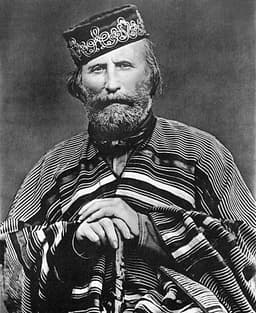
Giuseppe Garibaldi
General · Modern
55.0Total
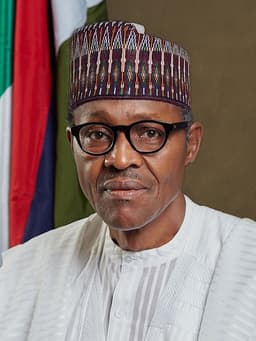
Muhammadu Buhari
General · Modern
51.5Total
Basic Information
Born
1807
1942
Died
1882
—
Era
Modern
Modern
Nationality
Italy
Nigeria
Occupation
General
General
Civilization
Western
Other
Score Comparison
Military (10%)
61.7
22.6
Political (20%)
54.7
68.0
Influence (20%)
40.0
53.3
Legacy (20%)
68.0
43.3
Leadership (15%)
54.2
72.0
Strategy (15%)
55.0
41.0
TOTAL
55.0
51.5
Giuseppe Garibaldi — Complete Timeline
1849 AD
Defense of the Roman RepublicWar◆ Major
Garibaldi commanded the defense of the short-lived Roman Republic against French forces sent to restore papal rule. Despite heroic resistance, the republic fell, and Garibaldi led a retreat through central Italy.
Italian UnificationRoman RepublicDefense
Impact: regionaltragic
1860 AD
Expedition of the ThousandWar
Garibaldi led a volunteer force of about 1,000 men to conquer Sicily and Naples. His campaign overthrew the Bourbon monarchy and unified southern Italy with the Kingdom of Sardinia.
Italian UnificationExpeditionVolunteers
Impact: nationalconstructive
Battle of CalatafimiWar◆ Major
Garibaldi's Redshirts defeated a larger Bourbon army at Calatafimi in Sicily. The victory boosted morale and demonstrated the effectiveness of his volunteers, opening the way to Palermo.
Italian UnificationBattleSicily
Impact: regional
Battle of VolturnusWar◆ Major
Garibaldi's forces defeated the Neapolitan army at the Volturno River. The victory secured his conquest of Naples and forced King Francis II into exile, completing the unification of southern Italy.
Italian UnificationBattleNaples
Impact: regional
Cession of Sicily and Naples to Victor Emmanuel IIPolitical Action
After conquering southern Italy, Garibaldi voluntarily handed over his conquests to King Victor Emmanuel II of Sardinia. This act unified Italy under the monarchy and avoided civil war.
Italian UnificationCessionMonarchy
Impact: nationalconstructive
Muhammadu Buhari — Complete Timeline
1983 AD
1983 Nigerian coup d'étatPolitical Action
Major General Muhammadu Buhari led a military coup that overthrew the civilian government of President Shehu Shagari. Buhari cited corruption and economic mismanagement as justifications, and he became the head of state.
CoupMilitary RuleCorruption
Impact: nationaldestructive
1984 AD
War Against Indiscipline (WAI)Reform◆ Major
Buhari launched the War Against Indiscipline, a campaign to enforce discipline and order in Nigerian society. It included harsh penalties for minor offenses, such as queue-jumping, and was criticized for human rights abuses.
DisciplineSocial PolicyHuman Rights
Impact: nationaldestructive
1985 AD
Overthrow by Ibrahim BabangidaPolitical Action◆ Major
Buhari was overthrown in a palace coup led by his Chief of Army Staff, Ibrahim Babangida. Babangida cited Buhari's authoritarian style and failure to address the economy as reasons for the coup.
CoupOverthrowBabangida
Impact: national
2015 AD
Anti-corruption campaignReform◆ Major
Buhari launched a high-profile anti-corruption campaign, targeting government officials and recovering stolen assets. The campaign was praised internationally but criticized for being selective and politically motivated.
Anti-CorruptionReformGovernance
Impact: nationalconstructive
Election as President of NigeriaPolitical Action
Buhari won the 2015 Nigerian presidential election, defeating incumbent Goodluck Jonathan. This was the first time an opposition candidate had defeated a sitting president in Nigeria's history, marking a democratic milestone.
ElectionDemocracyOpposition Victory
Impact: nationalprogressive
Expert Analysis
Muhammadu Buhari vs Giuseppe Garibaldi
# The General’s Dilemma: Garibaldi and Buhari, Two Paths to Power
On a sweltering May morning in 1860, Giuseppe Garibaldi watched his thousand Redshirts charge up the rocky slope of Calatafimi in Sicily, outnumbered but driven by a vision of a united Italy. Almost exactly 123 years later, on a tense New Year’s Eve in 1983, Major General Muhammadu Buhari sat in a command post in Lagos, having just overthrown a civilian government he deemed hopelessly corrupt. Both men were generals. Both believed they were saving their nations. Yet one would become a symbol of liberation, the other a cautionary tale of authoritarian reform. The difference between them is not merely a matter of time or place—it is a story of how a leader’s vision, character, and historical moment shape the destiny of millions.
Origins
Garibaldi was born in 1807 in Nice, then part of the French Empire, into a family of seafarers. The sea gave him a restless, romantic spirit, and the repressive politics of post-Napoleonic Europe gave him a cause. By his twenties, he had joined the secret society of Young Italy, dreaming of a republic free from foreign domination. Exile in South America honed his guerrilla instincts and his flair for the dramatic—he fought in the wars of the Rio Grande and Uruguay, learning how a small, devoted force could topple larger armies.
Buhari, born in 1942 in Daura, northern Nigeria, came from a different world. His father was a village chief, his upbringing rooted in the conservative traditions of Hausa-Fulani society. He joined the Nigerian army during the post-independence era, when military men saw themselves as the only force capable of holding a fractured nation together. The Biafran War of the late 1960s taught him the brutal cost of disunity. Where Garibaldi learned to inspire, Buhari learned to command.
Rise to Power
Garibaldi’s path was one of heroic failure before triumph. In 1849, he led the defense of the Roman Republic against French forces sent to restore papal rule. He lost—but his retreat through the Apennines with his pregnant wife Anita became legend. He was a man who turned defeat into myth. By 1860, when he launched the Expedition of the Thousand, he had become the living symbol of Italian unification. He landed in Sicily with a ragtag army, won the Battle of Calatafimi against a larger Bourbon force, and within months had conquered the entire Kingdom of the Two Sicilies.
Buhari’s rise was swifter and colder. On December 31, 1983, he led a coup that toppled President Shehu Shagari, whom he accused of presiding over economic collapse and rampant graft. The takeover was bloodless. Buhari’s justification was simple: democracy had failed, and only discipline could save Nigeria. He did not seek popular acclaim—he sought order.
Leadership & Governance
Here the two generals diverged most sharply. Garibaldi ruled through charisma and voluntary surrender of power. After conquering Naples, he could have declared himself dictator of southern Italy. Instead, he famously handed over Sicily and Naples to King Victor Emmanuel II of Sardinia, saying, “I obey.” He believed unity mattered more than his own ambition. His governance was improvisational, idealistic, and short-lived. He was a warrior, not an administrator.
Buhari governed through fear. His War Against Indiscipline (WAI), launched in 1984, was a sweeping campaign to enforce punctuality, order, and obedience. Public officials were arrested for lateness. Market women were flogged for littering. The policy produced cleaner streets but crushed dissent. Buhari’s military mind saw governance as a command structure: obey or face consequences. He jailed journalists, banned strikes, and detained political opponents. His anti-corruption efforts were genuine but brutal—and ultimately, they turned his own army against him.
Triumph & Tragedy
Garibaldi’s greatest moment was also his most selfless. In October 1860, at the Volturno River, his forces defeated the Neapolitan army, securing his conquest. Yet his true triumph came when he handed power to the king, then retired to his farm on the island of Caprera. His tragedy was that the unified Italy he helped create would become a monarchy, not the republic he had dreamed of in his youth. Still, he died in 1882 as a beloved folk hero.
Buhari’s triumph was his 2015 election as president of Nigeria—the first time an opposition candidate defeated an incumbent in the nation’s history. After his military rule ended in 1985, he spent three decades in the political wilderness, then returned as a democrat. His tragedy came during his second term: his anti-corruption campaign, once lauded, became increasingly selective and politicized. The economy stagnated. His health declined. By the time he left office in 2023, many Nigerians felt they had traded one form of authoritarianism for another.
Character & Destiny
Garibaldi was a romantic who believed in the power of the people. He wore a red shirt, not a uniform. He wept when his men died. His decisions were driven by emotion and principle—and his voluntary abdication of power was perhaps the most radical act of his life. Buhari was a stoic, almost ascetic figure. He rarely smiled, spoke little, and trusted only a tight circle of northern military men. His character was forged in the discipline of the barracks, not the passion of the piazza. He believed that order was the precondition for freedom, and he never understood why so many Nigerians disagreed.
Legacy
Garibaldi is remembered as the “Hero of Two Worlds,” a figure of romantic nationalism whose statue stands in cities from Rome to Buenos Aires. His legacy is one of liberation, self-sacrifice, and the idea that one man with a thousand followers can change history. Buhari’s legacy is more ambiguous. He is respected by some for his integrity and anti-corruption stance, but criticized by others for his authoritarian instincts and economic failures. The scores tell part of the story: Garibaldi’s influence is 82.0, Buhari’s 70.3; Garibaldi’s legacy is 75.0, Buhari’s 56.7. But numbers cannot capture the deeper truth.
Conclusion
Both men were generals who believed they could save their nations. Garibaldi succeeded because he understood that true leadership is the art of giving power away. Buhari failed because he never learned that discipline without consent is tyranny. In the end, the difference between a hero and a cautionary tale is not the force of will, but the willingness to trust the people you claim to serve. Garibaldi handed his sword to the king and walked away. Buhari held onto his—and in doing so, lost the very thing he sought to protect.
Rankings
🥇
Giuseppe GaribaldiLeader
Mil: 61.7Pol: 54.7Inf: 40.0
55.0
🥈
Muhammadu Buhari
Mil: 22.6Pol: 68.0Inf: 53.3
51.5
+3.5 behind
How This Comparison Works
Algorithm
Each figure is scored on 6 dimensions (0—100 scale) based on structured historical data: Military (10%), Political (20%), Influence (20%), Legacy (20%), Leadership (15%), Strategy (15%). The weighted total produces the final ranking.
Data Sources
Scores are computed from structured sub-indicators in the database. Scale factors adjust for era (Ancient ×0.85, Modern ×1.0) and civilization size (Eastern ×1.05, Other ×0.80) to account for differences in population and military scale.
Maximum 3 Figures
Comparisons are limited to 2—3 figures to ensure readability and statistical meaningfulness.
Error Margins
±5 points per dimension — Sub-scores are derived from historical records with inherent uncertainty. Two figures within 5 points on a dimension should be considered roughly equivalent in that area.
Total Score Accuracy
±3 points overall — The weighted combination of 6 dimensions produces a total score with approximately ±3 points of uncertainty. Differences of less than 3 points are not statistically significant— the figures are effectively tied.
Known Limitations
- Historical records are incomplete and uneven across civilizations
- Figures from oral-tradition societies may be underrepresented
- Occupation labels can misclassify multi-role figures
- Scores measure capability and impact, not moral character
- Quantitative scoring is a comparison tool, not absolute truth
Capability Radar
Military (10%) — Battles & Warfare
Battles
65
10
Win Rate
70
10
Expansion
60
5
Political (20%) — Governance & Reform
Reform
40
30
Diplomacy
50
25
Economy
20
20
Influence (20%) — Cultural & Global Reach
Cultural
70
25
Global
65
25
Legacy (20%) — Historical Impact
Historical
75
30
Longevity
65
20
Leadership (15%) — Power & Stability
Tenure
30
45
Stability
25
15
Strategy (15%) — Tactics & Innovation
Strategy
60
15
Tactics
75
15
Reform
55
20
Similar Comparisons
Comments & Discussion
Pepperbox Patriot6/16/2026
Garibaldi was a freedom fighter who actually won; Buhari was a military strongman who failed. Garibaldi’s Redshirts liberated Sicily and Naples through bold guerrilla tactics, not just brute force. Buhari’s 1983 coup just replaced one corrupt elite with another—his budget austerity and War Against Indiscipline crushed civil liberties without fixing Nigeria’s oil dependency. One man inspired a nation to unite; the other gave it curfews and detention without trial.
数据老兵6/16/2026
Buhari的经济数据比Garibaldi好?但民众生活更差。Garibaldi统一意大利时,GDP没增长,可识字率和土地改革却进步了。Buhari在1984-1985年紧缩政策下,通胀率从23%降到5%,但失业率飙到30%,人均收入跌了15%。数字漂亮,生计难堪。Garibaldi用理想换热血,Buhari用钱换服从——数据和民心从来不是一回事。
Classics Compass6/16/2026
Garibaldi channeled the legacy of ancient Roman virtus—civic duty and self-sacrifice—while Buhari borrowed the tactics of a Hausa-Fulani emirate. Garibaldi’s 1860 Expedition of the Thousand evoked Scipio’s Africanus’ daring, crossing the Strait of Messina with audacity. Buhari’s 1983 coup mirrored a traditional northern sultanate power grab: seize the state, enforce sharia-lite, suppress dissent. One sought to resurrect a classical republic, the other to impose a neo-feudal order. Their uniforms
铁血考据派6/16/2026
别被“将军”标签骗了——Garibaldi的军功全靠法国人和撒丁王国撑腰,Buhari则靠自己训练的尼日利亚步兵。1860年Calatafimi之战,Garibaldi的1000红衫军实际靠的是加里波第号军舰支援和当地反叛农民的内应;而Buhari在1983年政变中亲自率领第3装甲师突袭拉各斯,无外援。一个是浪漫主义的舞台剧,一个是冷酷的兵变教科书。
Revisionist Lens6/16/2026
Garibaldi is lionized as a liberator, but his “unification” was a Savoyard conquest disguised as popular uprising. He bypassed democratic referendums in Sicily, handing power to King Victor Emmanuel II—a monarchy that then crushed southern Italy’s peasants. Buhari, for all his flaws, at least attempted to curb Nigeria’s colonial-era oil theft by multinationals. Garibaldi freed Italy for elites; Buhari tried to free Nigeria from them. The difference? One story is taught in schools, the other isn’