Loading...
Giuseppe Garibaldi vs Ramon Castilla
Ramon Castilla leads by 4.7 pts · 2 figures compared
…
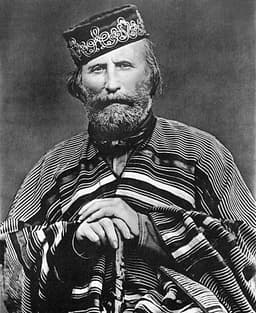
Giuseppe Garibaldi
General · Modern
55.0Total
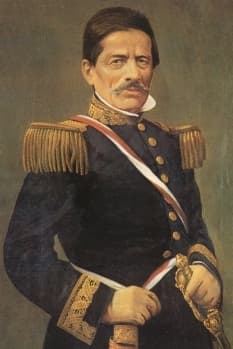
Ramon Castilla
General · Modern
59.7Total
Basic Information
Born
1807
1797
Died
1882
1867
Era
Modern
Modern
Nationality
Italy
Peru
Occupation
General
General
Civilization
Western
Western
Score Comparison
Military (10%)
61.7
40.0
Political (20%)
54.7
72.0
Influence (20%)
40.0
56.7
Legacy (20%)
68.0
52.0
Leadership (15%)
54.2
78.0
Strategy (15%)
55.0
60.0
TOTAL
55.0
59.7
Giuseppe Garibaldi — Complete Timeline
1849 AD
Defense of the Roman RepublicWar◆ Major
Garibaldi commanded the defense of the short-lived Roman Republic against French forces sent to restore papal rule. Despite heroic resistance, the republic fell, and Garibaldi led a retreat through central Italy.
Italian UnificationRoman RepublicDefense
Impact: regionaltragic
1860 AD
Expedition of the ThousandWar
Garibaldi led a volunteer force of about 1,000 men to conquer Sicily and Naples. His campaign overthrew the Bourbon monarchy and unified southern Italy with the Kingdom of Sardinia.
Italian UnificationExpeditionVolunteers
Impact: nationalconstructive
Battle of CalatafimiWar◆ Major
Garibaldi's Redshirts defeated a larger Bourbon army at Calatafimi in Sicily. The victory boosted morale and demonstrated the effectiveness of his volunteers, opening the way to Palermo.
Italian UnificationBattleSicily
Impact: regional
Battle of VolturnusWar◆ Major
Garibaldi's forces defeated the Neapolitan army at the Volturno River. The victory secured his conquest of Naples and forced King Francis II into exile, completing the unification of southern Italy.
Italian UnificationBattleNaples
Impact: regional
Cession of Sicily and Naples to Victor Emmanuel IIPolitical Action
After conquering southern Italy, Garibaldi voluntarily handed over his conquests to King Victor Emmanuel II of Sardinia. This act unified Italy under the monarchy and avoided civil war.
Italian UnificationCessionMonarchy
Impact: nationalconstructive
Ramon Castilla — Complete Timeline
1824 AD
Battle of AyacuchoWar
Castilla fought as a junior officer in the decisive Battle of Ayacucho, which ended Spanish rule in Peru. This victory secured Peruvian independence and marked the end of the Spanish Empire in South America, shaping Castilla's nationalist views.
Peruvian War of IndependenceBattleLiberation
Impact: regional
1845 AD
First Presidency of PeruPolitical Action◆ Major
Castilla was elected President of Peru in 1845, serving until 1851. His first term focused on economic development, including the guano boom, and infrastructure projects such as railroads and ports, modernizing the Peruvian state.
PresidencyEconomic DevelopmentGuano
Impact: nationalconstructive
1854 AD
Abolition of Slavery in PeruReform◆ Major
During his second presidency, Castilla issued a decree abolishing slavery in Peru on December 3, 1854. This reform freed approximately 25,000 slaves and was part of a broader liberal agenda, though it faced opposition from slave-owning elites.
AbolitionSlaveryHuman Rights
Impact: nationalprogressive
Abolition of Indigenous TributeReform◆ Major
Castilla also abolished the indigenous tribute tax in 1854, which had been a burden on native communities since colonial times. This measure aimed to integrate indigenous peoples into the Peruvian state as equal citizens, though its implementation was uneven.
Indigenous RightsTax ReformCitizenship
Impact: nationalprogressive
1855 AD
Second Presidency and Guano BoomPolitical Action◆ Major
Castilla served a second term from 1855 to 1862, during the peak of the guano export boom. He used guano revenues to fund public works, pay off foreign debt, and modernize the military, but also faced criticism for corruption and over-reliance on a single resource.
PresidencyGuanoModernization
Impact: nationalconstructive
1860 AD
Constitutional Reform of 1860Reform◆ Major
Castilla oversaw the adoption of a new constitution in 1860, which established a centralized republic with a strong executive. The constitution remained in effect until 1920 and shaped Peru's political structure, though it limited regional autonomy.
ConstitutionPolitical ReformCentralization
Impact: nationalconstructive
Expert Analysis
Ramon Castilla vs Giuseppe Garibaldi
# The Soldier and the Statesman: Garibaldi and Castilla, Two Paths to Modernity
On a sweltering September day in 1860, Giuseppe Garibaldi stood on the deck of a steamship in the Bay of Naples, watching his Redshirts swarm ashore. He had conquered Sicily with a thousand volunteers, and now the Bourbon kingdom of the Two Sicilies lay before him, ripe for the taking. Half a world away, in the same decade, Ramón Castilla sat in the presidential palace in Lima, signing decrees that would reshape Peru. One man led his nation through fire and blood; the other through ink and guano. Both forged modern nations, yet their legacies could not be more different. The question is why.
Origins
Giuseppe Garibaldi was born in 1807 in Nice, a Mediterranean port city then part of the French Empire. His father was a fisherman, his mother a woman of quiet piety. The sea was Garibaldi’s first classroom, and he learned early that the world was larger than any village. He grew up in the shadow of the Napoleonic Wars, when Italy was a patchwork of foreign-controlled states—Austrian in the north, Bourbon in the south, papal in the center. The dream of a unified Italy, *il Risorgimento*, was the air he breathed.
Ramón Castilla, born a decade earlier in 1797, came from a different world. He was the son of a Spanish colonial official in Tarapacá, then part of the Viceroyalty of Peru. His family was of mixed blood—criollo, with indigenous roots—a fact that would shape his politics. He grew up in a society rigidly stratified by race and caste, where the Spanish crown ruled through fear and tradition. The wars of independence that swept Latin America in the 1810s were his formative experience.
Their eras dictated their missions. Garibaldi’s Italy was fractured by foreign domination; Castilla’s Peru was fractured by colonial legacy. One sought to unite, the other to reform.
Rise to Power
Garibaldi entered history as a rebel. In 1834, he participated in a failed insurrection in Genoa, fled to South America, and spent a decade fighting in Brazil and Uruguay as a guerrilla leader. There he learned irregular warfare, honed his charisma, and earned the nickname “the Hero of Two Worlds.” He returned to Italy in 1848, when revolutions swept Europe, and by 1849 he was commanding the defense of the Roman Republic against French troops sent to restore papal rule. He lost that fight—besieged, outnumbered, forced into a dramatic retreat across the Apennines—but his legend was born.
Castilla rose through the ranks of the Peruvian army during the wars of independence. He fought at the Battle of Ayacucho in 1824, the decisive engagement that ended Spanish rule in South America. Unlike Garibaldi, whose path was one of romantic exile, Castilla’s was one of institutional service. He became a military commander, then a politician, and in 1845 he was elected president of Peru. His rise was not a revolution but a consolidation—a man of the system who sought to change it from within.
Leadership and Governance
Garibaldi was a general, not a governor. His genius lay in inspiration: the ragged volunteers who followed him across Sicily, the Redshirts who charged at Calatafimi in 1860 against a Bourbon army twice their size. The Battle of Calatafimi was his masterpiece—a victory of morale over numbers, of will over firepower. He was a strategist of movement, not of administration. After conquering Naples, he famously handed his conquests to King Victor Emmanuel II of Sardinia, saying, “I obey.” He had no desire to rule.
Castilla, by contrast, was a statesman. His military score (64.3) is nearly identical to Garibaldi’s (65.2), but his political score (77.4) towers over Garibaldi’s (66.4). During his two presidencies (1845–1851 and 1855–1862), Castilla used the guano boom—Peru’s sudden wealth from bird-droppings exported as fertilizer—to fund railroads, ports, and schools. He abolished slavery in 1854, freeing thousands of Afro-Peruvians, and abolished the indigenous tribute tax that had burdened native communities since colonial times. He oversaw the Constitution of 1860, which centralized power in a strong executive. Where Garibaldi conquered, Castilla built.
Triumph and Tragedy
Garibaldi’s greatest triumph was the Expedition of the Thousand in 1860. With a volunteer force of about 1,000 men, he landed in Sicily, defeated the Bourbon army at Calatafimi, and swept north to Naples. It was a campaign of breathtaking audacity—a guerrilla leader toppling a kingdom. But his tragedy came later. After unification, he was sidelined by the very monarchy he had served. He attempted to march on Rome in 1862 and 1867, only to be stopped by Italian troops. He died in 1882 on the island of Caprera, a hero but a frustrated one.
Castilla’s triumph was the abolition of slavery in 1854—a decree he issued while fighting a civil war against a conservative rival. It was a moment of moral clarity, a reform that changed Peru forever. His tragedy was the guano boom itself. The wealth he used to modernize Peru also created dependency and corruption. After his death in 1867, Peru squandered its guano riches in a disastrous war with Chile. Castilla built a nation, but he could not save it from its own fragility.
Character and Destiny
Garibaldi was a romantic. He wore a red shirt, a poncho, and a sombrero. He wrote memoirs and novels. He was impulsive, charismatic, and utterly indifferent to power for its own sake. His destiny was to be a symbol—the “sword of Italian unification”—not a ruler. When he handed Sicily to Victor Emmanuel, he was acting out of a deep, almost mystical faith in monarchy and unity. He believed in the cause, not in himself.
Castilla was a pragmatist. He was a mestizo in a white elite, a soldier who became a bureaucrat. He understood that reform required institutions, not heroism. He used guano revenues to buy political stability, brokered deals with regional caudillos, and wrote constitutions. His destiny was to be a builder, not a liberator. He had no epic retreats, no dramatic surrenders—just decades of patient governance.
Legacy
Garibaldi is remembered as a folk hero. His face appears on Italian coins, his name on streets and squares across the world. He is the archetype of the freedom fighter, the man who made Italy with his bare hands. His legacy is romantic, global, and enduring.
Castilla is remembered as a reformer—but a Peruvian one. His statue stands in Lima, his name on schools and hospitals, but he is little known outside his country. His legacy is practical, national, and fading. The abolition of slavery and indigenous tribute were monumental achievements, but they are often overshadowed by the chaos that followed.
Conclusion
Garibaldi and Castilla both faced the question of how to build a modern nation. Garibaldi answered with the sword, Castilla with the pen. One gave his people a flag; the other gave them laws. The difference was not in ability—both were extraordinary—but in context. Garibaldi’s Italy needed a symbol to rally around; Castilla’s Peru needed a statesman to reform a broken system. In the end, the hero and the administrator both succeeded, but only the hero is remembered. Perhaps that is the cruelest truth of history: we remember the fire, not the architect who built the firebreak.
Rankings
🥇
Ramon CastillaLeader
Mil: 40.0Pol: 72.0Inf: 56.7
59.7
🥈
Giuseppe Garibaldi
Mil: 61.7Pol: 54.7Inf: 40.0
55.0
+4.7 behind
How This Comparison Works
Algorithm
Each figure is scored on 6 dimensions (0—100 scale) based on structured historical data: Military (10%), Political (20%), Influence (20%), Legacy (20%), Leadership (15%), Strategy (15%). The weighted total produces the final ranking.
Data Sources
Scores are computed from structured sub-indicators in the database. Scale factors adjust for era (Ancient ×0.85, Modern ×1.0) and civilization size (Eastern ×1.05, Other ×0.80) to account for differences in population and military scale.
Maximum 3 Figures
Comparisons are limited to 2—3 figures to ensure readability and statistical meaningfulness.
Error Margins
±5 points per dimension — Sub-scores are derived from historical records with inherent uncertainty. Two figures within 5 points on a dimension should be considered roughly equivalent in that area.
Total Score Accuracy
±3 points overall — The weighted combination of 6 dimensions produces a total score with approximately ±3 points of uncertainty. Differences of less than 3 points are not statistically significant— the figures are effectively tied.
Known Limitations
- Historical records are incomplete and uneven across civilizations
- Figures from oral-tradition societies may be underrepresented
- Occupation labels can misclassify multi-role figures
- Scores measure capability and impact, not moral character
- Quantitative scoring is a comparison tool, not absolute truth
Capability Radar
Military (10%) — Battles & Warfare
Battles
65
45
Win Rate
70
50
Expansion
60
30
Political (20%) — Governance & Reform
Reform
40
85
Diplomacy
50
70
Economy
20
75
Influence (20%) — Cultural & Global Reach
Cultural
70
55
Global
65
50
Legacy (20%) — Historical Impact
Historical
75
65
Longevity
65
60
Leadership (15%) — Power & Stability
Tenure
30
65
Stability
25
60
Strategy (15%) — Tactics & Innovation
Strategy
60
45
Tactics
75
40
Reform
55
55
Similar Comparisons
Comments & Discussion
卡斯蒂亚的独裁者6/16/2026
别拿统一意大利的浪漫英雄跟卡斯蒂亚比。加里波第是神话,卡斯蒂亚是粪便管理员。他靠鸟粪发家,用独裁手腕签几个法令也算治国?瞧瞧秘鲁那点鸟粪经济,全靠剥削华工和印第安人。他的"解放"不过是换个主人。加里波第至少亲自流血,卡斯蒂亚只会用墨水淹死人民。虚伪的补锅匠罢了。
The Guano Gambler6/16/2026
Castilla's "progress" was a mirage financed by bird shit. He rode the guano boom like a drunk on a mule, signing contracts with British firms that turned Peru into a resource colony. Sure, he abolished slavery—but only because the imported Chinese coolies were cheaper. Garibaldi built a nation from idealism and bayonets; Castilla built a house of cards. When the guano ran out, so did Peru's luck. One created a legend, the other a cautionary tale.
数据拆穿者6/16/2026
算笔账:加里波第的千人队不到两年就搞垮两西西里王国,战损率约15%。卡斯蒂亚呢?他执政24年,秘鲁外债从零滚到3500万英镑,经济全靠单一资源。加里波第靠的是民心和战术,卡斯蒂亚靠的是垄断价格。前者是短期高杠杆革命,后者是长期低效腐败。结果:意大利统一了,秘鲁等着被智利揍。数据不说谎,卡斯蒂亚就是个乌龟。
Rome's Echo6/16/2026
Classic historian blunder: comparing a hurricane to a drainpipe. Garibaldi was the soul of the *Risorgimento*, a man who rejected Caesar's crown twice and built a nation from dust. Castilla? He was a competent bureaucrat who happened to find a mountain of seabird droppings. One inspired Mazzini's "Third Rome"; the other left Peru with a guano addiction. Garibaldi's legacy is the Italian flag; Castilla's is a caution about resource curses. Choose wisely.
历史辩证家6/16/2026
你们这帮浪漫主义者就会吹加里波第。卡斯蒂亚才是实干家:废除奴隶制、建立公共教育、修铁路,哪样不实在?他借鸟粪搞基建,加里波第只会打仗。意大利统一后什么烂摊子?南北差距至今没填平。卡斯蒂亚至少给秘鲁留了点家底,加里波第留给意大利的是军阀和黑手党。别跟我谈理想,现实就是卡斯蒂亚的菜谱比加里波第的口号管用。