Loading...
Giuseppe Garibaldi vs Prem Tinsulanonda
Prem Tinsulanonda leads by 2.2 pts · 2 figures compared
…
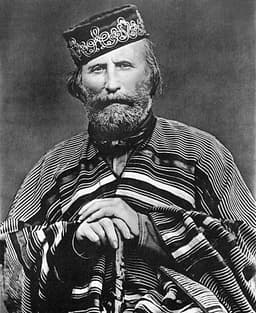
Giuseppe Garibaldi
General · Modern
55.0Total
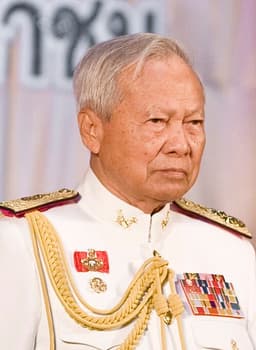
Prem Tinsulanonda
General · Modern
57.2Total
Basic Information
Born
1807
1920
Died
1882
—
Era
Modern
Modern
Nationality
Italy
Thailand
Occupation
General
General
Civilization
Western
Eastern
Score Comparison
Military (10%)
61.7
50.0
Political (20%)
54.7
59.3
Influence (20%)
40.0
54.9
Legacy (20%)
68.0
47.5
Leadership (15%)
54.2
78.0
Strategy (15%)
55.0
60.0
TOTAL
55.0
57.2
Giuseppe Garibaldi — Complete Timeline
1849 AD
Defense of the Roman RepublicWar◆ Major
Garibaldi commanded the defense of the short-lived Roman Republic against French forces sent to restore papal rule. Despite heroic resistance, the republic fell, and Garibaldi led a retreat through central Italy.
Italian UnificationRoman RepublicDefense
Impact: regionaltragic
1860 AD
Expedition of the ThousandWar
Garibaldi led a volunteer force of about 1,000 men to conquer Sicily and Naples. His campaign overthrew the Bourbon monarchy and unified southern Italy with the Kingdom of Sardinia.
Italian UnificationExpeditionVolunteers
Impact: nationalconstructive
Battle of CalatafimiWar◆ Major
Garibaldi's Redshirts defeated a larger Bourbon army at Calatafimi in Sicily. The victory boosted morale and demonstrated the effectiveness of his volunteers, opening the way to Palermo.
Italian UnificationBattleSicily
Impact: regional
Battle of VolturnusWar◆ Major
Garibaldi's forces defeated the Neapolitan army at the Volturno River. The victory secured his conquest of Naples and forced King Francis II into exile, completing the unification of southern Italy.
Italian UnificationBattleNaples
Impact: regional
Cession of Sicily and Naples to Victor Emmanuel IIPolitical Action
After conquering southern Italy, Garibaldi voluntarily handed over his conquests to King Victor Emmanuel II of Sardinia. This act unified Italy under the monarchy and avoided civil war.
Italian UnificationCessionMonarchy
Impact: nationalconstructive
Prem Tinsulanonda — Complete Timeline
1980 AD
Appointed Prime Minister after a coupPolitical Action◆ Major
Prem Tinsulanonda was appointed Prime Minister of Thailand by the military after a coup. He served for over eight years, overseeing a period of political stability and economic growth.
Prime MinisterMilitary RuleStability
Impact: national
1981 AD
Survived a coup attemptPolitical Action◆ Major
Prem survived a coup attempt by military officers loyal to the 'Young Turks' faction. The coup failed due to lack of support and the loyalty of key military units, allowing Prem to remain in power.
Coup AttemptPolitical CrisisMilitary
Impact: national
1988 AD
Resigned as Prime MinisterPolitical Action◆ Major
Prem resigned as Prime Minister after the general election, handing over power to a civilian government led by Chatichai Choonhavan. His resignation marked a rare peaceful transition of power in Thai politics.
ResignationDemocratic TransitionPeaceful
Impact: nationalconstructive
2016 AD
Appointed Regent of ThailandPolitical Action
After the death of King Bhumibol, Prem was appointed Regent of Thailand until the ascension of King Maha Vajiralongkorn. He served as a key figure in the transition of the monarchy.
RegentMonarchyTransition
Impact: national
Expert Analysis
Prem Tinsulanonda vs Giuseppe Garibaldi
# The General and the Regent
On a sweltering day in 1860, Giuseppe Garibaldi stood at the helm of a rickety steamship, his thousand Redshirts huddled on deck, bound for a kingdom they intended to overthrow. A century and a half later, in the air-conditioned corridors of Bangkok’s Government House, General Prem Tinsulanonda sipped tea with diplomats, his power resting not on a sword but on a telephone and a quiet word to the king. Both men were generals. Both shaped their nations. Yet one became a revolutionary legend, the other a master of stability. Why did their paths diverge so sharply?
Origins
Garibaldi was born in 1807 in Nice, then part of the French Empire, into a family of sailors. The sea was his first classroom, and the winds of revolution his first teacher. As a young man, he joined the secret society of Young Italy, inspired by Giuseppe Mazzini’s vision of a unified republic. His early life was one of exile and adventure: he fled to South America, fought in wars there, and honed the guerrilla tactics that would later define his campaigns. The Romantic era forged him—a time when men believed they could remake the world with courage and a cause.
Prem Tinsulanonda, born in 1920 in Songkhla, southern Thailand, grew up in a very different world. Siam had never been colonized, and its monarchy stood as a pillar of continuity. Prem attended military academy, served in World War II, and rose through the ranks of a professional army that valued order over ideology. His era was the Cold War, when Southeast Asia became a chessboard for superpowers, and the greatest virtue for a leader was not heroism but survival. He learned to navigate not battlefields but bureaucracies.
Rise to Power
Garibaldi’s rise was a series of explosions. In 1849, he commanded the defense of the Roman Republic against French forces sent to restore papal rule. He fought with desperate brilliance, but the republic fell. Yet defeat only burnished his legend. He retreated through the mountains of central Italy with his pregnant wife Anita, a dramatic escape that became part of the national myth. His true turning point came in 1860, when he launched the Expedition of the Thousand—a volunteer force of barely 1,000 men that sailed from Genoa to conquer Sicily and Naples. The gamble was absurd. It succeeded.
Prem’s rise was quieter but no less decisive. He was appointed Prime Minister in 1980 by the military after a coup, inheriting a country torn by communist insurgency and factional infighting. He did not seize power; he was handed it, precisely because he seemed a safe pair of hands. His first great test came in 1981, when the “Young Turks” faction attempted a coup. Prem survived not by fighting but by rallying the king’s support and the loyalty of key generals. His phone calls, not his sword, saved him.
Leadership & Governance
Garibaldi governed through charisma and action. He was not a builder of institutions; he was a destroyer of old orders. After conquering Sicily and Naples, he declared himself dictator—but only temporarily. His greatest political act was not holding power but yielding it: in 1860, he voluntarily ceded his conquests to King Victor Emmanuel II of Sardinia, uniting Italy under a monarchy he personally distrusted. He believed the nation mattered more than his own ambitions. His military genius lay in mobility and morale. At the Battle of Calatafimi, his Redshirts defeated a larger Bourbon army through sheer will. At the Battle of Volturnus, he secured Naples. But his strategy was often reckless—he relied on luck and passion as much as planning.
Prem governed through patience and networks. As Prime Minister from 1980 to 1988, he presided over a transition from military rule to civilian democracy. He did not command; he mediated. He balanced the army, the monarchy, the parliament, and the business elite. His military score is low—33.7—because he rarely fought. But his leadership score is 89.0, reflecting his ability to hold a fractious nation together. He survived coups, elections, and economic crises by being indispensable to everyone and threatening to no one.
Triumph & Tragedy
Garibaldi’s triumph was the unification of Italy. In 1860, he rode into Naples in a carriage, hailed as a liberator. The dream of centuries seemed realized. Yet his tragedy was that the Italy he helped create was not the republic he had fought for. It was a monarchy, dominated by the north, and his later years were marked by disappointment. He retired to the island of Caprera, a farmer more than a statesman, watching his revolution become a bureaucracy.
Prem’s triumph was stability. He guided Thailand through the 1980s without civil war, without collapse, without a return to the darkest days of military repression. In 1988, he resigned after an election, handing power to a civilian government—a rare peaceful transition in Thai history. His tragedy was that this stability proved fragile. The democracy he nurtured later collapsed in coups, and his quiet influence continued behind the scenes. He was appointed Regent in 2016 after King Bhumibol’s death, a role that symbolized his enduring power but also his distance from the people.
Character & Destiny
Garibaldi was a man of fire. He wore a red shirt and a poncho, spoke in grand gestures, and lived for the moment. His decisions were driven by emotion—love for Italy, hatred for tyranny, faith in the common man. This made him a hero but also a flawed strategist. He often acted alone, trusting his instinct over advice. His destiny was to be a symbol, not a ruler.
Prem was a man of ice. He wore a crisp uniform and spoke in measured tones. His decisions were driven by calculation—what would keep the kingdom stable, what would preserve his position, what would satisfy the king. This made him effective but also opaque. He left few memorable quotes, only a legacy of careful maneuvering. His destiny was to be a regent, a guardian of order.
Legacy
Garibaldi is remembered as the “Hero of Two Worlds,” his face on coins and statues across Italy. His legacy is romantic and revolutionary—he inspired generations of freedom fighters from Latin America to Europe. His total score of 73.4 reflects a man who changed the course of history through sheer will.
Prem is remembered as a wise elder, a figure of continuity. His legacy is institutional—he helped Thailand navigate the Cold War and preserved a monarchy that remains central to national identity. His total score of 68.4 is lower, but it measures a different kind of achievement: not conquest, but survival.
Conclusion
Stand at the foot of Garibaldi’s statue in Rome, and you see a man charging forward, sword raised, ready to die for a dream. Walk through the silent halls of Prem’s Bangkok residence, and you feel the weight of decisions made in whispers. One changed the map. The other held the map steady. Both were generals who understood that the greatest battles are not always fought with guns. Sometimes they are fought with a word, a gesture, a surrender. And sometimes the most radical act is not to seize power—but to let it go.
Rankings
🥇
Prem TinsulanondaLeader
Mil: 50.0Pol: 59.3Inf: 54.9
57.2
🥈
Giuseppe Garibaldi
Mil: 61.7Pol: 54.7Inf: 40.0
55.0
+2.2 behind
How This Comparison Works
Algorithm
Each figure is scored on 6 dimensions (0—100 scale) based on structured historical data: Military (10%), Political (20%), Influence (20%), Legacy (20%), Leadership (15%), Strategy (15%). The weighted total produces the final ranking.
Data Sources
Scores are computed from structured sub-indicators in the database. Scale factors adjust for era (Ancient ×0.85, Modern ×1.0) and civilization size (Eastern ×1.05, Other ×0.80) to account for differences in population and military scale.
Maximum 3 Figures
Comparisons are limited to 2—3 figures to ensure readability and statistical meaningfulness.
Error Margins
±5 points per dimension — Sub-scores are derived from historical records with inherent uncertainty. Two figures within 5 points on a dimension should be considered roughly equivalent in that area.
Total Score Accuracy
±3 points overall — The weighted combination of 6 dimensions produces a total score with approximately ±3 points of uncertainty. Differences of less than 3 points are not statistically significant— the figures are effectively tied.
Known Limitations
- Historical records are incomplete and uneven across civilizations
- Figures from oral-tradition societies may be underrepresented
- Occupation labels can misclassify multi-role figures
- Scores measure capability and impact, not moral character
- Quantitative scoring is a comparison tool, not absolute truth
Capability Radar
Military (10%) — Battles & Warfare
Battles
65
20
Win Rate
70
25
Expansion
60
10
Political (20%) — Governance & Reform
Reform
40
55
Diplomacy
50
60
Economy
20
50
Influence (20%) — Cultural & Global Reach
Cultural
70
30
Global
65
30
Legacy (20%) — Historical Impact
Historical
75
40
Longevity
65
35
Leadership (15%) — Power & Stability
Tenure
30
65
Stability
25
60
Strategy (15%) — Tactics & Innovation
Strategy
60
30
Tactics
75
30
Reform
55
35
Similar Comparisons
Comments & Discussion
TheRedShirtSkeptic6/16/2026
Comparing Prem to Garibaldi is like comparing a chess grandmaster to a street brawler. Garibaldi actually led men into battle, lost campaigns, and got exiled—twice. Prem's "military genius" was a telephone call to the palace and a well-timed resignation in 1988. Garibaldi's Thousand conquered a kingdom; Prem's "1981 coup attempt" failed because he couldn't control Bangkok's taxi drivers. The only thing these two share is a uniform.
秩序至上者6/16/2026
把炳·廷素拉暖比作加里波第简直是对历史的侮辱。加里波第带着一千个衣衫褴褛的志愿兵就敢攻打西西里岛,而炳将军呢?他的权力建立在皇室电话本和军队津贴上。加里波第流亡南美时在 guerrilla 战中九死一生,炳将军最危险的时刻大概是在曼谷空调房里喝红茶。一个是革命诗人,一个是官僚政客,根本不是一个物种。
RomanticRealist6/16/2026
You're missing the point. Garibaldi's Italy was a fractured mess of foreign powers; Prem's Thailand was a stable kingdom. That's why one needed to storm Palermo and the other just needed to keep generals happy with pensions. Garibaldi failed as a politician because revolutionaries don't govern well. Prem succeeded as a regent because stability doesn't need charisma, just a good network of informants. Both played the hand history dealt them—just with different cards.
数据拆解师6/16/2026
从效率角度说,加里波第是赔本买卖:他解放了西西里(1860年),但意大利统一后20年内人均GDP增长只有15%(Giannetti, 1998)。炳将军一纸"1984年经济稳定令"就让泰国GDP在80年代年均增长7.2%(World Bank)。哪个更划算?浪漫主义者的牺牲换不来统计局的数据。
ClassicsTroll6/16/2026
Prem is what happens when you translate Garibaldi into a world without romance. Garibaldi rode into Naples like Caesar into Rome, scraggly beard and all. Prem's greatest weapon was the 1976 Thammasat massacre's aftermath, where he cleaned up the pieces with a quiet phone to the king. One man's legend is another's cold pragmatism. I'll take the Redshirts over a red-carpeted hallway any day.