Loading...
Giuseppe Garibaldi vs Plutarco Elias Calles
Plutarco Elias Calles leads by 3.5 pts · 2 figures compared
…
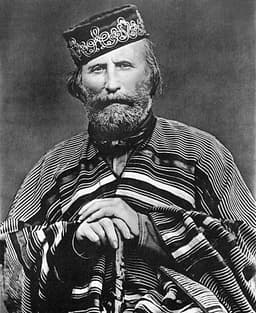
Giuseppe Garibaldi
General · Modern
55.0Total
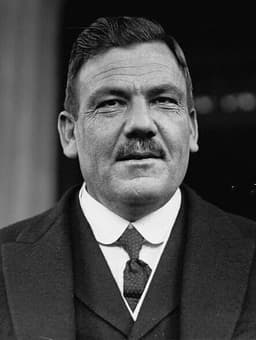
Plutarco Elias Calles
General · Modern
58.5Total
Basic Information
Born
1807
1877
Died
1882
1945
Era
Modern
Modern
Nationality
Italy
Mexico
Occupation
General
General
Civilization
Western
Western
Score Comparison
Military (10%)
61.7
40.0
Political (20%)
54.7
70.3
Influence (20%)
40.0
68.0
Legacy (20%)
68.0
40.0
Leadership (15%)
54.2
78.0
Strategy (15%)
55.0
52.5
TOTAL
55.0
58.5
Giuseppe Garibaldi — Complete Timeline
1849 AD
Defense of the Roman RepublicWar◆ Major
Garibaldi commanded the defense of the short-lived Roman Republic against French forces sent to restore papal rule. Despite heroic resistance, the republic fell, and Garibaldi led a retreat through central Italy.
Italian UnificationRoman RepublicDefense
Impact: regionaltragic
1860 AD
Expedition of the ThousandWar
Garibaldi led a volunteer force of about 1,000 men to conquer Sicily and Naples. His campaign overthrew the Bourbon monarchy and unified southern Italy with the Kingdom of Sardinia.
Italian UnificationExpeditionVolunteers
Impact: nationalconstructive
Battle of CalatafimiWar◆ Major
Garibaldi's Redshirts defeated a larger Bourbon army at Calatafimi in Sicily. The victory boosted morale and demonstrated the effectiveness of his volunteers, opening the way to Palermo.
Italian UnificationBattleSicily
Impact: regional
Battle of VolturnusWar◆ Major
Garibaldi's forces defeated the Neapolitan army at the Volturno River. The victory secured his conquest of Naples and forced King Francis II into exile, completing the unification of southern Italy.
Italian UnificationBattleNaples
Impact: regional
Cession of Sicily and Naples to Victor Emmanuel IIPolitical Action
After conquering southern Italy, Garibaldi voluntarily handed over his conquests to King Victor Emmanuel II of Sardinia. This act unified Italy under the monarchy and avoided civil war.
Italian UnificationCessionMonarchy
Impact: nationalconstructive
Plutarco Elias Calles — Complete Timeline
1915 AD
Governorship of SonoraPolitical Action
Calles served as Governor of Sonora from 1915 to 1919, implementing radical reforms including land redistribution, anti-clerical laws, and labor rights. His governorship established him as a key figure in the Sonoran dynasty and a proponent of revolutionary change.
GovernorshipSonoraReforms
Impact: regionalconstructive
1924 AD
Presidency of MexicoPolitical Action◆ Major
Calles was elected President of Mexico in 1924, serving until 1928. His administration continued revolutionary reforms, including land reform, labor rights, and secularization, but also faced opposition from the Catholic Church and conservative groups.
PresidencyMexican RevolutionReforms
Impact: nationalconstructive
1926 AD
Cristero WarWar◆ Major
Calles enforced anti-clerical laws, including the Calles Law, which restricted the Catholic Church's role in society. This sparked the Cristero War (1926-1929), a violent rebellion by Catholic peasants against the state, resulting in tens of thousands of deaths.
Cristero WarAnti-clericalismReligious Conflict
Impact: nationaldestructive
1928 AD
MaximatoPolitical Action◆ Major
After his presidency, Calles remained the de facto ruler of Mexico during the Maximato (1928-1934), controlling puppet presidents. He continued to influence policy, but his power waned as President L
MaximatoPolitical ControlCárdenas
Impact: national
1929 AD
Founding of the National Revolutionary Party (PNR)Political Action
Calles founded the National Revolutionary Party (PNR) in 1929, which later became the Institutional Revolutionary Party (PRI). This party dominated Mexican politics for over 70 years, institutionalizing the revolution's legacy and centralizing power.
Political PartyPRIInstitutionalization
Impact: nationalconstructive
Expert Analysis
Plutarco Elias Calles vs Giuseppe Garibaldi
### The Redshirt and the Jefe Máximo
On a dusty Sicilian road in May 1860, Giuseppe Garibaldi, a man with a flowing red shirt and a mane of wild hair, led a thousand ragged volunteers against a Bourbon army three times its size. Half a world away and sixty years later, in the sun-baked halls of Mexico City, Plutarco Elías Calles, a stern-faced man in a dark suit, signed a law that would ignite a civil war. One fought for a unified nation; the other fought to define one. Both were generals, both were revolutionaries, yet their paths—and their legacies—diverged as sharply as the oceans that separated their homelands. Why did Garibaldi, the romantic hero, become a global symbol of liberation, while Calles, the iron-willed reformer, remains a controversial architect of modern Mexico? The answer lies not in their goals, but in the soil from which they grew.
### Origins
Giuseppe Garibaldi was born in 1807 in Nice, a Mediterranean port city then part of the French Empire. His father was a fisherman, his mother a woman of deep piety. From boyhood, Garibaldi was drawn to the sea and to the radical ideas of Italian nationalism—a dream of a single, unified Italy free from foreign domination. His world was one of empires: the Austrian Empire in the north, the Bourbon Kingdom in the south, and the Pope in Rome. His enemy was clear: tyranny.
Plutarco Elías Calles, born in 1877 in Guaymas, Sonora, came from a humbler, harsher world. His father was an alcoholic who died when Calles was young; his mother raised him in poverty. He worked as a schoolteacher, a bartender, and a flour mill manager before the Mexican Revolution of 1910 shattered the old order. Calles’s enemy was not a foreign king but a system: the entrenched power of the Catholic Church, the landed aristocracy, and the remnants of the Porfiriato dictatorship. If Garibaldi fought to *create* a nation, Calles fought to *remake* one.
### Rise to Power
Garibaldi’s rise was a series of dramatic leaps. Exiled after a failed uprising in 1834, he fled to South America, where he became a guerrilla leader in Brazil and Uruguay. There he honed his military skills, adopted the red shirt as his uniform, and earned a reputation for audacity. His great moment came in 1849, when he led the defense of the Roman Republic against French forces sent to restore the Pope. Outnumbered and outgunned, Garibaldi’s stand was heroic but doomed. He retreated across Italy, his pregnant wife Anita dying in his arms. It was a defeat that became legend.
Calles’s path was more calculated. He rose through the ranks of the Mexican Revolution as a military governor of Sonora, where from 1915 to 1919 he implemented radical reforms: land redistribution, anti-clerical laws, and the promotion of public education. He was not a battlefield hero like Garibaldi; he was an organizer. In 1924, he was elected President of Mexico. Where Garibaldi’s power came from the people’s adoration, Calles’s came from the machinery of the state.
### Leadership & Governance
As a military leader, Garibaldi was inspirational. His 1860 Expedition of the Thousand was a masterpiece of strategic daring. Landing in Sicily with fewer than 1,200 men, he won the Battle of Calatafimi against a larger Bourbon army, the victory boosting morale and proving that his "Redshirts" could win. He swept through Sicily and Naples, culminating in the Battle of Volturnus, where his forces defeated the Neapolitan army. But Garibaldi was no politician. After conquering southern Italy, he voluntarily handed his conquests to King Victor Emmanuel II of Sardinia, famously declaring, "Italy is made. Now we must make Italians." He trusted the monarch to unify the country, a decision that would leave the south neglected for generations.
Calles governed with a different hand. As president from 1924 to 1928, he enforced the secular, anti-clerical constitution of 1917, restricting the Catholic Church’s role in education, property, and public life. The result was the Cristero War (1926–1929), a brutal rebellion of Catholic peasants that killed an estimated 90,000 people. Calles did not lead armies in the field; he directed them from the presidential palace. After his term ended, he remained the *Jefe Máximo* (Maximum Chief) during the Maximato (1928–1934), controlling puppet presidents and founding the National Revolutionary Party (PNR) in 1929—the precursor to the Institutional Revolutionary Party (PRI) that would rule Mexico for seven decades. His governance was institutional, ruthless, and enduring.
### Triumph & Tragedy
Garibaldi’s greatest triumph was the unification of Italy. In 1860, at the height of his power, he was the most famous man in Europe, hailed as the "Hero of Two Worlds." His tragedy was that his idealism outpaced his political reality. He failed to capture Rome (it fell to Italian troops in 1870, not to him) and spent his final years in retirement on the island of Caprera, disillusioned with the monarchy he had served.
Calles’s triumph was the creation of a stable, one-party state that ended decades of revolution and chaos. His tragedy was the cost. The Cristero War stained his legacy with blood, and his anti-clericalism alienated millions. In 1936, he was exiled by his own protégé, Lázaro Cárdenas, who outmaneuvered him. Calles died in 1945, a ghost of his former power.
### Character & Destiny
Garibaldi was a man of passion—impulsive, generous, and charismatic. He fought for ideals, not power. "I offer neither pay, nor quarters, nor food; I offer only hunger, thirst, forced marches, battles, and death," he told his volunteers. His destiny was to be a symbol, not a ruler. Calles was cold, calculating, and pragmatic. He once said, "The revolution is not a bed of roses." His destiny was to build a machine, not a legend. Their personalities shaped their outcomes: Garibaldi’s romance made him immortal; Calles’s ruthlessness made him effective.
### Legacy
Today, Garibaldi is remembered as a global icon of liberty. Streets, squares, and monuments bear his name from Buenos Aires to London. His red shirt is a symbol of grassroots revolution. Calles is remembered more ambiguously. In Mexico, he is honored as a founder of the modern state, but also blamed for the PRI’s authoritarian grip and the Cristero War’s suffering. His total score of 74.5 slightly edges Garibaldi’s 73.4, but the numbers mask a deeper truth: Garibaldi’s influence (82.0) and legacy (75.0) reflect a universal appeal, while Calles’s political score (79.8) reflects his institutional impact.
### Conclusion
In the end, Garibaldi and Calles represent two faces of revolution. One was a knight-errant who dreamed of a nation; the other was a builder who forged a state. Garibaldi’s Italy is a unified democracy; Calles’s Mexico is a vibrant, complicated republic. Both succeeded, but in different currencies. Garibaldi gave the world a story; Calles gave Mexico a system. And as history judges them, it may be that the world needs both the dreamer and the architect—but it will always remember the man in the red shirt.
Rankings
🥇
Plutarco Elias CallesLeader
Mil: 40.0Pol: 70.3Inf: 68.0
58.5
🥈
Giuseppe Garibaldi
Mil: 61.7Pol: 54.7Inf: 40.0
55.0
+3.5 behind
How This Comparison Works
Algorithm
Each figure is scored on 6 dimensions (0—100 scale) based on structured historical data: Military (10%), Political (20%), Influence (20%), Legacy (20%), Leadership (15%), Strategy (15%). The weighted total produces the final ranking.
Data Sources
Scores are computed from structured sub-indicators in the database. Scale factors adjust for era (Ancient ×0.85, Modern ×1.0) and civilization size (Eastern ×1.05, Other ×0.80) to account for differences in population and military scale.
Maximum 3 Figures
Comparisons are limited to 2—3 figures to ensure readability and statistical meaningfulness.
Error Margins
±5 points per dimension — Sub-scores are derived from historical records with inherent uncertainty. Two figures within 5 points on a dimension should be considered roughly equivalent in that area.
Total Score Accuracy
±3 points overall — The weighted combination of 6 dimensions produces a total score with approximately ±3 points of uncertainty. Differences of less than 3 points are not statistically significant— the figures are effectively tied.
Known Limitations
- Historical records are incomplete and uneven across civilizations
- Figures from oral-tradition societies may be underrepresented
- Occupation labels can misclassify multi-role figures
- Scores measure capability and impact, not moral character
- Quantitative scoring is a comparison tool, not absolute truth
Capability Radar
Military (10%) — Battles & Warfare
Battles
65
45
Win Rate
70
50
Expansion
60
30
Political (20%) — Governance & Reform
Reform
40
85
Diplomacy
50
65
Economy
20
60
Influence (20%) — Cultural & Global Reach
Cultural
70
70
Global
65
60
Legacy (20%) — Historical Impact
Historical
75
75
Longevity
65
70
Leadership (15%) — Power & Stability
Tenure
30
70
Stability
25
55
Strategy (15%) — Tactics & Innovation
Strategy
60
55
Tactics
75
40
Reform
55
60
Similar Comparisons
Comments & Discussion
GARIBALDI'S GHOST6/16/2026
Comparing Garibaldi to Calles is like comparing a bonfire to a steam engine. Garibaldi's redshirts fought with muskets and passion, but Calles faced machine guns and oil refineries. The romantic hero of Sicily held no candle to the Jefe Máximo who built a modern state from chaos. Without Calles, there's no PRI, no stable Mexico — just endless revolution. Garibaldi unified Italy's map; Calles unified a nation's soul. Give me the iron fist over the flower.
红衣武士的叹息6/16/2026
拿加里波第和卡列斯比,简直就是拿拿破仑时代和工业革命比。加里波第的红衫军只有浪漫和梦想,卡列斯却有铁腕和宪法。意大利统一更多靠民族情绪和皮埃蒙特军队,墨西哥革命后重建却是卡列斯一手铺路——没有他,何来稳定?别跟我提什么自由战士,真正的国父是穿西装打赢内战的那个人。