Loading...
Giuseppe Garibaldi vs J. B. M. Hertzog
J. B. M. Hertzog leads by 1.1 pts · 2 figures compared
…
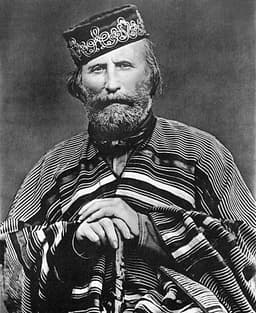
Giuseppe Garibaldi
General · Modern
55.0Total
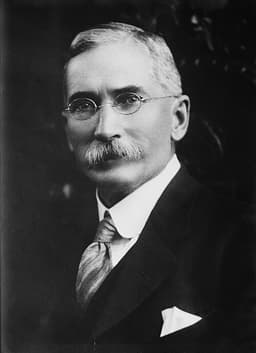
J. B. M. Hertzog
General · Modern
56.1Total
Basic Information
Born
1807
1866
Died
1882
1942
Era
Modern
Modern
Nationality
Italy
South Africa
Occupation
General
General
Civilization
Western
Other
Score Comparison
Military (10%)
61.7
25.0
Political (20%)
54.7
60.0
Influence (20%)
40.0
56.7
Legacy (20%)
68.0
50.0
Leadership (15%)
54.2
79.8
Strategy (15%)
55.0
60.0
TOTAL
55.0
56.1
Giuseppe Garibaldi — Complete Timeline
1849 AD
Defense of the Roman RepublicWar◆ Major
Garibaldi commanded the defense of the short-lived Roman Republic against French forces sent to restore papal rule. Despite heroic resistance, the republic fell, and Garibaldi led a retreat through central Italy.
Italian UnificationRoman RepublicDefense
Impact: regionaltragic
1860 AD
Expedition of the ThousandWar
Garibaldi led a volunteer force of about 1,000 men to conquer Sicily and Naples. His campaign overthrew the Bourbon monarchy and unified southern Italy with the Kingdom of Sardinia.
Italian UnificationExpeditionVolunteers
Impact: nationalconstructive
Battle of CalatafimiWar◆ Major
Garibaldi's Redshirts defeated a larger Bourbon army at Calatafimi in Sicily. The victory boosted morale and demonstrated the effectiveness of his volunteers, opening the way to Palermo.
Italian UnificationBattleSicily
Impact: regional
Battle of VolturnusWar◆ Major
Garibaldi's forces defeated the Neapolitan army at the Volturno River. The victory secured his conquest of Naples and forced King Francis II into exile, completing the unification of southern Italy.
Italian UnificationBattleNaples
Impact: regional
Cession of Sicily and Naples to Victor Emmanuel IIPolitical Action
After conquering southern Italy, Garibaldi voluntarily handed over his conquests to King Victor Emmanuel II of Sardinia. This act unified Italy under the monarchy and avoided civil war.
Italian UnificationCessionMonarchy
Impact: nationalconstructive
J. B. M. Hertzog — Complete Timeline
1899 AD
Boer War GeneralWar◆ Major
Hertzog served as a Boer general in the Second Boer War, commanding forces in the Orange Free State. He participated in several battles and became a prominent Afrikaner military leader.
Second Boer WarGeneralMilitary
Impact: regional
1914 AD
Founded the National PartyPolitical Action
Hertzog broke away from the South African Party and founded the National Party, which championed Afrikaner nationalism and opposed British imperial influence. The party would later implement apartheid.
National PartyAfrikaner NationalismFounding
Impact: nationalconstructive
1924 AD
Prime Minister of South AfricaPolitical Action◆ Major
Hertzog became Prime Minister after his National Party won the general election in coalition with the Labour Party. His government implemented policies to protect white workers and promote Afrikaner interests, including the 'civilized labour' policy.
Prime MinisterAfrikaner RightsLabour Policy
Impact: national
1934 AD
Merged with Smuts to Form United PartyPolitical Action◆ Major
Hertzog merged his National Party with Jan Smuts' South African Party to form the United Party. The coalition aimed to address the economic crisis of the Great Depression and promote national unity, but it alienated hardline Afrikaner nationalists.
United PartyCoalitionNational Unity
Impact: nationalconstructive
1936 AD
Passed the Representation of Natives ActReform◆ Major
Hertzog's government passed the Representation of Natives Act, which removed Black voters from the common voters' roll in the Cape Province and allowed them to elect white representatives instead. This further entrenched racial segregation.
SegregationDisenfranchisementLegislation
Impact: nationaldestructive
1939 AD
Resigned Over Neutrality in WWIIPolitical Action◆ Major
Hertzog advocated for South African neutrality in World War II, but his cabinet voted to enter the war on the Allied side. He resigned as Prime Minister and was succeeded by Jan Smuts, splitting the United Party.
World War IINeutralityResignation
Impact: national
Expert Analysis
J. B. M. Hertzog vs Giuseppe Garibaldi
# The Revolutionary and the Nationalist: Garibaldi and Hertzog
On a sun-baked Sicilian hillside in May 1860, Giuseppe Garibaldi led a thousand ragged volunteers against a Bourbon army three times their size. The Redshirts charged with bayonets fixed, their commander shouting "Qui si fa l'Italia o si muore!" — Here we make Italy, or we die. Seventy-four years later, in the halls of Cape Town's parliament, J.B.M. Hertzog signed the Representation of Natives Act, removing Black South Africans from the common voters' roll. One man unified a nation through courage; the other divided one through law. Both were generals, both were nationalists, but their paths could not have diverged more sharply.
Origins
Garibaldi was born in 1807 in Nice, a Mediterranean port city that would change hands between France and Italy multiple times in his lifetime. The son of a fisherman, he grew up watching ships from across the world dock in the harbor. The sea gave him a global perspective rare for his time — he would later fight in South America before returning to liberate his homeland. His was the world of secret societies, romantic revolutions, and the intoxicating dream of a unified Italy.
Hertzog, born in 1866 in the Cape Colony, came from a very different frontier. His family were Afrikaner farmers, Boers who had trekked into the interior to escape British rule. He studied law in the Netherlands and returned to a South Africa scarred by the Anglo-Boer wars. Where Garibaldi saw the sea as liberation, Hertzog saw the veld as a homeland under siege. His nationalism was defensive, born from the trauma of British imperialism and the bitter memory of concentration camps where his people had suffered.
Rise to Power
Garibaldi's path to fame began in failure. In 1849, he commanded the defense of the Roman Republic against French forces sent to restore papal rule. He held out for months, his guerrilla tactics frustrating a professional army. When defeat came, he escaped through the Apennines with his pregnant wife Anita, who died in his arms during the retreat. This romantic tragedy made him a legend across Europe. He fled to New York, worked as a candle-maker, and bided his time.
Hertzog's rise was more methodical. He proved himself as a Boer general in the Second Boer War (1899-1902), commanding forces in the Orange Free State with tactical skill but ultimately facing defeat. Unlike Garibaldi, who embraced exile, Hertzog stayed to fight politically. In 1914, he founded the National Party, breaking from Jan Smuts' more conciliatory South African Party. His message was simple: Afrikaners must rule their own land.
Leadership & Governance
Garibaldi was a commander of men, not institutions. The Expedition of the Thousand in 1860 was a masterpiece of irregular warfare. He landed in Sicily with 1,087 volunteers — students, artisans, lawyers — and defeated the Bourbon army at Calatafimi through sheer audacity. His Redshirts charged uphill against artillery, believing their leader invincible. After conquering Sicily and Naples, he could have crowned himself king. Instead, in a gesture that still puzzles historians, he ceded everything to King Victor Emmanuel II of Sardinia. "I obey," he reportedly said, handing over the keys to a unified Italy.
Hertzog governed from 1924 as Prime Minister, and his leadership was about legislation, not battles. He passed laws to protect Afrikaans language and culture, but his vision had a dark side. The 1936 Representation of Natives Act was his crowning achievement in the eyes of his supporters — and his most damning legacy. It removed Black voters from the rolls, systematically dismantling what little political power they held. Where Garibaldi unified, Hertzog divided.
Triumph & Tragedy
Garibaldi's triumph was the Battle of Volturnus in 1860, where his improvised army defeated the main Neapolitan force and secured southern Italy for unification. His tragedy came later: the unified Italy he helped create was ruled by a monarchy that marginalized radicals like him. He spent his final years on the island of Caprera, farming and writing, a hero without a role.
Hertzog's triumph was becoming Prime Minister and forging Afrikaner unity. His tragedy was the Second World War. In 1939, he argued passionately for South African neutrality, but his cabinet voted to enter the war on the Allied side. He resigned, broken, and died in 1942, his political career ending in defeat.
Character & Destiny
Garibaldi was a man of action, not ideology. He wore a red shirt because it was cheap and available, not as a political statement. He fought for a romantic ideal of nationhood that transcended class and region. His generosity — handing over power when he could have seized it — was both his greatest strength and his political limitation.
Hertzog was a man of principle, but his principles were narrow. He saw South Africa as a white man's country, and his legal mind built the architecture of apartheid. Where Garibaldi's nationalism was inclusive — "Italy is made, now we must make Italians" — Hertzog's was exclusive. The difference lay in their circumstances: Garibaldi fought foreign oppressors, while Hertzog fought to oppress others.
Legacy
Garibaldi remains a global symbol of liberation. Statues of him stand in cities from Rome to Buenos Aires, and his image adorns Italian currency. His Expedition of the Thousand is studied as a model of guerrilla leadership. Yet his dream of a unified, republican Italy was never fully realized — the monarchy he served collapsed, and the nation he helped create often disappointed him.
Hertzog's legacy is deeply contested. He is honored by some Afrikaners as a father of their nation, but his laws laid the foundation for apartheid. The National Party he founded would govern South Africa until 1994, implementing the segregation he codified. His name appears on streets and schools, but in a post-apartheid South Africa, those names are increasingly questioned.
Conclusion
Two generals, two nationalisms, two very different destinies. Garibaldi rode into history on a wave of romantic idealism, his sword aimed at foreign tyrants. Hertzog built his legacy in parliamentary chambers, his pen drawing lines between races. One unified a people who had never been a nation; the other divided a nation that could have been unified. Their stories remind us that nationalism is a double-edged sword — it can liberate or imprison, depending on who wields it and who stands in its path. The hills of Sicily and the plains of the Orange Free State both heard the cries of men fighting for their people. The difference lay in what they meant by "their people."
Rankings
🥇
J. B. M. HertzogLeader
Mil: 25.0Pol: 60.0Inf: 56.7
56.1
🥈
Giuseppe Garibaldi
Mil: 61.7Pol: 54.7Inf: 40.0
55.0
+1.1 behind
How This Comparison Works
Algorithm
Each figure is scored on 6 dimensions (0—100 scale) based on structured historical data: Military (10%), Political (20%), Influence (20%), Legacy (20%), Leadership (15%), Strategy (15%). The weighted total produces the final ranking.
Data Sources
Scores are computed from structured sub-indicators in the database. Scale factors adjust for era (Ancient ×0.85, Modern ×1.0) and civilization size (Eastern ×1.05, Other ×0.80) to account for differences in population and military scale.
Maximum 3 Figures
Comparisons are limited to 2—3 figures to ensure readability and statistical meaningfulness.
Error Margins
±5 points per dimension — Sub-scores are derived from historical records with inherent uncertainty. Two figures within 5 points on a dimension should be considered roughly equivalent in that area.
Total Score Accuracy
±3 points overall — The weighted combination of 6 dimensions produces a total score with approximately ±3 points of uncertainty. Differences of less than 3 points are not statistically significant— the figures are effectively tied.
Known Limitations
- Historical records are incomplete and uneven across civilizations
- Figures from oral-tradition societies may be underrepresented
- Occupation labels can misclassify multi-role figures
- Scores measure capability and impact, not moral character
- Quantitative scoring is a comparison tool, not absolute truth
Capability Radar
Military (10%) — Battles & Warfare
Battles
65
45
Win Rate
70
40
Expansion
60
20
Political (20%) — Governance & Reform
Reform
40
60
Diplomacy
50
55
Economy
20
50
Influence (20%) — Cultural & Global Reach
Cultural
70
50
Global
65
45
Legacy (20%) — Historical Impact
Historical
75
55
Longevity
65
40
Leadership (15%) — Power & Stability
Tenure
30
65
Stability
25
45
Strategy (15%) — Tactics & Innovation
Strategy
60
50
Tactics
75
45
Reform
55
30
Similar Comparisons
Comments & Discussion
铸铁档案员6/16/2026
拿一个渔夫的儿子跟牧场主比,简直是对革命者精神的侮辱。加里波第在蒙泰贝洛战役中亲手缴获了敌军军旗,而赫佐格签署的《代表原住民法》不过是在议会里把黑人的票撕了。一个用热血铸就国家,一个用纸笔碾碎人权。别让法律学者把这两种民族主义混为一谈。
Chronicler77276/16/2026
Hertzog's a lawyer who legislated division; Garibaldi fought for unification on the battlefield. One used ink, the other blood—a stark contrast in method, not just morality. Garibaldi's Redshirts were a guerilla force that outmaneuvered armies; Hertzog's canon law simply erased people from democracy. The comparison isn't just about nationalism, it's about courage versus cowardice in action.