Loading...
Giuseppe Garibaldi vs Huang Xing
Huang Xing leads by 2.5 pts · 2 figures compared
…
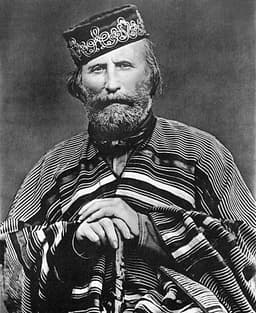
Giuseppe Garibaldi
General · Modern
55.0Total
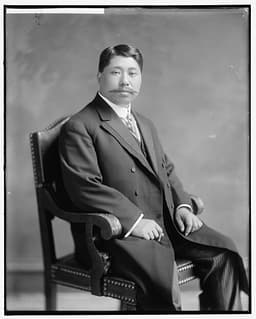
Huang Xing
General · Modern
57.5Total
Basic Information
Born
1807
1874
Died
1882
1916
Era
Modern
Modern
Nationality
Italy
China
Occupation
General
General
Civilization
Western
Eastern
Score Comparison
Military (10%)
61.7
46.7
Political (20%)
54.7
53.8
Influence (20%)
40.0
62.0
Legacy (20%)
68.0
56.0
Leadership (15%)
54.2
62.0
Strategy (15%)
55.0
60.0
TOTAL
55.0
57.5
Giuseppe Garibaldi — Complete Timeline
1849 AD
Defense of the Roman RepublicWar◆ Major
Garibaldi commanded the defense of the short-lived Roman Republic against French forces sent to restore papal rule. Despite heroic resistance, the republic fell, and Garibaldi led a retreat through central Italy.
Italian UnificationRoman RepublicDefense
Impact: regionaltragic
1860 AD
Expedition of the ThousandWar
Garibaldi led a volunteer force of about 1,000 men to conquer Sicily and Naples. His campaign overthrew the Bourbon monarchy and unified southern Italy with the Kingdom of Sardinia.
Italian UnificationExpeditionVolunteers
Impact: nationalconstructive
Battle of CalatafimiWar◆ Major
Garibaldi's Redshirts defeated a larger Bourbon army at Calatafimi in Sicily. The victory boosted morale and demonstrated the effectiveness of his volunteers, opening the way to Palermo.
Italian UnificationBattleSicily
Impact: regional
Battle of VolturnusWar◆ Major
Garibaldi's forces defeated the Neapolitan army at the Volturno River. The victory secured his conquest of Naples and forced King Francis II into exile, completing the unification of southern Italy.
Italian UnificationBattleNaples
Impact: regional
Cession of Sicily and Naples to Victor Emmanuel IIPolitical Action
After conquering southern Italy, Garibaldi voluntarily handed over his conquests to King Victor Emmanuel II of Sardinia. This act unified Italy under the monarchy and avoided civil war.
Italian UnificationCessionMonarchy
Impact: nationalconstructive
Huang Xing — Complete Timeline
1905 AD
Co-founded the TongmenghuiPolitical Action◆ Major
Huang Xing co-founded the Tongmenghui (Revolutionary Alliance) in Tokyo with Sun Yat-sen. He became its military leader, organizing armed uprisings against the Qing dynasty.
TongmenghuiRevolutionMilitary
Impact: nationalconstructive
1911 AD
Led the Wuchang UprisingWar
Huang Xing led the Wuchang Uprising, which sparked the Xinhai Revolution. He commanded revolutionary forces against Qing troops, securing initial victories that led to the dynasty's collapse.
Xinhai RevolutionUprisingMilitary
Impact: nationalconstructive
1912 AD
Served as Minister of War in the RepublicPolitical Action◆ Major
Huang Xing served as Minister of War in the provisional government of the Republic of China. He worked to organize a national army and defend the republic against counter-revolutionary forces.
GovernmentMilitaryRepublic
Impact: nationalconstructive
1913 AD
Led the Second Revolution Against Yuan ShikaiWar◆ Major
Huang Xing led the Second Revolution, an armed uprising against President Yuan Shikai's authoritarian rule. The rebellion failed due to lack of coordination and military inferiority, forcing Huang into exile.
Second RevolutionYuan ShikaiExile
Impact: nationaltragic
1916 AD
Died in Exile in ShanghaiPolitical Action
Huang Xing died in Shanghai after returning from exile in Japan and the United States. His death marked the loss of a key military leader of the Chinese revolution, though his legacy endured.
DeathExileRevolution
Impact: nationaltragic
Expert Analysis
Huang Xing vs Giuseppe Garibaldi
# The Redshirt and the Revolutionary
In the autumn of 1860, a weathered Italian sailor-turned-general stood on the deck of a steamship, watching the coast of Sicily recede. Giuseppe Garibaldi had just conquered a kingdom. His reward was not a crown, but the quiet satisfaction of handing it over to a king he barely trusted. Half a century later and half a world away, a Chinese revolutionary named Huang Xing lay dying in a Shanghai hospital, his body broken by years of exile and failed uprisings. Both men fought to forge new nations. One succeeded in his lifetime; the other saw his dream shattered before his eyes. What made the difference?
Origins
Giuseppe Garibaldi was born in 1807 in Nice, a port city then part of the French Empire. His father was a fisherman, his mother a woman of deep piety. The sea was his first teacher, and the Mediterranean his first battlefield. By his twenties, he had joined the secret society of Young Italy, a network of conspirators who dreamed of a unified republic. Exiled after a failed uprising, he spent years in South America, fighting for independence movements in Brazil and Uruguay. There he learned guerrilla warfare, developed his signature red shirt, and forged a reputation as a warrior of the people.
Huang Xing was born in 1874 in Hunan province, the son of a scholar-official. He grew up in the twilight of the Qing dynasty, a crumbling empire besieged by foreign powers and internal rebellion. Educated in classical Confucian texts, he later studied in Japan, where he encountered Western military science and revolutionary ideas. Where Garibaldi learned war in the jungles of South America, Huang Xing learned it in Japanese military academies. Both men were shaped by failure, but Garibaldi’s failures were personal and romantic—lost battles, narrow escapes. Huang Xing’s were civilizational: the slow collapse of a 2,000-year-old imperial system.
Rise to Power
Garibaldi’s path to power was built on charisma and the sword. In 1849, he commanded the defense of the Roman Republic against French forces sent to restore papal rule. The republic fell, but Garibaldi’s retreat across Italy became legend. He escaped to America, returned, and by 1860 had become the symbol of Italian unification. His Expedition of the Thousand—a volunteer force of about 1,000 men—landed in Sicily in May 1860. At the Battle of Calatafimi, his Redshirts defeated a larger Bourbon army, proving that passion could overcome numbers.
Huang Xing’s rise was more cautious, more political. In 1905, he co-founded the Tongmenghui (Revolutionary Alliance) in Tokyo with Sun Yat-sen. While Sun was the philosopher of the revolution, Huang was its sword. He organized uprisings, smuggled weapons, and trained cadres. His moment came in 1911, when the Wuchang Uprising sparked the Xinhai Revolution. Huang rushed to the scene and commanded revolutionary forces against the Qing. The dynasty fell, and Huang became Minister of War in the provisional government of the Republic of China.
Leadership & Governance
Garibaldi governed through example. He slept on the ground with his men, shared their rations, and never sought personal wealth. His military strategy was aggressive and mobile—strike fast, win the people, and move on. After conquering Sicily and Naples, he could have declared himself dictator. Instead, in a gesture that still puzzles historians, he ceded his conquests to King Victor Emmanuel II of Sardinia in 1860, believing that national unity mattered more than personal ambition. It was a decision that revealed both his idealism and his political naivete.
Huang Xing governed through organization. As Minister of War, he tried to build a national army from scratch, but the new republic was weak, divided, and bankrupt. When President Yuan Shikai turned authoritarian, Huang led the Second Revolution in 1913—an armed uprising that failed within months. He fled into exile, first to Japan, then to the United States. Where Garibaldi’s military instincts were sharp and decisive, Huang’s were more theoretical. His leadership score of 75.5 is nearly identical to Garibaldi’s 74.9, but his strategy score of 57.6 is far below Garibaldi’s 73.2. Huang was a brave fighter, but not a brilliant general.
Triumph & Tragedy
Garibaldi’s greatest moment was the conquest of Sicily and Naples, culminating in the Battle of Volturnus in 1860, where his forces defeated the Neapolitan army and secured the south. His tragedy came later: after unification, he was sidelined by the monarchy he had helped create. He retired to the island of Caprera, farming and writing, a hero without a role.
Huang Xing’s greatest moment was the Wuchang Uprising itself—the spark that ended an empire. His tragedy was that he lived long enough to see the republic he helped found descend into warlordism. He died in 1916 at age 42, back in Shanghai after years of exile. His death marked the loss of a key military leader for the young republic. Where Garibaldi died an old man surrounded by admirers, Huang died in obscurity, his health ruined by stress and disappointment.
Character & Destiny
Garibaldi was a romantic—impulsive, generous, and stubborn. He believed in freedom with a religious intensity and trusted that history would vindicate him. Huang Xing was a realist—methodical, patient, and deeply loyal to Sun Yat-sen. He understood that revolution required organization, but he lacked Garibaldi’s gift for inspiring mass devotion.
Their different fates were shaped by their eras. Garibaldi fought against a fragmented collection of small states and foreign powers; his enemy was weak and divided. Huang Xing fought against a decaying empire that was still the largest political entity on earth. Garibaldi had the support of a rising middle class and a powerful kingdom (Piedmont-Sardinia). Huang Xing faced a China torn between foreign imperialism, internal rebellion, and a conservative elite that feared change more than it loved the nation.
Legacy
Garibaldi is remembered as the “Hero of Two Worlds,” a symbol of liberation and national unity. His name adorns streets, squares, and monuments across Italy. Huang Xing is less known outside China, but within his homeland, he is honored as one of the founding fathers of the republic. His influence score of 70.6 and legacy score of 66.6 are respectable but overshadowed by Sun Yat-sen’s towering reputation.
Yet Huang Xing’s story is perhaps more relevant today. He fought not against foreign occupiers, but against the internal decay of a civilization. His failures—the Second Revolution, the exile—were not his alone. They were the failures of a generation trying to build a modern nation from the ruins of an ancient one.
Conclusion
Both men gave their lives to a cause larger than themselves. Garibaldi succeeded because he had a simpler task: uniting a people who already shared a language, a culture, and a geography. Huang Xing failed because his task was impossibly complex: transforming a civilization while fighting off foreign predators and internal enemies. One became a legend; the other became a footnote. But history’s judgment is not always just. In the end, both men remind us that revolutions are not made by generals alone. They are made by the forces of time, circumstance, and the silent patience of the people who endure.
Rankings
🥇
Huang XingLeader
Mil: 46.7Pol: 53.8Inf: 62.0
57.5
🥈
Giuseppe Garibaldi
Mil: 61.7Pol: 54.7Inf: 40.0
55.0
+2.5 behind
How This Comparison Works
Algorithm
Each figure is scored on 6 dimensions (0—100 scale) based on structured historical data: Military (10%), Political (20%), Influence (20%), Legacy (20%), Leadership (15%), Strategy (15%). The weighted total produces the final ranking.
Data Sources
Scores are computed from structured sub-indicators in the database. Scale factors adjust for era (Ancient ×0.85, Modern ×1.0) and civilization size (Eastern ×1.05, Other ×0.80) to account for differences in population and military scale.
Maximum 3 Figures
Comparisons are limited to 2—3 figures to ensure readability and statistical meaningfulness.
Error Margins
±5 points per dimension — Sub-scores are derived from historical records with inherent uncertainty. Two figures within 5 points on a dimension should be considered roughly equivalent in that area.
Total Score Accuracy
±3 points overall — The weighted combination of 6 dimensions produces a total score with approximately ±3 points of uncertainty. Differences of less than 3 points are not statistically significant— the figures are effectively tied.
Known Limitations
- Historical records are incomplete and uneven across civilizations
- Figures from oral-tradition societies may be underrepresented
- Occupation labels can misclassify multi-role figures
- Scores measure capability and impact, not moral character
- Quantitative scoring is a comparison tool, not absolute truth
Capability Radar
Military (10%) — Battles & Warfare
Battles
65
35
Win Rate
70
30
Expansion
60
20
Political (20%) — Governance & Reform
Reform
40
60
Diplomacy
50
55
Economy
20
30
Influence (20%) — Cultural & Global Reach
Cultural
70
40
Global
65
40
Legacy (20%) — Historical Impact
Historical
75
55
Longevity
65
45
Leadership (15%) — Power & Stability
Tenure
30
40
Stability
25
25
Strategy (15%) — Tactics & Innovation
Strategy
60
45
Tactics
75
40
Reform
55
50
Similar Comparisons
Comments & Discussion
青铜矛头6/16/2026
数据打假:你们吹的“成功”到底按什么算?加里波第的确拿下了两西西里王国,但1861年意大利统一时,南方人均GDP比北方低40%,而且他交出的政权立马被政客架空。黄兴看似失败,但1911年革命后六个月内,中国15省宣布独立。如果以“点燃连锁反应”为标准,黄兴才是效率更高的那个人。别被浪漫故事骗了,历史要算硬账。|
Fascio-Rotto6/16/2026
Classics scholar here: Garibaldi's mythos is pure Roman nostalgia—he literally dressed his men like gladiators in red shirts, evoking the blood of martyrs. In Uruguay, he founded the Italian Legion with a black flag bearing a volcano, a direct echo of Spartacus. Huang Xing, however, drew from classical Confucian "righteous rebellion" tropes—his 1908 campaign in Guangxi was modeled on the Book of Han's tactics. Two different civilizations' heroic scripts: one borrowed from Rome, the other from Ha
不中用的政委6/16/2026
加里波第最被高估的一点,是他“人民领袖”的人设。实际上他1862年试图进军罗马时,国王一声令下,意大利正规军就把他打得落花流水。黄兴在1913年二次革命时确实也输了,但至少他输给的是袁世凯的北洋军,不是自己的同胞。加里波第最后三十年被政客当吉祥物;黄兴死前还在筹划讨袁,骨头比那些穿红衬衫的硬多了。|
The Historian's Mule6/16/2026
Let's talk logistics. Garibaldi's success hinged on the British Royal Navy's tacit protection in 1860—they stopped the Neapolitan fleet from intercepting him. Huang Xing had no one; foreign powers backed the Qing. In the 1911 revolution, Japan even shipped arms to the imperial side. Huang's 1909 failed siege of Guangzhou would've turned differently with one British cruiser. Garibaldi won because the Great Game allowed it. Huang lost because the world chose his enemy.|en|
Historian7616/16/2026
As a military historian, I'm struck by Garibaldi's genius for leveraging volatility. His Sicilian campaign of 1860 is a masterclass in controlled chaos—he landed with only 1,089 redshirts, yet turned local resentment into a revolutionary wave. Huang Xing, by contrast, fought the Qing with raw courage but lacked Garibaldi's media-savvy timing. The 1911 Wuchang Uprising had no equivalent to Garibaldi's "Thousand" myth. One man built a legend; the other just built a fight.|en|