Loading...
Ghazan Khan vs Valdemar II of Denmark
Ghazan Khan leads by 4.4 pts · 2 figures compared
…
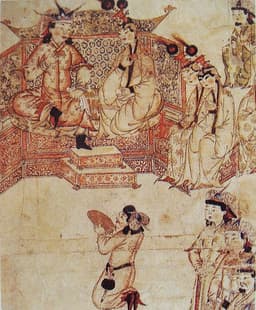
Ghazan Khan
Emperor · Medieval
63.2Total
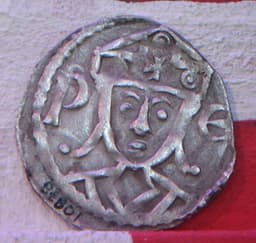
Valdemar II of Denmark
Emperor · Medieval
58.8Total
Basic Information
Born
1271
1170
Died
1304
1241
Era
Medieval
Medieval
Nationality
Ilkhanate
Denmark
Occupation
Emperor
Emperor
Civilization
Middle Eastern
Western
Score Comparison
Military (10%)
50.0
61.7
Political (20%)
70.0
62.7
Influence (20%)
72.0
58.0
Legacy (20%)
58.0
50.0
Leadership (15%)
68.0
68.0
Strategy (15%)
50.0
60.7
TOTAL
63.2
58.8
Ghazan Khan — Complete Timeline
1295 AD
Reforms of the Ilkhanate (Ghazan's Reforms)Reform◆ Major
Ghazan implemented a comprehensive reform program including tax reform, standardization of weights and measures, land redistribution, and the establishment of a new legal code. He also reformed the military and postal system, stabilizing the Ilkhanate after decades of instability.
ReformIlkhanateAdministration
Impact: regionalconstructive
Conversion to IslamCultural
Ghazan converted to Islam upon ascending the throne, becoming the first Ilkhan to adopt the faith. He publicly declared Islam the state religion, ordered the destruction of Buddhist temples and churches, and adopted the name Mahmud. This transformed the Ilkhanate's identity.
ReligionIlkhanateIslam
Impact: regionalconstructive
1297 AD
Patronage of Science and CultureCultural
Ghazan patronized scholars, historians, and scientists, including the vizier Rashid al-Din, who wrote the Jami' al-tawarikh, a world history. Ghazan also built observatories, hospitals, and mosques, contributing to the cultural flowering of the Ilkhanate.
CulturePatronageIlkhanate
Impact: regionalconstructive
1299 AD
Campaigns against the MamluksWar◆ Major
Ghazan led three major invasions of Mamluk Syria, capturing Damascus and Aleppo in 1299
Mongol InvasionSyriaMamluk Sultanate
Impact: regional
Battle of Wadi al-KhaznadarWar
Ghazan's Mongol army defeated the Mamluks under Sultan Al-Nasir Muhammad at Wadi al-Khaznadar near Homs. The victory allowed the Mongols to occupy Damascus and Aleppo, but they withdrew after a few months due to logistical problems and the need to return to Persia.
BattleMongol VictorySyria
Impact: regional
Valdemar II of Denmark — Complete Timeline
1202 AD
Became King of DenmarkPolitical Action◆ Major
Valdemar II became King of Denmark after the death of his brother, King Canute VI. He inherited a kingdom that was already a major Baltic power, and he continued his predecessor's expansionist policies, aiming to control the Baltic Sea trade routes.
SuccessionDenmarkBaltic Power
Impact: regional
1219 AD
Conquered EstoniaWar◆ Major
Valdemar II led a Danish crusade to conquer Estonia, defeating the Estonian tribes at the Battle of Lyndanisse (near modern Tallinn). According to legend, the Danish flag Dannebrog fell from the sky during this battle. Estonia became a Danish possession until 1346.
ConquestEstoniaCrusade
Impact: regional
1223 AD
Captured by Count Henry of SchwerinPolitical Action◆ Major
Valdemar II was captured by Count Henry of Schwerin during a hunting trip and held prisoner for over two years. His captivity forced Denmark to pay a huge ransom and cede territories in northern Germany, weakening Danish power in the region.
CaptureRansomGermany
Impact: regionaltragic
1227 AD
Defeated at the Battle of BornhövedWar◆ Major
After his release, Valdemar II attempted to regain lost territories but was decisively defeated by a coalition of German princes at the Battle of Bornh
BattleDefeatGermany
Impact: regionaldestructive
1241 AD
Codified Danish law with the Jutland CodeReform◆ Major
Valdemar II oversaw the compilation of the Jutland Code (Jyske Lov), a comprehensive legal code for Denmark. The code standardized laws, reduced the power of local chieftains, and established a uniform legal system that influenced Danish law for centuries.
Legal CodeReformDenmark
Impact: nationalconstructive
Expert Analysis
Origins
Ghazan Khan was born in 1271 in the Ilkhanate, the Mongol state in Persia. He was the son of Arghun Khan and a Buddhist mother. Raised in the Mongol tradition, he later converted to Islam. His early life was shaped by the court intrigues of the Ilkhanate and the legacy of his grandfather, Hulagu. Valdemar II of Denmark was born in 1170, the second son of King Valdemar I and Sophia of Minsk. He grew up in a period of Danish expansion, learning military tactics and governance. His brother Canute VI was king before him, and Valdemar served as duke of Schleswig, gaining administrative experience.
Rise to Power
Ghazan's rise was marked by conflict. In 1295, he overthrew his uncle Baydu, who had briefly ruled. Ghazan converted to Islam upon taking the throne, securing support from Muslim subjects and ending the Ilkhanate's Buddhist past. His military campaigns against the Mamluks began in 1299, capturing Damascus and Aleppo. Valdemar II became king in 1202 after his brother's death. He continued Danish expansion in the Baltic, leading a crusade in 1219 that conquered Estonia. The Battle of Lyndanisse gave Denmark a foothold in the region. His capture in 1223 by Count Henry of Schwerin was a major setback, but he regained power after paying a ransom.
Leadership & Governance
Ghazan implemented sweeping reforms in the Ilkhanate. He introduced a unified tax system, standardized weights and measures, and redistributed land to curb corruption. His vizier Rashid al-Din compiled a world history, reflecting Ghazan's patronage of science. He scored 70.0 in political skill, reflecting his administrative focus. Valdemar II oversaw the Jutland Code (1241), a legal code that reduced feudal violence and standardized laws across Denmark. His leadership score of 68.0 matches Ghazan's, but his political score of 62.7 is lower. Valdemar's governance was less transformative than Ghazan's systematic reforms.
Triumph & Tragedy
Ghazan's greatest triumph was his reform program, which stabilized the Ilkhanate after decades of turmoil. His military campaigns against the Mamluks, however, ended in failure; he could not hold Syria due to logistical issues and Mamluk resilience. His score of 50.0 in military reflects this. Valdemar's conquest of Estonia was a major success, but his capture in 1223 and defeat at Bornhöved in 1227 reversed Danish gains. His military score of 61.7 is higher than Ghazan's, but his legacy is more limited. Both faced tragedy: Ghazan's early death in 1304 at age 33 cut short his reforms, while Valdemar's later years saw Danish decline.
Character & Destiny
Ghazan was pragmatic, converting to Islam for political unity. He was known for his intelligence and interest in science, but his temper could lead to harsh punishments. His decision to invade Syria repeatedly showed strategic ambition but poor logistics. Valdemar was a capable warrior-king, earning the nickname "the Victorious." His capture was a result of overconfidence, and his later defeat showed the limits of Danish power. Historians assess Ghazan as a reformer who modernized the Ilkhanate, while Valdemar is remembered for his crusading and legal code.
Legacy
Ghazan's reforms influenced subsequent Mongol rulers and Persian administration. The Jami' al-tawarikh remains a key historical source. His conversion to Islam shaped the Ilkhanate's identity, leading to its eventual assimilation into Persian culture. His influence score of 72.0 is high. Valdemar's Jutland Code influenced Danish law for centuries, and his conquest of Estonia brought Denmark into Baltic politics. However, his legacy is less enduring; Estonia was lost by 1346. His legacy score of 50.0 is lower than Ghazan's 58.0.
Conclusion
Ghazan Khan had a greater overall impact than Valdemar II. His reforms were more comprehensive, his legacy more enduring. While Valdemar's military achievements were notable, Ghazan's political and cultural influence shaped a region. With a total score of 63.2 against Valdemar's 58.8, Ghazan's leadership and reforms outshine Valdemar's more transient victories.
Rankings
🥇
Ghazan KhanLeader
Mil: 50.0Pol: 70.0Inf: 72.0
63.2
🥈
Valdemar II of Denmark
Mil: 61.7Pol: 62.7Inf: 58.0
58.8
+4.4 behind
How This Comparison Works
Algorithm
Each figure is scored on 6 dimensions (0—100 scale) based on structured historical data: Military (10%), Political (20%), Influence (20%), Legacy (20%), Leadership (15%), Strategy (15%). The weighted total produces the final ranking.
Data Sources
Scores are computed from structured sub-indicators in the database. Scale factors adjust for era (Ancient ×0.85, Modern ×1.0) and civilization size (Eastern ×1.05, Other ×0.80) to account for differences in population and military scale.
Maximum 3 Figures
Comparisons are limited to 2—3 figures to ensure readability and statistical meaningfulness.
Error Margins
±5 points per dimension — Sub-scores are derived from historical records with inherent uncertainty. Two figures within 5 points on a dimension should be considered roughly equivalent in that area.
Total Score Accuracy
±3 points overall — The weighted combination of 6 dimensions produces a total score with approximately ±3 points of uncertainty. Differences of less than 3 points are not statistically significant— the figures are effectively tied.
Known Limitations
- Historical records are incomplete and uneven across civilizations
- Figures from oral-tradition societies may be underrepresented
- Occupation labels can misclassify multi-role figures
- Scores measure capability and impact, not moral character
- Quantitative scoring is a comparison tool, not absolute truth
Capability Radar
Military (10%) — Battles & Warfare
Battles
55
65
Win Rate
60
70
Expansion
45
70
Political (20%) — Governance & Reform
Reform
85
60
Diplomacy
70
65
Economy
75
60
Influence (20%) — Cultural & Global Reach
Cultural
70
50
Global
55
40
Legacy (20%) — Historical Impact
Historical
65
55
Longevity
60
45
Leadership (15%) — Power & Stability
Tenure
60
70
Stability
65
55
Strategy (15%) — Tactics & Innovation
Strategy
55
65
Tactics
50
60
Reform
65
55
Similar Comparisons
Comments & Discussion
No comments yet. Be the first to share your thoughts!