Loading...
Ghazan Khan vs Kebek
Ghazan Khan leads by 7.9 pts · 2 figures compared
…
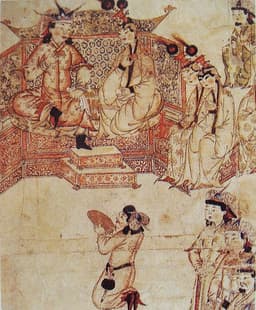
Ghazan Khan
Emperor · Medieval
63.2Total
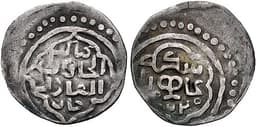
Kebek
Emperor · Medieval
55.3Total
Basic Information
Born
1271
1280
Died
1304
1325
Era
Medieval
Medieval
Nationality
Ilkhanate
Chagatai Khanate
Occupation
Emperor
Emperor
Civilization
Middle Eastern
Eastern
Score Comparison
Military (10%)
50.0
38.3
Political (20%)
70.0
68.0
Influence (20%)
72.0
52.5
Legacy (20%)
58.0
44.2
Leadership (15%)
68.0
74.0
Strategy (15%)
50.0
60.0
TOTAL
63.2
55.3
Ghazan Khan — Complete Timeline
1295 AD
Reforms of the Ilkhanate (Ghazan's Reforms)Reform◆ Major
Ghazan implemented a comprehensive reform program including tax reform, standardization of weights and measures, land redistribution, and the establishment of a new legal code. He also reformed the military and postal system, stabilizing the Ilkhanate after decades of instability.
ReformIlkhanateAdministration
Impact: regionalconstructive
Conversion to IslamCultural
Ghazan converted to Islam upon ascending the throne, becoming the first Ilkhan to adopt the faith. He publicly declared Islam the state religion, ordered the destruction of Buddhist temples and churches, and adopted the name Mahmud. This transformed the Ilkhanate's identity.
ReligionIlkhanateIslam
Impact: regionalconstructive
1297 AD
Patronage of Science and CultureCultural
Ghazan patronized scholars, historians, and scientists, including the vizier Rashid al-Din, who wrote the Jami' al-tawarikh, a world history. Ghazan also built observatories, hospitals, and mosques, contributing to the cultural flowering of the Ilkhanate.
CulturePatronageIlkhanate
Impact: regionalconstructive
1299 AD
Campaigns against the MamluksWar◆ Major
Ghazan led three major invasions of Mamluk Syria, capturing Damascus and Aleppo in 1299
Mongol InvasionSyriaMamluk Sultanate
Impact: regional
Battle of Wadi al-KhaznadarWar
Ghazan's Mongol army defeated the Mamluks under Sultan Al-Nasir Muhammad at Wadi al-Khaznadar near Homs. The victory allowed the Mongols to occupy Damascus and Aleppo, but they withdrew after a few months due to logistical problems and the need to return to Persia.
BattleMongol VictorySyria
Impact: regional
Kebek — Complete Timeline
1309 AD
Became Khan of the Chagatai KhanatePolitical Action◆ Major
Kebek became Khan of the Chagatai Khanate in 1309, succeeding his brother Esen Buqa I. His reign focused on administrative and economic reforms, moving the khanate toward greater stability and centralization.
Chagatai KhanateKhanEsen Buqa I
Impact: regional
1310 AD
Reformed Coinage SystemReform◆ Major
Kebek introduced a standardized silver coinage system across the Chagatai Khanate, replacing the diverse local currencies. The coins, known as 'Kebek dirhams,' facilitated trade and tax collection, strengthening the khanate's economy.
CoinageEconomic ReformTrade
Impact: regionalconstructive
1312 AD
Implemented Administrative ReformsReform◆ Major
Kebek reorganized the Chagatai Khanate's administration, dividing it into provinces (tumens) governed by appointed officials. He also established a centralized tax system and a postal relay network, improving governance and communication.
AdministrationTax ReformCentralization
Impact: regionalconstructive
1314 AD
Defeated by the Yuan DynastyWar
Kebek's forces were defeated by the Yuan dynasty in a border conflict in 1314. The loss forced him to pay tribute to the Yuan, acknowledging their supremacy and ending Kebek's expansionist ambitions in the east.
Yuan DynastyDefeatTribute
Impact: regionaldestructive
Expert Analysis
Origins
Ghazan Khan (1271–1304) was born to Arghun Khan, the fifth Ilkhan, and a Buddhist mother. He was raised in the Mongol tradition, receiving military training and education in Mongolian and Persian. His early life was marked by the political instability of the Ilkhanate, including his father's brief reign and his uncle Gaykhatu's rule. Ghazan converted to Buddhism in his youth but later embraced Islam after his accession.
Kebek (died 1326) was a son of Duwa, the Khan of the Chagatai Khanate. He grew up in a period of internal strife and external pressure from the Yuan Dynasty. His education focused on Mongol customs and governance, but he also adopted elements of sedentary administration from neighboring Islamic states. Kebek's early career involved military campaigns alongside his brother Esen Buqa I.
Rise to Power
Ghazan rose to power in 1295 after a coup against his uncle Baydu. He had been a commander in the Ilkhanate's army, and his conversion to Islam upon accession was a strategic move to gain support from the Muslim majority. His early reign faced challenges from Mongol nobles who opposed his religious shift, but he consolidated power through purges and alliances.
Kebek became Khan in 1309 after the death of his brother Esen Buqa I. His rise was facilitated by the support of the Chagatai nobility, who were weary of constant conflict with the Yuan and the Ilkhanate. Kebek's reign focused on stabilizing the khanate through administrative reforms rather than military expansion.
Leadership & Governance
Ghazan implemented sweeping reforms known as Ghazan's Reforms. He standardized weights and measures, reformed the tax system by introducing fixed rates, and redistributed land to reduce corruption. He also established a centralized bureaucracy with a vizier, Rashid al-Din, who compiled the Jami' al-tawarikh. Ghazan's leadership was characterized by a blend of Mongol military traditions and Persian administrative practices.
Kebek's governance focused on economic stability. He introduced a standardized silver coinage, the 'Kebek dirham', which facilitated trade across the Chagatai Khanate. He divided the realm into provinces (tumens) governed by appointed officials, reducing the power of nomadic chieftains. His administrative reforms were less comprehensive than Ghazan's but effectively centralized authority in Transoxiana.
Triumph & Tragedy
Ghazan's greatest triumph was his reform program, which revitalized the Ilkhanate's economy and administration. His military campaigns against the Mamluks reached a peak at the Battle of Wadi al-Khaznadar (1299), where he defeated the Mamluk army and captured Damascus. However, his failure to hold Syria due to supply issues and internal dissent marked a tragedy. His early death at 32 also cut short his reforms.
Kebek's triumph was the stabilization of the Chagatai Khanate through his coinage and administrative reforms, which laid the groundwork for future prosperity. His tragedy was the defeat by the Yuan Dynasty in 1314, which forced him to pay tribute and accept Yuan suzerainty. This weakened his authority and limited his independence.
Character & Destiny
Ghazan was pragmatic and intellectually curious. He actively participated in scholarly discussions, patronized Rashid al-Din, and even learned Persian. His conversion to Islam was politically motivated but genuine. His decisiveness in implementing reforms contrasted with his occasional brutality against opponents. His early death prevented the full realization of his vision.
Kebek was more cautious and administrative-minded. He avoided large-scale wars, preferring to strengthen internal governance. His decision to pay tribute to the Yuan reflects a realistic assessment of power. However, his reforms were not as far-reaching as Ghazan's, and his legacy is more localized to the Chagatai Khanate.
Legacy
Ghazan's legacy endures through the Islamization of the Ilkhanate and the cultural flourishing under Rashid al-Din. His reforms influenced later Persian dynasties. He scored 72.0 in influence and 58.0 in legacy, reflecting his impact on Islamic history.
Kebek's legacy is tied to his coinage, which remained in use for centuries, and his administrative model that shaped later Chagatai rulers. He scored 52.5 in influence and 44.2 in legacy, indicating a narrower impact.
Conclusion
Ghazan Khan had a greater impact than Kebek. With a total score of 63.2 compared to Kebek's 55.3, Ghazan's reforms transformed the Ilkhanate and left a lasting cultural legacy, while Kebek's achievements, though significant, were confined to the Chagatai Khanate and lacked the same breadth. Ghazan's integration of Mongol and Persian elements created a model that influenced subsequent Islamic empires.
Rankings
🥇
Ghazan KhanLeader
Mil: 50.0Pol: 70.0Inf: 72.0
63.2
🥈
Kebek
Mil: 38.3Pol: 68.0Inf: 52.5
55.3
+7.9 behind
How This Comparison Works
Algorithm
Each figure is scored on 6 dimensions (0—100 scale) based on structured historical data: Military (10%), Political (20%), Influence (20%), Legacy (20%), Leadership (15%), Strategy (15%). The weighted total produces the final ranking.
Data Sources
Scores are computed from structured sub-indicators in the database. Scale factors adjust for era (Ancient ×0.85, Modern ×1.0) and civilization size (Eastern ×1.05, Other ×0.80) to account for differences in population and military scale.
Maximum 3 Figures
Comparisons are limited to 2—3 figures to ensure readability and statistical meaningfulness.
Error Margins
±5 points per dimension — Sub-scores are derived from historical records with inherent uncertainty. Two figures within 5 points on a dimension should be considered roughly equivalent in that area.
Total Score Accuracy
±3 points overall — The weighted combination of 6 dimensions produces a total score with approximately ±3 points of uncertainty. Differences of less than 3 points are not statistically significant— the figures are effectively tied.
Known Limitations
- Historical records are incomplete and uneven across civilizations
- Figures from oral-tradition societies may be underrepresented
- Occupation labels can misclassify multi-role figures
- Scores measure capability and impact, not moral character
- Quantitative scoring is a comparison tool, not absolute truth
Capability Radar
Military (10%) — Battles & Warfare
Battles
55
30
Win Rate
60
35
Expansion
45
35
Political (20%) — Governance & Reform
Reform
85
65
Diplomacy
70
50
Economy
75
60
Influence (20%) — Cultural & Global Reach
Cultural
70
30
Global
55
25
Legacy (20%) — Historical Impact
Historical
65
35
Longevity
60
30
Leadership (15%) — Power & Stability
Tenure
60
50
Stability
65
55
Strategy (15%) — Tactics & Innovation
Strategy
55
40
Tactics
50
40
Reform
65
45
Similar Comparisons
Comments & Discussion
No comments yet. Be the first to share your thoughts!