Loading...
Ghazan Khan vs Gongmin of Goryeo
Ghazan Khan leads by 6.5 pts · 2 figures compared
…
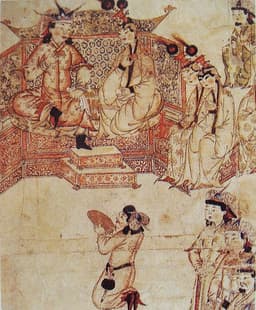
Ghazan Khan
Emperor · Medieval
63.2Total
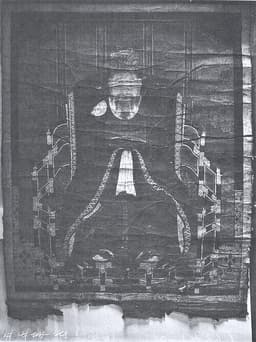
Gongmin of Goryeo
Emperor · Medieval
56.7Total
Basic Information
Born
1271
1330
Died
1304
1374
Era
Medieval
Medieval
Nationality
Ilkhanate
Korea
Occupation
Emperor
Emperor
Civilization
Middle Eastern
Eastern
Score Comparison
Military (10%)
50.0
50.0
Political (20%)
70.0
72.0
Influence (20%)
72.0
55.7
Legacy (20%)
58.0
49.2
Leadership (15%)
68.0
72.0
Strategy (15%)
50.0
38.3
TOTAL
63.2
56.7
Ghazan Khan — Complete Timeline
1295 AD
Reforms of the Ilkhanate (Ghazan's Reforms)Reform◆ Major
Ghazan implemented a comprehensive reform program including tax reform, standardization of weights and measures, land redistribution, and the establishment of a new legal code. He also reformed the military and postal system, stabilizing the Ilkhanate after decades of instability.
ReformIlkhanateAdministration
Impact: regionalconstructive
Conversion to IslamCultural
Ghazan converted to Islam upon ascending the throne, becoming the first Ilkhan to adopt the faith. He publicly declared Islam the state religion, ordered the destruction of Buddhist temples and churches, and adopted the name Mahmud. This transformed the Ilkhanate's identity.
ReligionIlkhanateIslam
Impact: regionalconstructive
1297 AD
Patronage of Science and CultureCultural
Ghazan patronized scholars, historians, and scientists, including the vizier Rashid al-Din, who wrote the Jami' al-tawarikh, a world history. Ghazan also built observatories, hospitals, and mosques, contributing to the cultural flowering of the Ilkhanate.
CulturePatronageIlkhanate
Impact: regionalconstructive
1299 AD
Campaigns against the MamluksWar◆ Major
Ghazan led three major invasions of Mamluk Syria, capturing Damascus and Aleppo in 1299
Mongol InvasionSyriaMamluk Sultanate
Impact: regional
Battle of Wadi al-KhaznadarWar
Ghazan's Mongol army defeated the Mamluks under Sultan Al-Nasir Muhammad at Wadi al-Khaznadar near Homs. The victory allowed the Mongols to occupy Damascus and Aleppo, but they withdrew after a few months due to logistical problems and the need to return to Persia.
BattleMongol VictorySyria
Impact: regional
Gongmin of Goryeo — Complete Timeline
1356 AD
Expulsion of Yuan InfluencePolitical Action◆ Major
Gongmin purged pro-Yuan officials and abolished Mongol-style institutions, reasserting Goryeo's independence. He also reclaimed territories in the northwest, ending decades of Mongol domination.
IndependenceAnti-YuanPolitical Reform
Impact: nationalconstructive
1365 AD
Assassination of Queen NogukPolitical Action
Gongmin's Mongol wife, Queen Noguk, died during childbirth, though rumors of poisoning circulated. Her death deeply affected Gongmin, leading to his withdrawal from governance and increased reliance on Buddhist monks.
Personal TragedyRoyal FamilyPolitical Decline
Impact: nationaltragic
1366 AD
Reform of Land SystemReform◆ Major
Gongmin implemented land reforms to reduce the power of Mongol-aligned nobles and redistribute land to peasants and loyal officials. This weakened Yuan influence and strengthened the central government.
Land ReformCentralizationAnti-Yuan
Impact: nationalprogressive
1374 AD
Assassination by Hong RyunPolitical Action◆ Major
Gongmin was assassinated by his close attendant Hong Ryun and other conspirators, possibly due to his erratic behavior and neglect of state affairs. His death plunged Goryeo into political chaos.
AssassinationPolitical InstabilityEnd of Reign
Impact: nationaltragic
Expert Analysis
Origins
Ghazan Khan was born in 1271 in the Ilkhanate, a Mongol khanate ruling Persia. He was the son of Arghun Khan, and his mother was a Christian princess. Raised in the Buddhist tradition, he later converted to Islam. His early life was shaped by the Mongol court's political intrigues and military campaigns. He was educated in Mongol traditions and warfare, but also exposed to Persian culture and Islam.
Gongmin of Goryeo was born in 1330 in Goryeo (modern Korea), the second son of King Chungsuk. His mother was a Yuan princess. He spent much of his youth in the Yuan court as a hostage, a common practice to ensure Goryeo's loyalty. This experience gave him firsthand knowledge of Mongol power and culture, but also fostered a desire for independence. He ascended the throne in 1351 after his brother died.
Rise to Power
Ghazan Khan rose to power in 1295 after a civil war against his uncle, Baydu. He had previously served as governor of Khorasan, where he gained military and administrative experience. His conversion to Islam upon taking the throne was a strategic move to gain support from the Muslim majority and stabilize the realm. He quickly consolidated power by executing rivals and implementing reforms.
Gongmin ascended the throne in 1351, but real power lay with the Yuan-backed nobility. He initially bided his time, but after the Yuan dynasty began to weaken in the 1350s, he moved to assert independence. In 1356, he purged pro-Yuan officials, abolished Mongol institutions, and reclaimed northern territories. His rise to power was marked by a careful balancing act between domestic factions and external threats.
Leadership & Governance
Ghazan Khan's leadership was characterized by comprehensive state reforms. He standardized weights and measures, reformed taxation to reduce corruption, and redistributed land to peasants and soldiers. He also established a postal system and promoted trade. His patronage of Persian culture and Islam helped integrate Mongol rule with local traditions. He scored 68.0 in leadership and 72.0 in influence.
Gongmin's governance focused on weakening Yuan influence and strengthening the monarchy. He implemented land reforms to reduce the power of Mongol-aligned nobles, redistributing land to peasants and loyal officials. He also reorganized the military and promoted Confucian scholars. However, his later years were marked by erratic behavior and neglect, leading to a decline in governance. He scored 72.0 in political skill but only 38.3 in strategy.
Triumph & Tragedy
Ghazan's triumphs include his successful reforms that revitalized the Ilkhanate economy and administration. His military campaigns, such as the capture of Damascus in 1300, showcased Mongol power. However, his failure to hold Syrian territories due to supply issues and Mamluk resilience was a significant setback. His conversion to Islam also alienated some Mongol traditionalists.
Gongmin's greatest success was expelling Yuan influence and reclaiming territory, notably the Liaodong region. His land reforms weakened the aristocracy and improved peasant conditions. However, his personal tragedy—the death of his wife Queen Noguk in 1365—led to a decline in his mental health. He became paranoid and neglectful, culminating in his assassination in 1374 by his attendant Hong Ryun. This left Goryeo in chaos and allowed Yuan remnants to regain influence.
Character & Destiny
Ghazan was pragmatic and intellectually curious. He studied history, astronomy, and chemistry, and personally oversaw reforms. His conversion to Islam was likely genuine but also politically motivated. His character—disciplined and reform-minded—shaped his destiny as a builder of institutions. However, his military ventures were hampered by overreach.
Gongmin was initially decisive and patriotic, but his character deteriorated after personal loss. He became withdrawn, superstitious, and prone to violence. His neglect of state affairs led to his assassination, undoing many of his reforms. His destiny was shaped by his emotional fragility.
Legacy
Ghazan's legacy endures through his reforms that stabilized the Ilkhanate and fostered Persian culture. The Jami' al-tawarikh, commissioned under his patronage, remains a key historical source. He is remembered as a enlightened ruler who integrated Mongol and Islamic traditions. His influence score is 72.0.
Gongmin's legacy is mixed. He is celebrated in Korea as a nationalist hero who resisted Mongol domination, but his later failures and assassination led to a period of instability. His land reforms had lasting impact on Korean society, though they were partially reversed. His legacy score is 49.2.
Conclusion
Ghazan Khan had a greater impact than Gongmin of Goryeo, as reflected in his total score of 63.2 versus 56.7. Ghazan's reforms were comprehensive and enduring, shaping the Ilkhanate for generations. Gongmin's achievements were significant but ultimately undermined by his personal decline and assassination. Ghazan's influence extended across cultures and through historical records, while Gongmin's legacy is more localized and contested. Thus, Ghazan Khan emerges as the more consequential figure.
Rankings
🥇
Ghazan KhanLeader
Mil: 50.0Pol: 70.0Inf: 72.0
63.2
🥈
Gongmin of Goryeo
Mil: 50.0Pol: 72.0Inf: 55.7
56.7
+6.5 behind
How This Comparison Works
Algorithm
Each figure is scored on 6 dimensions (0—100 scale) based on structured historical data: Military (10%), Political (20%), Influence (20%), Legacy (20%), Leadership (15%), Strategy (15%). The weighted total produces the final ranking.
Data Sources
Scores are computed from structured sub-indicators in the database. Scale factors adjust for era (Ancient ×0.85, Modern ×1.0) and civilization size (Eastern ×1.05, Other ×0.80) to account for differences in population and military scale.
Maximum 3 Figures
Comparisons are limited to 2—3 figures to ensure readability and statistical meaningfulness.
Error Margins
±5 points per dimension — Sub-scores are derived from historical records with inherent uncertainty. Two figures within 5 points on a dimension should be considered roughly equivalent in that area.
Total Score Accuracy
±3 points overall — The weighted combination of 6 dimensions produces a total score with approximately ±3 points of uncertainty. Differences of less than 3 points are not statistically significant— the figures are effectively tied.
Known Limitations
- Historical records are incomplete and uneven across civilizations
- Figures from oral-tradition societies may be underrepresented
- Occupation labels can misclassify multi-role figures
- Scores measure capability and impact, not moral character
- Quantitative scoring is a comparison tool, not absolute truth
Capability Radar
Military (10%) — Battles & Warfare
Battles
55
20
Win Rate
60
25
Expansion
45
10
Political (20%) — Governance & Reform
Reform
85
70
Diplomacy
70
65
Economy
75
50
Influence (20%) — Cultural & Global Reach
Cultural
70
45
Global
55
30
Legacy (20%) — Historical Impact
Historical
65
55
Longevity
60
40
Leadership (15%) — Power & Stability
Tenure
60
60
Stability
65
40
Strategy (15%) — Tactics & Innovation
Strategy
55
15
Tactics
50
20
Reform
65
30
Similar Comparisons
Comments & Discussion
No comments yet. Be the first to share your thoughts!