Loading...
Alfonso I of Asturias vs Ghazan Khan
Ghazan Khan leads by 18.6 pts · 2 figures compared
…

Alfonso I of Asturias
Emperor · Medieval
44.6Total
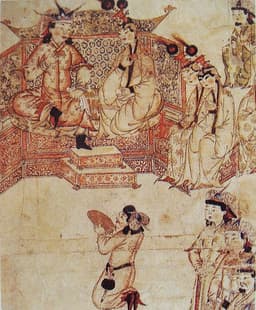
Ghazan Khan
Emperor · Medieval
63.2Total
Basic Information
Born
693
1271
Died
757
1304
Era
Medieval
Medieval
Nationality
Asturias
Ilkhanate
Occupation
Emperor
Emperor
Civilization
Western
Middle Eastern
Score Comparison
Military (10%)
55.0
50.0
Political (20%)
27.9
70.0
Influence (20%)
49.4
72.0
Legacy (20%)
42.5
58.0
Leadership (15%)
51.9
68.0
Strategy (15%)
41.7
50.0
TOTAL
44.6
63.2
Alfonso I of Asturias — Complete Timeline
730 AD
Married Ermesinda, daughter of PelagiusPolitical Action
Alfonso married Ermesinda, the daughter of Pelagius, the first king of Asturias. This marriage allied him with the founding dynasty and legitimized his claim to the throne, which he later inherited after Pelagius's death.
MarriageDynastyAsturias
Impact: nationalconstructive
740 AD
Expanded the Kingdom of Asturias into Galicia and LeónWar◆ Major
Alfonso I launched military campaigns that extended Asturian control over Galicia, Le
Territorial ExpansionAsturiasReconquista
Impact: regionalconstructive
750 AD
Established the policy of depopulating the Duero ValleyPolitical Action◆ Major
Alfonso I implemented a strategy of depopulating the Duero River valley by relocating Christian populations northward. This created a buffer zone between Asturias and Muslim-controlled lands, hindering Umayyad incursions and shaping the region's demographic landscape.
Demographic PolicyAsturiasReconquista
Impact: regionaldestructive
Ghazan Khan — Complete Timeline
1295 AD
Reforms of the Ilkhanate (Ghazan's Reforms)Reform◆ Major
Ghazan implemented a comprehensive reform program including tax reform, standardization of weights and measures, land redistribution, and the establishment of a new legal code. He also reformed the military and postal system, stabilizing the Ilkhanate after decades of instability.
ReformIlkhanateAdministration
Impact: regionalconstructive
Conversion to IslamCultural
Ghazan converted to Islam upon ascending the throne, becoming the first Ilkhan to adopt the faith. He publicly declared Islam the state religion, ordered the destruction of Buddhist temples and churches, and adopted the name Mahmud. This transformed the Ilkhanate's identity.
ReligionIlkhanateIslam
Impact: regionalconstructive
1297 AD
Patronage of Science and CultureCultural
Ghazan patronized scholars, historians, and scientists, including the vizier Rashid al-Din, who wrote the Jami' al-tawarikh, a world history. Ghazan also built observatories, hospitals, and mosques, contributing to the cultural flowering of the Ilkhanate.
CulturePatronageIlkhanate
Impact: regionalconstructive
1299 AD
Campaigns against the MamluksWar◆ Major
Ghazan led three major invasions of Mamluk Syria, capturing Damascus and Aleppo in 1299
Mongol InvasionSyriaMamluk Sultanate
Impact: regional
Battle of Wadi al-KhaznadarWar
Ghazan's Mongol army defeated the Mamluks under Sultan Al-Nasir Muhammad at Wadi al-Khaznadar near Homs. The victory allowed the Mongols to occupy Damascus and Aleppo, but they withdrew after a few months due to logistical problems and the need to return to Persia.
BattleMongol VictorySyria
Impact: regional
Expert Analysis
Origins
**Alfonso I of Asturias** was born around 693, likely in the Cantabrian region. He was the son of Duke Peter of Cantabria, a Visigothic noble. His early life coincided with the Muslim conquest of Hispania, which began in 711. Alfonso married Ermesinda, daughter of Pelagius, the first Asturian king, linking him to the founding dynasty. This marriage provided legitimacy and positioned him as a key figure in the Christian resistance.
**Ghazan Khan** was born on November 5, 1271, in the Ilkhanate, a Mongol state in Persia. He was the son of Arghun Khan and a Buddhist mother, and he was raised as a Buddhist. His early years were shaped by the Mongol court culture, but he also received education in Persian and Islamic traditions. Ghazan's grandfather, Abaqa, had ruled the Ilkhanate, and Ghazan was groomed for leadership, though his path was contested by rivals.
Rise to Power
Alfonso I rose to prominence through his marriage to Ermesinda, which made him a royal consort. After Pelagius's death in 737, Alfonso became king. He capitalized on internal divisions among the Moors, launching campaigns to expand Asturian territory. Key turning points included his alliance with his brother Fruela, and his ability to mobilize Christian populations. By 740, he had extended his control into Galicia and Leon, taking advantage of the Berber revolt in al-Andalus.
Ghazan Khan's rise was more turbulent. In 1295, he overthrew his rival, the Ilkhan Baidu, with the support of Mongol nobles and Muslim converts. Ghazan had previously fought against Baidu, but after a series of betrayals, he defeated him at the Battle of Tabriz. Ghazan's conversion to Islam upon taking the throne was a strategic move to secure support from the Muslim majority. He was crowned in 1295, becoming the first Ilkhan to adopt Islam as state religion.
Leadership & Governance
Alfonso I's leadership was military-focused. He expanded the Kingdom of Asturias through campaigns into Galicia and Leon, and implemented a policy of depopulating the Duero Valley. By relocating Christians northward, he created a buffer zone against Moorish raids. However, his political governance was less sophisticated; he scored 27.9 in political acumen. He did not establish lasting administrative structures, relying on personal authority and kinship ties.
Ghazan Khan was a reformer. He implemented the Ghazan's Reforms, which included tax reform, standardization of weights and measures, land redistribution, and the establishment of a postal system. He also centralized the bureaucracy, reducing corruption. His political score of 70.0 reflects his systematic approach. Ghazan patronized scholars like Rashid al-Din, who compiled the Jami' al-tawarikh, a world history. He also built observatories and hospitals.
Triumph & Tragedy
Alfonso I's greatest success was expanding Asturias to control Galicia and Leon, and creating the Duero buffer zone. His military campaigns secured Christian footholds in northern Iberia. However, his depopulation policy also weakened the region economically, and his lack of administrative reforms left the kingdom vulnerable. He scored 55.0 in military, but his legacy was limited by his failure to consolidate gains.
Ghazan Khan's triumphs include converting the Ilkhanate to Islam, which stabilized the realm, and his comprehensive reforms that modernized the state. He also led campaigns against the Mamluks, capturing Damascus and Aleppo in 1299-1300. However, he failed to hold these territories due to supply lines and Mamluk counterattacks. His greatest tragedy was his inability to defeat the Mamluks decisively, and his early death at age 32 in 1304 left his reforms incomplete.
Character & Destiny
Alfonso I was a pragmatic warrior-king, focused on survival and expansion. His decision to marry into Pelagius's line shows political calculation, but his reliance on depopulation suggests a short-term mindset. Historians note his role in the Reconquista, but his character was more that of a chieftain than a statesman.
Ghazan Khan was a visionary reformer, but also a ruthless ruler. He converted to Islam for political gain, and he eliminated rivals without mercy. His patronage of culture indicates a sophisticated mind, yet his campaigns were often hampered by overreach. His destiny was shaped by his ambition and the vast, fragmented Ilkhanate he inherited.
Legacy
Alfonso I's legacy is mixed. He is remembered as a key figure in the early Reconquista, but his depopulation policy had long-term negative effects on the Duero region. His kingdom set the stage for later Asturian expansion, but his direct impact was limited. His total score of 44.6 reflects this.
Ghazan Khan's legacy is more profound. His conversion made the Ilkhanate a Muslim state, which influenced later Mongol dynasties. His reforms created a more efficient administration that lasted beyond his reign. He is also remembered for his patronage of history and science. His total score of 63.2 indicates greater overall impact.
Conclusion
Ghazan Khan had a greater impact than Alfonso I. While Alfonso expanded a small Christian kingdom, Ghazan transformed an empire through conversion and reform. Ghazan's political and influence scores (70.0 and 72.0) far exceed Alfonso's (27.9 and 49.4). Ghazan's reforms had lasting effects on the Ilkhanate and Persian society, whereas Alfonso's achievements were more localized and less enduring. The 18.6-point score gap underscores this disparity. Ghazan Khan is the more significant historical figure.
Rankings
🥇
Ghazan KhanLeader
Mil: 50.0Pol: 70.0Inf: 72.0
63.2
🥈
Alfonso I of Asturias
Mil: 55.0Pol: 27.9Inf: 49.4
44.6
+18.6 behind
How This Comparison Works
Algorithm
Each figure is scored on 6 dimensions (0—100 scale) based on structured historical data: Military (10%), Political (20%), Influence (20%), Legacy (20%), Leadership (15%), Strategy (15%). The weighted total produces the final ranking.
Data Sources
Scores are computed from structured sub-indicators in the database. Scale factors adjust for era (Ancient ×0.85, Modern ×1.0) and civilization size (Eastern ×1.05, Other ×0.80) to account for differences in population and military scale.
Maximum 3 Figures
Comparisons are limited to 2—3 figures to ensure readability and statistical meaningfulness.
Error Margins
±5 points per dimension — Sub-scores are derived from historical records with inherent uncertainty. Two figures within 5 points on a dimension should be considered roughly equivalent in that area.
Total Score Accuracy
±3 points overall — The weighted combination of 6 dimensions produces a total score with approximately ±3 points of uncertainty. Differences of less than 3 points are not statistically significant— the figures are effectively tied.
Known Limitations
- Historical records are incomplete and uneven across civilizations
- Figures from oral-tradition societies may be underrepresented
- Occupation labels can misclassify multi-role figures
- Scores measure capability and impact, not moral character
- Quantitative scoring is a comparison tool, not absolute truth
Capability Radar
Military (10%) — Battles & Warfare
Battles
30
55
Win Rate
35
60
Expansion
40
45
Political (20%) — Governance & Reform
Reform
20
85
Diplomacy
25
70
Economy
20
75
Influence (20%) — Cultural & Global Reach
Cultural
20
70
Global
15
55
Legacy (20%) — Historical Impact
Historical
30
65
Longevity
25
60
Leadership (15%) — Power & Stability
Tenure
35
60
Stability
30
65
Strategy (15%) — Tactics & Innovation
Strategy
30
55
Tactics
25
50
Reform
20
65
Similar Comparisons
Comments & Discussion
No comments yet. Be the first to share your thoughts!