Loading...
Ghazan Khan vs Pulakeshin II
Ghazan Khan leads by 1.0 pts · 2 figures compared
…
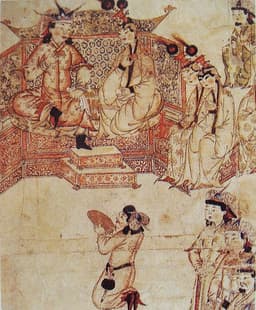
Ghazan Khan
Emperor · Medieval
63.2Total
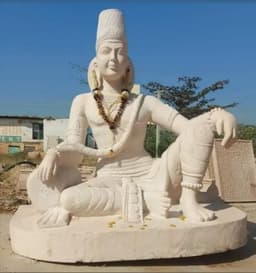
Pulakeshin II
Emperor · Medieval
62.2Total
Basic Information
Born
1271
610
Died
1304
642
Era
Medieval
Medieval
Nationality
Ilkhanate
India
Occupation
Emperor
Emperor
Civilization
Middle Eastern
Indian
Score Comparison
Military (10%)
50.0
76.0
Political (20%)
70.0
60.0
Influence (20%)
72.0
62.0
Legacy (20%)
58.0
56.0
Leadership (15%)
68.0
62.4
Strategy (15%)
50.0
67.2
TOTAL
63.2
62.2
Ghazan Khan — Complete Timeline
1295 AD
Reforms of the Ilkhanate (Ghazan's Reforms)Reform◆ Major
Ghazan implemented a comprehensive reform program including tax reform, standardization of weights and measures, land redistribution, and the establishment of a new legal code. He also reformed the military and postal system, stabilizing the Ilkhanate after decades of instability.
ReformIlkhanateAdministration
Impact: regionalconstructive
Conversion to IslamCultural
Ghazan converted to Islam upon ascending the throne, becoming the first Ilkhan to adopt the faith. He publicly declared Islam the state religion, ordered the destruction of Buddhist temples and churches, and adopted the name Mahmud. This transformed the Ilkhanate's identity.
ReligionIlkhanateIslam
Impact: regionalconstructive
1297 AD
Patronage of Science and CultureCultural
Ghazan patronized scholars, historians, and scientists, including the vizier Rashid al-Din, who wrote the Jami' al-tawarikh, a world history. Ghazan also built observatories, hospitals, and mosques, contributing to the cultural flowering of the Ilkhanate.
CulturePatronageIlkhanate
Impact: regionalconstructive
1299 AD
Campaigns against the MamluksWar◆ Major
Ghazan led three major invasions of Mamluk Syria, capturing Damascus and Aleppo in 1299
Mongol InvasionSyriaMamluk Sultanate
Impact: regional
Battle of Wadi al-KhaznadarWar
Ghazan's Mongol army defeated the Mamluks under Sultan Al-Nasir Muhammad at Wadi al-Khaznadar near Homs. The victory allowed the Mongols to occupy Damascus and Aleppo, but they withdrew after a few months due to logistical problems and the need to return to Persia.
BattleMongol VictorySyria
Impact: regional
Pulakeshin II — Complete Timeline
625 AD
Received an Embassy from the Sassanid Persian KingPolitical Action
Pulakeshin II received a diplomatic mission from the Sassanid Persian king Khosrow II, as recorded in the Aihole inscription. This embassy indicates the Chalukya kingdom's international prestige and trade connections with the Persian Gulf.
DiplomacyInternational Relations
Impact: regional
630 AD
Defeated Emperor Harsha at the Battle of NarmadaWar
Pulakeshin II repelled an invasion by the northern emperor Harsha of Kannauj on the banks of the Narmada River. This victory established the Chalukya kingdom as the dominant power in the Deccan and prevented Harsha from expanding southward.
BattleChalukya-Harsha War
Impact: regional
634 AD
Issued the Aihole InscriptionCultural
Pulakeshin II commissioned the Aihole inscription, composed by the poet Ravikirti. The inscription details his military campaigns, including the defeat of Harsha, and provides a key historical source for the Chalukya dynasty.
InscriptionPropaganda
Impact: regional
642 AD
Conquered the Pallava Capital KanchipuramWar◆ Major
Pulakeshin II captured the Pallava capital of Kanchipuram, defeating the Pallava king Mahendravarman I. This conquest extended Chalukya control into Tamil country and marked the height of his empire's territorial extent.
ConquestPallava War
Impact: regional
Killed in Battle by the PallavasWar◆ Major
Pulakeshin II was killed in battle against the Pallava king Narasimhavarman I, who avenged the earlier capture of Kanchipuram. The Pallavas sacked the Chalukya capital Vatapi, and Pulakeshin's death led to a temporary decline of the Chalukya empire.
BattleDeath
Impact: regionaltragic
Expert Analysis
Origins
Ghazan Khan was born in 1271 in the Ilkhanate, a Mongol khanate in Persia. He was the son of Arghun Khan and a Buddhist mother. Raised in a Mongol court, he was trained in warfare and administration. He converted to Buddhism before later embracing Islam. Pulakeshin II was born around 610 CE in the Chalukya dynasty of southern India. His father, Kirttivarman I, was a Chalukya king. Pulakeshin II received a traditional Hindu education and military training. He ascended the throne after a succession struggle with his uncle Mangalesha.
Rise to Power
Ghazan Khan rose to power in 1295 after overthrowing his rival Baidu with the support of Mongol nobles. His conversion to Islam upon accession was a turning point, gaining support from the Muslim majority. Pulakeshin II became king in 610 CE after defeating his uncle Mangalesha. His major turning point was the Battle of Narmada in 618 CE, where he repelled the invasion of Emperor Harsha of Kannauj, establishing Chalukya supremacy in the Deccan.
Leadership & Governance
Ghazan Khan implemented comprehensive reforms, known as Ghazan's Reforms, which included tax reform, standardization of weights and measures, land redistribution, and the establishment of a postal system. He also patronized scholars like Rashid al-Din, who wrote the Jami' al-tawarikh. His leadership was centralized and bureaucratic, with a focus on economic stability. Pulakeshin II expanded the Chalukya empire through military conquests, defeating the Kadambas, Gangas, and Pallavas. He issued the Aihole inscription, detailing his campaigns. His governance was feudal, with local chiefs paying tribute. He maintained diplomatic relations with the Sassanid Persian king Khosrow II.
Triumph & Tragedy
Ghazan Khan's greatest success was his reform program, which stabilized the Ilkhanate's economy and administration. He also led campaigns against the Mamluks, capturing Damascus and Aleppo in 1299-1300. However, he failed to hold Syria due to supply issues and Mamluk resistance. His conversion to Islam led to religious tensions with Buddhist and Christian subjects. Pulakeshin II's greatest triumph was defeating Harsha and conquering the Pallava capital Kanchipuram. However, he was killed in battle in 642 CE by the Pallava king Narasimhavarman I, who avenged the earlier defeat. The Pallavas sacked the Chalukya capital Vatapi, leading to a period of decline.
Character & Destiny
Ghazan Khan was pragmatic and adaptable, converting to Islam to secure his rule. He was a reformer who sought to centralize power and improve the state. His military campaigns showed strategic ability but lacked follow-through. Pulakeshin II was ambitious and militarily aggressive, expanding his empire through conquest. His defeat and death at the hands of the Pallavas highlight his overextension and inability to consolidate gains. Historians note his administrative skills through the Aihole inscription but criticize his lack of defensive preparedness.
Legacy
Ghazan Khan's reforms influenced later Mongol and Persian administrations. His patronage of Rashid al-Din produced a major historical work. The Ilkhanate became more Persianized and Islamic under his rule. Pulakeshin II is remembered as a great conqueror in Indian history. The Aihole inscription provides valuable historical records. The Chalukya empire continued after his death but never regained its peak. His defeat of Harsha is considered a defining moment in Indian history, preventing northern domination of the Deccan.
Conclusion
Ghazan Khan scored 63.2 overall, with high political (70.0) and influence (72.0) scores, while Pulakeshin II scored 62.2, with higher military (76.0) and strategy (67.2) scores. Ghazan Khan's impact was more enduring due to his comprehensive reforms and cultural patronage, which shaped the Ilkhanate's trajectory. Pulakeshin II's military achievements were significant but temporary, as his empire declined after his death. Therefore, Ghazan Khan had a greater historical impact.
Rankings
🥇
Ghazan KhanLeader
Mil: 50.0Pol: 70.0Inf: 72.0
63.2
🥈
Pulakeshin II
Mil: 76.0Pol: 60.0Inf: 62.0
62.2
+1.0 behind
How This Comparison Works
Algorithm
Each figure is scored on 6 dimensions (0—100 scale) based on structured historical data: Military (10%), Political (20%), Influence (20%), Legacy (20%), Leadership (15%), Strategy (15%). The weighted total produces the final ranking.
Data Sources
Scores are computed from structured sub-indicators in the database. Scale factors adjust for era (Ancient ×0.85, Modern ×1.0) and civilization size (Eastern ×1.05, Other ×0.80) to account for differences in population and military scale.
Maximum 3 Figures
Comparisons are limited to 2—3 figures to ensure readability and statistical meaningfulness.
Error Margins
±5 points per dimension — Sub-scores are derived from historical records with inherent uncertainty. Two figures within 5 points on a dimension should be considered roughly equivalent in that area.
Total Score Accuracy
±3 points overall — The weighted combination of 6 dimensions produces a total score with approximately ±3 points of uncertainty. Differences of less than 3 points are not statistically significant— the figures are effectively tied.
Known Limitations
- Historical records are incomplete and uneven across civilizations
- Figures from oral-tradition societies may be underrepresented
- Occupation labels can misclassify multi-role figures
- Scores measure capability and impact, not moral character
- Quantitative scoring is a comparison tool, not absolute truth
Capability Radar
Military (10%) — Battles & Warfare
Battles
55
75
Win Rate
60
80
Expansion
45
85
Political (20%) — Governance & Reform
Reform
85
65
Diplomacy
70
75
Economy
75
70
Influence (20%) — Cultural & Global Reach
Cultural
70
60
Global
55
50
Legacy (20%) — Historical Impact
Historical
65
65
Longevity
60
55
Leadership (15%) — Power & Stability
Tenure
60
70
Stability
65
68
Strategy (15%) — Tactics & Innovation
Strategy
55
82
Tactics
50
78
Reform
65
60
Similar Comparisons
Comments & Discussion
No comments yet. Be the first to share your thoughts!