Loading...
Gongmin of Goryeo vs Napoleon Bonaparte
Napoleon Bonaparte leads by 14.2 pts · 2 figures compared
…
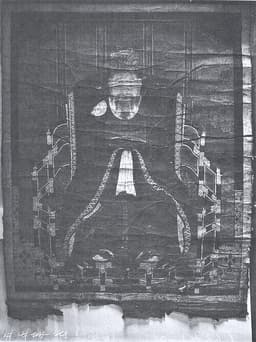
Gongmin of Goryeo
Emperor · Medieval
56.7Total

Napoleon Bonaparte
General · Modern
70.9Total
Basic Information
Born
1330
1769
Died
1374
1821
Era
Medieval
Modern
Nationality
Korea
France
Occupation
Emperor
General
Civilization
Eastern
Western
Score Comparison
Military (10%)
50.0
94.0
Political (20%)
72.0
72.0
Influence (20%)
55.7
40.0
Legacy (20%)
49.2
80.0
Leadership (15%)
72.0
78.0
Strategy (15%)
38.3
90.0
TOTAL
56.7
70.9
Gongmin of Goryeo — Complete Timeline
1356 AD
Expulsion of Yuan InfluencePolitical Action◆ Major
Gongmin purged pro-Yuan officials and abolished Mongol-style institutions, reasserting Goryeo's independence. He also reclaimed territories in the northwest, ending decades of Mongol domination.
IndependenceAnti-YuanPolitical Reform
Impact: nationalconstructive
1365 AD
Assassination of Queen NogukPolitical Action
Gongmin's Mongol wife, Queen Noguk, died during childbirth, though rumors of poisoning circulated. Her death deeply affected Gongmin, leading to his withdrawal from governance and increased reliance on Buddhist monks.
Personal TragedyRoyal FamilyPolitical Decline
Impact: nationaltragic
1366 AD
Reform of Land SystemReform◆ Major
Gongmin implemented land reforms to reduce the power of Mongol-aligned nobles and redistribute land to peasants and loyal officials. This weakened Yuan influence and strengthened the central government.
Land ReformCentralizationAnti-Yuan
Impact: nationalprogressive
1374 AD
Assassination by Hong RyunPolitical Action◆ Major
Gongmin was assassinated by his close attendant Hong Ryun and other conspirators, possibly due to his erratic behavior and neglect of state affairs. His death plunged Goryeo into political chaos.
AssassinationPolitical InstabilityEnd of Reign
Impact: nationaltragic
Napoleon Bonaparte — Complete Timeline
1799 AD
Coup of 18 BrumaireOther◆ Major
Napoleon Bonaparte, with support from his brother Lucien and key political figures, overthrew the Directory in a bloodless coup. He established the Consulate with himself as First Consul, effectively becoming the ruler of France. This event ended the French Revolution's most unstable period.
French RevolutionCoupRise to Power
Impact: regional
1804 AD
Promulgation of the Napoleonic CodeOther◆ Major
Napoleon enacted the Civil Code of the French, known as the Napoleonic Code, a comprehensive set of laws that replaced the fragmented feudal legal systems. The code established legal equality, protected property rights, and secularized law. It became the basis for legal systems in many European and world countries.
Legal ReformNapoleonic CodeCivil Law
Impact: globalconstructive
1805 AD
Battle of AusterlitzWar◆ Major
Napoleon's Grande Arm
Napoleonic WarsBattleDecisive Victory
Impact: global
1812 AD
Invasion of RussiaWar◆ Major
Napoleon led the Grande Arm
Napoleonic WarsInvasionDisaster
Impact: globaldestructive
1815 AD
Battle of WaterlooWar◆ Major
Napoleon's French army was defeated by the combined forces of the Duke of Wellington's Anglo-Allied army and Gebhard Leberecht von Bl
Napoleonic WarsBattleFinal Defeat
Impact: globaldestructive
Expert Analysis
gongmin-of-goryeo-vs-napoleon-bonaparte
# The Eagle and the Phoenix: Napoleon Bonaparte and King Gongmin of Goryeo
On a June morning in 1815, Napoleon Bonaparte surveyed the muddy fields of Waterloo, his Grande Armée poised for what would be his final gamble. Four centuries earlier and half a world away, King Gongmin of Goryeo stood on the walls of his palace in Kaesong, watching the smoke rise from the burning symbols of Mongol domination. Both men faced empires that had shaped their worlds—Napoleon against the combined might of Europe, Gongmin against the crumbling Yuan dynasty. Yet their fates could not have been more different: one would die in exile on a remote Atlantic island, the other murdered by his own servant in the shadows of his throne. What drove these two rulers, separated by time and culture, to such divergent ends?
Origins
Napoleon Bonaparte was born in 1769 on the Mediterranean island of Corsica, a land recently annexed by France. His family belonged to the minor nobility, but they were neither wealthy nor influential. The young Napoleon grew up speaking Corsican Italian, not French, and carried a lifelong sense of being an outsider. The French Revolution, erupting when he was twenty, shattered the old order and opened doors that would have remained closed under the monarchy. A Corsican boy with a talent for mathematics and artillery could now command armies.
King Gongmin, born in 1330, was the son of a Goryeo king who ruled under the shadow of the Mongol Yuan dynasty. For nearly a century, Goryeo had been a vassal state, its kings forced to marry Mongol princesses, adopt Mongol customs, and send tribute. Gongmin himself was half-Mongol through his mother. Unlike Napoleon, who rose from obscurity, Gongmin was born into power—but it was a power borrowed from foreign masters. His education was a careful balancing act between Korean tradition and Mongol expectation.
Rise to Power
Napoleon’s ascent was a masterpiece of ambition and timing. In 1793, at just twenty-four, he recaptured the port of Toulon from British forces, earning promotion to brigadier general. By 1796, he commanded the French army in Italy, where his lightning campaigns stunned Europe. The Directory, France’s corrupt ruling body, gave him command not out of trust but because he was seen as useful—and expendable. Napoleon understood better than anyone that in revolutionary France, merit mattered more than birth.
Gongmin’s path was slower and more treacherous. He became king in 1351 at age twenty-one, inheriting a realm that was less a kingdom than a province of the Mongol empire. His first years were spent enduring the humiliations of vassalage—attending Mongol courts, sending sons as hostages, watching his officials bow to Yuan envoys. But Gongmin was patient. He studied the growing weakness of the Yuan dynasty, which was collapsing under rebellions in China. In 1356, he struck: purging pro-Yuan officials, abolishing Mongol institutions, and reclaiming Goryeo’s northern territories. It was a risk that could have brought annihilation, but his timing was perfect.
Leadership and Governance
Napoleon’s genius was military, but his ambition was political. As First Consul from 1799 and Emperor from 1804, he reorganized France with the efficiency of a battlefield. The Napoleonic Code standardized law, the Bank of France stabilized currency, and the lycées system created a meritocratic education. Yet his governance was a dictatorship in republican clothing. He centralized power, censored the press, and crowned himself emperor in a ceremony where he famously took the crown from the pope’s hands.
Gongmin governed as a reformer, not a conqueror. His land reforms of 1366 redistributed property from Mongol-aligned nobles to peasants and loyal officials, breaking the economic backbone of foreign influence. He promoted Confucian scholarship, revived Korean cultural practices, and rebuilt temples destroyed under Mongol rule. But his leadership was increasingly solitary. The death of his Mongol wife, Queen Noguk, in 1365—rumored to have been poisoned—shattered him. He withdrew from court, surrounded himself with Buddhist monks and young favorites, and neglected the daily business of rule.
Triumph and Tragedy
Napoleon’s greatest triumph was his military peak: the 1805 victory at Austerlitz, where he crushed the combined armies of Russia and Austria. He redrew the map of Europe, placed his brothers on thrones, and seemed invincible. His tragedy was the same ambition that made him great. The 1812 invasion of Russia cost half a million men. The 1814 defeat forced his first abdication. The Hundred Days in 1815 ended at Waterloo, a battle he might have won if rain had not delayed his artillery or if his generals had followed orders.
Gongmin’s triumph was quieter but no less significant: the restoration of Korean sovereignty. By 1360, Goryeo was once again an independent kingdom, free from Mongol interference. His tragedy was personal and political. Queen Noguk’s death drove him into paranoia and erratic behavior. He turned to a young Buddhist monk named Shin Don, who became his chief advisor and, eventually, a tyrant who exploited the king’s trust. By 1374, Gongmin was isolated, suspicious of everyone, and prone to violent outbursts. His assassination by Hong Ryun, a trusted attendant, was a sordid end: stabbed in his bedchamber, the reformer king died alone.
Character and Destiny
Napoleon was driven by an insatiable hunger for glory. “Impossible,” he once said, “is a word to be found only in the dictionary of fools.” His confidence bordered on delusion—he believed his star would never fade. This hubris led him to invade Russia, reject peace offers, and fight on when retreat might have saved his empire. His character was his destiny: a man who could not stop until he had everything, and therefore lost everything.
Gongmin was driven by a different fire: the desire for independence. His courage was real, but his temperament was melancholic. After Queen Noguk’s death, he wrote poems mourning her, neglected his duties, and sought solace in Buddhism. His character was shaped by grief, not glory. Where Napoleon saw the world as a stage for his ambition, Gongmin saw it as a burden he had to bear alone. One man was destroyed by his success, the other by his sorrow.
Legacy
Napoleon’s legacy is colossal. The Napoleonic Code influenced legal systems across Europe and the Americas. His military tactics are still studied in war colleges. He reshaped nationalism, statecraft, and the very idea of the modern state. Yet he is remembered as both liberator and tyrant, a man who spread revolutionary ideals while crushing them under his crown.
Gongmin’s legacy is more contained but equally profound in Korea. He is celebrated as the king who restored national pride, a symbol of resistance against foreign domination. His land reforms laid groundwork for later dynasties. But his later years tarnished his memory—he is seen as a tragic figure, a reformer who lost his way. In modern South Korea, his portrait appears on the 10,000 won banknote, a quiet reminder that even flawed leaders can shape a nation’s soul.
Conclusion
Napoleon and Gongmin lived in different worlds, yet both faced the same essential question: what does a ruler owe to his people and to himself? Napoleon answered with conquest, Gongmin with liberation. One built an empire that collapsed under its own weight; the other restored a kingdom that endured for centuries. Perhaps the deepest difference lies in their relationship with time. Napoleon raced against it, desperate to achieve everything in a single lifetime. Gongmin tried to slow it, mourning what he had lost even as he fought for what remained. In the end, the eagle fell from the sky, and the phoenix rose from ashes—but both, in their own ways, changed the world forever.
Rankings
🥇
Napoleon BonaparteLeader
Mil: 94.0Pol: 72.0Inf: 40.0
70.9
🥈
Gongmin of Goryeo
Mil: 50.0Pol: 72.0Inf: 55.7
56.7
+14.2 behind
How This Comparison Works
Algorithm
Each figure is scored on 6 dimensions (0—100 scale) based on structured historical data: Military (10%), Political (20%), Influence (20%), Legacy (20%), Leadership (15%), Strategy (15%). The weighted total produces the final ranking.
Data Sources
Scores are computed from structured sub-indicators in the database. Scale factors adjust for era (Ancient ×0.85, Modern ×1.0) and civilization size (Eastern ×1.05, Other ×0.80) to account for differences in population and military scale.
Maximum 3 Figures
Comparisons are limited to 2—3 figures to ensure readability and statistical meaningfulness.
Error Margins
±5 points per dimension — Sub-scores are derived from historical records with inherent uncertainty. Two figures within 5 points on a dimension should be considered roughly equivalent in that area.
Total Score Accuracy
±3 points overall — The weighted combination of 6 dimensions produces a total score with approximately ±3 points of uncertainty. Differences of less than 3 points are not statistically significant— the figures are effectively tied.
Known Limitations
- Historical records are incomplete and uneven across civilizations
- Figures from oral-tradition societies may be underrepresented
- Occupation labels can misclassify multi-role figures
- Scores measure capability and impact, not moral character
- Quantitative scoring is a comparison tool, not absolute truth
Capability Radar
Military (10%) — Battles & Warfare
Battles
20
95
Win Rate
25
90
Expansion
10
95
Political (20%) — Governance & Reform
Reform
70
95
Diplomacy
65
80
Economy
50
85
Influence (20%) — Cultural & Global Reach
Cultural
45
85
Global
30
90
Legacy (20%) — Historical Impact
Historical
55
95
Longevity
40
90
Leadership (15%) — Power & Stability
Tenure
60
85
Stability
40
70
Strategy (15%) — Tactics & Innovation
Strategy
15
95
Tactics
20
98
Reform
30
92
Similar Comparisons
Comments & Discussion
GONGMIN'S GHOST6/17/2026
Waterloo was a tragedy; Gongmin's death was farce. Napoleon picked his battles, but Gongmin, despite brilliant reforms, got knifed by his own eunuch at age 44. That is not a "similar fate"—that's a leadership failure. Napoleonic charisma and strategic genius kept armies loyal; Gongmin’s purges made enemies among allies. No empire survives when you can't trust your bedchamber. Epic reformer? Sure. But you sleep with daggers if you rule by fear.