Loading...
Gongmin of Goryeo vs Itzcoatl
Itzcoatl leads by 1.4 pts · 2 figures compared
…
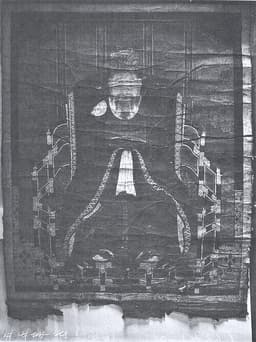
Gongmin of Goryeo
Emperor · Medieval
56.7Total
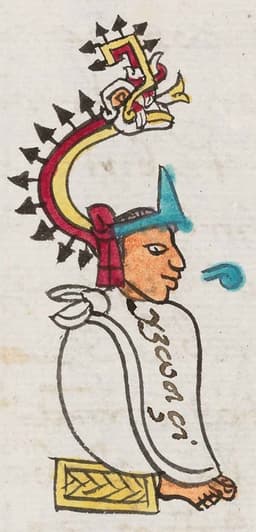
Itzcoatl
Emperor · Medieval
58.1Total
Basic Information
Born
1330
1380
Died
1374
1440
Era
Medieval
Medieval
Nationality
Korea
Aztec Empire
Occupation
Emperor
Emperor
Civilization
Eastern
Other
Score Comparison
Military (10%)
50.0
61.7
Political (20%)
72.0
55.0
Influence (20%)
55.7
61.0
Legacy (20%)
49.2
52.0
Leadership (15%)
72.0
66.0
Strategy (15%)
38.3
55.0
TOTAL
56.7
58.1
Gongmin of Goryeo — Complete Timeline
1356 AD
Expulsion of Yuan InfluencePolitical Action◆ Major
Gongmin purged pro-Yuan officials and abolished Mongol-style institutions, reasserting Goryeo's independence. He also reclaimed territories in the northwest, ending decades of Mongol domination.
IndependenceAnti-YuanPolitical Reform
Impact: nationalconstructive
1365 AD
Assassination of Queen NogukPolitical Action
Gongmin's Mongol wife, Queen Noguk, died during childbirth, though rumors of poisoning circulated. Her death deeply affected Gongmin, leading to his withdrawal from governance and increased reliance on Buddhist monks.
Personal TragedyRoyal FamilyPolitical Decline
Impact: nationaltragic
1366 AD
Reform of Land SystemReform◆ Major
Gongmin implemented land reforms to reduce the power of Mongol-aligned nobles and redistribute land to peasants and loyal officials. This weakened Yuan influence and strengthened the central government.
Land ReformCentralizationAnti-Yuan
Impact: nationalprogressive
1374 AD
Assassination by Hong RyunPolitical Action◆ Major
Gongmin was assassinated by his close attendant Hong Ryun and other conspirators, possibly due to his erratic behavior and neglect of state affairs. His death plunged Goryeo into political chaos.
AssassinationPolitical InstabilityEnd of Reign
Impact: nationaltragic
Expert Analysis
Origins
Gongmin of Goryeo (1330–1374) was born as Wang Gi, the second son of King Chungsuk. His mother was a Yuan princess, reflecting Goryeo's subordination to the Mongol Yuan dynasty. He spent his early years in the Yuan court as a hostage, a common practice for Goryeo princes. This exposure to Mongol culture and politics shaped his later desire for independence. Itzcoatl (1380–1440) was born in Tenochtitlan, the son of Acamapichtli, the first tlatoani of the Aztecs. His mother was a slave, which initially limited his prospects. He rose through military ranks, gaining respect as a capable warrior. Unlike Gongmin, Itzcoatl was not born into direct power but earned his position through talent and alliances.
Rise to Power
Gongmin ascended the throne in 1351 after his elder brother died. His rise was facilitated by Yuan influence, but he quickly sought to reduce it. A turning point came in 1356 when he purged pro-Yuan officials, abolished the Mongol-style Privy Council, and reclaimed northern territories. He also ended the use of Mongol hairstyles and clothing. Itzcoatl became tlatoani in 1427 after the death of his predecessor, Chimalpopoca. He formed the Triple Alliance with Texcoco and Tlacopan, creating the Aztec Empire. Key allies included Nezahualcoyotl of Texcoco. Itzcoatl led military campaigns that conquered Coyoacán, Xochimilco, and other city-states, expanding Aztec control. His political skill in forging alliances was crucial to his rise.
Leadership & Governance
Gongmin's governance focused on centralization and reform. He implemented land reforms to redistribute land from Mongol-aligned nobles to peasants and loyal officials, scoring 72.0 in political leadership. He also promoted Confucianism and established the Office of Remonstrance to advise the king. However, his later years saw erratic behavior, including neglect of state affairs and reliance on monks. Itzcoatl, scoring 66.0 in leadership, centralized power by consolidating the Triple Alliance under Tenochtitlan's dominance. He reorganized the tribute system, ensuring a steady flow of resources. He also burned historical codices to rewrite Aztec history, emphasizing the Mexica's divine right to rule. This act, while controversial, solidified his political control. Both leaders used reforms to strengthen their rule, but Itzcoatl's methods were more systematic.
Triumph & Tragedy
Gongmin's greatest success was expelling Yuan influence and reclaiming territories, including the northwest region. His land reforms weakened the aristocracy and improved conditions for peasants. However, his greatest failure was his descent into paranoia and tyranny after his wife's death. He was assassinated in 1374 by his attendant Hong Ryun and others, leading to political chaos. Itzcoatl's triumphs include founding the Triple Alliance and expanding the empire to control central Mexico. He achieved a military score of 61.7, with victories over powerful rivals. His tragedy lies in his destruction of historical records, which erased alternative narratives. Additionally, his reforms created a rigid class structure that later contributed to internal tensions. Both leaders had mixed legacies: Gongmin's reforms were undone after his death, while Itzcoatl's empire flourished but eventually fell to the Spanish.
Character & Destiny
Gongmin was initially a determined reformer, but his character shifted after personal tragedy. He became withdrawn, suspicious, and prone to violence, ultimately leading to his assassination. His destiny was shaped by his inability to maintain stability. Itzcoatl was pragmatic and ruthless. He used propaganda and military force to achieve his goals. His destiny was to build an empire that would dominate Mesoamerica for a century. His strategic score of 55.0 reflects his effective use of alliances. In contrast, Gongmin's strategy score of 38.3 indicates a less systematic approach. Both leaders' characters directly influenced their fates: Gongmin's emotional instability led to his downfall, while Itzcoatl's calculated ruthlessness ensured his success.
Legacy
Gongmin's legacy is mixed. He is remembered as a nationalist hero in Korea for resisting Yuan domination, but his reforms were reversed after his death. His influence score of 55.7 reflects his limited long-term impact. Itzcoatl's legacy is more enduring. He established the Aztec Empire's foundation, which lasted until the Spanish conquest. His legacy score of 52.0 is slightly higher than Gongmin's 49.2. However, his destruction of codices erased pre-Aztec history. Modern scholars view him as a key figure in Mesoamerican history. Both leaders' legacies are tied to their nations' identities: Gongmin as a symbol of Korean independence, Itzcoatl as a founder of Aztec power.
Conclusion
Itzcoatl had greater impact than Gongmin. Despite a narrow total score gap of 1.4 points (Itzcoatl 58.1 vs. Gongmin 56.7), Itzcoatl's creation of the Triple Alliance fundamentally reshaped Mesoamerican politics and created an empire that lasted centuries. Gongmin's reforms, while significant, were short-lived and failed to prevent his assassination. Itzcoatl's political and military achievements, including his score of 66.0 in leadership, demonstrate a more sustained influence. Therefore, Itzcoatl is the more impactful figure.
Rankings
🥇
ItzcoatlLeader
Mil: 61.7Pol: 55.0Inf: 61.0
58.1
🥈
Gongmin of Goryeo
Mil: 50.0Pol: 72.0Inf: 55.7
56.7
+1.4 behind
How This Comparison Works
Algorithm
Each figure is scored on 6 dimensions (0—100 scale) based on structured historical data: Military (10%), Political (20%), Influence (20%), Legacy (20%), Leadership (15%), Strategy (15%). The weighted total produces the final ranking.
Data Sources
Scores are computed from structured sub-indicators in the database. Scale factors adjust for era (Ancient ×0.85, Modern ×1.0) and civilization size (Eastern ×1.05, Other ×0.80) to account for differences in population and military scale.
Maximum 3 Figures
Comparisons are limited to 2—3 figures to ensure readability and statistical meaningfulness.
Error Margins
±5 points per dimension — Sub-scores are derived from historical records with inherent uncertainty. Two figures within 5 points on a dimension should be considered roughly equivalent in that area.
Total Score Accuracy
±3 points overall — The weighted combination of 6 dimensions produces a total score with approximately ±3 points of uncertainty. Differences of less than 3 points are not statistically significant— the figures are effectively tied.
Known Limitations
- Historical records are incomplete and uneven across civilizations
- Figures from oral-tradition societies may be underrepresented
- Occupation labels can misclassify multi-role figures
- Scores measure capability and impact, not moral character
- Quantitative scoring is a comparison tool, not absolute truth
Capability Radar
Military (10%) — Battles & Warfare
Battles
20
65
Win Rate
25
70
Expansion
10
70
Political (20%) — Governance & Reform
Reform
70
80
Diplomacy
65
75
Economy
50
60
Influence (20%) — Cultural & Global Reach
Cultural
45
55
Global
30
50
Legacy (20%) — Historical Impact
Historical
55
70
Longevity
40
60
Leadership (15%) — Power & Stability
Tenure
60
65
Stability
40
70
Strategy (15%) — Tactics & Innovation
Strategy
15
75
Tactics
20
60
Reform
30
55
Similar Comparisons
Comments & Discussion
No comments yet. Be the first to share your thoughts!