Loading...
George Washington vs Yuan Shikai
George Washington leads by 16.8 pts · 2 figures compared
…
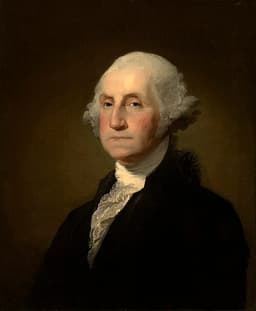
George Washington
Politician · Modern
76.8Total
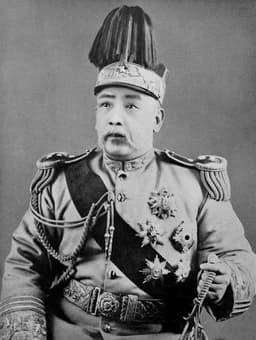
Yuan Shikai
Politician · Modern
60.0Total
Basic Information
Born
1732
1859
Died
1799
1916
Era
Modern
Modern
Nationality
United States
China
Occupation
Politician
Politician
Civilization
Western
Eastern
Score Comparison
Military (10%)
75.0
45.0
Political (20%)
82.0
72.0
Influence (20%)
75.0
57.2
Legacy (20%)
80.0
54.0
Leadership (15%)
85.0
72.0
Strategy (15%)
55.0
61.2
TOTAL
76.8
60.0
George Washington — Complete Timeline
1775 AD
Appointed Commander-in-Chief of the Continental ArmyOther◆ Major
The Second Continental Congress appointed Washington as commander-in-chief of the Continental Army on June 15, 1775. He accepted the position without pay, taking command of the forces besieging Boston at the start of the American Revolutionary War.
American RevolutionMilitary Leadership
Impact: national
1776 AD
Crossed the Delaware RiverOther◆ Major
On the night of December 25-26, 1776, Washington led 2,400 troops across the ice-choked Delaware River. The surprise attack on Hessian forces at Trenton resulted in a decisive American victory, capturing nearly 1,000 prisoners and reviving Patriot morale after a series of defeats.
American RevolutionBattleTurning Point
Impact: nationalconstructive
1787 AD
Presided over the Constitutional ConventionPolitical Action◆ Major
Washington served as president of the Constitutional Convention in Philadelphia from May to September 1787. His presence lent legitimacy to the proceedings, and he formally signed the final draft of the U.S. Constitution, though he contributed little to the debates.
ConstitutionFounding Father
Impact: national
1789 AD
Inaugurated as First President of the United StatesPolitical Action◆ Major
Washington was unanimously elected by the Electoral College and inaugurated on April 30, 1789, at Federal Hall in New York City. He established numerous executive branch precedents, including the cabinet system, the inaugural address, and the title 'Mr. President'.
PresidencyFounding Father
Impact: national
1793 AD
Issued the Proclamation of NeutralityOther◆ Major
Washington issued the Proclamation of Neutrality on April 22, 1793, declaring the United States neutral in the conflict between France and Great Britain. This decision established the precedent of American isolationism and avoided entanglement in European wars.
Foreign PolicyNeutrality
Impact: national
1796 AD
Delivered the Farewell AddressOther◆ Major
Washington published his Farewell Address on September 19, 1796, announcing his decision not to seek a third term. The address warned against political factionalism, permanent foreign alliances, and the influence of the military in government, shaping American political culture.
PresidencyLegacy
Impact: national
Yuan Shikai — Complete Timeline
1901 AD
Command of the Beiyang ArmyReform◆ Major
Yuan Shikai took command of the Beiyang Army, the most modern military force in late Qing China. He expanded and trained the army, which became the basis for his political power and later dominated Chinese politics.
Military reformBeiyang Army
Impact: national
1912 AD
Appointed First President of the Republic of ChinaPolitical Action
Yuan Shikai became the first president of the Republic of China after negotiating the abdication of the Qing emperor. He used his control of the Beiyang Army to pressure the revolutionary government into accepting his leadership.
PresidencyRepublic of China
Impact: national
1915 AD
Declaration of the Empire of ChinaPolitical Action◆ Major
Yuan Shikai declared himself emperor of the Empire of China, attempting to restore the monarchy. This move sparked widespread opposition from provincial leaders and foreign powers, leading to the collapse of his regime.
Monarchy restorationPolitical crisis
Impact: nationaldestructive
Signing of the Twenty-One DemandsPolitical Action◆ Major
Yuan Shikai accepted most of Japan's Twenty-One Demands, which expanded Japanese influence in China. The agreement granted Japan economic rights in Manchuria and Shandong, and was seen as a national humiliation.
DiplomacyJapanese imperialism
Impact: globaltragic
1916 AD
Death and Collapse of the Beiyang GovernmentPolitical Action◆ Major
Yuan Shikai died of uremia, leaving no clear successor. His death led to the fragmentation of the Beiyang Army into warlord factions, plunging China into a period of civil war and political instability.
Warlord eraPolitical fragmentation
Impact: nationaltragic
Expert Analysis
George Washington vs Yuan Shikai
### The Founder and the Usurper: Washington and Yuan Shikai
In the winter of 1915, a man in a dragon robe ascended a throne in Beijing, proclaiming a new dynasty. Across the Pacific, a century earlier, another man had refused a crown, insisting that the power he held belonged not to him but to the people. The first, Yuan Shikai, died in disgrace two years later, his empire crumbling into warlord chaos. The second, George Washington, died revered, his republic enduring. Why did two men, both military strongmen who navigated the collapse of an ancient order, arrive at such opposite destinations? The answer lies not in their ambition, which both possessed, but in the soil in which that ambition was planted.
### Origins
George Washington was born in 1732 into the Virginia gentry of a British colony that was already a century old. His world was one of land, tobacco, and the rule of English law. He was a surveyor before he was a soldier, a man who learned to measure boundaries, not to break them. The American Revolution was not a rebellion against monarchy as an idea; it was a revolt against a distant king who had violated the colonists’ rights as Englishmen. Washington grew up in a society where local assemblies, juries, and property rights were lived realities. His ambition was to be a gentleman of virtue, not a sovereign.
Yuan Shikai, born in 1859, came of age in a China that was bleeding. The Opium Wars had humiliated the Qing Dynasty, and the great Taiping Rebellion had nearly destroyed it. Yuan’s family was a military clan in a land where the old Confucian order was cracking. He failed the civil service exams, the traditional path to power, and instead joined the army. His world was one of survival, not liberty. He learned that power came from guns, not from law. When he took command of the Beiyang Army in 1901, he inherited the most modern force in China, but he commanded it as a personal instrument, not a national institution.
### Rise to Power
Washington’s rise was a story of failure and redemption. He lost more battles than he won during the French and Indian War. Yet when the Continental Congress needed a commander in 1775, they chose him for his character: his patience, his stoicism, his ability to hold a ragged army together through the frozen winters of Valley Forge. He did not seize power; it was thrust upon him. His greatest victory was not a battle but a retreat—the crossing of the Delaware, the survival of his army. He was a leader who learned to lose slowly so that his cause might win in the end.
Yuan Shikai’s rise was a story of cunning and opportunity. He was the man who maneuvered between the Qing court and the revolutionaries. In 1912, when the Qing emperor abdicated, Yuan did not fight for the dynasty. He negotiated: the emperor would step down, and Yuan would become the first president of the Republic of China. He was a broker of power, not a champion of a cause. The revolutionaries, led by Sun Yat-sen, trusted him because they had no army. Yuan had the Beiyang Army. He did not earn the presidency through election or sacrifice; he bought it with bayonets.
### Leadership & Governance
As president, Washington set precedents that became constitutional law. He created a cabinet, respected the separation of powers, and after two terms, he walked away. When he put down the Whiskey Rebellion in 1794, he did so not to crush dissent but to demonstrate that the federal government had the authority to enforce its laws. He was a monarch in function but a republican in spirit. His Farewell Address warned against foreign entanglements and the spirit of faction. He governed as if he were building a house for future generations.
Yuan Shikai, as president, governed as if he were building a fortress for himself. He accepted most of Japan’s Twenty-One Demands in 1915, granting Japan extensive rights in Manchuria and Shandong, in exchange for Japanese support for his monarchical ambitions. He did not see the nation as a project of law but as a prize. When he declared himself emperor of the Empire of China in 1915, he believed that only a strong, centralized monarchy could hold the fractured country together. But he had no mandate from heaven, only an army. The provinces rose in rebellion, and his own generals abandoned him.
### Triumph & Tragedy
Washington’s greatest moment was his resignation. After the Revolutionary War, he could have been king. Instead, he returned to Mount Vernon, a private citizen. That act, more than any battle, defined the American republic. His tragedy was personal: he died childless, his stepchildren gone before him. But his legacy was secure.
Yuan Shikai’s greatest moment was also his tragedy. He had the chance to be the father of Chinese democracy. Instead, he chose the crown. His death from uremia in 1916 left a vacuum. The Beiyang Army shattered into warlord factions, plunging China into a decade of chaos. He had built nothing that outlasted him.
### Character & Destiny
Washington was a man of immense pride, but he had learned humility through defeat. He burned with ambition, but he had a cause larger than himself. Yuan Shikai was also proud, but his ambition was personal. He saw the state as an extension of his household. One man believed in a system of laws; the other believed in a system of loyalty. One trusted the people; the other trusted only his soldiers.
### Legacy
Washington is the father of his country, his face on the dollar, his name on the capital. He is remembered not for what he conquered but for what he refused to conquer. Yuan Shikai is remembered as a traitor and a failure, the man who tried to turn back the clock. In China, his name is a cautionary tale.
### Conclusion
The difference between Washington and Yuan Shikai is not a difference of talent or ambition. It is a difference of vision. Washington saw that true power lies in stepping aside. Yuan Shikai saw only the throne. One man built a republic; the other dug its grave. History is not kind to those who mistake the crown for the country.
Rankings
🥇
George WashingtonLeader
Mil: 75.0Pol: 82.0Inf: 75.0
76.8
🥈
Yuan Shikai
Mil: 45.0Pol: 72.0Inf: 57.2
60.0
+16.8 behind
How This Comparison Works
Algorithm
Each figure is scored on 6 dimensions (0—100 scale) based on structured historical data: Military (10%), Political (20%), Influence (20%), Legacy (20%), Leadership (15%), Strategy (15%). The weighted total produces the final ranking.
Data Sources
Scores are computed from structured sub-indicators in the database. Scale factors adjust for era (Ancient ×0.85, Modern ×1.0) and civilization size (Eastern ×1.05, Other ×0.80) to account for differences in population and military scale.
Maximum 3 Figures
Comparisons are limited to 2—3 figures to ensure readability and statistical meaningfulness.
Error Margins
±5 points per dimension — Sub-scores are derived from historical records with inherent uncertainty. Two figures within 5 points on a dimension should be considered roughly equivalent in that area.
Total Score Accuracy
±3 points overall — The weighted combination of 6 dimensions produces a total score with approximately ±3 points of uncertainty. Differences of less than 3 points are not statistically significant— the figures are effectively tied.
Known Limitations
- Historical records are incomplete and uneven across civilizations
- Figures from oral-tradition societies may be underrepresented
- Occupation labels can misclassify multi-role figures
- Scores measure capability and impact, not moral character
- Quantitative scoring is a comparison tool, not absolute truth
Capability Radar
Military (10%) — Battles & Warfare
Battles
75
45
Win Rate
70
55
Expansion
60
50
Political (20%) — Governance & Reform
Reform
90
55
Diplomacy
85
70
Economy
65
50
Influence (20%) — Cultural & Global Reach
Cultural
85
40
Global
85
35
Legacy (20%) — Historical Impact
Historical
95
65
Longevity
90
40
Leadership (15%) — Power & Stability
Tenure
70
60
Stability
85
30
Strategy (15%) — Tactics & Innovation
Strategy
80
65
Tactics
65
60
Reform
85
80
Similar Comparisons
Comments & Discussion
数据解剖师6/16/2026
讲数据的话,华盛顿退休后GDP增速翻倍,而袁世凯称帝那年北方饥荒饿死三十万人。别跟我扯道德——华盛顿靠奴隶种烟草养大他的“美德”,袁在朝鲜练新军时确实现代化了北洋。但数字说话:美国建国宪法存活234年,袁世凯“洪宪”帝国撑了83天。这不仅是民主vs帝制,是制度能不能吸收现实压力。华盛顿的联邦制有弹性,袁的集权一碰就碎。
Classics Scholar6/16/2026
The spectacle of Yuan Shikai in dragon robes reminds me of Tacitus on the early Roman emperors—a military strongman seizing power and trying to cloak it in old rites. Washington, by contrast, embodied Cincinnatus: the farmer called from his plow to save the republic, then returning. But Cincinnatus was a myth even in Rome; Washington made it real. Yuan failed because he desperately mimicked dead forms—Confucian ritual, Manchu protocol—while Washington invented a new virtue for a new age. One loo
历史票友6/16/2026
谁都能说袁世凯是“窃国大盗”,但我得说他确实修补了清廷烂摊子——练新军、废科举,连孙中山都一度信他能共和。问题是他骨子里是官场老油条,以为权力就是收买和恐吓。华盛顿不同,弗农山庄的庄园主见过更开明的贵族圈子,知道权力得有底线。袁的北洋军只听他个人,华盛顿的大陆军是为理念而战。所以袁一死,中国崩成军阀火柴盒;华盛顿退位,美国还能长成巨兽。
Revisionist Critic6/16/2026
Let’s drop the hagiography. Washington owned hundreds of slaves and signed the Fugitive Slave Act; his “virtue” was built on brutal exploitation. Yuan Shikai was a product of a collapsing empire but at least modernized China’s military and railways—he wasn't just a “usurper” but a transitional figure. The real difference? Washington had a ready-made political class (white, propertied men) to support a republic. Yuan faced a fractured elite and foreign predators. Both were ruthless, but one
Historian5226/16/2026
Washington’s refusal of a crown was a strategic masterstroke, not just virtue—he knew a monarch would’ve fractured the fragile union of squabbling states. Yuan’s fatal error was timing: he declared himself emperor in a world where revolution had already killed the divine right. Washington planted a republic because he had a strong, land-owning gentry to back him; Yuan’s support was a pack of warlords who bolted the moment he slipped. Same ambition, different soil. Yuan was a smarter tactician, b