Loading...
George Washington vs Winston Churchill
George Washington leads by 5.0 pts · 2 figures compared
…
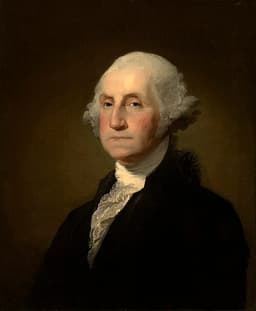
George Washington
Politician · Modern
76.8Total
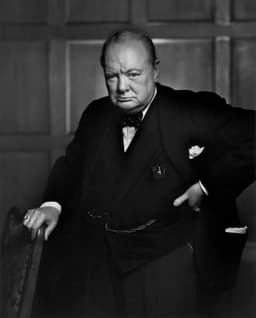
Winston Churchill
Politician · Modern
71.8Total
Basic Information
Born
1732
1874
Died
1799
1965
Era
Modern
Modern
Nationality
United States
United Kingdom
Occupation
Politician
Politician
Civilization
Western
Western
Score Comparison
Military (10%)
75.0
55.0
Political (20%)
82.0
78.0
Influence (20%)
75.0
75.0
Legacy (20%)
80.0
68.0
Leadership (15%)
85.0
82.0
Strategy (15%)
55.0
65.0
TOTAL
76.8
71.8
George Washington — Complete Timeline
1775 AD
Appointed Commander-in-Chief of the Continental ArmyOther◆ Major
The Second Continental Congress appointed Washington as commander-in-chief of the Continental Army on June 15, 1775. He accepted the position without pay, taking command of the forces besieging Boston at the start of the American Revolutionary War.
American RevolutionMilitary Leadership
Impact: national
1776 AD
Crossed the Delaware RiverOther◆ Major
On the night of December 25-26, 1776, Washington led 2,400 troops across the ice-choked Delaware River. The surprise attack on Hessian forces at Trenton resulted in a decisive American victory, capturing nearly 1,000 prisoners and reviving Patriot morale after a series of defeats.
American RevolutionBattleTurning Point
Impact: nationalconstructive
1787 AD
Presided over the Constitutional ConventionPolitical Action◆ Major
Washington served as president of the Constitutional Convention in Philadelphia from May to September 1787. His presence lent legitimacy to the proceedings, and he formally signed the final draft of the U.S. Constitution, though he contributed little to the debates.
ConstitutionFounding Father
Impact: national
1789 AD
Inaugurated as First President of the United StatesPolitical Action◆ Major
Washington was unanimously elected by the Electoral College and inaugurated on April 30, 1789, at Federal Hall in New York City. He established numerous executive branch precedents, including the cabinet system, the inaugural address, and the title 'Mr. President'.
PresidencyFounding Father
Impact: national
1793 AD
Issued the Proclamation of NeutralityOther◆ Major
Washington issued the Proclamation of Neutrality on April 22, 1793, declaring the United States neutral in the conflict between France and Great Britain. This decision established the precedent of American isolationism and avoided entanglement in European wars.
Foreign PolicyNeutrality
Impact: national
1796 AD
Delivered the Farewell AddressOther◆ Major
Washington published his Farewell Address on September 19, 1796, announcing his decision not to seek a third term. The address warned against political factionalism, permanent foreign alliances, and the influence of the military in government, shaping American political culture.
PresidencyLegacy
Impact: national
Winston Churchill — Complete Timeline
1940 AD
Appointed Prime Minister of the United KingdomPolitical Action◆ Major
On May 10, 1940, Winston Churchill became Prime Minister of the United Kingdom, replacing Neville Chamberlain. His appointment came as Nazi Germany invaded France and the Low Countries, and Churchill formed a coalition government to lead Britain through World War II.
World War IILeadershipCoalition Government
Impact: globalconstructive
Delivered the 'We Shall Fight on the Beaches' SpeechOther◆ Major
On June 4, 1940, Churchill delivered a speech to the House of Commons following the evacuation of British forces from Dunkirk. He declared that Britain would fight on the beaches, landing grounds, fields, streets, and hills, and never surrender, rallying British morale during the darkest days of World War II.
World War IIOratoryMorale
Impact: nationalconstructive
1941 AD
Signed the Atlantic CharterOther◆ Major
On August 14, 1941, Churchill and U.S. President Franklin D. Roosevelt signed the Atlantic Charter aboard HMS Prince of Wales. This joint declaration outlined post-war goals including self-determination, disarmament, and free trade, and became a foundational document for the Allied war aims and the United Nations.
World War IIAllied CooperationPost-war Planning
Impact: globalconstructive
1945 AD
Attended the Yalta ConferenceOther◆ Major
In February 1945, Churchill attended the Yalta Conference with Roosevelt and Stalin to discuss the post-war reorganization of Europe. The conference agreed on the division of Germany, the establishment of the United Nations, and the fate of Eastern Europe, though Churchill later expressed regret over concessions to Stalin.
World War IIPost-war SettlementBig Three
Impact: global
1946 AD
Delivered the 'Iron Curtain' SpeechOther◆ Major
On March 5, 1946, Churchill delivered a speech at Westminster College in Fulton, Missouri, where he stated that an 'iron curtain' had descended across Europe from Stettin to Trieste. This speech is widely regarded as marking the beginning of the Cold War, as it highlighted the division between Soviet-controlled Eastern Europe and the West.
Cold WarSoviet UnionDivision of Europe
Impact: globaldestructive
1953 AD
Awarded the Nobel Prize in LiteratureOther◆ Major
In 1953, Churchill was awarded the Nobel Prize in Literature for his historical writings, particularly 'The Second World War' and 'A History of the English-Speaking Peoples'. The Nobel committee cited his mastery of historical and biographical description as well as his brilliant oratory in defending human values.
LiteratureNobel PrizeHistorical Writing
Impact: nationalconstructive
Expert Analysis
Winston Churchill vs George Washington
# The Reluctant Giant and the Lion’s Roar
On a bitter December night in 1776, George Washington crossed the Delaware River in a small boat, his men half-frozen, his cause nearly lost. He was not a man of grand speeches or fiery rhetoric; he was a planter who had never commanded an army before the previous year. Across the Atlantic, more than a century and a half later, Winston Churchill stood in the bomb-scarred chamber of the House of Commons in June 1940, his voice rolling through the radio waves: “We shall fight on the beaches, we shall fight on the landing grounds, we shall fight in the fields and in the streets.” Two men, two moments of existential crisis, two different kinds of courage. Washington led by silent endurance; Churchill by defiant words. Why did one become the father of a nation and the other the savior of an empire? The answer lies not only in their times but in the very fabric of their characters.
Origins
George Washington was born in 1732 into the Virginia gentry, a world of tobacco plantations, enslaved labor, and cautious ambition. His father died when he was eleven, leaving him to learn self-reliance early. He never attended university; his education came from surveying the wilderness and managing a sprawling estate. The American colonies were a raw, unsettled place, and Washington absorbed its pragmatism—a man who measured his words as carefully as he measured land. In contrast, Winston Churchill entered the world in 1874 at Blenheim Palace, the grand estate of the Dukes of Marlborough. His father was a flamboyant politician, his mother an American socialite. Churchill was raised in the shadow of aristocratic privilege but also of neglect; he stuttered as a child and found solace in history and literature. While Washington learned to command by managing slaves and surveying forests, Churchill learned to command by reading about his ancestor, the first Duke of Marlborough, who had crushed French armies a century before. One era demanded building a new order from scratch; the other required defending an old one against collapse.
Rise to Power
Washington’s ascent was slow and deliberate—a series of small steps that built trust. He served as a young officer in the French and Indian War, where his mistakes taught him humility. He married Martha Custis, gaining wealth and social standing. By 1775, when the Second Continental Congress needed a commander-in-chief for the ragtag Continental Army, Washington was chosen not for brilliance but for his steadiness, his Virginia pedigree, and his willingness to serve without pay. He was the safe choice. Churchill’s rise was far more dramatic and erratic. He entered Parliament in 1900, switched parties twice, and was dismissed as a reckless adventurer after the disastrous Gallipoli campaign in World War I. For a decade, he was a political outcast, his warnings about Nazi Germany ignored. It took the fall of France in May 1940 for the British establishment to turn to him—a man they distrusted but could not ignore. Washington rose because he was reliable; Churchill rose because he was indispensable in a crisis.
Leadership & Governance
Washington governed by example. As president from 1789 to 1797, he established norms—the cabinet system, a two-term limit, and a policy of neutrality in foreign wars—that became constitutional bedrock. His military score of 70 reflects his competence rather than genius: he lost more battles than he won, but he kept an army in the field long enough for the French to arrive. His political score of 80 captures his genius for restraint—he knew when not to act. Churchill, with a leadership score of 85 and a political score of 82, governed by inspiration. He was a whirlwind of energy, micromanaging military strategy, scribbling memos at all hours, and delivering speeches that stiffened British resolve. Yet his military score of 55 reveals a weakness: his strategic instincts, like the disastrous invasion of Norway or the insistence on fighting in the Mediterranean, were often flawed. He needed brilliant generals like Alan Brooke to correct him. Washington’s leadership was like a slow-burning fire; Churchill’s was a bonfire that could consume itself.
Triumph & Tragedy
Washington’s greatest moment was not a battle but a surrender of power. In 1783, after winning the war, he resigned his commission to Congress—an act so unprecedented that King George III called him “the greatest character of the age.” His tragedy was the institution of slavery: he owned hundreds of enslaved people, freed none in his lifetime, and left a legacy of moral compromise. Churchill’s greatest moment was the summer of 1940, when his defiance turned Britain into a fortress of democracy. His tragedy came later: in 1945, he was voted out of office while the war was still raging in the Pacific, a rejection so bitter he called it “the verdict of history.” Both men knew the sting of ingratitude, but Washington’s came from a grateful nation that let him retire in peace; Churchill’s came from a people exhausted by war.
Character & Destiny
Washington was a man of immense self-control. He rarely laughed, never swore, and kept a ledger of his emotions. His stoicism was a shield; he feared that any display of weakness would unravel the fragile republic. Churchill was volcanic—he wept, raged, drank brandy at breakfast, and once told a secretary, “I am easily satisfied with the very best.” Washington’s caution saved a nation; Churchill’s audacity saved a continent. Yet both were driven by a deep sense of duty. Washington wrote, “I walk on untrodden ground. There is scarcely any action, whose motives may not be subject to a double interpretation.” Churchill said, “Success is not final, failure is not fatal: it is the courage to continue that counts.” One man built the stage; the other gave the performance.
Legacy
Washington’s legacy score of 78 is etched into the very structure of American government. His Farewell Address warned against factionalism and foreign entanglements—advice still debated today. His image is on the dollar bill, his name on the capital city, his myth the foundation of American identity. Churchill’s legacy score of 75 is more contested. He is revered for saving Britain from Nazism, but his views on empire, race, and India—he called Gandhi a “half-naked fakir”—are now scrutinized. His legacy is a statue that some want to topple and others defend. Both men are giants, but Washington’s legacy is a cathedral built to last; Churchill’s is a lighthouse, brilliant but flickering in the storms of modern judgment.
Conclusion
Standing on the deck of a ship crossing the Delaware, Washington had no idea if he would succeed. Standing in the ruins of the House of Commons, Churchill had no certainty he would prevail. What they shared was a refusal to yield. Washington’s quiet endurance and Churchill’s roaring defiance were not opposites but complements—two ways of saying “no” to tyranny. One gave birth to a nation; the other prevented its death. In the end, their differences remind us that history has no single mold for greatness. It needs both the carpenter who builds the frame and the poet who sets it on fire.
Rankings
🥇
George WashingtonLeader
Mil: 75.0Pol: 82.0Inf: 75.0
76.8
🥈
Winston Churchill
Mil: 55.0Pol: 78.0Inf: 75.0
71.8
+5.0 behind
How This Comparison Works
Algorithm
Each figure is scored on 6 dimensions (0—100 scale) based on structured historical data: Military (10%), Political (20%), Influence (20%), Legacy (20%), Leadership (15%), Strategy (15%). The weighted total produces the final ranking.
Data Sources
Scores are computed from structured sub-indicators in the database. Scale factors adjust for era (Ancient ×0.85, Modern ×1.0) and civilization size (Eastern ×1.05, Other ×0.80) to account for differences in population and military scale.
Maximum 3 Figures
Comparisons are limited to 2—3 figures to ensure readability and statistical meaningfulness.
Error Margins
±5 points per dimension — Sub-scores are derived from historical records with inherent uncertainty. Two figures within 5 points on a dimension should be considered roughly equivalent in that area.
Total Score Accuracy
±3 points overall — The weighted combination of 6 dimensions produces a total score with approximately ±3 points of uncertainty. Differences of less than 3 points are not statistically significant— the figures are effectively tied.
Known Limitations
- Historical records are incomplete and uneven across civilizations
- Figures from oral-tradition societies may be underrepresented
- Occupation labels can misclassify multi-role figures
- Scores measure capability and impact, not moral character
- Quantitative scoring is a comparison tool, not absolute truth
Capability Radar
Military (10%) — Battles & Warfare
Battles
75
55
Win Rate
70
60
Expansion
60
40
Political (20%) — Governance & Reform
Reform
90
70
Diplomacy
85
85
Economy
65
60
Influence (20%) — Cultural & Global Reach
Cultural
85
85
Global
85
85
Legacy (20%) — Historical Impact
Historical
95
90
Longevity
90
80
Leadership (15%) — Power & Stability
Tenure
70
75
Stability
85
70
Strategy (15%) — Tactics & Innovation
Strategy
80
85
Tactics
65
65
Reform
85
70
Similar Comparisons
Comments & Discussion
**PragmaticPlanter**6/16/2026
Washington wins this hands-down. Churchill’s “we shall fight on the beaches” is glorious poetry, but Washington’s Delaware crossing was action without a safety net. Churchill had an empire’s resources behind him; Washington had a ragtag army that melted away every winter. Washington didn’t just survive defeat at Brooklyn—he turned retreat into a strategy. Churchill talked about fighting in the streets; Washington *lived* in a frozen field. One saved a fading empire; the other *invented* a nation
**SkepticalDataDrone**6/16/2026
Let’s pump the brakes on the Washington myth. Look at the *facts*: Washington lost more battles than he won (7 out of 9 major engagements in 1776 alone—a 78% loss rate). Churchill’s 1940 alone saw the RAF halt the Luftwaffe in the Battle of Britain, a decisive strategic victory. Washington’s “endurance” was often just incompetent generalship masked by luck (the British literally just got tired at Trenton). Churchill’s words *rallied a nation* to a tangible fight. Calling Washington a better lead
**ClassicsChronicler**6/16/2026
This is Cato the Younger vs. Cicero in modern dress. Washington is pure Stoic virtus—silent, enduring, a man of *res* not *verba*. He crossed the Delaware like a Roman general leading a desperate cohort, not a poet. Churchill, however, is the quintessential Ciceronian orator: fire, rhetoric, the *word* as weapon. Rome needed both to survive—Cato for the raw will, Cicero for the nation’s soul. But if I must choose, I take the man who didn’t need a speech to act. Action over eloquence, always.
**历史锻造者**6/16/2026
华盛顿的沉默才是绝杀。他指挥大陆军时,手下士兵甚至没有统一制服,鞋破光脚行军(1777年冬天有3000人无鞋可穿)。丘吉尔呢?他1940年接手的是一个世界帝国的工业全开状态。华盛顿是在用破烂拼凑一个国家的神话;丘吉尔只是维护了一个现成的神话。别忘了,英国还有三军统帅布鲁克和蒙哥马利实际执行,而华盛顿兼任总司令、政委、后勤部长。一个是苦行僧,一个是演说家。谁更累?
**逆流批判家**6/16/2026
别把华盛顿抬成圣人。他赢了独立战争,但靠的是法国海军在约克镇切断了康沃利斯退路——那是兰迪·格林的南方战略和罗尚