Loading...
George Washington vs William Pitt the Elder
George Washington leads by 6.6 pts · 2 figures compared
…
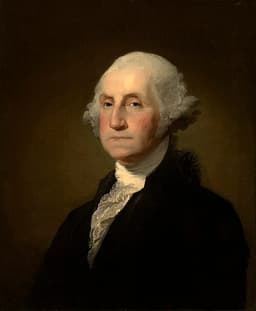
George Washington
Politician · Modern
76.8Total
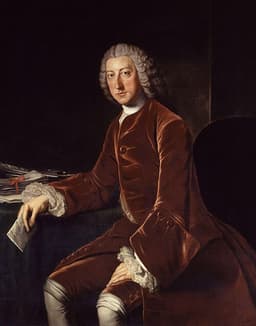
William Pitt the Elder
Politician · Modern
70.2Total
Basic Information
Born
1732
1708
Died
1799
1778
Era
Modern
Modern
Nationality
United States
United Kingdom
Occupation
Politician
Politician
Civilization
Western
Western
Score Comparison
Military (10%)
75.0
67.3
Political (20%)
82.0
72.0
Influence (20%)
75.0
68.0
Legacy (20%)
80.0
68.0
Leadership (15%)
85.0
80.0
Strategy (15%)
55.0
67.2
TOTAL
76.8
70.2
George Washington — Complete Timeline
1775 AD
Appointed Commander-in-Chief of the Continental ArmyOther◆ Major
The Second Continental Congress appointed Washington as commander-in-chief of the Continental Army on June 15, 1775. He accepted the position without pay, taking command of the forces besieging Boston at the start of the American Revolutionary War.
American RevolutionMilitary Leadership
Impact: national
1776 AD
Crossed the Delaware RiverOther◆ Major
On the night of December 25-26, 1776, Washington led 2,400 troops across the ice-choked Delaware River. The surprise attack on Hessian forces at Trenton resulted in a decisive American victory, capturing nearly 1,000 prisoners and reviving Patriot morale after a series of defeats.
American RevolutionBattleTurning Point
Impact: nationalconstructive
1787 AD
Presided over the Constitutional ConventionPolitical Action◆ Major
Washington served as president of the Constitutional Convention in Philadelphia from May to September 1787. His presence lent legitimacy to the proceedings, and he formally signed the final draft of the U.S. Constitution, though he contributed little to the debates.
ConstitutionFounding Father
Impact: national
1789 AD
Inaugurated as First President of the United StatesPolitical Action◆ Major
Washington was unanimously elected by the Electoral College and inaugurated on April 30, 1789, at Federal Hall in New York City. He established numerous executive branch precedents, including the cabinet system, the inaugural address, and the title 'Mr. President'.
PresidencyFounding Father
Impact: national
1793 AD
Issued the Proclamation of NeutralityOther◆ Major
Washington issued the Proclamation of Neutrality on April 22, 1793, declaring the United States neutral in the conflict between France and Great Britain. This decision established the precedent of American isolationism and avoided entanglement in European wars.
Foreign PolicyNeutrality
Impact: national
1796 AD
Delivered the Farewell AddressOther◆ Major
Washington published his Farewell Address on September 19, 1796, announcing his decision not to seek a third term. The address warned against political factionalism, permanent foreign alliances, and the influence of the military in government, shaping American political culture.
PresidencyLegacy
Impact: national
William Pitt the Elder — Complete Timeline
1756 AD
Led Britain in Seven Years' WarWar
William Pitt the Elder served as Secretary of State from 1756 to 1761, directing British strategy in the Seven Years' War. His policies focused on naval supremacy and colonial campaigns, leading to victories in Canada, India, and the Caribbean.
Seven Years' WarColonial EmpireMilitary Strategy
Impact: global
1759 AD
Conquest of QuebecWar◆ Major
Under Pitt's direction, British forces under General James Wolfe captured Quebec City on September 13, 1759, after the Battle of the Plains of Abraham. This victory secured British control over Canada and marked a turning point in the Seven Years' War.
Seven Years' WarCanadaMilitary Victory
Impact: global
1766 AD
Became Prime MinisterPolitical Action
Pitt was appointed Prime Minister on July 30, 1766, forming a government. However, his health declined and he was elevated to the House of Lords as Earl of Chatham, which weakened his political base. His second ministry was less effective than his wartime leadership.
Prime MinisterGovernment18th Century
Impact: national
Opposed American TaxationPolitical Action◆ Major
Pitt argued for the repeal of the Stamp Act in 1766, asserting that Parliament had no right to tax the American colonies without representation. His speech in the Commons helped secure repeal, though he maintained Parliament's authority to legislate for the colonies.
American ColoniesTaxationParliamentary Debate
Impact: global
Expert Analysis
George Washington vs William Pitt the Elder
### The Reluctant King and the Great Commoner
On a sweltering July morning in 1776, as delegates in Philadelphia signed the Declaration of Independence, a different drama was unfolding across the Atlantic. In London, William Pitt the Elder, the man who had forged Britain into the world’s mightiest empire, lay bedridden, his body ravaged by gout and his spirit tormented. The colonies he had once defended in Parliament were now in open rebellion. Meanwhile, in New York, a tall, stoic Virginian named George Washington prepared to face the full force of the British war machine with a ragtag army of farmers and merchants. Two men, both architects of their nation’s destiny, yet on a collision course that history would judge in radically different lights. How did the man who saved the British Empire and the man who destroyed it come from such similar stock—and why did their legacies diverge so profoundly?
### Origins
George Washington was born in 1732 into the Virginia gentry, a world of tobacco plantations and slave labor that was both prosperous and precarious. His father died when he was eleven, leaving him to be shaped by a frontier wilderness that demanded self-reliance, not book learning. Washington never attended university; his education came from surveying the untamed Ohio Valley, where he learned to read the land and the men who lived on it. The American colonies were a raw, ambitious society, obsessed with land and liberty, but still tethered to a distant crown.
William Pitt the Elder, born in 1708, emerged from a very different English soil. His grandfather was a governor of Madras, a fortune made in the East India Company’s rapacious trade. Pitt inherited not vast wealth but a ferocious intellect and a gift for oratory that would electrify the House of Commons. He was educated at Eton and Oxford, steeped in classical rhetoric and the Whig tradition of parliamentary supremacy. Where Washington learned to command men through quiet endurance, Pitt learned to command through the thunder of his voice. Their eras—a settled, hierarchical Britain versus a restless, egalitarian America—shaped the very tools they would use.
### Rise to Power
Washington entered the historical stage through the crucible of war. In 1754, as a young colonel in the Virginia militia, he fired the first shots of the French and Indian War at the Battle of Jumonville Glen—a skirmish that would spiral into a global conflict. He was humiliated when the French forced his surrender at Fort Necessity, but he learned an unforgiving lesson: survival required patience, not glory. His real rise came not through battlefield brilliance but through sheer presence. In 1775, the Continental Congress appointed him commander-in-chief of the new American army, not because he was the best general, but because he was the one man who could hold the fractious colonies together.
Pitt’s rise was a masterclass in political theater. In 1756, as the Seven Years' War began, Britain was reeling from defeats at the hands of France. Pitt, already known as the “Great Commoner” for his populist defiance of the aristocracy, was made Secretary of State. He did not command armies; he commanded strategy. With a vision that dwarfed his contemporaries, he saw the war as a global chessboard. He poured resources into the Royal Navy, subsidized Prussia’s Frederick the Great to tie down French armies in Europe, and dispatched expeditions to capture French outposts in Canada, India, and the Caribbean. His key event—the capture of Quebec in 1759—was a gamble that paid off when General James Wolfe scaled the cliffs of the St. Lawrence. Pitt’s genius was not in fighting but in orchestrating.
### Leadership & Governance
As a leader, Washington was a study in restraint. As President from 1789 to 1797, he defined the office by what he refused to do. He declined a crown, resisted the temptation to become a monarch, and established the two-term precedent. His cabinet was a warring collection of geniuses—Alexander Hamilton and Thomas Jefferson—and he let them argue, trusting that the system could absorb conflict. His military leadership was similarly defensive: he lost more battles than he won, but he preserved his army, knowing that the revolution’s survival was enough. When his troops mutinied over pay, he wept before them, reading a letter from Congress, and his tears did what orders could not.
Pitt, by contrast, governed through audacity. As Prime Minister in 1766, he was a whirlwind of policy, but his health was a wreck. He was elevated to the House of Lords as the Earl of Chatham, a move that ironically silenced his greatest weapon—his voice in the Commons. His political wisdom was visionary but brittle. He argued passionately for the repeal of the Stamp Act in 1766, asserting that Parliament had no right to tax the American colonies without representation. Yet he refused to grant them independence, believing the empire must remain whole. This contradiction—a champion of liberty who could not let go—would define his tragedy.
### Triumph & Tragedy
Washington’s greatest moment came at Yorktown in 1781, where the French fleet and his army trapped the British, securing American independence. But his most devastating failure was the winter at Valley Forge in 1777–1778, where his army starved, froze, and died while Congress dithered. He held them together through sheer will, writing desperate letters and enduring the same suffering as his men. It was a triumph of character over circumstance.
Pitt’s triumph was the year 1759, Britain’s *annus mirabilis*, when Quebec fell, Guadeloupe was taken, and the French navy was shattered. He was hailed as the savior of the nation. But his tragedy was the American Revolution. He had warned Parliament not to tax the colonies, but his warnings were ignored. In 1778, as the war raged, he collapsed on the floor of the House of Lords while giving a speech opposing American independence. He died a month later, broken by the realization that the empire he had built was tearing itself apart.
### Character & Destiny
Washington’s character was a mask of stoicism. He was famously aloof, even cold, but this distance was deliberate. He knew that a republic needed a leader who was above faction, above personality. His famous dentures, his wooden teeth (actually ivory and human teeth), were a symbol of his endurance—he suffered silently. His decisions were shaped by an almost religious sense of duty. When offered a crown, he refused not because he lacked ambition, but because he understood that his destiny was to be the first, not the last.
Pitt’s character was fire. He was arrogant, theatrical, and prone to bouts of manic energy followed by crushing depression. His nickname, “the Great Commoner,” was both a badge of honor and a weapon: he used his outsider status to attack the aristocracy, but it also made him enemies. His health—gout, madness, and paranoia—mirrored the strain of his ambitions. He could not compromise, and that rigidity cost him. Where Washington bent, Pitt broke.
### Legacy
Washington’s legacy is the United States itself. He is remembered as the “Father of His Country,” a figure so central that his face adorns the dollar bill and his name graces the capital. His scores—Leadership 78, Influence 72, Legacy 78—reflect a man who built institutions, not just victories. He left behind a precedent of peaceful transition of power, a republic that outlasted him.
Pitt’s legacy is more ambiguous. He is celebrated as the architect of the British Empire, the man who made Britain a global power. His scores—Leadership 75, Legacy 75—are nearly identical to Washington’s, but his memory is fainter. He is a name in textbooks, not a face on currency. His greatest failure—the loss of America—haunts his reputation. Yet his vision of a global navy, a balanced European alliance, and an empire of trade, not conquest, foreshadowed the Pax Britannica of the 19th century.
### Conclusion
Standing on the deck of a ship in New York Harbor in 1783, George Washington watched the last British troops sail away. He had won. In London, a statue of William Pitt the Elder stood in Guildhall, a monument to a lost cause. Both men had sought to build something lasting; one succeeded in creating a new nation, the other in expanding an old empire. But the deepest difference lies in what they were willing to sacrifice. Washington gave up power; Pitt gave up health. Washington let go of the crown; Pitt could not let go of the colonies. In the end, the man who refused to be a king became the father of a republic, while the man who ruled through words died watching his empire fracture. Their stories remind us that history’s verdict is not about who was stronger or smarter, but about who understood that the greatest victory is often the one you choose not to fight.
Rankings
🥇
George WashingtonLeader
Mil: 75.0Pol: 82.0Inf: 75.0
76.8
🥈
William Pitt the Elder
Mil: 67.3Pol: 72.0Inf: 68.0
70.2
+6.6 behind
How This Comparison Works
Algorithm
Each figure is scored on 6 dimensions (0—100 scale) based on structured historical data: Military (10%), Political (20%), Influence (20%), Legacy (20%), Leadership (15%), Strategy (15%). The weighted total produces the final ranking.
Data Sources
Scores are computed from structured sub-indicators in the database. Scale factors adjust for era (Ancient ×0.85, Modern ×1.0) and civilization size (Eastern ×1.05, Other ×0.80) to account for differences in population and military scale.
Maximum 3 Figures
Comparisons are limited to 2—3 figures to ensure readability and statistical meaningfulness.
Error Margins
±5 points per dimension — Sub-scores are derived from historical records with inherent uncertainty. Two figures within 5 points on a dimension should be considered roughly equivalent in that area.
Total Score Accuracy
±3 points overall — The weighted combination of 6 dimensions produces a total score with approximately ±3 points of uncertainty. Differences of less than 3 points are not statistically significant— the figures are effectively tied.
Known Limitations
- Historical records are incomplete and uneven across civilizations
- Figures from oral-tradition societies may be underrepresented
- Occupation labels can misclassify multi-role figures
- Scores measure capability and impact, not moral character
- Quantitative scoring is a comparison tool, not absolute truth
Capability Radar
Military (10%) — Battles & Warfare
Battles
75
60
Win Rate
70
75
Expansion
60
80
Political (20%) — Governance & Reform
Reform
90
75
Diplomacy
85
80
Economy
65
70
Influence (20%) — Cultural & Global Reach
Cultural
85
60
Global
85
75
Legacy (20%) — Historical Impact
Historical
95
80
Longevity
90
70
Leadership (15%) — Power & Stability
Tenure
70
70
Stability
85
65
Strategy (15%) — Tactics & Innovation
Strategy
80
85
Tactics
65
65
Reform
85
70
Similar Comparisons
Comments & Discussion
No comments yet. Be the first to share your thoughts!