Loading...
Gao Huan vs Odoacer
Gao Huan leads by 8.7 pts · 2 figures compared
…

Gao Huan
General · Ancient
58.4Total
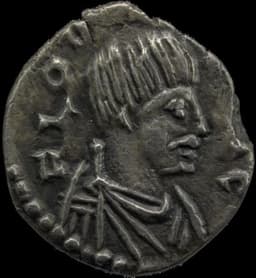
Odoacer
General · Ancient
49.7Total
Basic Information
Born
496
433
Died
547
493
Era
Ancient
Ancient
Nationality
China
Italy
Occupation
General
General
Civilization
Eastern
Western
Score Comparison
Military (10%)
78.0
70.0
Political (20%)
62.7
29.3
Influence (20%)
54.9
54.1
Legacy (20%)
50.0
46.7
Leadership (15%)
48.8
47.3
Strategy (15%)
76.0
60.0
TOTAL
58.4
49.7
Gao Huan — Complete Timeline
531 AD
Battle of ShanyinWar
Gao Huan defeated the Erzhu clan at the Battle of Shanyin, ending their dominance over the Northern Wei court. This victory allowed him to install Emperor Xiaowu as a puppet ruler and become the de facto ruler of northern China.
Northern WeiErzhu ClanBattlePower Struggle
Impact: nationaldestructive
534 AD
Establishment of Eastern WeiPolitical Action
After a split with Emperor Xiaowu, Gao Huan established the Eastern Wei Dynasty with Emperor Xiaojing as a puppet ruler. He controlled the eastern half of northern China from his capital at Yecheng, ruling as de facto dictator until his death.
Eastern WeiNorthern WeiDynastic SplitPuppet Emperor
Impact: regionaldestructive
547 AD
Death from IllnessOther◆ Major
Gao Huan died from illness at age 51. His sons Gao Cheng and Gao Yang succeeded him, with Gao Yang later founding the Northern Qi Dynasty, fulfilling Gao Huan's ambition of establishing a new ruling house.
Eastern WeiNorthern QiSuccessionGao Yang
Impact: regional
Odoacer — Complete Timeline
476 AD
Deposition of Romulus AugustulusPolitical Action
Odoacer, leading a revolt of Germanic foederati, deposed the Western Roman Emperor Romulus Augustulus. He sent the imperial regalia to the Eastern Roman Emperor Zeno, effectively ending the Western Roman Empire.
Fall of Western Roman EmpireEnd of Antiquity
Impact: global
Proclamation as King of ItalyPolitical Action◆ Major
After deposing Romulus Augustulus, Odoacer was proclaimed King of Italy by his troops. He ruled Italy autonomously while nominally recognizing the authority of the Eastern Roman Emperor, establishing a new political order.
Kingdom of ItalyGermanic RulePost-Roman
Impact: regional
489 AD
War with the OstrogothsWar◆ Major
The Eastern Roman Emperor Zeno sent the Ostrogothic king Theodoric the Great to invade Italy and overthrow Odoacer. Odoacer's forces were defeated at the battles of Isonzo and Verona, leading to a prolonged siege of Ravenna.
Ostrogothic InvasionItaly War
Impact: regionaldestructive
493 AD
Siege of Ravenna and DeathWar◆ Major
Odoacer surrendered Ravenna to Theodoric after a three-year siege. Under a truce, Theodoric invited Odoacer to a banquet and killed him with his own hands, ending Odoacer's rule and establishing the Ostrogothic Kingdom of Italy.
AssassinationOstrogothic KingdomEnd of Rule
Impact: regionaltragic
Expert Analysis
Origins
Gao Huan (496–547) was born into a modest Xianbei family in the Northern Wei dynasty. His father, Gao Shu, died early, leaving him in poverty. He rose through military service, becoming a commander under the Erzhu clan. Odoacer (c. 433–493) was a Germanic soldier, likely of Scirian or Hun origin, born in Pannonia. He served as a foederatus leader in the Western Roman army, gaining prominence among the barbarian troops.
Rise to Power
Gao Huan's rise began with the collapse of the Erzhu clan's control over Northern Wei. In 531, he defeated the Erzhu at the Battle of Shanyin (scoring 78.0 in military), seizing effective control. In 534, after a conflict with Emperor Xiaowu, he established the Eastern Wei dynasty with a puppet emperor, ruling the eastern half of the realm. Odoacer's rise came in 476 when he led a revolt of Germanic foederati against the Western Roman emperor Romulus Augustulus. He deposed the emperor, sent the imperial regalia to Constantinople, and was proclaimed King of Italy by his troops.
Leadership & Governance
Gao Huan governed Eastern Wei through a combination of military might and political manipulation. He maintained a strong army and enacted reforms to stabilize the state, but his regime was marked by factionalism. He scored 62.7 in political skills, reflecting his ability to control the court. Odoacer, with a political score of 29.3, ruled Italy pragmatically, cooperating with the Roman Senate and respecting Roman institutions. He maintained autonomy while nominally recognizing Eastern Roman authority, but his governance lacked institutional depth.
Triumph & Tragedy
Gao Huan's greatest triumph was defeating the Erzhu and establishing Eastern Wei, which lasted until his son founded the Northern Qi dynasty. His failure was his inability to reunify China; his rivalry with Western Wei's Yuwen Tai persisted. He died of illness at age 51, leaving succession to his sons. Odoacer's triumph was ending the Western Roman Empire and ruling Italy for 13 years. His tragedy was his downfall: Eastern Emperor Zeno sent Theodoric the Great to invade Italy. After a three-year siege of Ravenna, Odoacer surrendered under truce and was treacherously murdered by Theodoric at a banquet.
Character & Destiny
Gao Huan was a pragmatic and ambitious general, known for his strategic acumen (scoring 76.0 in strategy). He was decisive but ruthless, often using puppet emperors to legitimize his rule. His destiny was to lay the groundwork for the Northern Qi, but his early death prevented him from seeing the unification of China. Odoacer was a capable soldier but politically naive. His decision to trust Theodoric's truce led to his assassination. His character reflects the volatile nature of post-Roman politics, where military strength could not guarantee survival.
Legacy
Gao Huan's legacy is significant in Chinese history. He paved the way for the Northern Qi, which briefly flourished before being conquered by Northern Zhou. His administrative and military systems influenced later dynasties. He is remembered as a key figure in the Northern and Southern dynasties period. Odoacer's legacy is more symbolic: he is often credited with ending the Western Roman Empire. However, his rule was short-lived and his impact on European history is overshadowed by the Ostrogothic kingdom that followed. In terms of influence, Gao Huan scored 54.9 vs Odoacer's 54.1; legacy scores 50.0 vs 46.7.
Conclusion
Gao Huan had a greater impact than Odoacer. His total score of 58.4 compared to Odoacer's 49.7 reflects his superior military and political achievements. Gao Huan's establishment of Eastern Wei shaped the course of Chinese history, leading to the Northern Qi and the eventual reunification under the Sui dynasty. Odoacer's deposition of Romulus Augustulus was a dramatic event, but his rule was ephemeral and his murder ended his dynasty. While Odoacer marks a symbolic end of an era, Gao Huan's actions had more enduring consequences for a major civilization.
Rankings
🥇
Gao HuanLeader
Mil: 78.0Pol: 62.7Inf: 54.9
58.4
🥈
Odoacer
Mil: 70.0Pol: 29.3Inf: 54.1
49.7
+8.7 behind
How This Comparison Works
Algorithm
Each figure is scored on 6 dimensions (0—100 scale) based on structured historical data: Military (10%), Political (20%), Influence (20%), Legacy (20%), Leadership (15%), Strategy (15%). The weighted total produces the final ranking.
Data Sources
Scores are computed from structured sub-indicators in the database. Scale factors adjust for era (Ancient ×0.85, Modern ×1.0) and civilization size (Eastern ×1.05, Other ×0.80) to account for differences in population and military scale.
Maximum 3 Figures
Comparisons are limited to 2—3 figures to ensure readability and statistical meaningfulness.
Error Margins
±5 points per dimension — Sub-scores are derived from historical records with inherent uncertainty. Two figures within 5 points on a dimension should be considered roughly equivalent in that area.
Total Score Accuracy
±3 points overall — The weighted combination of 6 dimensions produces a total score with approximately ±3 points of uncertainty. Differences of less than 3 points are not statistically significant— the figures are effectively tied.
Known Limitations
- Historical records are incomplete and uneven across civilizations
- Figures from oral-tradition societies may be underrepresented
- Occupation labels can misclassify multi-role figures
- Scores measure capability and impact, not moral character
- Quantitative scoring is a comparison tool, not absolute truth
Capability Radar
Military (10%) — Battles & Warfare
Battles
75
45
Win Rate
70
50
Expansion
75
40
Political (20%) — Governance & Reform
Reform
75
30
Diplomacy
85
50
Economy
70
35
Influence (20%) — Cultural & Global Reach
Cultural
50
30
Global
40
35
Legacy (20%) — Historical Impact
Historical
65
50
Longevity
50
40
Leadership (15%) — Power & Stability
Tenure
80
55
Stability
65
30
Strategy (15%) — Tactics & Innovation
Strategy
85
45
Tactics
80
40
Reform
70
20
Similar Comparisons
Comments & Discussion
No comments yet. Be the first to share your thoughts!