Loading...
Odoacer vs Sima Wang
Odoacer leads by 4.9 pts · 2 figures compared
…
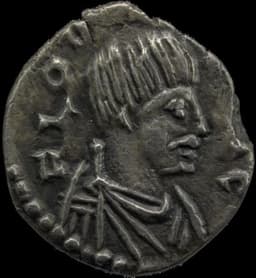
Odoacer
General · Ancient
49.7Total

Sima Wang
General · Ancient
44.8Total
Basic Information
Born
433
205
Died
493
271
Era
Ancient
Ancient
Nationality
Italy
China
Occupation
General
General
Civilization
Western
Eastern
Score Comparison
Military (10%)
70.0
60.0
Political (20%)
29.3
26.4
Influence (20%)
54.1
50.2
Legacy (20%)
46.7
40.0
Leadership (15%)
47.3
43.8
Strategy (15%)
60.0
57.5
TOTAL
49.7
44.8
Odoacer — Complete Timeline
476 AD
Deposition of Romulus AugustulusPolitical Action
Odoacer, leading a revolt of Germanic foederati, deposed the Western Roman Emperor Romulus Augustulus. He sent the imperial regalia to the Eastern Roman Emperor Zeno, effectively ending the Western Roman Empire.
Fall of Western Roman EmpireEnd of Antiquity
Impact: global
Proclamation as King of ItalyPolitical Action◆ Major
After deposing Romulus Augustulus, Odoacer was proclaimed King of Italy by his troops. He ruled Italy autonomously while nominally recognizing the authority of the Eastern Roman Emperor, establishing a new political order.
Kingdom of ItalyGermanic RulePost-Roman
Impact: regional
489 AD
War with the OstrogothsWar◆ Major
The Eastern Roman Emperor Zeno sent the Ostrogothic king Theodoric the Great to invade Italy and overthrow Odoacer. Odoacer's forces were defeated at the battles of Isonzo and Verona, leading to a prolonged siege of Ravenna.
Ostrogothic InvasionItaly War
Impact: regionaldestructive
493 AD
Siege of Ravenna and DeathWar◆ Major
Odoacer surrendered Ravenna to Theodoric after a three-year siege. Under a truce, Theodoric invited Odoacer to a banquet and killed him with his own hands, ending Odoacer's rule and establishing the Ostrogothic Kingdom of Italy.
AssassinationOstrogothic KingdomEnd of Rule
Impact: regionaltragic
Sima Wang — Complete Timeline
265 AD
Appointed Prince of LangyaPolitical Action
After the founding of Jin, Sima Wang was enfeoffed as Prince of Langya, a high-ranking noble title. This appointment reflected his status as a key member of the Sima clan.
EnfeoffmentJin DynastyNobility
Impact: nationalconstructive
270 AD
Suppressed Rebellion of XiongnuWar◆ Major
Sima Wang crushed a Xiongnu rebellion in the north, securing Jin's borders. His victory stabilized the frontier and enhanced his reputation as a general.
RebellionBorder SecurityJin Dynasty
Impact: regional
Expert Analysis
Origins
Odoacer was born around 433 AD, likely in Pannonia, to a Germanic tribal background. His father was Edeko, a Hun commander under Attila. Odoacer rose through the ranks of the Roman military, serving as a leader of Germanic foederati (mercenaries). His early life was shaped by the chaos of the collapsing Western Roman Empire, where barbarian generals wielded increasing power.
Sima Wang was born in 205 AD during the late Eastern Han dynasty, into the powerful Sima clan of the Cao Wei state. He was the son of Sima Fu, a key official, and grandson of Sima Yi, the renowned strategist. Sima Wang grew up in a politically charged environment, witnessing the gradual usurpation of Wei by his family. His early career involved military and administrative roles, preparing him for the eventual establishment of the Jin dynasty.
Rise to Power
Odoacer's rise culminated in 476 AD when he led a revolt of Germanic foederati against the Western Roman emperor Romulus Augustulus. He deposed the young emperor, sent the imperial regalia to the Eastern Roman emperor Zeno, and was proclaimed King of Italy by his troops. This event is traditionally marked as the fall of the Western Roman Empire. Odoacer ruled Italy autonomously, nominally recognizing Zeno's authority, and expanded his territory into Dalmatia.
Sima Wang's rise was less dramatic but steady. As a member of the Sima clan, he benefited from his grandfather Sima Yi's coup in 249 AD and his uncle Sima Shi's and father Sima Zhao's consolidation of power. In 265 AD, Sima Zhao's son Sima Yan founded the Jin dynasty, and Sima Wang was appointed as a general and prince. He played a key role in the conquest of Wu (280 AD), commanding forces that captured key territories, leading to the unification of China. His suppression of Xiongnu rebellions further solidified his reputation.
Leadership & Governance
Odoacer's leadership style was pragmatic and militaristic. As king, he maintained Roman administrative structures and appointed Roman officials, such as the philosopher Boethius, to manage civil affairs. He sought coexistence with the Roman Senate and the Eastern Empire, but his rule was marked by constant military campaigns to secure his borders. His governance scored 47.3 in leadership, reflecting a reliance on force rather than institutional reform.
Sima Wang's leadership was more bureaucratic, typical of a Jin prince. He administered his fiefdom of Langya and participated in the imperial court. His military leadership scored 43.8, lower than Odoacer's, but he was effective in campaigns. His governance was constrained by the Jin dynasty's complex power structures, where nobles and generals vied for influence. He did not initiate major reforms, instead supporting the existing Confucian order.
Triumph & Tragedy
Odoacer's greatest triumph was deposing the last Western Roman emperor and establishing a kingdom that lasted 33 years. He successfully defended Italy against external threats, including a Frankish invasion. However, his tragedy was his inability to secure his position against the Ostrogoths. In 489, Theodoric the Great, sent by Emperor Zeno, invaded Italy. After a three-year siege of Ravenna, Odoacer surrendered in 493, only to be murdered by Theodoric at a banquet. His death ended his kingdom.
Sima Wang's triumph was his role in the Jin conquest of Wu, which ended the Three Kingdoms period and unified China. He also suppressed Xiongnu rebellions, stabilizing the northern frontier. His tragedy was the short-lived nature of the Jin dynasty's unity. After the death of Emperor Wu (Sima Yan), the Jin fell into civil war (the War of the Eight Princes), and Sima Wang's descendants were caught in the chaos. His personal tragedy was that his achievements were overshadowed by the dynasty's collapse.
Character & Destiny
Odoacer was ambitious and decisive, but also trusting to a fault. He believed Theodoric's peace offer and attended the banquet where he was killed. His character scored 47.3 in leadership, indicating a strong but flawed commander. His destiny was tied to the fall of Rome; he was both a product and an agent of that collapse.
Sima Wang was cautious and loyal to the Sima clan, but lacked the ruthlessness of his grandfather Sima Yi. He scored 43.8 in leadership, reflecting a competent but not exceptional general. His destiny was to be a pillar of the Jin dynasty, but not its architect. He died in 293 AD, before the dynasty's unraveling.
Legacy
Odoacer's legacy is profound: he is remembered as the barbarian who ended the Western Roman Empire. His reign marked the transition from Antiquity to the Middle Ages in Italy. His influence scored 54.1, but his legacy score of 46.7 reflects the ephemeral nature of his kingdom. He is a symbol of Rome's fall.
Sima Wang's legacy is more modest. He is remembered as a Jin prince and general who helped unify China. His influence score of 50.2 and legacy of 40.0 indicate a secondary figure in Chinese history. The Jin dynasty he served is often seen as a weak, short-lived dynasty. His contributions are overshadowed by the Three Kingdoms era's more famous figures.
Conclusion
Odoacer had a greater impact than Sima Wang. His total score of 49.7 exceeds Sima Wang's 44.8, a gap of 4.9 points. Odoacer's deposition of Romulus Augustulus is a watershed event in world history, marking the end of ancient Rome. Sima Wang's role in unifying China was important but not transformative; the Jin dynasty soon fractured. Odoacer's actions reshaped Europe, while Sima Wang's were a footnote in Chinese dynastic cycles. Therefore, Odoacer holds a more significant place in history.
Rankings
🥇
OdoacerLeader
Mil: 70.0Pol: 29.3Inf: 54.1
49.7
🥈
Sima Wang
Mil: 60.0Pol: 26.4Inf: 50.2
44.8
+4.9 behind
How This Comparison Works
Algorithm
Each figure is scored on 6 dimensions (0—100 scale) based on structured historical data: Military (10%), Political (20%), Influence (20%), Legacy (20%), Leadership (15%), Strategy (15%). The weighted total produces the final ranking.
Data Sources
Scores are computed from structured sub-indicators in the database. Scale factors adjust for era (Ancient ×0.85, Modern ×1.0) and civilization size (Eastern ×1.05, Other ×0.80) to account for differences in population and military scale.
Maximum 3 Figures
Comparisons are limited to 2—3 figures to ensure readability and statistical meaningfulness.
Error Margins
±5 points per dimension — Sub-scores are derived from historical records with inherent uncertainty. Two figures within 5 points on a dimension should be considered roughly equivalent in that area.
Total Score Accuracy
±3 points overall — The weighted combination of 6 dimensions produces a total score with approximately ±3 points of uncertainty. Differences of less than 3 points are not statistically significant— the figures are effectively tied.
Known Limitations
- Historical records are incomplete and uneven across civilizations
- Figures from oral-tradition societies may be underrepresented
- Occupation labels can misclassify multi-role figures
- Scores measure capability and impact, not moral character
- Quantitative scoring is a comparison tool, not absolute truth
Capability Radar
Military (10%) — Battles & Warfare
Battles
45
45
Win Rate
50
50
Expansion
40
35
Political (20%) — Governance & Reform
Reform
30
30
Diplomacy
50
35
Economy
35
30
Influence (20%) — Cultural & Global Reach
Cultural
30
25
Global
35
15
Legacy (20%) — Historical Impact
Historical
50
30
Longevity
40
20
Leadership (15%) — Power & Stability
Tenure
55
40
Stability
30
40
Strategy (15%) — Tactics & Innovation
Strategy
45
45
Tactics
40
40
Reform
20
30
Similar Comparisons
Comments & Discussion
No comments yet. Be the first to share your thoughts!