Loading...
Odoacer vs Wang Ji
Odoacer leads by 7.7 pts · 2 figures compared
…
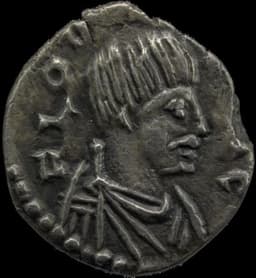
Odoacer
General · Ancient
49.7Total

Wang Ji
General · Ancient
42.0Total
Basic Information
Born
433
190
Died
493
261
Era
Ancient
Ancient
Nationality
Italy
China
Occupation
General
General
Civilization
Western
Eastern
Score Comparison
Military (10%)
70.0
45.0
Political (20%)
29.3
30.8
Influence (20%)
54.1
47.1
Legacy (20%)
46.7
37.5
Leadership (15%)
47.3
50.7
Strategy (15%)
60.0
41.7
TOTAL
49.7
42.0
Odoacer — Complete Timeline
476 AD
Deposition of Romulus AugustulusPolitical Action
Odoacer, leading a revolt of Germanic foederati, deposed the Western Roman Emperor Romulus Augustulus. He sent the imperial regalia to the Eastern Roman Emperor Zeno, effectively ending the Western Roman Empire.
Fall of Western Roman EmpireEnd of Antiquity
Impact: global
Proclamation as King of ItalyPolitical Action◆ Major
After deposing Romulus Augustulus, Odoacer was proclaimed King of Italy by his troops. He ruled Italy autonomously while nominally recognizing the authority of the Eastern Roman Emperor, establishing a new political order.
Kingdom of ItalyGermanic RulePost-Roman
Impact: regional
489 AD
War with the OstrogothsWar◆ Major
The Eastern Roman Emperor Zeno sent the Ostrogothic king Theodoric the Great to invade Italy and overthrow Odoacer. Odoacer's forces were defeated at the battles of Isonzo and Verona, leading to a prolonged siege of Ravenna.
Ostrogothic InvasionItaly War
Impact: regionaldestructive
493 AD
Siege of Ravenna and DeathWar◆ Major
Odoacer surrendered Ravenna to Theodoric after a three-year siege. Under a truce, Theodoric invited Odoacer to a banquet and killed him with his own hands, ending Odoacer's rule and establishing the Ostrogothic Kingdom of Italy.
AssassinationOstrogothic KingdomEnd of Rule
Impact: regionaltragic
Wang Ji — Complete Timeline
240 AD
Governed with Ethical PoliciesReform◆ Major
As a local governor in Wei, Wang Ji implemented policies reducing taxes and promoting agriculture. His governance was praised for fairness and effectiveness.
GovernanceReformWei Dynasty
constructive
257 AD
Defeated Zhuge Dan's RebellionWar◆ Major
Wang Ji served under Sima Zhao in suppressing Zhuge Dan's rebellion. He played a key role in the siege of Shouchun, contributing to the Wei victory.
RebellionSiegeWei Dynasty
Impact: regional
260 AD
Refused Promotion to Avoid FactionalismPolitical Action
Wang Ji declined a high court position to avoid entanglement in Sima clan politics. His decision preserved his reputation as an upright official.
RefusalIntegrityWei Dynasty
Impact: nationalconstructive
Expert Analysis
Origins
Odoacer (c. 433–493 AD) was born to a Germanic tribe, likely the Sciri or Rugii, in the region of Pannonia (modern Hungary/Croatia). Little is known of his early life, but he rose as a leader of Germanic foederati—barbarian mercenaries serving the Western Roman Empire. His background as a soldier in a collapsing empire shaped his pragmatic and opportunistic approach.
Wang Ji (c. 190–260 AD) was born in the late Eastern Han dynasty, in Donglai Commandery (modern Shandong). He came from a scholarly family; his father served as a local official. Wang Ji received a Confucian education, emphasizing moral governance and loyalty. His early career began as a minor official under the warlord Cao Cao, where he gained a reputation for integrity.
Rise to Power
Odoacer's rise came in 476 AD when he led a revolt of Germanic foederati against the Western Roman emperor Romulus Augustulus. The Roman army had been weakened by decades of civil war and barbarian incursions. Odoacer's forces captured Ravenna, the imperial capital, and deposed the boy emperor. He sent the imperial regalia to the Eastern Roman Emperor Zeno, effectively ending the Western Roman Empire. Odoacer then proclaimed himself King of Italy, ruling with nominal allegiance to Zeno.
Wang Ji rose through bureaucratic and military service under the Wei dynasty (founded by Cao Pi in 220 AD). He served as a local governor and later as a general. His key turning point came during Zhuge Dan's rebellion (257-258 AD), where he contributed to the siege of Shouchun under Sima Zhao. Wang Ji's role was supportive rather than leading, but his logistical and strategic advice proved valuable. He never sought supreme power, preferring administrative roles.
Leadership & Governance
Odoacer's governance was pragmatic and aimed at stability. He maintained the Roman administrative system, appointed Romans to key posts, and respected the Senate. He distributed land to his Germanic followers but did not impose radical changes. His leadership style was that of a military strongman relying on personal loyalty. He scored 47.3 in leadership, reflecting his ability to hold power for 13 years but ultimately falling to treachery.
Wang Ji's governance emphasized ethical policies. As a governor, he reduced taxes, promoted agriculture, and ensured fair justice. He declined a high court position to avoid factionalism within the Sima clan, preserving his reputation. His leadership scored 50.7, slightly higher than Odoacer's, due to his principled approach and lack of corruption. However, his influence was limited to local administration.
Triumph & Tragedy
Odoacer's greatest triumph was the deposition of Romulus Augustulus, a bloodless coup that ended the Western Roman Empire. He ruled Italy for 13 years, maintaining peace and order. His tragedy was his downfall: the Eastern Emperor Zeno sent the Ostrogothic king Theodoric the Great to invade Italy. After a three-year war, Odoacer surrendered Ravenna in 493 AD under a truce, only to be murdered by Theodoric at a banquet. Odoacer scored 70.0 in military but only 29.3 in political, reflecting his inability to secure his position diplomatically.
Wang Ji's triumph was his role in suppressing Zhuge Dan's rebellion, contributing to Wei's consolidation. His ethical governance earned him lasting respect. His tragedy was his limited ambition: by refusing promotion, he remained a minor figure in history. He scored 45.0 military and 30.8 political, indicating competence but not brilliance.
Character & Destiny
Odoacer was ambitious and decisive, but also trusting and naive. He believed Theodoric's truce, leading to his assassination. His character reflected the brutal politics of the time, where power was won by force and lost by betrayal. Historians see him as a transitional figure between Rome and the Middle Ages.
Wang Ji was principled and cautious, prioritizing moral integrity over advancement. His destiny was to be a respected but minor official. He embodies the Confucian ideal of the virtuous minister, but his refusal to engage in power struggles meant he had little impact on the broader course of Chinese history.
Legacy
Odoacer's legacy is monumental: his deposition of Romulus Augustulus is conventionally marked as the fall of the Western Roman Empire. He paved the way for Ostrogothic rule and the medieval Italian kingdoms. His score of 46.7 in legacy reflects his role as a historical pivot point.
Wang Ji's legacy is limited to historical records of ethical governance. He is remembered as a model official in Chinese historiography, but his influence is minor compared to other Three Kingdoms figures. His legacy score of 37.5 is lower, as his actions did not change the course of history.
Conclusion
Odoacer had greater historical impact than Wang Ji. His deposition of the Western Roman emperor ended an era and reshaped Europe. Despite his lower leadership score (47.3 vs 50.7), his total score of 49.7 outranks Wang Ji's 42.0. Wang Ji's ethical governance is admirable but insignificant in scale. Odoacer's actions triggered the fall of the Roman Empire in the West, a transformation that still resonates. Therefore, Odoacer stands as the more consequential figure.
Rankings
🥇
OdoacerLeader
Mil: 70.0Pol: 29.3Inf: 54.1
49.7
🥈
Wang Ji
Mil: 45.0Pol: 30.8Inf: 47.1
42.0
+7.7 behind
How This Comparison Works
Algorithm
Each figure is scored on 6 dimensions (0—100 scale) based on structured historical data: Military (10%), Political (20%), Influence (20%), Legacy (20%), Leadership (15%), Strategy (15%). The weighted total produces the final ranking.
Data Sources
Scores are computed from structured sub-indicators in the database. Scale factors adjust for era (Ancient ×0.85, Modern ×1.0) and civilization size (Eastern ×1.05, Other ×0.80) to account for differences in population and military scale.
Maximum 3 Figures
Comparisons are limited to 2—3 figures to ensure readability and statistical meaningfulness.
Error Margins
±5 points per dimension — Sub-scores are derived from historical records with inherent uncertainty. Two figures within 5 points on a dimension should be considered roughly equivalent in that area.
Total Score Accuracy
±3 points overall — The weighted combination of 6 dimensions produces a total score with approximately ±3 points of uncertainty. Differences of less than 3 points are not statistically significant— the figures are effectively tied.
Known Limitations
- Historical records are incomplete and uneven across civilizations
- Figures from oral-tradition societies may be underrepresented
- Occupation labels can misclassify multi-role figures
- Scores measure capability and impact, not moral character
- Quantitative scoring is a comparison tool, not absolute truth
Capability Radar
Military (10%) — Battles & Warfare
Battles
45
15
Win Rate
50
20
Expansion
40
10
Political (20%) — Governance & Reform
Reform
30
35
Diplomacy
50
40
Economy
35
45
Influence (20%) — Cultural & Global Reach
Cultural
30
20
Global
35
10
Legacy (20%) — Historical Impact
Historical
50
20
Longevity
40
15
Leadership (15%) — Power & Stability
Tenure
55
40
Stability
30
50
Strategy (15%) — Tactics & Innovation
Strategy
45
15
Tactics
40
20
Reform
20
10
Similar Comparisons
Comments & Discussion
No comments yet. Be the first to share your thoughts!