Loading...
Odaenathus vs Odoacer
Odaenathus leads by 14.4 pts · 2 figures compared
…

Odaenathus
General · Ancient
64.1Total
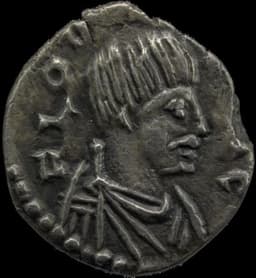
Odoacer
General · Ancient
49.7Total
Basic Information
Born
220
433
Died
267
493
Era
Ancient
Ancient
Nationality
Palmyrene Empire
Italy
Occupation
General
General
Civilization
Middle Eastern
Western
Score Comparison
Military (10%)
75.0
70.0
Political (20%)
68.0
29.3
Influence (20%)
58.0
54.1
Legacy (20%)
49.2
46.7
Leadership (15%)
80.0
47.3
Strategy (15%)
76.0
60.0
TOTAL
64.1
49.7
Odaenathus — Complete Timeline
260 AD
Defense of the Roman East against the SassanidsWar◆ Major
Odaenathus, king of Palmyra, organized a successful defense of the Roman eastern provinces after Emperor Valerian was captured by the Sassanid king Shapur I. He defeated the Sassanid forces, drove them back across the Euphrates, and restored Roman authority in Syria and Mesopotamia.
PalmyraSassanid EmpireRoman Empire
Impact: regionalconstructive
262 AD
Campaign against the SassanidsWar◆ Major
Odaenathus launched a major campaign against the Sassanid Empire, recapturing the cities of Nisibis and Carrhae. He besieged the Sassanid capital of Ctesiphon but was unable to take it. His victories secured the Roman eastern frontier and earned him the title of Corrector Totius Orientis.
PalmyraSassanid EmpireCampaign
Impact: regionalconstructive
267 AD
AssassinationPolitical Action◆ Major
Odaenathus was assassinated along with his eldest son Herodianus at Emesa, allegedly on the orders of his wife Zenobia or his nephew Maeonius. His death created a power vacuum that allowed Zenobia to take control of Palmyra and expand the Palmyrene Empire.
AssassinationPalmyraZenobia
Impact: regionaltragic
Odoacer — Complete Timeline
476 AD
Deposition of Romulus AugustulusPolitical Action
Odoacer, leading a revolt of Germanic foederati, deposed the Western Roman Emperor Romulus Augustulus. He sent the imperial regalia to the Eastern Roman Emperor Zeno, effectively ending the Western Roman Empire.
Fall of Western Roman EmpireEnd of Antiquity
Impact: global
Proclamation as King of ItalyPolitical Action◆ Major
After deposing Romulus Augustulus, Odoacer was proclaimed King of Italy by his troops. He ruled Italy autonomously while nominally recognizing the authority of the Eastern Roman Emperor, establishing a new political order.
Kingdom of ItalyGermanic RulePost-Roman
Impact: regional
489 AD
War with the OstrogothsWar◆ Major
The Eastern Roman Emperor Zeno sent the Ostrogothic king Theodoric the Great to invade Italy and overthrow Odoacer. Odoacer's forces were defeated at the battles of Isonzo and Verona, leading to a prolonged siege of Ravenna.
Ostrogothic InvasionItaly War
Impact: regionaldestructive
493 AD
Siege of Ravenna and DeathWar◆ Major
Odoacer surrendered Ravenna to Theodoric after a three-year siege. Under a truce, Theodoric invited Odoacer to a banquet and killed him with his own hands, ending Odoacer's rule and establishing the Ostrogothic Kingdom of Italy.
AssassinationOstrogothic KingdomEnd of Rule
Impact: regionaltragic
Expert Analysis
Origins
Odaenathus was born around 220 CE into a noble Palmyrene family. Palmyra, an oasis city in the Syrian desert, was a wealthy trading hub under Roman influence. His father, Septimius Odaenathus, was a senator. Odaenathus inherited a position of authority, likely as a local ruler, and was granted Roman citizenship and senatorial rank. His early life was shaped by Palmyra's unique position as a buffer between Rome and Parthia.
Odoacer, born around 433 CE, was of Germanic origin, likely from the Sciri tribe. Little is known of his early life. He served as a leader of Germanic foederati in the Roman army. He rose through military ranks, becoming a commander in the Western Roman Empire. His background was that of a barbarian mercenary, contrasting sharply with Odaenathus's aristocratic Palmyrene lineage.
Rise to Power
Odaenathus rose to prominence in the 260s CE after the devastating capture of Emperor Valerian by the Sassanid king Shapur I. The Roman East was in chaos. Odaenathus organized local forces and, with Roman support, launched a successful counteroffensive. In 261 CE, he defeated the usurper Quietus, and was recognized by Emperor Gallienus as corrector totius Orientis (governor of the East). His military successes against the Sassanids, including the recapture of Nisibis and Carrhae in 262 CE, solidified his power. By 266 CE, he had expanded his influence, even besieging the Sassanid capital Ctesiphon, though he did not capture it.
Odoacer's rise came in 476 CE when he led a revolt of Germanic foederati against the Western Roman Emperor Romulus Augustulus. The Roman army in Italy had been neglected and underpaid. Odoacer deposed Romulus on September 4, 476 CE, and sent the imperial regalia to the Eastern Roman Emperor Zeno. He was proclaimed King of Italy by his troops, ruling autonomously while nominally recognizing Zeno's authority. This event is traditionally marked as the fall of the Western Roman Empire.
Leadership & Governance
Odaenathus governed the Roman East with a blend of Roman and Palmyrene traditions. He maintained Roman administrative structures but ruled as a monarch. He secured the eastern frontier, restoring stability after the Sassanid crisis. His leadership was military-focused: he personally led campaigns and was respected by his troops. He did not challenge Roman authority but acted as a defender of the empire. His governance style was effective but short-lived, as he was assassinated in 267 CE.
Odoacer ruled Italy pragmatically. He kept the Roman administrative system intact, cooperating with the Senate and the Roman Catholic Church. He distributed land to his Germanic followers but avoided widespread confiscation. His rule was stable for a decade, but he faced challenges from the Ostrogoths. His political score of 29.3 reflects his inability to secure lasting legitimacy. He was a military leader who lacked the political acumen to create a durable kingdom.
Triumph & Tragedy
Odaenathus's greatest triumph was his defense of the Roman East and his campaigns against the Sassanids. He recaptured key cities and restored Roman prestige. His military score of 75.0 reflects his effectiveness. However, his assassination at Emesa in 267 CE, possibly orchestrated by his wife Zenobia or his nephew Maeonius, cut short his achievements. His death led to the rise of Zenobia, who later challenged Rome, undoing some of his work.
Odoacer's triumph was the deposition of Romulus Augustulus, ending the Western Roman Empire. This act made him a historical landmark. However, his tragedy was his failure to consolidate power. He was defeated by Theodoric the Great in 490 CE and killed in 493 CE after a deceitful truce. His legacy is overshadowed by the Ostrogothic kingdom that followed.
Character & Destiny
Odaenathus was a capable military leader with a strategic mind, as shown by his campaigns. His leadership score of 80.0 indicates strong command. He was loyal to Rome but ambitious. His assassination suggests a failure in political security or perhaps personal betrayal. His character combined Roman and Palmyrene elements, but his destiny was cut short by internal intrigue.
Odoacer was a pragmatic but ultimately unlucky leader. His political score of 29.3 reveals poor statecraft. He failed to secure recognition from the Eastern Empire, leading to the Ostrogothic invasion. His fate—murdered at a banquet—reflects the brutality of the era. His character was that of a soldier, not a statesman.
Legacy
Odaenathus's legacy is mixed. He saved the Roman East temporarily but his death enabled Zenobia's rebellion, which led to the destruction of Palmyra. His influence score of 58.0 reflects his limited long-term impact. He is remembered as a heroic figure in Palmyrene history but not widely known outside specialist circles.
Odoacer's legacy is more significant. His deposition of Romulus Augustulus is often used as the symbolic end of the Western Roman Empire. This event marks a major historical transition. However, his rule was brief and his influence score of 54.1 is similar to Odaenathus's. He is a key figure in the fall of Rome but not a builder of lasting institutions.
Conclusion
Odaenathus and Odoacer both emerged in times of crisis and seized power. Odaenathus scored 64.1 overall to Odoacer's 49.7, a gap of 14.4 points. Odaenathus was the superior military leader and strategist, with scores of 75.0 and 76.0 respectively, compared to Odoacer's 70.0 and 60.0. Odaenathus's leadership score of 80.0 dwarfs Odoacer's 47.3. However, Odoacer's political impact was arguably greater: his act of deposing the emperor had profound historical consequences. Yet, Odaenathus's achievements in defending Rome and his higher overall score suggest he was the more capable and effective leader. Therefore, Odaenathus had greater impact in his time and in historical assessment, despite Odoacer's symbolic role.
Rankings
🥇
OdaenathusLeader
Mil: 75.0Pol: 68.0Inf: 58.0
64.1
🥈
Odoacer
Mil: 70.0Pol: 29.3Inf: 54.1
49.7
+14.4 behind
How This Comparison Works
Algorithm
Each figure is scored on 6 dimensions (0—100 scale) based on structured historical data: Military (10%), Political (20%), Influence (20%), Legacy (20%), Leadership (15%), Strategy (15%). The weighted total produces the final ranking.
Data Sources
Scores are computed from structured sub-indicators in the database. Scale factors adjust for era (Ancient ×0.85, Modern ×1.0) and civilization size (Eastern ×1.05, Other ×0.80) to account for differences in population and military scale.
Maximum 3 Figures
Comparisons are limited to 2—3 figures to ensure readability and statistical meaningfulness.
Error Margins
±5 points per dimension — Sub-scores are derived from historical records with inherent uncertainty. Two figures within 5 points on a dimension should be considered roughly equivalent in that area.
Total Score Accuracy
±3 points overall — The weighted combination of 6 dimensions produces a total score with approximately ±3 points of uncertainty. Differences of less than 3 points are not statistically significant— the figures are effectively tied.
Known Limitations
- Historical records are incomplete and uneven across civilizations
- Figures from oral-tradition societies may be underrepresented
- Occupation labels can misclassify multi-role figures
- Scores measure capability and impact, not moral character
- Quantitative scoring is a comparison tool, not absolute truth
Capability Radar
Military (10%) — Battles & Warfare
Battles
75
45
Win Rate
80
50
Expansion
70
40
Political (20%) — Governance & Reform
Reform
55
30
Diplomacy
80
50
Economy
60
35
Influence (20%) — Cultural & Global Reach
Cultural
45
30
Global
45
35
Legacy (20%) — Historical Impact
Historical
55
50
Longevity
40
40
Leadership (15%) — Power & Stability
Tenure
65
55
Stability
70
30
Strategy (15%) — Tactics & Innovation
Strategy
82
45
Tactics
78
40
Reform
60
20
Similar Comparisons
Comments & Discussion
No comments yet. Be the first to share your thoughts!