Loading...
Gao Huan vs Geng Yan
Gao Huan leads by 12.2 pts · 2 figures compared
…

Gao Huan
General · Ancient
58.4Total
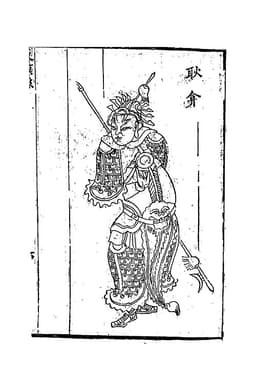
Geng Yan
General · Ancient
46.2Total
Basic Information
Born
496
-5
Died
547
58
Era
Ancient
Ancient
Nationality
China
China
Occupation
General
General
Civilization
Eastern
Eastern
Score Comparison
Military (10%)
78.0
80.0
Political (20%)
62.7
30.7
Influence (20%)
54.9
48.6
Legacy (20%)
50.0
41.7
Leadership (15%)
48.8
36.9
Strategy (15%)
76.0
55.0
TOTAL
58.4
46.2
Gao Huan — Complete Timeline
531 AD
Battle of ShanyinWar
Gao Huan defeated the Erzhu clan at the Battle of Shanyin, ending their dominance over the Northern Wei court. This victory allowed him to install Emperor Xiaowu as a puppet ruler and become the de facto ruler of northern China.
Northern WeiErzhu ClanBattlePower Struggle
Impact: nationaldestructive
534 AD
Establishment of Eastern WeiPolitical Action
After a split with Emperor Xiaowu, Gao Huan established the Eastern Wei Dynasty with Emperor Xiaojing as a puppet ruler. He controlled the eastern half of northern China from his capital at Yecheng, ruling as de facto dictator until his death.
Eastern WeiNorthern WeiDynastic SplitPuppet Emperor
Impact: regionaldestructive
547 AD
Death from IllnessOther◆ Major
Gao Huan died from illness at age 51. His sons Gao Cheng and Gao Yang succeeded him, with Gao Yang later founding the Northern Qi Dynasty, fulfilling Gao Huan's ambition of establishing a new ruling house.
Eastern WeiNorthern QiSuccessionGao Yang
Impact: regional
Geng Yan — Complete Timeline
26 AD
Appointed General of the VanguardPolitical Action
Geng Yan was appointed General of the Vanguard, a key military post under Emperor Guangwu. He led elite forces in numerous campaigns, earning a reputation as one of the most effective commanders of the Eastern Han restoration.
AppointmentMilitary CommandEastern Han
Impact: nationalconstructive
29 AD
Conquest of QiWar◆ Major
Geng Yan led the Eastern Han campaign to conquer the kingdom of Qi (modern Shandong). He defeated the local ruler Zhang Bu, bringing the wealthy and strategic Qi region under Eastern Han control. This conquest was crucial for the dynasty's consolidation.
ConquestQiEastern Han
Impact: regional
Battle of LinziWar◆ Major
Geng Yan captured the city of Linzi, the capital of Qi, after a decisive battle. He used strategic maneuvers to outflank Zhang Bu's forces. The victory broke Qi's resistance and led to the submission of the entire region.
BattleSiegeQi
Impact: regional
Expert Analysis
Origins
Gao Huan was born in 496 in the Northern Wei dynasty, into a humble family of Xianbei or mixed Han-Xianbei origin. His father died early, and he grew up in poverty, later joining the army to escape obscurity. He rose through the ranks due to his intelligence and charisma, eventually becoming a commander under the Erzhu clan. His early experiences taught him the value of alliances and the fragility of power.
Geng Yan was born in 2 AD in Fufeng (modern Shaanxi), into a prominent official family. His father Geng Kuang served as a high-ranking minister under Wang Mang's Xin dynasty. Geng Yan received a classical education and initially served as a local official, but the chaos of the Xin-Han transition pushed him toward military service. He joined Liu Xiu (later Emperor Guangwu) in 23 AD, bringing with him a network of family connections and administrative skills.
Rise to Power
Gao Huan's rise began after the death of the Northern Wei emperor Xiaozhuang in 531, when the Erzhu clan dominated the court. Gao Huan, initially a loyalist, turned against the Erzhu after they murdered the emperor. In 532, he defeated the Erzhu coalition at the Battle of Shanyin, a turning point that gave him control of the central plains. He installed a puppet emperor, Yuan Xiu (Emperor Xiaowu), but soon clashed with him. In 534, after a failed assassination attempt, Xiaowu fled west to Yuwen Tai, splitting the realm. Gao Huan then established Eastern Wei with a new puppet, Yuan Shanjian (Emperor Xiaojing). His political score of 62.7 reflects his skill in maneuvering within a fractured court.
Geng Yan rose by joining Liu Xiu's campaign to restore the Han dynasty. In 24 AD, Liu Xiu appointed him General of the Vanguard after Geng Yan proposed a strategy to conquer the northeastern kingdoms. His first major independent command came in 27 AD, when he was tasked with subduing the kingdom of Qi (modern Shandong). At the Battle of Linzi (29 AD), he used a feigned retreat to draw out Zhang Bu's forces, then encircled and crushed them. This victory secured the wealthy Qi region for Han, cementing his reputation as a skilled tactician. His military score of 80.0 reflects this success, though his political score of 30.7 indicates limited influence beyond the battlefield.
Leadership & Governance
Gao Huan governed Eastern Wei through a combination of military force and political patronage. He maintained a dual administrative system, employing both Xianbei warriors and Han civil officials. He reformed the military by creating a standing army of professional soldiers, known as the "Six Garrisons of the East," which later became the core of Northern Qi's military. Economically, he promoted agriculture and trade, stabilizing the region after years of war. However, his reliance on puppet emperors and his own clan led to factional strife. His leadership score of 48.8 reflects his effectiveness as a ruler but also his inability to create lasting institutions.
Geng Yan, by contrast, was primarily a military commander, not a governor. After conquering Qi, he was appointed as its military governor but spent most of his career on campaign. He enforced strict discipline among his troops, forbidding looting and winning local support. He also integrated surrendered soldiers into his army, a strategy that boosted his numbers but occasionally led to defections. His leadership score of 36.9 reflects his narrow focus on military affairs; he never held high civil office and died relatively young (around 58 AD) without leaving a political legacy.
Triumph & Tragedy
Gao Huan's greatest triumph was founding Eastern Wei and laying the groundwork for the Northern Qi dynasty. His military campaigns against Western Wei, while inconclusive, prevented Yuwen Tai from unifying the north. His tragedy was his failure to conquer the west and his early death at age 51 in 547, which left his sons to struggle with internal and external foes. The subsequent fall of Northern Qi in 577 was partly due to the fractious legacy he left.
Geng Yan's triumph was the conquest of Qi, which added a wealthy province to the Eastern Han and provided resources for further expansion. His tactical brilliance at Linzi is still studied. His tragedy was that his achievements were overshadowed by other generals like Deng Yu and Feng Yi, and he died without achieving high office. He also suffered a defeat in 30 AD when his army was ambushed by rebels, though he recovered. His influence score of 48.6 indicates moderate recognition.
Character & Destiny
Gao Huan was pragmatic and ruthlessly ambitious. He was known for his generosity to allies and his willingness to share power, but also for his cunning and occasional cruelty. His decision to install puppet emperors rather than take the throne himself showed caution, but it also created instability. His character was shaped by the turbulent politics of the Northern Wei collapse, where trust was rare. His strategy score of 76.0 reflects his ability to outmaneuver rivals like Erzhu Rong and Yuwen Tai.
Geng Yan was disciplined and methodical. He was a loyal servant of the Han, never seeking personal power. His caution in battle and his emphasis on logistics made him a reliable commander, but he lacked the charisma to inspire mass followings. His destiny was to be a tool of the Han restoration, not a shaper of it. His strategy score of 55.0 is moderate, indicating competence but not genius.
Legacy
Gao Huan's legacy is the Eastern Wei and Northern Qi dynasties, which continued the Northern Wei's sinicization policies and contributed to the cultural fusion of the Six Dynasties period. His military reforms influenced later Sui and Tang armies. However, his state was short-lived, and he is often overshadowed by his son Gao Yang and rival Yuwen Tai. His legacy score of 50.0 reflects this mixed impact.
Geng Yan's legacy is more limited. He is remembered as a capable general in the Han restoration, but his conquests were quickly absorbed and his name is not widely known outside military history circles. His legacy score of 41.7 is lower, partly because his achievements were part of a larger effort led by Emperor Guangwu.
Conclusion
Gao Huan had a greater impact on Chinese history than Geng Yan. His total score of 58.4 vs. 46.2 reflects his broader influence as a de facto ruler who shaped the political landscape of the Northern Dynasties. While Geng Yan's military score of 80.0 is higher than Gao Huan's 78.0, Gao Huan's political and strategy scores (62.7 and 76.0) gave him the ability to found a dynasty and influence events for decades. Geng Yan, for all his tactical skill, remained a subordinate general whose victories served a larger cause. Gao Huan's establishment of Eastern Wei set the stage for the eventual reunification of China under the Sui, making him the more consequential figure.
Rankings
🥇
Gao HuanLeader
Mil: 78.0Pol: 62.7Inf: 54.9
58.4
🥈
Geng Yan
Mil: 80.0Pol: 30.7Inf: 48.6
46.2
+12.2 behind
How This Comparison Works
Algorithm
Each figure is scored on 6 dimensions (0—100 scale) based on structured historical data: Military (10%), Political (20%), Influence (20%), Legacy (20%), Leadership (15%), Strategy (15%). The weighted total produces the final ranking.
Data Sources
Scores are computed from structured sub-indicators in the database. Scale factors adjust for era (Ancient ×0.85, Modern ×1.0) and civilization size (Eastern ×1.05, Other ×0.80) to account for differences in population and military scale.
Maximum 3 Figures
Comparisons are limited to 2—3 figures to ensure readability and statistical meaningfulness.
Error Margins
±5 points per dimension — Sub-scores are derived from historical records with inherent uncertainty. Two figures within 5 points on a dimension should be considered roughly equivalent in that area.
Total Score Accuracy
±3 points overall — The weighted combination of 6 dimensions produces a total score with approximately ±3 points of uncertainty. Differences of less than 3 points are not statistically significant— the figures are effectively tied.
Known Limitations
- Historical records are incomplete and uneven across civilizations
- Figures from oral-tradition societies may be underrepresented
- Occupation labels can misclassify multi-role figures
- Scores measure capability and impact, not moral character
- Quantitative scoring is a comparison tool, not absolute truth
Capability Radar
Military (10%) — Battles & Warfare
Battles
75
65
Win Rate
70
70
Expansion
75
55
Political (20%) — Governance & Reform
Reform
75
20
Diplomacy
85
35
Economy
70
25
Influence (20%) — Cultural & Global Reach
Cultural
50
30
Global
40
20
Legacy (20%) — Historical Impact
Historical
65
35
Longevity
50
25
Leadership (15%) — Power & Stability
Tenure
80
40
Stability
65
30
Strategy (15%) — Tactics & Innovation
Strategy
85
65
Tactics
80
60
Reform
70
30
Similar Comparisons
Comments & Discussion
No comments yet. Be the first to share your thoughts!