Loading...
Geng Yan vs Napoleon Bonaparte
Napoleon Bonaparte leads by 24.7 pts · 2 figures compared
…
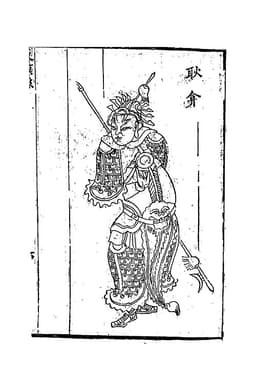
Geng Yan
General · Ancient
46.2Total

Napoleon Bonaparte
General · Modern
70.9Total
Basic Information
Born
-5
1769
Died
58
1821
Era
Ancient
Modern
Nationality
China
France
Occupation
General
General
Civilization
Eastern
Western
Score Comparison
Military (10%)
80.0
94.0
Political (20%)
30.7
72.0
Influence (20%)
48.6
40.0
Legacy (20%)
41.7
80.0
Leadership (15%)
36.9
78.0
Strategy (15%)
55.0
90.0
TOTAL
46.2
70.9
Geng Yan — Complete Timeline
26 AD
Appointed General of the VanguardPolitical Action
Geng Yan was appointed General of the Vanguard, a key military post under Emperor Guangwu. He led elite forces in numerous campaigns, earning a reputation as one of the most effective commanders of the Eastern Han restoration.
AppointmentMilitary CommandEastern Han
Impact: nationalconstructive
29 AD
Conquest of QiWar◆ Major
Geng Yan led the Eastern Han campaign to conquer the kingdom of Qi (modern Shandong). He defeated the local ruler Zhang Bu, bringing the wealthy and strategic Qi region under Eastern Han control. This conquest was crucial for the dynasty's consolidation.
ConquestQiEastern Han
Impact: regional
Battle of LinziWar◆ Major
Geng Yan captured the city of Linzi, the capital of Qi, after a decisive battle. He used strategic maneuvers to outflank Zhang Bu's forces. The victory broke Qi's resistance and led to the submission of the entire region.
BattleSiegeQi
Impact: regional
Napoleon Bonaparte — Complete Timeline
1799 AD
Coup of 18 BrumaireOther◆ Major
Napoleon Bonaparte, with support from his brother Lucien and key political figures, overthrew the Directory in a bloodless coup. He established the Consulate with himself as First Consul, effectively becoming the ruler of France. This event ended the French Revolution's most unstable period.
French RevolutionCoupRise to Power
Impact: regional
1804 AD
Promulgation of the Napoleonic CodeOther◆ Major
Napoleon enacted the Civil Code of the French, known as the Napoleonic Code, a comprehensive set of laws that replaced the fragmented feudal legal systems. The code established legal equality, protected property rights, and secularized law. It became the basis for legal systems in many European and world countries.
Legal ReformNapoleonic CodeCivil Law
Impact: globalconstructive
1805 AD
Battle of AusterlitzWar◆ Major
Napoleon's Grande Arm
Napoleonic WarsBattleDecisive Victory
Impact: global
1812 AD
Invasion of RussiaWar◆ Major
Napoleon led the Grande Arm
Napoleonic WarsInvasionDisaster
Impact: globaldestructive
1815 AD
Battle of WaterlooWar◆ Major
Napoleon's French army was defeated by the combined forces of the Duke of Wellington's Anglo-Allied army and Gebhard Leberecht von Bl
Napoleonic WarsBattleFinal Defeat
Impact: globaldestructive
Expert Analysis
geng-yan-vs-napoleon-bonaparte
# The Conqueror and the Consolidator: Napoleon and Geng Yan
On a June morning in 1815, near a small Belgian village called Waterloo, Napoleon Bonaparte watched his Imperial Guard march into the maw of British cannon fire. Twenty years of triumph dissolved into exile. Eighteen centuries earlier and half a world away, a Chinese general named Geng Yan stood before the walls of Linzi, the capital of the Qi kingdom, and did not need to watch his men die. He had already outmaneuvered his enemy into surrender. Both men were generals. Both reshaped their worlds. Yet one ended on a remote Atlantic island, the other in the annals of a dynasty he helped restore. Why?
Origins
Napoleon was born in 1769 on Corsica, an island that had just become French. He was the son of minor nobility, ambitious and restless, raised in a world where the old order was cracking. The French Revolution erupted when he was twenty, opening a path for talent over birth. He devoured military history, mastered artillery, and emerged from the chaos of the Reign of Terror with a cold, calculating ambition. His era was one of upheaval, where a young officer could become emperor in a decade.
Geng Yan was born in 5 BC, into a family of Han dynasty officials. His father was a governor, his brother a general. China was then in crisis: the Wang Mang interregnum had shattered the Western Han, and civil war raged. Geng Yan grew up in a world of Confucian order and military necessity, where loyalty to a rightful ruler was both virtue and survival. He was learned in the classics but trained in war, a product of an ancient civilization that valued stability above all.
The difference in their origins is not merely one of time and place. Napoleon’s world rewarded individual genius; Geng Yan’s demanded service to a cause. One was a comet, the other a craftsman.
Rise to Power
Napoleon’s ascent was meteoric. In 1796, at twenty-six, he took command of the French army in Italy and won a series of stunning victories against Austria. He understood that the Revolution had made war a national endeavor—mass armies, rapid marches, decisive battles. He seized power in a coup in 1799, crowned himself emperor in 1804, and by 1810 controlled most of Europe. His path was built on his own brilliance and the collapse of old structures.
Geng Yan’s rise was different. In 26 AD, he was appointed General of the Vanguard under Emperor Guangwu, the man who would reunite China. He did not seize power; he was given it. His task was not conquest for personal glory but consolidation for a dynasty. The emperor was the sun; Geng Yan was a loyal star. In 29 AD, he led the campaign against the kingdom of Qi in modern Shandong. At the Battle of Linzi, he captured the capital not by sheer force but by strategic maneuvers that outflanked the enemy. He did not need to destroy his opponent—he needed to bring the realm back under one rule.
Napoleon rose by breaking the world; Geng Yan rose by mending it.
Leadership & Governance
Napoleon’s leadership was a paradox. He was a military genius—his 94 in strategy and 93 in military skill are unmatched—but his political score of 75 reflects his fatal flaw: he could not stop. He reformed France through the Napoleonic Code, standardizing law, abolishing feudalism, and centralizing administration. These were lasting achievements. Yet he governed through conquest, placing his brothers on thrones, demanding tribute, and provoking endless war. His leadership was brilliant in execution but disastrous in restraint.
Geng Yan governed with a different philosophy. His military score of 73 and strategy of 72 are modest by comparison, but his leadership of 72 and influence of 70 show a man who understood that war was a means, not an end. He did not seek to annihilate the Qi kingdom; he sought to incorporate it. He used negotiation, patience, and the credibility of the Han court. His conquest was surgical, not scorched-earth. Where Napoleon demanded submission, Geng Yan offered integration.
The difference is not just in numbers. Napoleon’s genius was in destruction; Geng Yan’s was in construction.
Triumph & Tragedy
Napoleon’s greatest moment was Austerlitz in 1805, where he crushed the Austro-Russian army and cemented his empire. His worst was Waterloo in 1815, where arrogance, a rainy day, and Prussian reinforcements ended his dream. He died in 1821 on Saint Helena, a prisoner, his legacy a mix of lawgiver and warmonger.
Geng Yan’s triumph was the conquest of Qi in 29 AD, a campaign that restored the eastern provinces to Han control. His tragedy? He is barely remembered outside China. His legacy score of 60 reflects a man who succeeded so completely that his work became invisible—the dynasty he served lasted nearly two centuries after his death in 58 AD. He died honored, not exiled.
Napoleon’s tragedy was his own ambition; Geng Yan’s was that his success erased his name.
Character & Destiny
Napoleon was driven by a hunger that could not be sated. “I am not a man,” he once said, “but a thing.” He saw himself as destiny incarnate, and his personality—restless, brilliant, paranoid—shaped every decision. He could not delegate, could not trust, could not stop. His character made his rise possible and his fall inevitable.
Geng Yan was a man of measure. He served a legitimate emperor, understood his limits, and knew that loyalty was strength. “A good general,” ancient Chinese strategists wrote, “fights only when victory is certain.” Geng Yan lived that maxim. His personality—patient, disciplined, self-effacing—allowed him to succeed where Napoleon failed: in building something that outlasted him.
One man was the storm; the other was the wall.
Legacy
Napoleon’s legacy is vast and contested. The Napoleonic Code influences law from Europe to Latin America. His military tactics are still studied. But he is also a warning: genius without restraint becomes tyranny. His score of 82 total reflects this duality.
Geng Yan’s legacy is quieter but perhaps deeper. He helped reunify China after a period of collapse, laying the foundation for the Eastern Han, one of the great dynasties. His methods—strategic, humane, politically astute—were a model for generations of Chinese generals. His score of 65 is lower, but it measures a different kind of achievement: not the explosion of a comet, but the steady work of a mason.
Conclusion
Napoleon and Geng Yan both commanded armies and changed history. But their stories reveal a profound truth about power. Napoleon’s world rewarded the individual who broke the mold; Geng Yan’s rewarded the servant who repaired it. One conquered an empire; the other restored one. One died alone on an island; the other died honored in his homeland. The difference was not talent—it was purpose. Napoleon asked, “What can I take?” Geng Yan asked, “What can I rebuild?” History remembers the taker more vividly, but it is the rebuilders who make the world last.
Rankings
🥇
Napoleon BonaparteLeader
Mil: 94.0Pol: 72.0Inf: 40.0
70.9
🥈
Geng Yan
Mil: 80.0Pol: 30.7Inf: 48.6
46.2
+24.7 behind
How This Comparison Works
Algorithm
Each figure is scored on 6 dimensions (0—100 scale) based on structured historical data: Military (10%), Political (20%), Influence (20%), Legacy (20%), Leadership (15%), Strategy (15%). The weighted total produces the final ranking.
Data Sources
Scores are computed from structured sub-indicators in the database. Scale factors adjust for era (Ancient ×0.85, Modern ×1.0) and civilization size (Eastern ×1.05, Other ×0.80) to account for differences in population and military scale.
Maximum 3 Figures
Comparisons are limited to 2—3 figures to ensure readability and statistical meaningfulness.
Error Margins
±5 points per dimension — Sub-scores are derived from historical records with inherent uncertainty. Two figures within 5 points on a dimension should be considered roughly equivalent in that area.
Total Score Accuracy
±3 points overall — The weighted combination of 6 dimensions produces a total score with approximately ±3 points of uncertainty. Differences of less than 3 points are not statistically significant— the figures are effectively tied.
Known Limitations
- Historical records are incomplete and uneven across civilizations
- Figures from oral-tradition societies may be underrepresented
- Occupation labels can misclassify multi-role figures
- Scores measure capability and impact, not moral character
- Quantitative scoring is a comparison tool, not absolute truth
Capability Radar
Military (10%) — Battles & Warfare
Battles
65
95
Win Rate
70
90
Expansion
55
95
Political (20%) — Governance & Reform
Reform
20
95
Diplomacy
35
80
Economy
25
85
Influence (20%) — Cultural & Global Reach
Cultural
30
85
Global
20
90
Legacy (20%) — Historical Impact
Historical
35
95
Longevity
25
90
Leadership (15%) — Power & Stability
Tenure
40
85
Stability
30
70
Strategy (15%) — Tactics & Innovation
Strategy
65
95
Tactics
60
98
Reform
30
92
Similar Comparisons
Comments & Discussion
No comments yet. Be the first to share your thoughts!