Loading...
Geng Yan vs Julius Caesar
Julius Caesar leads by 36.6 pts · 2 figures compared
…
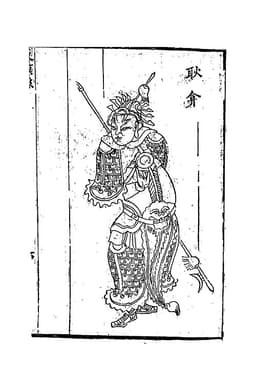
Geng Yan
General · Ancient
46.2Total

Julius Caesar
General · Ancient
82.8Total
Basic Information
Born
-5
-100
Died
58
-44
Era
Ancient
Ancient
Nationality
China
Roman Republic
Occupation
General
General
Civilization
Eastern
Western
Score Comparison
Military (10%)
80.0
88.0
Political (20%)
30.7
78.0
Influence (20%)
48.6
85.0
Legacy (20%)
41.7
82.0
Leadership (15%)
36.9
80.0
Strategy (15%)
55.0
85.0
TOTAL
46.2
82.8
Geng Yan — Complete Timeline
26 AD
Appointed General of the VanguardPolitical Action
Geng Yan was appointed General of the Vanguard, a key military post under Emperor Guangwu. He led elite forces in numerous campaigns, earning a reputation as one of the most effective commanders of the Eastern Han restoration.
AppointmentMilitary CommandEastern Han
Impact: nationalconstructive
29 AD
Conquest of QiWar◆ Major
Geng Yan led the Eastern Han campaign to conquer the kingdom of Qi (modern Shandong). He defeated the local ruler Zhang Bu, bringing the wealthy and strategic Qi region under Eastern Han control. This conquest was crucial for the dynasty's consolidation.
ConquestQiEastern Han
Impact: regional
Battle of LinziWar◆ Major
Geng Yan captured the city of Linzi, the capital of Qi, after a decisive battle. He used strategic maneuvers to outflank Zhang Bu's forces. The victory broke Qi's resistance and led to the submission of the entire region.
BattleSiegeQi
Impact: regional
Julius Caesar — Complete Timeline
58 BC
Gallic WarsWar◆ Major
Caesar, as proconsul of Gaul, launched a series of campaigns that conquered all of Gaul (modern France, Belgium, and parts of Switzerland). He fought numerous battles, including against the Helvetii, the Belgae, and the Gallic chieftain Vercingetorix. The wars brought immense wealth and a loyal army to Caesar.
Gallic WarsConquestRoman Expansion
Impact: regional
49 BC
Crossing the RubiconPolitical Action◆ Major
Caesar led Legio XIII across the Rubicon River into Italy, defying the Roman Senate's order to disband his army. This act triggered a civil war against Pompey and the Optimates, ultimately leading to Caesar's dictatorship and the end of the Roman Republic.
Roman Civil WarEnd of RepublicPower Struggle
Impact: global
48 BC
Battle of PharsalusWar◆ Major
Caesar's outnumbered army defeated the larger forces of Pompey the Great at Pharsalus in Greece. Caesar's tactical use of a reserve line to counter Pompey's cavalry charge proved decisive. Pompey fled to Egypt, where he was assassinated, leaving Caesar as the undisputed master of the Roman world.
Roman Civil WarBattleDecisive Victory
Impact: regional
44 BC
Appointment as Dictator for LifePolitical Action◆ Major
The Roman Senate appointed Caesar dictator perpetuo (dictator for life), granting him unprecedented personal power. This move concentrated military, legislative, and judicial authority in one person, effectively ending the Roman Republic's traditional system of checks and balances and alarming many senators.
DictatorshipEnd of RepublicPower Consolidation
Impact: regionaldestructive
Assassination on the Ides of MarchPolitical Action◆ Major
A group of Roman senators, led by Marcus Junius Brutus and Gaius Cassius Longinus, stabbed Caesar to death at a meeting of the Senate in the Theatre of Pompey. The assassination was intended to restore the Republic, but instead triggered another civil war that led to the rise of the Roman Empire.
AssassinationRoman PoliticsEnd of Republic
Impact: globaldestructive
Expert Analysis
geng-yan-vs-julius-caesar
# The General and the Empire Builder: Caesar and Geng Yan
On a January morning in 49 BCE, Julius Caesar stood at the banks of the Rubicon River, a small stream that separated his province of Gaul from Italy proper. By Roman law, no general could cross this boundary with his army. Caesar paused, famously declaring, *“Alea iacta est”* — the die is cast. He crossed, igniting a civil war that would destroy the Roman Republic and birth an empire. Half a world away and half a century later, Geng Yan, a general of the Eastern Han dynasty, faced no such moment of personal rebellion. His duty was clear: to serve Emperor Guangwu and reunite a fractured China. Where Caesar seized power through audacity, Geng Yan earned it through loyalty. Their divergent paths illuminate how two great civilizations shaped their most brilliant warriors.
Origins
Caesar was born into the patrician Julian clan, a family of ancient lineage but modest political influence in the late Republic. His youth unfolded amid the violent collapse of republican norms — civil wars, street riots, and the rise of populist strongmen like Marius and Sulla. Caesar learned early that survival meant navigating chaos. He fled Rome to avoid Sulla’s proscriptions, served as a military tribune in Asia Minor, and was captured by pirates whom he famously mocked and later crucified. These experiences forged a man who understood that power came not from tradition, but from personal ambition and military might.
Geng Yan was born in 5 BCE into a military family serving the Han dynasty. His father, Geng Kuang, was a respected general, and his older brother, Geng Sheng, had already died fighting for the Han cause. The dynasty itself was in crisis: the Xin interregnum had shattered imperial unity, and rival warlords carved up the land. Geng Yan grew up in a world where loyalty to the rightful emperor was both a family duty and a moral absolute. He studied strategy and history, absorbing the Confucian ideals of service and order that defined Chinese civilization. His path was not about personal glory but about restoring harmony.
Rise to Power
Caesar’s ascent was a masterclass in calculated risk. He climbed the political ladder through military commands in Hispania and Gaul, where he spent eight years conquering a vast territory and building an army personally loyal to him. The Gallic Wars made him rich and famous, but they also alarmed the Senate. When ordered to disband his legions, Caesar chose war. His crossing of the Rubicon in 49 BCE was not merely a military decision — it was a declaration that the old republic was dead. Within four years, he had defeated his rival Pompey, pacified the Mediterranean, and made himself dictator for life.
Geng Yan’s rise was quieter but no less decisive. In 26 CE, Emperor Guangwu appointed him General of the Vanguard, entrusting him with elite forces to reconquer the eastern regions. Unlike Caesar, Geng Yan did not create his own army; he inherited one loyal to the throne. His key campaign came in 29 CE, when he led the conquest of the kingdom of Qi in modern Shandong. At the Battle of Linzi, he captured the capital by outflanking the enemy with superior tactics. His victories were not personal conquests but acts of imperial restoration. Where Caesar broke the old order, Geng Yan rebuilt it.
Leadership & Governance
Caesar ruled as a revolutionary pragmatist. As dictator, he reformed the calendar, extended citizenship to provincials, launched public works projects, and centralized power in his own hands. He was a brilliant military strategist — his siege of Alesia in 52 BCE remains a masterpiece of encirclement and psychological warfare. But his political wisdom was flawed. He pardoned enemies who later killed him, and he alienated the Senate by accepting divine honors. His leadership was dazzling but brittle, built on personal charisma rather than institutional loyalty.
Geng Yan governed as a servant of the emperor. His military genius lay in methodical campaigns of attrition and maneuver, not dramatic gambles. He secured the loyalty of conquered territories by enforcing discipline among his troops and respecting local customs. His political role was minimal — he did not seek power beyond his command. The difference is stark: Caesar’s reforms aimed to transform the state into his image; Geng Yan’s victories aimed to restore the state to its proper order. One was a builder, the other a restorer.
Triumph & Tragedy
Caesar’s greatest moment came in 46 BCE, when he returned to Rome in triumph after defeating his final enemies. He was hailed as “Liberator” and “Father of the Fatherland.” Yet his tragedy was equally immense: on the Ides of March in 44 BCE, a group of senators stabbed him to death in the Senate chamber. He died at the height of his power, but his assassination plunged Rome into another civil war, ultimately leading to the empire he had unwittingly created.
Geng Yan’s triumph was the conquest of Qi, which secured the eastern heartland for the Eastern Han. He suffered no dramatic fall — he died in 58 CE, honored and at peace. His tragedy was one of obscurity: his name faded from Chinese historical memory, overshadowed by the emperors he served. While Caesar’s death became legend, Geng Yan’s quiet end reflected a culture that valued collective achievement over individual fame.
Character & Destiny
Caesar was restless, arrogant, and visionary. He believed he was destined to rule, and his personality drove every decision — from his affair with Cleopatra to his refusal to disband his bodyguard. His fatal flaw was overconfidence: he thought he could charm his enemies into submission. Instead, he inspired their daggers.
Geng Yan was disciplined, humble, and dutiful. He saw himself as a tool of the emperor, not a master of history. His personality ensured he would never overreach, but it also guaranteed he would never transcend his era. Destiny rewarded him with a quiet life and a small footnote.
Legacy
Caesar’s legacy is monumental. His name became synonymous with imperial power — “Kaiser” and “Tsar” derive from it. His writings, especially the *Commentaries on the Gallic War*, shaped military strategy for two millennia. He transformed Rome from a republic into an empire, for better or worse.
Geng Yan’s legacy is modest. He is remembered in Chinese historical records as a capable general of the early Eastern Han, but his name is unknown to most Western readers. His greatest contribution was helping to restore the Han dynasty, which would endure for another two centuries. In Chinese tradition, he is a model of the loyal general — competent, selfless, and forgotten.
Conclusion
Standing at the Rubicon, Caesar saw only himself. Geng Yan, at Linzi, saw only his emperor. One man changed the world by breaking it; the other restored it by serving it. Their stories remind us that greatness takes many forms — sometimes it is the audacity to cross a forbidden river, and sometimes it is the discipline to stay on the appointed path. In the end, Caesar’s name echoes across centuries, while Geng Yan’s lies buried in the annals of a single dynasty. But both were indispensable to the civilizations they served, and both reveal the profound difference between a general who makes history and one who lets history make him.
Rankings
🥇
Julius CaesarLeader
Mil: 88.0Pol: 78.0Inf: 85.0
82.8
🥈
Geng Yan
Mil: 80.0Pol: 30.7Inf: 48.6
46.2
+36.6 behind
How This Comparison Works
Algorithm
Each figure is scored on 6 dimensions (0—100 scale) based on structured historical data: Military (10%), Political (20%), Influence (20%), Legacy (20%), Leadership (15%), Strategy (15%). The weighted total produces the final ranking.
Data Sources
Scores are computed from structured sub-indicators in the database. Scale factors adjust for era (Ancient ×0.85, Modern ×1.0) and civilization size (Eastern ×1.05, Other ×0.80) to account for differences in population and military scale.
Maximum 3 Figures
Comparisons are limited to 2—3 figures to ensure readability and statistical meaningfulness.
Error Margins
±5 points per dimension — Sub-scores are derived from historical records with inherent uncertainty. Two figures within 5 points on a dimension should be considered roughly equivalent in that area.
Total Score Accuracy
±3 points overall — The weighted combination of 6 dimensions produces a total score with approximately ±3 points of uncertainty. Differences of less than 3 points are not statistically significant— the figures are effectively tied.
Known Limitations
- Historical records are incomplete and uneven across civilizations
- Figures from oral-tradition societies may be underrepresented
- Occupation labels can misclassify multi-role figures
- Scores measure capability and impact, not moral character
- Quantitative scoring is a comparison tool, not absolute truth
Capability Radar
Military (10%) — Battles & Warfare
Battles
65
95
Win Rate
70
92
Expansion
55
97
Political (20%) — Governance & Reform
Reform
20
90
Diplomacy
35
85
Economy
25
82
Influence (20%) — Cultural & Global Reach
Cultural
30
88
Global
20
94
Legacy (20%) — Historical Impact
Historical
35
95
Longevity
25
96
Leadership (15%) — Power & Stability
Tenure
40
75
Stability
30
60
Strategy (15%) — Tactics & Innovation
Strategy
65
94
Tactics
60
96
Reform
30
88
Similar Comparisons
Comments & Discussion
No comments yet. Be the first to share your thoughts!