Loading...
Fabius Maximus vs Geng Yan
Fabius Maximus leads by 8.4 pts · 2 figures compared
…

Fabius Maximus
General · Ancient
54.6Total
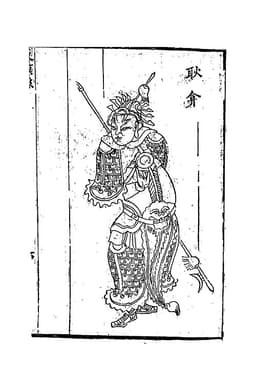
Geng Yan
General · Ancient
46.2Total
Basic Information
Born
-280
-5
Died
-203
58
Era
Ancient
Ancient
Nationality
Roman Republic
China
Occupation
General
General
Civilization
Western
Eastern
Score Comparison
Military (10%)
47.5
80.0
Political (20%)
48.0
30.7
Influence (20%)
56.7
48.6
Legacy (20%)
52.0
41.7
Leadership (15%)
48.8
36.9
Strategy (15%)
81.2
55.0
TOTAL
54.6
46.2
Fabius Maximus — Complete Timeline
230 BC
Censorship and ReformsReform
Fabius served as censor, conducting a census and revising the list of senators. He also introduced sumptuary laws to curb luxury and promote traditional Roman values, reinforcing conservative social norms.
CensorshipSocial reform
Impact: nationalconstructive
217 BC
Appointment as Dictator and Fabian StrategyWar
Fabius Maximus was appointed dictator after Roman defeats at Trebia and Lake Trasimene. He implemented a strategy of avoiding direct battle with Hannibal, instead harassing his supply lines and avoiding pitched engagements.
Second Punic WarMilitary strategy
Impact: global
216 BC
Battle of CannaeWar◆ Major
Fabius's delaying strategy was abandoned after his term ended, leading to the disastrous Battle of Cannae where Hannibal destroyed a Roman army. This defeat vindicated Fabius's cautious approach and led to its renewed adoption.
Second Punic WarBattle
Impact: globaltragic
209 BC
Recapture of TarentumWar◆ Major
Fabius, as consul, recaptured the city of Tarentum from Hannibal's forces through a combination of siege and betrayal. This victory restored Roman control over southern Italy and weakened Hannibal's position.
Second Punic WarMilitary campaign
Impact: regional
205 BC
Opposition to Scipio AfricanusPolitical Action
Fabius opposed Scipio Africanus's plan to invade Africa, arguing it was too risky. His opposition delayed the campaign but was ultimately overruled. Scipio's victory at Zama later proved Fabius's caution was excessive.
Political conflictStrategy debate
Impact: national
Geng Yan — Complete Timeline
26 AD
Appointed General of the VanguardPolitical Action
Geng Yan was appointed General of the Vanguard, a key military post under Emperor Guangwu. He led elite forces in numerous campaigns, earning a reputation as one of the most effective commanders of the Eastern Han restoration.
AppointmentMilitary CommandEastern Han
Impact: nationalconstructive
29 AD
Conquest of QiWar◆ Major
Geng Yan led the Eastern Han campaign to conquer the kingdom of Qi (modern Shandong). He defeated the local ruler Zhang Bu, bringing the wealthy and strategic Qi region under Eastern Han control. This conquest was crucial for the dynasty's consolidation.
ConquestQiEastern Han
Impact: regional
Battle of LinziWar◆ Major
Geng Yan captured the city of Linzi, the capital of Qi, after a decisive battle. He used strategic maneuvers to outflank Zhang Bu's forces. The victory broke Qi's resistance and led to the submission of the entire region.
BattleSiegeQi
Impact: regional
Expert Analysis
Origins
**Fabius Maximus** was born around 280 BCE into the patrician Fabia family, one of Rome's most ancient and influential gentes. His full name, Quintus Fabius Maximus Verrucosus, reflected a physical trait (a wart on his lip). He received a traditional Roman education focused on law, military tactics, and public service. His early career included serving as consul in 233 and 228 BCE, and censor in 230 BCE, where he revised the senatorial rolls and enforced sumptuary laws.
**Geng Yan** (耿弇) was born in 3 CE in Maoling (modern Shaanxi) into a military family; his father Geng Kuang was a general under Wang Mang. From youth, Geng Yan studied military classics and displayed strategic acumen. He joined Emperor Guangwu's cause early in the civil war following the Xin dynasty's collapse. His rise was rapid due to his skill in leading cavalry and planning sieges.
Rise to Power
Fabius Maximus rose to prominence during the Second Punic War. After Hannibal's devastating victories at Trebia (218 BCE) and Lake Trasimene (217 BCE), Rome appointed Fabius as dictator in 217 BCE. He implemented the "Fabian Strategy"—avoiding pitched battles while harassing Hannibal's supply lines and limiting his foraging. This cautious approach frustrated the Roman populace but preserved the army. However, his term ended, and the consuls who replaced him abandoned the strategy, leading to the catastrophic Battle of Cannae in 216 BCE, where Rome lost an estimated 50,000-70,000 men.
Geng Yan's rise came during the Eastern Han restoration. He was appointed General of the Vanguard under Emperor Guangwu. His first major success was the conquest of the kingdom of Qi (modern Shandong) in 29-30 CE. He defeated the Qi ruler Zhang Bu through a series of rapid campaigns, culminating in the capture of Linzi, the capital. His ability to coordinate infantry and cavalry, and his use of feigned retreats and ambushes, marked him as a top commander.
Leadership & Governance
Fabius Maximus led through patience and discipline. He maintained strict control over his troops, forbidding engagement unless conditions favored Rome. His governance as censor emphasized traditional Roman virtues, restricting luxury and reinforcing class hierarchies. He opposed Scipio Africanus's plan to invade Africa, arguing it was too risky. His leadership style was defensive and conservative, prioritizing survival over glory.
Geng Yan led aggressively and innovatively. He emphasized speed, surprise, and decisive action. In the Qi campaign, he marched rapidly, bypassed strongholds, and struck at the capital. He integrated surrendered troops into his army, showing political acumen. His governance after conquest was pragmatic, appointing local officials to maintain stability. However, his political influence was limited; he remained a military commander rather than a statesman.
Triumph & Tragedy
Fabius Maximus's greatest success was saving Rome after Cannae. By refusing to engage Hannibal in a decisive battle, he allowed Rome to rebuild its armies and eventually turn the tide. His recapture of Tarentum in 209 BCE via betrayal was a strategic victory that restored Roman control over southern Italy. However, his greatest failure was his opposition to Scipio Africanus's African campaign; had Scipio not overruled him, Rome might have delayed the war's end. Moreover, his strategy, while effective, did not destroy Hannibal—it merely contained him.
Geng Yan's triumph was the conquest of Qi, a wealthy province that provided resources for the Eastern Han. His military score of 80.0 reflects his effectiveness in battle. However, his political score of 30.7 indicates limited influence in court. He died relatively young (around 40 CE) and did not achieve high civil office. His methods were sometimes brutal; after conquering Linzi, he executed many of Zhang Bu's supporters, which may have hindered long-term stability.
Character & Destiny
Fabius Maximus was patient, cautious, and stubborn. His nickname "Cunctator" (the Delayer) encapsulated his approach. His character saved Rome but also made him unpopular; he was often accused of cowardice. His opposition to Scipio showed his inability to adapt to changing circumstances. Historical assessments vary: Polybius praised his prudence, while Livy noted his excessive caution. His leadership score of 48.8 reflects a mixed reputation.
Geng Yan was bold, decisive, and ambitious. He took risks that paid off, but his rapid rise may have bred enemies. His character was shaped by the chaotic era of the Eastern Han restoration, where loyalty and martial prowess were paramount. He died without leaving a lasting political legacy, as his influence waned after Emperor Guangwu consolidated power. His total score of 46.2 is lower than Fabius's 54.6, partly due to his narrower scope of impact.
Legacy
Fabius Maximus's legacy is the concept of "Fabian strategy"—a military doctrine of attrition and delay. His tactics influenced later generals like George Washington and Mikhail Kutuzov. He is remembered as a savior of Rome, with his statue in the Temple of Hercules. His political reforms as censor also had lasting effects on Roman morality laws.
Geng Yan's legacy is more localized. He is celebrated in Chinese history as a model general of the Eastern Han, but his achievements were overshadowed by later figures like Ban Chao and Zhuge Liang. His conquest of Qi strengthened the Han dynasty, but his methods did not become a distinct school of strategy. His influence score of 48.6 reflects this limited global recognition.
Conclusion
Fabius Maximus had greater overall impact. His strategy saved Rome during its darkest hour and became a timeless military concept. Geng Yan was a skilled general, but his achievements were confined to a single dynasty and region. Fabius's political and influence scores (48.0 and 56.7) exceed Geng's (30.7 and 48.6), and his total score of 54.6 beats Geng's 46.2. While Geng Yan excelled in rapid conquest, Fabius's patient defense altered the course of Western history. The victor is Fabius Maximus.
Rankings
🥇
Fabius MaximusLeader
Mil: 47.5Pol: 48.0Inf: 56.7
54.6
🥈
Geng Yan
Mil: 80.0Pol: 30.7Inf: 48.6
46.2
+8.4 behind
How This Comparison Works
Algorithm
Each figure is scored on 6 dimensions (0—100 scale) based on structured historical data: Military (10%), Political (20%), Influence (20%), Legacy (20%), Leadership (15%), Strategy (15%). The weighted total produces the final ranking.
Data Sources
Scores are computed from structured sub-indicators in the database. Scale factors adjust for era (Ancient ×0.85, Modern ×1.0) and civilization size (Eastern ×1.05, Other ×0.80) to account for differences in population and military scale.
Maximum 3 Figures
Comparisons are limited to 2—3 figures to ensure readability and statistical meaningfulness.
Error Margins
±5 points per dimension — Sub-scores are derived from historical records with inherent uncertainty. Two figures within 5 points on a dimension should be considered roughly equivalent in that area.
Total Score Accuracy
±3 points overall — The weighted combination of 6 dimensions produces a total score with approximately ±3 points of uncertainty. Differences of less than 3 points are not statistically significant— the figures are effectively tied.
Known Limitations
- Historical records are incomplete and uneven across civilizations
- Figures from oral-tradition societies may be underrepresented
- Occupation labels can misclassify multi-role figures
- Scores measure capability and impact, not moral character
- Quantitative scoring is a comparison tool, not absolute truth
Capability Radar
Military (10%) — Battles & Warfare
Battles
45
65
Win Rate
40
70
Expansion
20
55
Political (20%) — Governance & Reform
Reform
55
20
Diplomacy
75
35
Economy
50
25
Influence (20%) — Cultural & Global Reach
Cultural
60
30
Global
65
20
Legacy (20%) — Historical Impact
Historical
75
35
Longevity
70
25
Leadership (15%) — Power & Stability
Tenure
65
40
Stability
80
30
Strategy (15%) — Tactics & Innovation
Strategy
90
65
Tactics
85
60
Reform
70
30
Similar Comparisons
Comments & Discussion
No comments yet. Be the first to share your thoughts!