Loading...
Fuad Chehab vs Prayut Chan-o-cha
Fuad Chehab leads by 1.8 pts · 2 figures compared
…
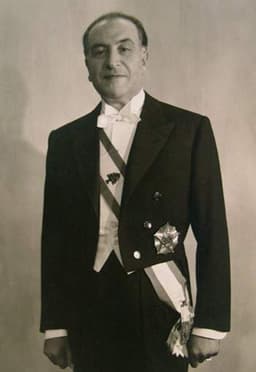
Fuad Chehab
General · Modern
49.9Total
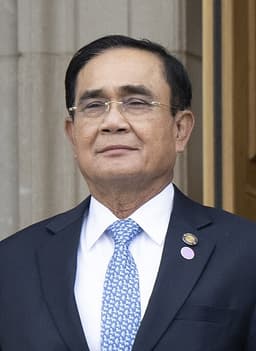
Prayut Chan-o-cha
General · Modern
48.1Total
Basic Information
Born
1902
1954
Died
1973
—
Era
Modern
Modern
Nationality
Lebanon
Thailand
Occupation
General
General
Civilization
Middle Eastern
Eastern
Score Comparison
Military (10%)
10.2
10.2
Political (20%)
70.0
68.0
Influence (20%)
54.1
51.8
Legacy (20%)
44.2
40.8
Leadership (15%)
72.0
68.0
Strategy (15%)
30.3
35.7
TOTAL
49.9
48.1
Fuad Chehab — Complete Timeline
1958 AD
Launched Chehabist reforms and modernizationReform◆ Major
President Chehab implemented a series of reforms known as Chehabism, including administrative modernization, economic planning, and strengthening state institutions. He established the Central Bank of Lebanon and the Civil Service Board.
ReformModernizationState Building
Impact: nationalconstructive
Elected President of LebanonPolitical Action◆ Major
Fuad Chehab was elected President of Lebanon on September 23, 1958, succeeding Camille Chamoun. His election ended the 1958 crisis and was supported by both Christian and Muslim factions seeking stability.
PresidencyElectionStabilization
Impact: nationalconstructive
Created the Deuxième Bureau intelligence agencyPolitical Action
Chehab expanded the role of the Deuxi
IntelligenceSecurityAuthoritarianism
Impact: national
1960 AD
Presided over the 1960s economic boomOther
Under Chehab's presidency, Lebanon experienced a period of economic growth and stability, with Beirut becoming a major financial and tourism hub. His policies attracted foreign investment and expanded the middle class.
Economic GrowthBeirutProsperity
Impact: nationalconstructive
1964 AD
Refused to amend constitution for a second termPolitical Action
Chehab declined to seek a second term as president, respecting the constitutional limit. He retired from politics in 1964, setting a precedent for peaceful transitions of power in Lebanon.
ConstitutionTerm LimitRetirement
Impact: nationalconstructive
Prayut Chan-o-cha — Complete Timeline
2014 AD
Led the 2014 military coupPolitical Action
General Prayut Chan-o-cha, as Army Commander-in-Chief, led a coup d'
CoupMilitaryThailand
Impact: nationaldestructive
Appointed Prime Minister by military legislaturePolitical Action◆ Major
Following the coup, Prayut was appointed Prime Minister by the military-controlled National Legislative Assembly. He assumed executive power, leading a government that promised reforms and national reconciliation.
AppointmentMilitary RuleThailand
Impact: national
2017 AD
Promulgation of the 2017 ConstitutionReform◆ Major
Prayut's government oversaw the drafting and approval of a new constitution that strengthened the military's political role and created a fully appointed Senate. The charter was criticized for entrenching military influence.
ConstitutionMilitaryThailand
Impact: national
2019 AD
Re-elected Prime Minister after 2019 electionPolitical Action◆ Major
Prayut was re-elected Prime Minister following a general election that was criticized for being manipulated to favor pro-military parties. He formed a coalition government, continuing his rule under a civilian facade.
ElectionContinuityThailand
Impact: national
Expert Analysis
Fuad Chehab vs Prayut Chan-o-cha
# The General Who Would Be Statesman
On a balmy September morning in 1958, Fuad Chehab stood before the Lebanese parliament, a reluctant soldier accepting a crown of thorns. Half a world away and half a century later, in May 2014, Prayut Chan-o-cha strode into a television studio in Bangkok, crisply uniformed, to announce that the Thai military had seized power once again. Both men were generals. Both believed their nations were falling apart. But the paths they chose—and the nations they left behind—could not have been more different.
Origins
Fuad Chehab was born into Lebanon’s aristocratic Maronite elite in 1902, a time when the Ottoman Empire still ruled the Levant. His family name carried weight; his uncle had been a prime minister. But Chehab himself was a quiet, almost monastic figure, educated by French Jesuits, shaped by the discipline of the French military academy at Saint-Cyr. He came of age during Lebanon’s birth as a French mandate, a fragile mosaic of eighteen sects held together by a fragile constitution. The country’s very existence was a balancing act, and Chehab internalized that tension.
Prayut Chan-o-cha, born in 1954 in northeastern Thailand, grew up in a different kind of shadow—the long, dark shadow of the Thai military. His father was a sergeant; his family was modest. He entered the Chulachomklao Royal Military Academy as a cadet, rising through a system where loyalty to the monarchy and the army were one and the same. Thailand had never been colonized, but it had been shaped by a succession of coups—eighteen since 1932. For Prayut, the military was not a temporary guardian; it was the natural order.
Rise to Power
Chehab’s ascent was reluctant. In 1952, as army commander, he was asked to lead a coup. He refused. When Lebanon’s 1958 civil war erupted—a conflict between pro-Western Christians and Arab nationalist Muslims—President Camille Chamoun called in U.S. Marines. The crisis ended with a deal: Chamoun would step down, and the neutral, respected General Chehab would take his place. He was elected on September 23, 1958, not as a conqueror, but as a compromise.
Prayut’s rise was the opposite. In 2014, after months of street protests against Prime Minister Yingluck Shinawatra, the army declared martial law. On May 22, Prayut personally led the coup, arresting political leaders and suspending the constitution. He was not elected; he seized power. The National Legislative Assembly, handpicked by the military, appointed him prime minister. Where Chehab entered politics through a door left ajar, Prayut kicked his down.
Leadership & Governance
Chehab’s presidency was an experiment in what became known as “Chehabism”—a philosophy of state-led modernization that sought to transcend Lebanon’s sectarian divisions. He created the Central Inspection Commission to root out corruption, launched the Litani River irrigation project, and built schools and hospitals in neglected rural areas. He also expanded the Deuxième Bureau, the military intelligence agency, to monitor political opponents—a quiet authoritarian streak that his admirers called stability and his critics called surveillance. His economic policies worked: Beirut boomed in the early 1960s, becoming the banking capital of the Arab world.
Prayut governed through a different logic. His 2017 constitution, drafted by military loyalists, created an unelected Senate with power to appoint the prime minister, effectively locking civilian control out of reach. He suppressed dissent with lèse-majesté laws, jailed activists, and controlled the media. But he also poured money into infrastructure—high-speed trains, new airports, and rural development—hoping to win hearts through wallets. His economic record was mixed: growth slowed, inequality persisted, and tourism, once Thailand’s lifeblood, suffered under the junta’s grim image.
Triumph & Tragedy
Chehab’s greatest triumph was his refusal to stay. In 1964, despite widespread calls to amend the constitution for a second term, he stepped down. “Power corrupts,” he reportedly said, “and absolute power corrupts absolutely.” He retired to his village, a quiet end to a quiet statesman. Yet his tragedy was that Chehabism did not outlive him. Without his personal authority, the system he built crumbled. The Deuxième Bureau became a tool of sectarian warlords. The reforms faded. By 1975, Lebanon was in civil war.
Prayut’s triumph was his survival. He won a disputed election in 2019, and again in 2023, each time through mechanisms his own constitution had designed. He outlasted protests, pandemics, and economic crises. But his tragedy is that he never truly left. As of 2024, he remains prime minister, a general who promised order and delivered a slow, grinding stagnation. Thailand’s democracy is not dead—but it is on life support, and the man who put it there still holds the plug.
Character & Destiny
Chehab was a man of restraint. His personality—introspective, cautious, almost ascetic—matched his era’s need for a healer. He believed that Lebanon’s salvation lay in institutions, not men. He was wrong, but his error was noble.
Prayut is a man of control. Blunt, stubborn, and unapologetic, he embodies the Thai military’s belief that democracy is a luxury the people cannot afford. He sees himself as a guardian, not a politician. His tragedy is that he may be right—but only because his own interventions have made it so.
Legacy
Chehab is remembered as Lebanon’s “father of reforms,” a tragic idealist whose vision of a unified nation died with him. Streets and squares bear his name, but his country bears his wounds.
Prayut’s legacy is still being written. To his supporters, he saved Thailand from chaos. To his critics, he crushed its future. History will judge him not by the coups he led, but by the institutions he refused to build.
Conclusion
Two generals, two nations, two centuries. Chehab and Prayut both believed that the military could save democracy from itself. One tried to heal his country and stepped away; the other tried to control his and stayed. The difference is not just in their characters—it is in the stories their nations told themselves about power. Lebanon’s tragedy was that it had too many voices and no strong state. Thailand’s tragedy is that it has too strong a state and too few voices. In the end, both generals remind us that when soldiers become statesmen, the hardest battle is knowing when to lay down the sword.
Rankings
🥇
Fuad ChehabLeader
Mil: 10.2Pol: 70.0Inf: 54.1
49.9
🥈
Prayut Chan-o-cha
Mil: 10.2Pol: 68.0Inf: 51.8
48.1
+1.8 behind
How This Comparison Works
Algorithm
Each figure is scored on 6 dimensions (0—100 scale) based on structured historical data: Military (10%), Political (20%), Influence (20%), Legacy (20%), Leadership (15%), Strategy (15%). The weighted total produces the final ranking.
Data Sources
Scores are computed from structured sub-indicators in the database. Scale factors adjust for era (Ancient ×0.85, Modern ×1.0) and civilization size (Eastern ×1.05, Other ×0.80) to account for differences in population and military scale.
Maximum 3 Figures
Comparisons are limited to 2—3 figures to ensure readability and statistical meaningfulness.
Error Margins
±5 points per dimension — Sub-scores are derived from historical records with inherent uncertainty. Two figures within 5 points on a dimension should be considered roughly equivalent in that area.
Total Score Accuracy
±3 points overall — The weighted combination of 6 dimensions produces a total score with approximately ±3 points of uncertainty. Differences of less than 3 points are not statistically significant— the figures are effectively tied.
Known Limitations
- Historical records are incomplete and uneven across civilizations
- Figures from oral-tradition societies may be underrepresented
- Occupation labels can misclassify multi-role figures
- Scores measure capability and impact, not moral character
- Quantitative scoring is a comparison tool, not absolute truth
Capability Radar
Military (10%) — Battles & Warfare
Battles
5
5
Win Rate
5
5
Expansion
5
5
Political (20%) — Governance & Reform
Reform
65
30
Diplomacy
60
40
Economy
50
35
Influence (20%) — Cultural & Global Reach
Cultural
30
20
Global
25
20
Legacy (20%) — Historical Impact
Historical
35
20
Longevity
30
15
Leadership (15%) — Power & Stability
Tenure
55
60
Stability
45
25
Strategy (15%) — Tactics & Innovation
Strategy
10
15
Tactics
10
10
Reform
20
20
Similar Comparisons
Comments & Discussion
草鞋书生6/16/2026
把富德·谢哈卜和巴育放在一起比?纯粹是驴唇不对马嘴。谢哈卜好歹是个读圣西尔军校、有法国教育背景的知识分子将军,知道黎巴嫩那个宗派拼盘不能硬来。巴育呢?从泰国陆军学院爬出来的铁杆保皇派,拿枪杆子治国是他的本能,跟谢哈卜那套“改革托管”的精英路线根本不是一路人。这种比较只会模糊掉两个完全不同的政治传统。
Gilded Sabre6/16/2026
Anyone who thinks Chehab and Prayut are similar hasn't read a single military history book. Chehab was a reluctant power-seizer who withdrew immediately after stabilizing Lebanon, refusing to stay despite public demand. Prayut clung to power for nine years, rewrote the constitution, and stacked the judiciary with junta loyalists. These aren't two models of military governance—they're opposites. One is a story of self-limitation; the other, systematic self-entrenchment.
二狗子的军靴6/16/2026
说实话,我看这分析就是在给巴育贴金。谢哈卜至少推行过真正的改革,比如土地改革和行政现代化,想打破黎巴嫩的封建旧网。巴育呢?他的“20年国家战略”不过是把权力锁死在自己人手里,搞经济靠炒房和旅游业刷数据。说他们都是“危机中的将军”?谢哈卜面对的是真正可能肢解国家的内战前兆,巴育面临的是他自导自演的政变借口。别把他们混为一谈。