Loading...
Fuad Chehab vs Louis Botha
Louis Botha leads by 11.2 pts · 2 figures compared
…
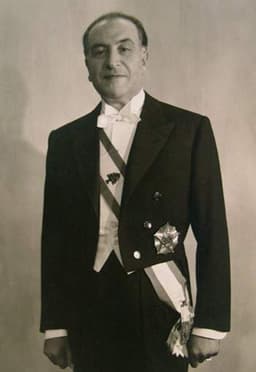
Fuad Chehab
General · Modern
49.9Total
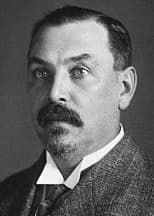
Louis Botha
General · Modern
61.1Total
Basic Information
Born
1902
1862
Died
1973
1919
Era
Modern
Modern
Nationality
Lebanon
South Africa
Occupation
General
General
Civilization
Middle Eastern
Other
Score Comparison
Military (10%)
10.2
61.7
Political (20%)
70.0
70.0
Influence (20%)
54.1
56.7
Legacy (20%)
44.2
50.0
Leadership (15%)
72.0
79.8
Strategy (15%)
30.3
58.0
TOTAL
49.9
61.1
Fuad Chehab — Complete Timeline
1958 AD
Launched Chehabist reforms and modernizationReform◆ Major
President Chehab implemented a series of reforms known as Chehabism, including administrative modernization, economic planning, and strengthening state institutions. He established the Central Bank of Lebanon and the Civil Service Board.
ReformModernizationState Building
Impact: nationalconstructive
Elected President of LebanonPolitical Action◆ Major
Fuad Chehab was elected President of Lebanon on September 23, 1958, succeeding Camille Chamoun. His election ended the 1958 crisis and was supported by both Christian and Muslim factions seeking stability.
PresidencyElectionStabilization
Impact: nationalconstructive
Created the Deuxième Bureau intelligence agencyPolitical Action
Chehab expanded the role of the Deuxi
IntelligenceSecurityAuthoritarianism
Impact: national
1960 AD
Presided over the 1960s economic boomOther
Under Chehab's presidency, Lebanon experienced a period of economic growth and stability, with Beirut becoming a major financial and tourism hub. His policies attracted foreign investment and expanded the middle class.
Economic GrowthBeirutProsperity
Impact: nationalconstructive
1964 AD
Refused to amend constitution for a second termPolitical Action
Chehab declined to seek a second term as president, respecting the constitutional limit. He retired from politics in 1964, setting a precedent for peaceful transitions of power in Lebanon.
ConstitutionTerm LimitRetirement
Impact: nationalconstructive
Louis Botha — Complete Timeline
1899 AD
Battle of ColensoWar◆ Major
Botha commanded Boer forces at the Battle of Colenso during the Second Boer War. His troops repelled a British attack under General Buller, inflicting heavy casualties and boosting Boer morale.
Second Boer WarBattleVictory
Impact: regional
1900 AD
Boer War Guerrilla CommanderWar◆ Major
After the British captured Pretoria, Botha led Boer guerrilla forces in the Transvaal. He conducted hit-and-run attacks against British columns, prolonging the war and becoming a symbol of Afrikaner resistance.
Second Boer WarGuerrillaResistance
Impact: regional
1902 AD
Signed the Treaty of VereenigingPolitical Action
Botha, as a leading Boer general, signed the Treaty of Vereeniging which ended the Second Boer War. The treaty granted the Boer republics self-government under British sovereignty and promised eventual self-rule.
TreatyPeaceSecond Boer War
Impact: regional
1910 AD
First Prime Minister of the Union of South AfricaPolitical Action
Botha became the first Prime Minister of the newly formed Union of South Africa. He led a coalition government that sought to reconcile Afrikaners and English-speaking whites, while implementing segregationist policies.
Prime MinisterUnion of South AfricaFounding
Impact: nationalconstructive
1914 AD
Suppressed the 1914 RebellionWar◆ Major
Botha personally led government forces to suppress the Maritz Rebellion, an Afrikaner uprising against South Africa's entry into World War I. He defeated the rebels, asserting state authority and maintaining support for the British Empire.
RebellionWorld War ISuppression
Impact: national
1915 AD
Conquered German South West AfricaWar◆ Major
Botha commanded South African forces in the invasion and conquest of German South West Africa. The campaign succeeded, and the territory was later administered by South Africa under a League of Nations mandate.
World War IConquestGerman South West Africa
Impact: regional
Expert Analysis
Louis Botha vs Fuad Chehab
### The General Who Built a Nation: Fuad Chehab and Louis Botha
The contrast could not be starker. One man, a former guerrilla commander, stands before his parliament in Pretoria, a victor’s sword sheathed, to speak of reconciliation. Another, a lifelong soldier, sits in the presidential palace in Beirut, a secret police report in his hands, trying to hold a fragile mosaic together. Louis Botha, the Boer who became South Africa’s first prime minister, and Fuad Chehab, the general who became Lebanon’s reformer, both rose from military command to political power. But the paths they took—and the nations they left behind—could not be more different. Why did one succeed in forging a union, while the other only postponed a collapse?
### Origins
Louis Botha was born in 1862 on a farm in the British colony of Natal, the son of a Voortrekker family. The Boer republics he grew up in were frontier societies, fiercely independent, shaped by the Bible, the rifle, and the plow. When the British Empire sought to crush their independence, Botha’s world turned to war. Fuad Chehab, born in 1902 in the Lebanese village of Ghazir, came from a different tradition. His family belonged to the Maronite Christian elite, but Lebanon itself was a patchwork of sects—Maronites, Sunnis, Shia, Druze—held together by French mandate rule and a fragile consensus. Botha’s formative experience was the open veld; Chehab’s was the delicate balance of a sectarian system.
### Rise to Power
Botha’s rise was forged in fire. In 1899, at the Battle of Colenso, he commanded Boer forces that repelled a British attack under General Redvers Buller, a stunning victory that made him a national hero. When the British captured Pretoria in 1900, he became a guerrilla commander, leading hit-and-run raids across the Transvaal for two more years. His military score of 62.0 reflects this battlefield prowess. Chehab’s path was quieter. A career officer in the French-mandated Lebanese army, he rose through staff positions, not combat. His military score of 19.9 is low, but that was not his strength. In 1958, as Lebanon teetered on the brink of civil war between pro-Western and Arab nationalist factions, Chehab was elected president on September 23, a compromise candidate who ended the crisis. Botha signed the Treaty of Vereeniging in 1902, ending the Boer War and accepting British sovereignty; Chehab signed no treaty, but his election was itself a truce.
### Leadership & Governance
Here, the two men diverged most sharply. Botha’s political score of 83.0 and leadership score of 89.6 reflect his ability to unite. As first prime minister of the Union of South Africa in 1910, he forged a coalition between Boer and Briton, even as many Afrikaners saw him as a traitor. He suppressed the 1914 Maritz Rebellion, a Boer uprising against his government, with the same ruthlessness he had once used against the British. Then he led South African forces to conquer German South West Africa in 1915, expanding the union’s territory. His governance was about consolidation—building a single nation from two warring peoples.
Chehab, with a political score of 68.8 and leadership score of 75.4, aimed at modernization, not unification. He launched Chehabist reforms: administrative modernization, economic planning, and the creation of the Deuxième Bureau, a military intelligence agency that monitored political opponents. Under his presidency, Lebanon experienced an economic boom, with Beirut becoming a financial hub. But his system relied on surveillance and patronage, not genuine integration. He strengthened the state but not the nation.
### Triumph & Tragedy
Botha’s greatest triumph was the Union itself—a feat of political engineering that survived his death in 1919. His tragedy was that this union was built on the exclusion of the black majority, a flaw that would doom South Africa to apartheid. Chehab’s triumph was the 1960s boom, a golden age of Lebanese prosperity. His tragedy came later: his refusal to amend the constitution for a second term in 1964, while principled, left his reforms incomplete. The Deuxième Bureau he created became a tool of repression, and the sectarian system he managed eventually collapsed into civil war in 1975.
### Character & Destiny
Botha was a pragmatist who could be ruthless. He fought the British, then befriended them. He crushed his own people in the 1914 rebellion, then led them to conquer new lands. His personality was that of a builder who accepted the world as it was. Chehab was a reformer who feared change. He wanted to modernize Lebanon but without upsetting its sectarian balance. His intelligence apparatus was a symptom of this fear: he trusted no faction completely. Where Botha saw a nation to be forged, Chehab saw a mosaic to be preserved.
### Legacy
Botha is remembered as a founding father of South Africa, but a controversial one. His legacy score of 66.8 reflects this ambivalence: he united Boer and Briton, but at the cost of black rights. Chehab’s legacy score of 57.9 is lower, partly because his reforms did not survive. Chehabism is a term used by historians, not a living political force. Botha’s union endured for decades; Chehab’s Lebanon crumbled.
### Conclusion
Standing at the edge of history, we see two generals who tried to build nations from the wreckage of conflict. Botha succeeded in creating a state, but its foundation was flawed. Chehab succeeded in stabilizing a state, but its structure was fragile. Their differences are not just about skill or luck—they are about the raw materials they had to work with. Botha had a people who had fought together; Chehab had a people who could not agree on who they were. In the end, the general who built a nation left a divided legacy, and the general who kept the peace left a broken one. Perhaps that is the deepest lesson: some fractures cannot be healed by any general, no matter how wise.
Rankings
🥇
Louis BothaLeader
Mil: 61.7Pol: 70.0Inf: 56.7
61.1
🥈
Fuad Chehab
Mil: 10.2Pol: 70.0Inf: 54.1
49.9
+11.2 behind
How This Comparison Works
Algorithm
Each figure is scored on 6 dimensions (0—100 scale) based on structured historical data: Military (10%), Political (20%), Influence (20%), Legacy (20%), Leadership (15%), Strategy (15%). The weighted total produces the final ranking.
Data Sources
Scores are computed from structured sub-indicators in the database. Scale factors adjust for era (Ancient ×0.85, Modern ×1.0) and civilization size (Eastern ×1.05, Other ×0.80) to account for differences in population and military scale.
Maximum 3 Figures
Comparisons are limited to 2—3 figures to ensure readability and statistical meaningfulness.
Error Margins
±5 points per dimension — Sub-scores are derived from historical records with inherent uncertainty. Two figures within 5 points on a dimension should be considered roughly equivalent in that area.
Total Score Accuracy
±3 points overall — The weighted combination of 6 dimensions produces a total score with approximately ±3 points of uncertainty. Differences of less than 3 points are not statistically significant— the figures are effectively tied.
Known Limitations
- Historical records are incomplete and uneven across civilizations
- Figures from oral-tradition societies may be underrepresented
- Occupation labels can misclassify multi-role figures
- Scores measure capability and impact, not moral character
- Quantitative scoring is a comparison tool, not absolute truth
Capability Radar
Military (10%) — Battles & Warfare
Battles
5
65
Win Rate
5
70
Expansion
5
60
Political (20%) — Governance & Reform
Reform
65
65
Diplomacy
60
70
Economy
50
55
Influence (20%) — Cultural & Global Reach
Cultural
30
45
Global
25
50
Legacy (20%) — Historical Impact
Historical
35
55
Longevity
30
40
Leadership (15%) — Power & Stability
Tenure
55
60
Stability
45
50
Strategy (15%) — Tactics & Innovation
Strategy
10
72
Tactics
10
68
Reform
20
55
Similar Comparisons
Comments & Discussion
FIELD COMMANDER6/16/2026
Military historians tend to romanticize guerrillas, but let's be honest: Botha fought a losing war against the British Empire and then surrendered. His "reconciliation" was essentially a deal to save Boer privilege in exchange for betraying the black majority. Chehab, by contrast, never lost a war—he inherited Lebanon's independence intact after WWII. Botha's Natal origins gave him frontier grit, but Chehab's Maronite upbringing in a sectarian tinderbox required actual finesse. Give me the gener
数据侦探6/16/2026
咱能不能别被“建国之父”这种叙事洗脑?把Botha和Chehab放一起比,简直是强行拉郎配。Botha的所谓union,本质上是英国殖民者扶植的白人傀儡政权,数据摆在那:1910年南非联邦成立时,黑人连投票权都没有。Chehab至少推动过统计改革,试图打破教派配额制。两边的GDP增长曲线完全靠的是不同资源:Boer靠黄金钻石掠夺,Lebanon靠银行业畸形繁荣。用一个词概括:Botha是殖民协定的执行者,Chehab是维持平衡的裱糊匠。谁更高尚?谁也别说谁。
CLASSICS ENTHUSIAST6/16/2026
Cornelius Nepos once wrote that great generals surpass themselves in peace, not war. Botha fits this perfectly: he transformed from a guerrilla leader into a statesman who brokered the Union of South Africa. That's a Ciceronian achievement—reconciling foes under a common law. Chehab, meanwhile, was more like a Platonic guardian, ruling prudently but failing to build lasting institutions. His time in power (1958-1964) was too brief; he reformed the army and secret service more than the state's so
历史票友6/16/2026
说句得罪人的话:这两位压根不在一个量级。Botha当年在Spion Kop顶着英军机枪冲锋,Colenso战役里救了整个布尔军队,那是实打实的战神履历。Chehab呢?二战期间基本是个打酱油的角色,等法国人走了才捡了个总统当。别被“建设性军队领袖”这类漂亮词忽悠了——Chehab最大的成绩是创立了情报局(Deuxième Bureau),本质上就是个监控系统。Botha打的是真战争,Chehab搞的是内部维稳。一个征服,一个妥协,高下立判。要我说,Botha至少知道自己在为谁而战。