Loading...
Fuad Chehab vs Julius Maada Bio
Julius Maada Bio leads by 1.3 pts · 2 figures compared
…
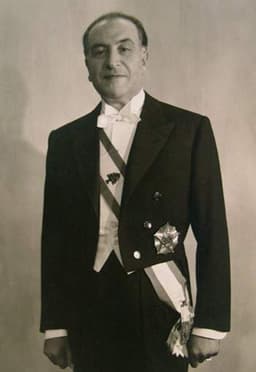
Fuad Chehab
General · Modern
49.9Total
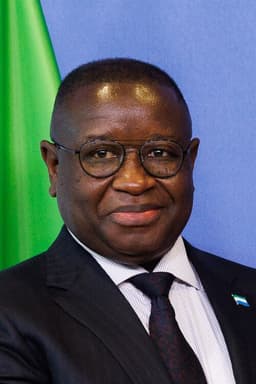
Julius Maada Bio
General · Modern
51.2Total
Basic Information
Born
1902
1964
Died
1973
—
Era
Modern
Modern
Nationality
Lebanon
Sierra Leone
Occupation
General
General
Civilization
Middle Eastern
Other
Score Comparison
Military (10%)
10.2
50.0
Political (20%)
70.0
45.0
Influence (20%)
54.1
53.3
Legacy (20%)
44.2
45.0
Leadership (15%)
72.0
70.0
Strategy (15%)
30.3
43.7
TOTAL
49.9
51.2
Fuad Chehab — Complete Timeline
1958 AD
Launched Chehabist reforms and modernizationReform◆ Major
President Chehab implemented a series of reforms known as Chehabism, including administrative modernization, economic planning, and strengthening state institutions. He established the Central Bank of Lebanon and the Civil Service Board.
ReformModernizationState Building
Impact: nationalconstructive
Elected President of LebanonPolitical Action◆ Major
Fuad Chehab was elected President of Lebanon on September 23, 1958, succeeding Camille Chamoun. His election ended the 1958 crisis and was supported by both Christian and Muslim factions seeking stability.
PresidencyElectionStabilization
Impact: nationalconstructive
Created the Deuxième Bureau intelligence agencyPolitical Action
Chehab expanded the role of the Deuxi
IntelligenceSecurityAuthoritarianism
Impact: national
1960 AD
Presided over the 1960s economic boomOther
Under Chehab's presidency, Lebanon experienced a period of economic growth and stability, with Beirut becoming a major financial and tourism hub. His policies attracted foreign investment and expanded the middle class.
Economic GrowthBeirutProsperity
Impact: nationalconstructive
1964 AD
Refused to amend constitution for a second termPolitical Action
Chehab declined to seek a second term as president, respecting the constitutional limit. He retired from politics in 1964, setting a precedent for peaceful transitions of power in Lebanon.
ConstitutionTerm LimitRetirement
Impact: nationalconstructive
Julius Maada Bio — Complete Timeline
1992 AD
1992 Sierra Leonean coup d'étatPolitical Action◆ Major
Julius Maada Bio was a member of the National Provisional Ruling Council (NPRC) that overthrew President Joseph Momoh in a military coup. Bio served as a key figure in the junta, which promised to end the civil war but faced criticism for human rights abuses.
CoupSierra LeoneCivil War
Impact: nationaldestructive
1996 AD
Brief tenure as head of statePolitical Action◆ Major
Bio led a palace coup within the NPRC in January 1996, becoming head of state. He oversaw the transition to civilian rule, handing over power to Ahmad Tejan Kabbah after elections in March 1996, a move that earned him praise for restoring democracy.
TransitionDemocracyCoup
Impact: nationalconstructive
2018 AD
Election as President of Sierra LeonePolitical Action◆ Major
Bio won the 2018 Sierra Leonean presidential election as the candidate of the Sierra Leone People's Party, defeating Samura Kamara in a runoff. His victory marked a return to power for the SLPP after a decade in opposition.
ElectionSierra LeonePresidency
Impact: nationalconstructive
2023 AD
Re-election amid economic challengesPolitical Action◆ Major
Bio was re-elected in 2023 with 56.6% of the vote, but the election was disputed by the opposition. His second term has been marked by economic difficulties, including high inflation and debt, as well as allegations of authoritarianism.
ElectionSierra LeoneEconomy
Impact: national
Expert Analysis
Fuad Chehab vs Julius Maada Bio
### The General’s Two Faces
On a warm September morning in 1958, Fuad Chehab took the oath of office in Beirut, inheriting a nation scarred by months of sectarian bloodshed. Across the world and decades later, in April 2018, Julius Maada Bio stood before a cheering crowd in Freetown, a former coup leader now hailed as a democratic savior. Both were generals who traded uniforms for presidential robes. Yet their paths, their eras, and their legacies could not have been more different. Why did one become a reluctant reformer, the other a resilient democrat? The answer lies in the soil of their birth, the storms of their times, and the choices that defined them.
### Origins: The Weight of History
Fuad Chehab was born in 1902 into the aristocratic Chehab family, a lineage that once ruled Mount Lebanon. He grew up in a Lebanon still part of the Ottoman Empire, where Maronite Christians, Sunni Muslims, and Druze coexisted in a fragile balance. The French Mandate shaped his youth, and he joined the French-trained Lebanese army, absorbing its discipline and its distance from politics. His Lebanon was a mosaic of communities, each suspicious of the other, and Chehab learned early that survival meant navigating these fault lines with quiet precision.
Julius Maada Bio, born in 1964 in a small village in Sierra Leone’s south, knew a different world. His country had gained independence from Britain just three years earlier, but the promises of freedom soon soured into corruption, coups, and chaos. Bio studied at the Bo Government Secondary School, then joined the army, where he witnessed the collapse of the state under President Siaka Stevens and his successors. Sierra Leone was not a mosaic but a powder keg, with diamonds fueling a brutal civil war. Bio’s generation learned that power came from the barrel of a gun, not from ballots.
### Rise to Power: The Coup and the Constitution
Chehab’s ascent was reluctant. In 1958, Lebanon’s President Camille Chamoun sought to amend the constitution for a second term, sparking a rebellion among Muslim factions. The army, under Chehab’s command, refused to take sides, earning him the trust of both camps. When Chamoun stepped down, Chehab was the natural compromise candidate. He was elected president on September 23, 1958, not as a conqueror but as a mediator. His power came not from force but from the exhaustion of a warring nation.
Bio’s rise was violent. In 1992, he joined the National Provisional Ruling Council, a group of young officers who overthrew President Joseph Momoh, citing rampant corruption. Bio was just 28. The coup was popular at first, but the NPRC’s rule grew chaotic. In January 1996, Bio led a palace coup, ousting his own comrades to become head of state. His tenure lasted only a few months, but he used it to fulfill a promise: overseeing elections that brought Ahmed Tejan Kabbah to power. Bio handed over the presidency, a rare act that earned him grudging respect—and a base for his future.
### Leadership & Governance: Chehabism vs. Bio’s Balancing Act
Chehab’s presidency was a laboratory of reform. He launched what became known as Chehabism: a program of administrative modernization, economic planning, and state-building. He created the Deuxième Bureau, a military intelligence agency, to monitor political opponents and curb sectarian violence. Under his watch, Lebanon experienced an economic boom in the early 1960s, with Beirut rising as a financial hub. But his rule was paternalistic, not democratic. He distrusted political parties and relied on the army to enforce stability. His reforms were top-down, and his intelligence agency became a tool of surveillance.
Bio, by contrast, had to earn democracy from scratch. After leaving power in 1996, he went into exile, studied in the United States, and returned to contest elections. He lost twice before winning the presidency in 2018 as candidate of the Sierra Leone People’s Party. His governance focused on free education, women’s empowerment, and anti-corruption drives. But the challenges were immense: a fragile economy, a legacy of war, and a population weary of broken promises. In 2023, he was re-elected with 56.6% of the vote, but the opposition cried foul. Bio’s leadership was a tightrope walk between reform and authoritarian temptation.
### Triumph & Tragedy
Chehab’s greatest triumph was his refusal to amend the constitution for a second term in 1964. He stepped down voluntarily, preserving the fragile peace he had built. But his tragedy was that Chehabism did not outlive him. His reforms were too reliant on his personal authority; without him, the system crumbled. The Deuxième Bureau grew corrupt, and sectarian tensions returned. By the time of his death in 1973, Lebanon was already sliding toward civil war.
Bio’s triumph was his transformation from coup leader to democrat. His 2018 victory was a symbol of hope for a country that had seen so much despair. His tragedy, however, is the present tense: his second term has been marred by economic crisis, rising debt, and disputed elections. The same military instincts that once served him now raise fears of a backslide. He has not yet faced his final judgment.
### Character & Destiny
Chehab was a man of restraint. He once said, “I am not a politician; I am a soldier who seeks the good of the country.” His personality was cautious, almost ascetic. He believed in order above all, and that belief shaped his decisions. His destiny was to be a caretaker, not a visionary. He built a house of cards, but he kept it standing for six years.
Bio is a man of resilience. He has survived coups, exile, and electoral defeats. His personality is pragmatic, even opportunistic. He learned that power must be earned and shared. His destiny is still unfolding, but it suggests a leader who has learned from his past—and perhaps fears repeating it.
### Legacy
Chehab is remembered as the father of modern Lebanon, a figure of stability in a land of chaos. But his legacy is ambiguous: revered by some, blamed by others for militarizing politics. His scores reflect this: a high Leadership of 75.4, but a modest Legacy of 57.9. He is a ghost who haunts Lebanese politics, a reminder of what could have been.
Bio’s legacy is unwritten. His scores are similar—Leadership 72.0, Legacy 59.0—but they are still being tallied. He is a symbol of democratic transition in Africa, but also a cautionary tale. Will he be remembered as the general who saved his country, or the one who let it slip?
### Conclusion
Two generals, two nations, two centuries. Chehab and Bio both believed they could heal their countries with a soldier’s hand. One chose order over freedom, the other chose democracy over control. Their differences were not accidents of personality but products of history. Lebanon’s sectarian mosaic demanded a mediator; Sierra Leone’s war-torn landscape demanded a reformer. In the end, both men showed that generals can be more than warriors—but also that the past is never fully left behind. Their stories remind us that leadership is not about the uniform, but about the moment. And the moment, for each of them, was everything.
Rankings
🥇
Julius Maada BioLeader
Mil: 50.0Pol: 45.0Inf: 53.3
51.2
🥈
Fuad Chehab
Mil: 10.2Pol: 70.0Inf: 54.1
49.9
+1.3 behind
How This Comparison Works
Algorithm
Each figure is scored on 6 dimensions (0—100 scale) based on structured historical data: Military (10%), Political (20%), Influence (20%), Legacy (20%), Leadership (15%), Strategy (15%). The weighted total produces the final ranking.
Data Sources
Scores are computed from structured sub-indicators in the database. Scale factors adjust for era (Ancient ×0.85, Modern ×1.0) and civilization size (Eastern ×1.05, Other ×0.80) to account for differences in population and military scale.
Maximum 3 Figures
Comparisons are limited to 2—3 figures to ensure readability and statistical meaningfulness.
Error Margins
±5 points per dimension — Sub-scores are derived from historical records with inherent uncertainty. Two figures within 5 points on a dimension should be considered roughly equivalent in that area.
Total Score Accuracy
±3 points overall — The weighted combination of 6 dimensions produces a total score with approximately ±3 points of uncertainty. Differences of less than 3 points are not statistically significant— the figures are effectively tied.
Known Limitations
- Historical records are incomplete and uneven across civilizations
- Figures from oral-tradition societies may be underrepresented
- Occupation labels can misclassify multi-role figures
- Scores measure capability and impact, not moral character
- Quantitative scoring is a comparison tool, not absolute truth
Capability Radar
Military (10%) — Battles & Warfare
Battles
5
15
Win Rate
5
20
Expansion
5
5
Political (20%) — Governance & Reform
Reform
65
50
Diplomacy
60
55
Economy
50
45
Influence (20%) — Cultural & Global Reach
Cultural
30
30
Global
25
20
Legacy (20%) — Historical Impact
Historical
35
35
Longevity
30
25
Leadership (15%) — Power & Stability
Tenure
55
55
Stability
45
40
Strategy (15%) — Tactics & Innovation
Strategy
10
20
Tactics
10
25
Reform
20
10
Similar Comparisons
Comments & Discussion
Lebanese Machiavelli6/16/2026
Chehab's restraint wasn't weakness—it was strategy. He saw Lebanon's sectarian powder keg and chose to defuse it through institutional reform rather than personal ambition. His intelligence service didn't crush rivals; it monitored them to prevent civil war. Bio, meanwhile, staged a 1996 coup to "save democracy," then handed power to civilians, only to return as an elected president later. That's not resilience; it's opportunism with good PR. One built stability; the other built a résumé.
沉默的将军6/16/2026
Chehab不是懦夫,他是看透黎巴嫩伤口的智者。1958年,他拒绝用军队镇压穆斯林暴动,反而推动经济公平——这让他被指责为“软弱”。可历史证明,他的克制避免了更大内乱。Bio呢?1996年他政变上台,承诺还政于民,结果2018年又回来当选总统。这哪里是民主的守护者?这是权力的轮回。Chehab给了黎巴嫩平静的十年,Bio给了塞拉利昂循环的幻象。