Loading...
Fuad Chehab vs Giuseppe Garibaldi
Giuseppe Garibaldi leads by 5.1 pts · 2 figures compared
…
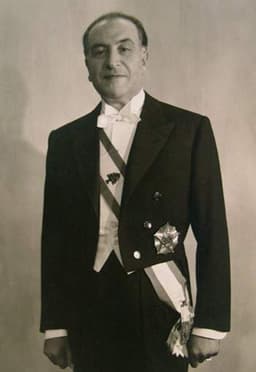
Fuad Chehab
General · Modern
49.9Total
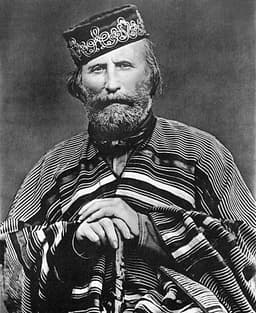
Giuseppe Garibaldi
General · Modern
55.0Total
Basic Information
Born
1902
1807
Died
1973
1882
Era
Modern
Modern
Nationality
Lebanon
Italy
Occupation
General
General
Civilization
Middle Eastern
Western
Score Comparison
Military (10%)
10.2
61.7
Political (20%)
70.0
54.7
Influence (20%)
54.1
40.0
Legacy (20%)
44.2
68.0
Leadership (15%)
72.0
54.2
Strategy (15%)
30.3
55.0
TOTAL
49.9
55.0
Fuad Chehab — Complete Timeline
1958 AD
Launched Chehabist reforms and modernizationReform◆ Major
President Chehab implemented a series of reforms known as Chehabism, including administrative modernization, economic planning, and strengthening state institutions. He established the Central Bank of Lebanon and the Civil Service Board.
ReformModernizationState Building
Impact: nationalconstructive
Elected President of LebanonPolitical Action◆ Major
Fuad Chehab was elected President of Lebanon on September 23, 1958, succeeding Camille Chamoun. His election ended the 1958 crisis and was supported by both Christian and Muslim factions seeking stability.
PresidencyElectionStabilization
Impact: nationalconstructive
Created the Deuxième Bureau intelligence agencyPolitical Action
Chehab expanded the role of the Deuxi
IntelligenceSecurityAuthoritarianism
Impact: national
1960 AD
Presided over the 1960s economic boomOther
Under Chehab's presidency, Lebanon experienced a period of economic growth and stability, with Beirut becoming a major financial and tourism hub. His policies attracted foreign investment and expanded the middle class.
Economic GrowthBeirutProsperity
Impact: nationalconstructive
1964 AD
Refused to amend constitution for a second termPolitical Action
Chehab declined to seek a second term as president, respecting the constitutional limit. He retired from politics in 1964, setting a precedent for peaceful transitions of power in Lebanon.
ConstitutionTerm LimitRetirement
Impact: nationalconstructive
Giuseppe Garibaldi — Complete Timeline
1849 AD
Defense of the Roman RepublicWar◆ Major
Garibaldi commanded the defense of the short-lived Roman Republic against French forces sent to restore papal rule. Despite heroic resistance, the republic fell, and Garibaldi led a retreat through central Italy.
Italian UnificationRoman RepublicDefense
Impact: regionaltragic
1860 AD
Expedition of the ThousandWar
Garibaldi led a volunteer force of about 1,000 men to conquer Sicily and Naples. His campaign overthrew the Bourbon monarchy and unified southern Italy with the Kingdom of Sardinia.
Italian UnificationExpeditionVolunteers
Impact: nationalconstructive
Battle of CalatafimiWar◆ Major
Garibaldi's Redshirts defeated a larger Bourbon army at Calatafimi in Sicily. The victory boosted morale and demonstrated the effectiveness of his volunteers, opening the way to Palermo.
Italian UnificationBattleSicily
Impact: regional
Battle of VolturnusWar◆ Major
Garibaldi's forces defeated the Neapolitan army at the Volturno River. The victory secured his conquest of Naples and forced King Francis II into exile, completing the unification of southern Italy.
Italian UnificationBattleNaples
Impact: regional
Cession of Sicily and Naples to Victor Emmanuel IIPolitical Action
After conquering southern Italy, Garibaldi voluntarily handed over his conquests to King Victor Emmanuel II of Sardinia. This act unified Italy under the monarchy and avoided civil war.
Italian UnificationCessionMonarchy
Impact: nationalconstructive
Expert Analysis
Fuad Chehab vs Giuseppe Garibaldi
# The General and the President: Two Paths to National Salvation
On a September morning in 1860, Giuseppe Garibaldi stood on the deck of a steamship off the coast of Naples, watching his ragged volunteers disembark onto a continent he would soon conquer. He wore his trademark red shirt, a poncho, and a hat that shaded a face weathered by decades of exile and battle. The man who had spent years fighting for causes across South America and Europe was about to deliver an entire kingdom into the hands of a monarch he barely knew. A century later, another general, Fuad Chehab, sat in a Beirut office, surrounded by maps and intelligence reports, trying to hold together a country that seemed determined to tear itself apart. Both men were soldiers who became saviors. Both were offered power on a scale that would have tempted lesser men. Only one of them walked away from it willingly.
Origins
Garibaldi was born in 1807 in Nice, a port city that would change hands between France and Italy three times during his lifetime. His father was a fisherman, his mother a woman of deep Catholic faith who taught him to read and write. The sea was his first classroom, and the Mediterranean his first battlefield. By his twenties, he had joined the secret society of the Carbonari, a revolutionary group dedicated to Italian unification and republican ideals. A failed uprising forced him into exile in 1834, and he spent the next fourteen years fighting in South America—for the breakaway republic of Rio Grande do Sul, then for Uruguay against Argentina. These were not wars of glory; they were brutal guerrilla campaigns that taught him how to win with scant resources and how to inspire men to follow him into impossible odds.
Fuad Chehab was born in 1902 into one of Lebanon’s most aristocratic Maronite Christian families, the Chehabs, who had provided the country with emirs and leaders for centuries. He was educated at the French Jesuit school in Beirut and later at the military academy in Damascus. His Lebanon was not a nation but a mosaic—a fragile patchwork of eighteen recognized religious sects, each with its own militias, loyalties, and foreign patrons. Where Garibaldi grew up dreaming of a unified Italy, Chehab grew up learning that unity was an illusion, and that the best a leader could hope for was a stable truce.
Rise to Power
Garibaldi’s rise was not a career but a series of explosions. In 1849, he commanded the defense of the Roman Republic, a short-lived experiment in democratic government that was crushed by French forces sent to restore papal rule. He escaped with his pregnant wife Anita, who died in his arms during the retreat. For a decade, he lived in obscurity, selling candles on Staten Island and working as a ship captain in the Pacific. Then, in 1860, the opportunity came. The Kingdom of Sardinia, under Prime Minister Cavour, was maneuvering to unify Italy, but needed a spark. Garibaldi gathered about a thousand volunteers—students, workers, artisans, and adventurers—and sailed for Sicily.
Chehab’s rise was slower and more calculated. He served as a French officer during the French mandate over Lebanon, then became commander of the Lebanese army after independence in 1943. He watched as Lebanon’s delicate power-sharing system—the National Pact, which reserved the presidency for a Maronite Christian, the premiership for a Sunni Muslim, and the speakership for a Shia Muslim—began to fray. In 1958, a civil war erupted between pro-Western President Camille Chamoun and Arab nationalist rebels backed by Egypt. Chehab, as army commander, refused to use the military to crush the rebellion. He kept his soldiers in their barracks, letting the crisis burn itself out. When Chamoun stepped down, Chehab was elected president on September 23, 1958, exactly one hundred years after Garibaldi’s conquest of Naples.
Leadership & Governance
Garibaldi led by charisma and example. At the Battle of Calatafimi on May 15, 1860, his Redshirts faced a Bourbon army twice their size. The fight was uphill, through rough terrain, under a blazing sun. Garibaldi himself charged at the head of his men, shouting, “Here we make Italy or die!” They won, and the victory electrified the island. Within months, he had conquered all of Sicily and crossed the Strait of Messina into the mainland. At the Battle of Volturnus on October 1, he defeated the Neapolitan army and entered Naples to a hero’s welcome. Then, in his most astonishing act, he handed everything over to King Victor Emmanuel II. He could have declared himself dictator or king. He chose instead to salute the monarch and retire to his farm on the island of Caprera.
Chehab governed by institutionalism. He believed that Lebanon’s survival depended on a strong, neutral state that could stand above the sectarian factions. He created the Deuxième Bureau, a military intelligence agency that monitored political opponents, but he also launched a series of reforms known as Chehabism: administrative modernization, economic planning, and the expansion of public services. Under his presidency, Lebanon experienced an economic boom, with Beirut becoming the financial and cultural capital of the Middle East. But his methods were authoritarian beneath the surface. He did not crush dissent—he managed it, balanced it, and kept it from boiling over.
Triumph & Tragedy
Garibaldi’s greatest triumph was the Expedition of the Thousand, a military campaign that seemed impossible and ended with the creation of the Kingdom of Italy in 1861. His greatest tragedy was that he never realized his dream of a republic. He spent his later years criticizing the monarchy he had helped create, and he died in 1882 a disappointed man.
Chehab’s greatest triumph was preventing Lebanon’s collapse in 1958 and steering it through six years of stability and growth. His greatest tragedy was that his system did not outlast him. When he refused to amend the constitution for a second term in 1964, he retired to his home, leaving behind a state that was strong but brittle. The Deuxième Bureau became a tool of repression. The sectarian tensions he had managed so carefully exploded into civil war in 1975, three years after his death.
Character & Destiny
Garibaldi was a romantic who believed in the power of the people. He was impulsive, generous, and utterly indifferent to personal gain. When he handed Sicily and Naples to Victor Emmanuel, he did so because he believed that unity mattered more than ideology. Chehab was a pragmatist who believed in the power of institutions. He was cautious, secretive, and deeply suspicious of mass movements. He saw politics not as a crusade but as a balancing act. Garibaldi changed history by charging forward. Chehab changed it by refusing to move.
Legacy
Garibaldi is remembered as the “Hero of Two Worlds,” a symbol of liberation and national unity. Statues of him stand in cities across Italy and the Americas. His red shirt is still worn by Italian nationalists and football fans. Chehab is remembered more quietly. In Lebanon, he is admired by some as a wise reformer and criticized by others as the father of the security state that later oppressed the population. His name lives on in the term “Chehabism,” but the system he built is gone.
Conclusion
Both men were generals who became presidents, but they faced fundamentally different challenges. Garibaldi had to create a nation; Chehab had to preserve one. Garibaldi’s Italy was a project of fusion, where different peoples were to be melted into a single identity. Chehab’s Lebanon was a project of friction, where different identities had to be kept from igniting. The general who conquered was remembered as a hero. The general who restrained was remembered as a manager. History, it seems, rewards the builder of dreams more than the keeper of peace.
Rankings
🥇
Giuseppe GaribaldiLeader
Mil: 61.7Pol: 54.7Inf: 40.0
55.0
🥈
Fuad Chehab
Mil: 10.2Pol: 70.0Inf: 54.1
49.9
+5.1 behind
How This Comparison Works
Algorithm
Each figure is scored on 6 dimensions (0—100 scale) based on structured historical data: Military (10%), Political (20%), Influence (20%), Legacy (20%), Leadership (15%), Strategy (15%). The weighted total produces the final ranking.
Data Sources
Scores are computed from structured sub-indicators in the database. Scale factors adjust for era (Ancient ×0.85, Modern ×1.0) and civilization size (Eastern ×1.05, Other ×0.80) to account for differences in population and military scale.
Maximum 3 Figures
Comparisons are limited to 2—3 figures to ensure readability and statistical meaningfulness.
Error Margins
±5 points per dimension — Sub-scores are derived from historical records with inherent uncertainty. Two figures within 5 points on a dimension should be considered roughly equivalent in that area.
Total Score Accuracy
±3 points overall — The weighted combination of 6 dimensions produces a total score with approximately ±3 points of uncertainty. Differences of less than 3 points are not statistically significant— the figures are effectively tied.
Known Limitations
- Historical records are incomplete and uneven across civilizations
- Figures from oral-tradition societies may be underrepresented
- Occupation labels can misclassify multi-role figures
- Scores measure capability and impact, not moral character
- Quantitative scoring is a comparison tool, not absolute truth
Capability Radar
Military (10%) — Battles & Warfare
Battles
5
65
Win Rate
5
70
Expansion
5
60
Political (20%) — Governance & Reform
Reform
65
40
Diplomacy
60
50
Economy
50
20
Influence (20%) — Cultural & Global Reach
Cultural
30
70
Global
25
65
Legacy (20%) — Historical Impact
Historical
35
75
Longevity
30
65
Leadership (15%) — Power & Stability
Tenure
55
30
Stability
45
25
Strategy (15%) — Tactics & Innovation
Strategy
10
60
Tactics
10
75
Reform
20
55
Similar Comparisons
Comments & Discussion
Captain Redshirt6/16/2026
Garibaldi's "retirement" was the greatest PR stunt in military history. He refused a kingdom but demanded a yacht? Please. The man knew exactly how to play the martyr while enjoying the spoils. In contrast, Chehab actually buried his ego under bureaucracy. One gave up power in principle; the other gave it up on paper while keeping it in practice. Give me a honest dictator over a theatrical saint any day.
数字怀疑论者6/16/2026
你们夸Garibaldi解放意大利?他那些红衫军装备还不如土匪,弹药从哪来的?多半是共济会或英国秘密资助。Chehab的财政数据更可疑——1958年危机期间黎巴嫩GDP逆势上涨3.7%,谁信?历史是胜利者编的账本,别拿英雄叙事骗我。
The Spear and the Olive6/16/2026
Garibaldi was a hurricane; Chehab was a dam. Both necessary, but you can't compare their contexts. Garibaldi smashed kingdoms with a few thousand volunteers—pure revolutionary thrust. Chehab held Lebanon together with constitutional legerdemain while facing a civil war on three fronts. One wrote history with blood; the other edited it with ink. Which takes more courage?
墨痕未干6/16/2026
我比较文化基因:Garibaldi点燃了意大利统一的神话,Chehab却被视为“沉默的将军”。历史偏爱爆炸性的人物。Chehab的政治遗产被他自己低调的风格掩盖了——他修水库、建军校、改革官僚,却拒绝宣传。结果呢?今天黎巴嫩人记得“夏蒙危机”多于“谢哈布主义”。英雄需要故事,而他拒绝出演。
Classica Admirer6/16/2026
You miss the classical echoes. Garibaldi is Cincinnatus with a red shirt—called from his plow to save the republic, then returning. Chehab is more like Augustus: building institutions, consolidating power under republican forms, but never letting go entirely. Both succeeded at different games. But history writes epic poems about Cincinnatus; it writes administrative manuals about Augustus. Which legacy would you rather have?