Loading...
Franklin D. Roosevelt vs William Pitt the Elder
Franklin D. Roosevelt leads by 0.8 pts · 2 figures compared
…
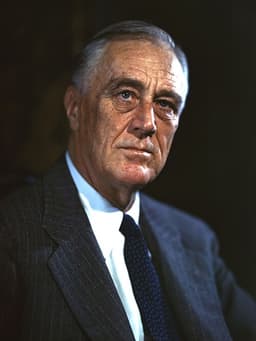
Franklin D. Roosevelt
Politician · Modern
71.0Total
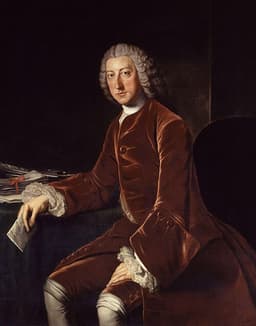
William Pitt the Elder
Politician · Modern
70.2Total
Basic Information
Born
1882
1708
Died
1945
1778
Era
Modern
Modern
Nationality
United States
United Kingdom
Occupation
Politician
Politician
Civilization
Western
Western
Score Comparison
Military (10%)
45.0
67.3
Political (20%)
85.0
72.0
Influence (20%)
75.0
68.0
Legacy (20%)
65.0
68.0
Leadership (15%)
85.0
80.0
Strategy (15%)
60.0
67.2
TOTAL
71.0
70.2
Franklin D. Roosevelt — Complete Timeline
1933 AD
Inaugurated as 32nd PresidentOther◆ Major
Franklin D. Roosevelt was inaugurated as President of the United States on March 4, 1933, during the Great Depression. His inaugural address declared 'the only thing we have to fear is fear itself,' and he immediately called Congress into special session to address the banking crisis.
Great DepressionPresidencyInauguration
Impact: national
Enacted the New DealOther◆ Major
Roosevelt launched the New Deal in 1933, a series of federal programs including the Civilian Conservation Corps, the Agricultural Adjustment Act, and the Tennessee Valley Authority. These measures aimed to provide relief, recovery, and reform during the Great Depression, fundamentally expanding the role of the federal government.
Great DepressionEconomic PolicySocial Reform
Impact: nationalconstructive
1935 AD
Signed the Social Security ActOther◆ Major
Roosevelt signed the Social Security Act into law on August 14, 1935, establishing a federal system of old-age pensions, unemployment insurance, and aid for dependent children. This created the modern American welfare state and provided a safety net for millions of citizens.
Social WelfareLegislationNew Deal
Impact: nationalconstructive
1941 AD
Lend-Lease ActOther◆ Major
Roosevelt signed the Lend-Lease Act on March 11, 1941, authorizing the transfer of military equipment and supplies to Allied nations, particularly Britain and the Soviet Union. This program provided critical material support to countries fighting the Axis powers before U.S. entry into World War II.
World War IIForeign PolicyMilitary Aid
Impact: globalconstructive
Declaration of War on JapanPolitical Action◆ Major
Following the Japanese attack on Pearl Harbor on December 7, 1941, Roosevelt delivered his 'Day of Infamy' speech to Congress the next day, requesting a declaration of war. Congress approved the declaration, bringing the United States into World War II.
World War IIPearl HarborDeclaration of War
Impact: globaldestructive
1942 AD
Executive Order 9066Other◆ Major
Roosevelt signed Executive Order 9066 on February 19, 1942, authorizing the forced relocation and internment of Japanese Americans living on the West Coast. Over 110,000 people, mostly U.S. citizens, were incarcerated in camps for the duration of the war, a decision later widely condemned as a violation of civil rights.
World War IICivil RightsInternment
Impact: nationaldestructive
1944 AD
Elected to Fourth TermOther◆ Major
Roosevelt was elected to an unprecedented fourth term as president in November 1944, defeating Republican Thomas E. Dewey. This election occurred during the final stages of World War II, and Roosevelt's continued leadership ensured stability in the war effort and post-war planning.
PresidencyElectionWorld War II
Impact: national
1945 AD
Yalta ConferenceOther◆ Major
Roosevelt met with Winston Churchill and Joseph Stalin at the Yalta Conference in February 1945 to discuss post-war Europe. Agreements included the division of Germany, Soviet entry into the war against Japan, and the creation of the United Nations, shaping the post-war world order.
World War IIDiplomacyPost-War Planning
Impact: global
William Pitt the Elder — Complete Timeline
1756 AD
Led Britain in Seven Years' WarWar
William Pitt the Elder served as Secretary of State from 1756 to 1761, directing British strategy in the Seven Years' War. His policies focused on naval supremacy and colonial campaigns, leading to victories in Canada, India, and the Caribbean.
Seven Years' WarColonial EmpireMilitary Strategy
Impact: global
1759 AD
Conquest of QuebecWar◆ Major
Under Pitt's direction, British forces under General James Wolfe captured Quebec City on September 13, 1759, after the Battle of the Plains of Abraham. This victory secured British control over Canada and marked a turning point in the Seven Years' War.
Seven Years' WarCanadaMilitary Victory
Impact: global
1766 AD
Became Prime MinisterPolitical Action
Pitt was appointed Prime Minister on July 30, 1766, forming a government. However, his health declined and he was elevated to the House of Lords as Earl of Chatham, which weakened his political base. His second ministry was less effective than his wartime leadership.
Prime MinisterGovernment18th Century
Impact: national
Opposed American TaxationPolitical Action◆ Major
Pitt argued for the repeal of the Stamp Act in 1766, asserting that Parliament had no right to tax the American colonies without representation. His speech in the Commons helped secure repeal, though he maintained Parliament's authority to legislate for the colonies.
American ColoniesTaxationParliamentary Debate
Impact: global
Expert Analysis
Franklin D. Roosevelt vs William Pitt the Elder
The Great Commoner and the Wheelchair President: A Study in Crisis Leadership
On a September morning in 1939, as German tanks rolled into Poland, Franklin D. Roosevelt sat in his study at Hyde Park, the weight of a world about to shatter pressing against his shoulders. A century and a half earlier, across the Atlantic, another man had faced a similar moment—William Pitt the Elder, watching French armies mass along the Rhine, knowing that the fate of an empire depended on his nerve. Both men rose to power in times of existential threat. Both reshaped their nations. But their paths, their methods, and their ultimate legacies could not have been more different. Why did one become a transformative icon of modern democracy, while the other remains a revered but distant figure of imperial glory?
Origins
William Pitt was born in 1708 into the fractious world of British parliamentary politics, the son of a wealthy but controversial politician. He grew up in an era when Britain was still defining its global role, a time of bitter party rivalries and constant war with France. Pitt’s education at Eton and Oxford instilled in him a fierce patriotism and a gift for oratory that would become his signature. But his health was fragile—he suffered from gout and bouts of depression—and he was never quite comfortable in the aristocratic circles that dominated Westminster. This outsider status, combined with a towering ambition, drove him to master the art of parliamentary attack. Franklin Roosevelt, born in 1882 into the Hudson Valley gentry, could not have been more different in temperament. He was the pampered only child of a wealthy family, educated at Groton, Harvard, and Columbia Law School. Where Pitt was prickly and combative, Roosevelt was charming and elusive. But both men inherited a deep sense of duty—Pitt from his father’s political legacy, Roosevelt from his cousin Theodore’s example of public service.
Rise to Power
Pitt entered Parliament in 1735, but his rise was anything but smooth. He was a brilliant speaker, but his attacks on the government of Sir Robert Walpole made him enemies. For years, he was denied high office, kept out by the king’s distrust and the entrenched power of the Whig aristocracy. His breakthrough came with the outbreak of the Seven Years’ War in 1756. Britain was losing badly—its army humiliated in Europe, its colonies threatened. In desperation, the king turned to the man the public called “the Great Commoner.” Pitt became Secretary of State, effectively running the war effort. Roosevelt’s path was different. He entered politics early, serving in the New York State Senate and as Assistant Secretary of the Navy. In 1920, he was the Democratic vice-presidential candidate—a rising star. Then disaster struck: in 1921, polio paralyzed him from the waist down. For years, he withdrew from public life, battling to regain his strength. When he returned, he was changed—more empathetic, more determined. In 1928, he was elected Governor of New York. In 1932, as the Great Depression deepened, he won the presidency, promising a “New Deal” for the American people.
Leadership & Governance
Pitt governed by will and vision. He did not micromanage battles; instead, he set grand strategy. He poured money into the Royal Navy, dispatched troops to North America and India, and supported Prussia with subsidies. His genius lay in choosing the right commanders—Wolfe for Quebec, Clive for India—and giving them the freedom to act. “I am sure I can save this country, and that nobody else can,” he once declared. He was arrogant, but he was right. By 1759, the “Year of Victories,” Britain had conquered Canada, destroyed the French fleet, and established itself as the world’s premier colonial power. Roosevelt’s leadership was more institutional. He built the modern American state. Through the New Deal, he created Social Security, the Securities and Exchange Commission, and the Works Progress Administration. He gave fireside chats on the radio, speaking directly to a frightened nation. During World War II, he was not a battlefield commander like Pitt’s generals; he was a coalition-builder, forging alliances with Churchill and Stalin, managing a global war from Washington. His political score of 85 reflects this mastery of domestic and international politics. Pitt’s 80 is close, but Roosevelt’s ability to reshape American society—and to win four elections—was unprecedented.
Triumph & Tragedy
Pitt’s greatest triumph was the conquest of Quebec in 1759. Under his direction, General James Wolfe scaled the cliffs above the St. Lawrence River and defeated the French on the Plains of Abraham. It was a victory that secured Canada for Britain and made Pitt a national hero. But his tragedy came later. In 1766, he became Prime Minister, but his health collapsed. He was elevated to the House of Lords as Earl of Chatham, a move that betrayed his “Commoner” image. When the American colonies revolted, he argued for conciliation—opposing taxation without representation—but his voice was ignored. He died in 1778, watching the empire he built begin to fracture. Roosevelt’s triumph was victory in World War II and the creation of a postwar order—the United Nations, the Bretton Woods system, the containment of Soviet power. But his tragedy was personal: he died on April 12, 1945, just weeks before Germany surrendered, never seeing the peace he had worked for. His health, already failing, was sacrificed to the war effort.
Character & Destiny
Pitt was a man of fire. His oratory was volcanic; his ambition, naked. He believed in empire and in the righteousness of British power. He was a strategist, not an administrator, and his personality—proud, irritable, isolated—limited his ability to govern in peacetime. Roosevelt was a man of water. He was flexible, pragmatic, and supremely confident. He could charm a senator, soothe a labor leader, and outmaneuver a dictator. His polio gave him a resilience that Pitt never needed—and never developed. Pitt’s destiny was to win a war; Roosevelt’s was to win a war and then to define the peace. Pitt’s leadership score of 75 is solid; Roosevelt’s 85 is higher because he led a nation through both depression and war, and he did it while unable to walk.
Legacy
Pitt is remembered as the architect of the British Empire—a man who, in Winston Churchill’s words, “saved England by his courage and his eloquence.” But his legacy is also ambiguous: the empire he built led to later conflicts, and his failure on America foreshadowed its loss. Roosevelt’s legacy is more enduring. He is the father of modern American liberalism, the man who gave the elderly Social Security, the worker a minimum wage, and the nation a belief that government could be a force for good. His legacy score of 75 is slightly below his overall impact, perhaps because the New Deal remains politically contested. Pitt’s 75 is similar, but for different reasons—his empire is gone, his wars forgotten by all but historians.
Conclusion
Standing at the edge of history, both men saw a world in crisis and chose to act. Pitt chose conquest; Roosevelt chose compassion. Pitt built an empire; Roosevelt built a society. One spoke in thunder; the other in calm, reassuring fireside chats. The differences between them are not just of temperament but of time. Pitt lived in an age when victory meant territory and glory. Roosevelt lived in an age when victory meant survival and justice. Both were great, but only one understood that the true test of leadership is not the wars you win, but the people you lift.
Rankings
🥇
Franklin D. RooseveltLeader
Mil: 45.0Pol: 85.0Inf: 75.0
71.0
🥈
William Pitt the Elder
Mil: 67.3Pol: 72.0Inf: 68.0
70.2
+0.8 behind
How This Comparison Works
Algorithm
Each figure is scored on 6 dimensions (0—100 scale) based on structured historical data: Military (10%), Political (20%), Influence (20%), Legacy (20%), Leadership (15%), Strategy (15%). The weighted total produces the final ranking.
Data Sources
Scores are computed from structured sub-indicators in the database. Scale factors adjust for era (Ancient ×0.85, Modern ×1.0) and civilization size (Eastern ×1.05, Other ×0.80) to account for differences in population and military scale.
Maximum 3 Figures
Comparisons are limited to 2—3 figures to ensure readability and statistical meaningfulness.
Error Margins
±5 points per dimension — Sub-scores are derived from historical records with inherent uncertainty. Two figures within 5 points on a dimension should be considered roughly equivalent in that area.
Total Score Accuracy
±3 points overall — The weighted combination of 6 dimensions produces a total score with approximately ±3 points of uncertainty. Differences of less than 3 points are not statistically significant— the figures are effectively tied.
Known Limitations
- Historical records are incomplete and uneven across civilizations
- Figures from oral-tradition societies may be underrepresented
- Occupation labels can misclassify multi-role figures
- Scores measure capability and impact, not moral character
- Quantitative scoring is a comparison tool, not absolute truth
Capability Radar
Military (10%) — Battles & Warfare
Battles
10
60
Win Rate
10
75
Expansion
10
80
Political (20%) — Governance & Reform
Reform
95
75
Diplomacy
90
80
Economy
95
70
Influence (20%) — Cultural & Global Reach
Cultural
80
60
Global
90
75
Legacy (20%) — Historical Impact
Historical
90
80
Longevity
85
70
Leadership (15%) — Power & Stability
Tenure
90
70
Stability
75
65
Strategy (15%) — Tactics & Innovation
Strategy
65
85
Tactics
10
65
Reform
70
70
Similar Comparisons
Comments & Discussion
No comments yet. Be the first to share your thoughts!