Loading...
Francisco Morazan vs Yelu Abaoji
Yelu Abaoji leads by 4.7 pts · 2 figures compared
…
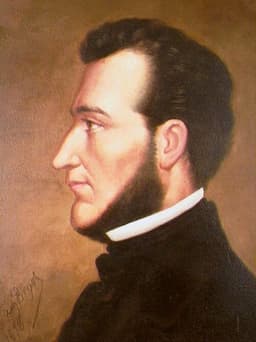
Francisco Morazan
General · Modern
58.0Total
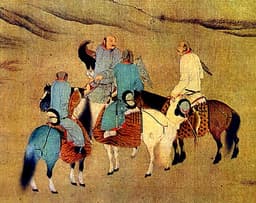
Yelu Abaoji
Emperor · Medieval
62.7Total
Basic Information
Born
1792
872
Died
1842
926
Era
Modern
Medieval
Nationality
Honduras
China
Occupation
General
Emperor
Civilization
Western
Eastern
Score Comparison
Military (10%)
52.5
77.2
Political (20%)
60.0
59.6
Influence (20%)
62.0
68.0
Legacy (20%)
50.0
40.0
Leadership (15%)
68.0
80.3
Strategy (15%)
55.0
69.6
TOTAL
58.0
62.7
Francisco Morazan — Complete Timeline
1824 AD
Abolition of slavery in Central AmericaReform◆ Major
As a key leader in the liberal movement, Moraz
AbolitionSlaveryLiberal Reform
Impact: regionalprogressive
1827 AD
Battle of La TrinidadWar◆ Major
Morazán led a liberal army to victory against conservative forces at La Trinidad, Honduras. This battle was a key turning point in the Central American civil war, allowing Morazán to consolidate power and eventually become president of the federation.
BattleLiberal VictoryCivil War
Impact: regional
1830 AD
Presidency of the Federal Republic of Central AmericaPolitical Action
Morazán was elected president of the Federal Republic of Central America, a union of Guatemala, El Salvador, Honduras, Nicaragua, and Costa Rica. He pursued liberal reforms including separation of church and state, free trade, and land reform, facing opposition from conservatives.
Federal RepublicLiberal ReformsCentral America
Impact: regionalconstructive
1842 AD
Execution by firing squadPolitical Action
After a failed attempt to restore the Federal Republic, Moraz
ExecutionEnd of FederationLiberal Defeat
Impact: regionaltragic
Yelu Abaoji — Complete Timeline
907 AD
Unified Khitan tribesPolitical Action◆ Major
Yelu Abaoji was elected khagan of the Khitan tribes, unifying them under his leadership. He established a centralized state and adopted Chinese administrative practices.
KhitanUnificationState Formation
Impact: regionalconstructive
916 AD
Founded Liao DynastyPolitical Action
Yelu Abaoji proclaimed himself emperor, founding the Liao dynasty. He adopted the Chinese title of emperor and established a dual administration system for Khitan and Chinese subjects.
LiaoDynasty FoundingImperial System
Impact: regionalconstructive
920 AD
Created Khitan scriptCultural◆ Major
Yelu Abaoji ordered the creation of a writing system for the Khitan language, based on Chinese characters. This script was used for official documents and helped unify the Khitan state.
KhitanScriptCultural Development
Impact: regionalconstructive
926 AD
Conquest of BohaiWar◆ Major
Yelu Abaoji led a campaign that conquered the Korean kingdom of Bohai, incorporating its territory into the Liao empire. This expanded Liao's influence into Manchuria and Korea.
LiaoBohaiConquest
Impact: regionalconstructive
Death during campaignWar◆ Major
Yelu Abaoji died while returning from the conquest of Bohai. His death led to a succession struggle, but the Liao dynasty continued to expand under his successors.
LiaoDeathSuccession
Impact: regionaltragic
Expert Analysis
Yelu Abaoji vs Francisco Morazan
# The Emperor and the Reformer: Two Visions of Unity, Two Tragic Ends
On a windswept plain in northern China in 907, a Khitan chieftain named Yelu Abaoji knelt before his assembled tribes, accepting the title of khagan. Nine centuries later, in a dusty square in San José, Costa Rica, a Honduran general named Francisco Morazán faced a firing squad. One man built an empire that would endure for two centuries; the other tried to hold a fragile republic together and died a traitor’s death. Both dreamed of unity—but their worlds, their tools, and their fates could not have been more different.
Origins
Yelu Abaoji was born in 872 into the chaos of the Khitan steppe, where tribal feuds and shifting alliances were the only constants. The Khitans were a nomadic people living between the Gobi Desert and the Liao River, constantly pressed by Chinese dynasties to the south and rival tribes to the north. Abaoji grew up in a world where power was measured in horses and loyalty was a matter of survival. He learned to negotiate with shamans and Chinese officials alike, absorbing the political wisdom of both worlds.
Francisco Morazán, born in 1792 in Tegucigalpa, Honduras, entered a world in upheaval. The Spanish Empire was crumbling, and the American and French Revolutions had planted seeds of liberalism across the Atlantic. Morazán was the son of a Creole merchant, educated in the Enlightenment ideas of Rousseau and Montesquieu. Where Abaoji learned to read the steppe winds, Morazán read constitutions. His world was not one of tribal loyalty but of ideological conviction—a faith in liberty, republicanism, and human progress.
Rise to Power
Abaoji’s ascent was a masterclass in steppe politics. He did not conquer the Khitan tribes by sheer force; he outmaneuvered them. In 907, he was elected khagan, but the title was ceremonial—real power required cunning. He systematically eliminated rival chieftains, married strategically into powerful clans, and adopted Chinese administrative techniques to centralize authority. By 916, he felt strong enough to proclaim himself emperor, founding the Liao dynasty. He borrowed the Chinese imperial title but kept his Khitan identity, creating a hybrid state that could rule both nomads and farmers.
Morazán’s rise was born of war and ideology. The Federal Republic of Central America, formed in 1823 after independence from Spain, was immediately torn between liberal reformers and conservative landowners. Morazán, a liberal military commander, won his first major victory at the Battle of La Trinidad in 1827, crushing a conservative army with a smaller, more motivated force. He was elected president of the federation in 1830, a position he used to push through sweeping reforms: abolition of slavery, freedom of the press, separation of church and state. But his power rested on military victories, not on the slow building of institutions.
Leadership & Governance
Abaoji governed like a man building a bridge between two worlds. He created a dual administration: the Northern Chancellery for Khitan tribes, ruled by traditional law, and the Southern Chancellery for Chinese subjects, governed by Confucian bureaucracy. In 920, he ordered the creation of a Khitan script, adapting Chinese characters to write his people’s language—a move that asserted cultural independence while borrowing Chinese technology. He was a pragmatist: he taxed trade routes, encouraged agriculture among settled Khitans, and kept the nomadic cavalry as his military backbone. His political score of 90.0 reflects his genius for balancing competing interests.
Morazán governed as a true believer. He abolished slavery in 1824, secularized education, and tried to limit the power of the Catholic Church. But his reforms alienated the conservative landowners, clergy, and rural peasants who saw him as a foreign ideologue imposing alien values. His military score of 65.4 is modest, but his leadership score of 76.7 shows a man who inspired fierce loyalty among his followers—and equally fierce hatred among his enemies. He lacked Abaoji’s patience: where the Khitan emperor built slowly, Morazán tried to remake a society overnight.
Triumph & Tragedy
Abaoji’s greatest triumph came in 926, when he conquered the Korean kingdom of Bohai, a wealthy and ancient state. The campaign was swift and brutal, adding vast territories to the Liao empire. He died that same year, returning from the campaign—possibly from illness, possibly from wounds. His death triggered a succession crisis, but his son Yelü Deguang held the empire together, and the Liao dynasty would rule northern China for another two centuries.
Morazán’s triumph was his presidency itself—a brief moment when liberal reforms seemed possible. But the tragedy was relentless. By 1839, the Federal Republic had collapsed into civil war, as conservative forces in Guatemala, Nicaragua, and Costa Rica rebelled. Morazán fought on, exiled, then returned in 1842 for one last desperate attempt to restore the union. He was captured in Costa Rica, tried, and executed by firing squad. His last words, according to tradition, were: “I die with the conviction that I have served my country.”
Character & Destiny
Abaoji was a strategist who saw power as a game of patience. He understood that to rule, one must sometimes bend—adopting Chinese script, using Chinese titles, but never losing Khitan loyalty. His personality was that of a builder: methodical, calculating, willing to compromise for long-term gain. His destiny was to found a dynasty that outlasted him.
Morazán was a crusader. He believed in ideas with a fervor that made him inflexible. He could win battles but could not build lasting political structures. His personality was that of a martyr: noble, inspiring, but ultimately self-destructive. His destiny was to die for a dream that the people he tried to liberate did not fully share.
Legacy
Abaoji is remembered as the founder of the Liao dynasty, a figure who brought writing, centralized government, and stability to the Khitan people. His legacy is complex: the Liao dynasty was eventually conquered by the Jurchens, but it left a mark on Chinese history as a period of cultural exchange between steppe and sown. His influence score of 72.3 and legacy score of 70.8 reflect a man who changed his world but was later overshadowed by more famous dynasties.
Morazán is a symbol—of Central American unity, of liberal idealism, of tragic failure. Streets, schools, and currencies bear his name across Honduras, El Salvador, and Costa Rica. His legacy score of 68.9 is lower than Abaoji’s, but his influence score of 76.2 is higher. Why? Because he represents an idea that still resonates: the dream of a united Central America. He failed, but his failure became a rallying cry.
Conclusion
Two men, two centuries apart, two visions of unity. Abaoji built an empire by adapting to the world as it was; Morazán tried to build a republic by forcing the world to become what he believed it should be. The Khitan emperor died in his bed, his dynasty secure; the Honduran reformer died before a firing squad, his federation in ruins. Yet both left behind something that outlasted them: Abaoji, a state; Morazán, a dream. In the end, perhaps the question is not which was greater, but which lesson we need more: the wisdom to build slowly, or the courage to die for an idea. History, as always, offers no easy answer.
Rankings
🥇
Yelu AbaojiLeader
Mil: 77.2Pol: 59.6Inf: 68.0
62.7
🥈
Francisco Morazan
Mil: 52.5Pol: 60.0Inf: 62.0
58.0
+4.7 behind
How This Comparison Works
Algorithm
Each figure is scored on 6 dimensions (0—100 scale) based on structured historical data: Military (10%), Political (20%), Influence (20%), Legacy (20%), Leadership (15%), Strategy (15%). The weighted total produces the final ranking.
Data Sources
Scores are computed from structured sub-indicators in the database. Scale factors adjust for era (Ancient ×0.85, Modern ×1.0) and civilization size (Eastern ×1.05, Other ×0.80) to account for differences in population and military scale.
Maximum 3 Figures
Comparisons are limited to 2—3 figures to ensure readability and statistical meaningfulness.
Error Margins
±5 points per dimension — Sub-scores are derived from historical records with inherent uncertainty. Two figures within 5 points on a dimension should be considered roughly equivalent in that area.
Total Score Accuracy
±3 points overall — The weighted combination of 6 dimensions produces a total score with approximately ±3 points of uncertainty. Differences of less than 3 points are not statistically significant— the figures are effectively tied.
Known Limitations
- Historical records are incomplete and uneven across civilizations
- Figures from oral-tradition societies may be underrepresented
- Occupation labels can misclassify multi-role figures
- Scores measure capability and impact, not moral character
- Quantitative scoring is a comparison tool, not absolute truth
Capability Radar
Military (10%) — Battles & Warfare
Battles
55
75
Win Rate
60
80
Expansion
40
82
Political (20%) — Governance & Reform
Reform
70
88
Diplomacy
45
75
Economy
50
70
Influence (20%) — Cultural & Global Reach
Cultural
45
60
Global
35
55
Legacy (20%) — Historical Impact
Historical
50
70
Longevity
40
65
Leadership (15%) — Power & Stability
Tenure
55
72
Stability
30
65
Strategy (15%) — Tactics & Innovation
Strategy
55
78
Tactics
50
70
Reform
45
85
Similar Comparisons
Comments & Discussion
数据猎人6/16/2026
光看表面相似性没用。阿保机的辽国延续了两百年,控制了从蒙古到华北的广袤区域,人口峰值近千万。莫拉桑的联邦中美洲共和国不到十五年就解体,GDP连今天的哥斯达黎加一个省都不如。拿一个帝国奠基者和一个地方起义军将领比,这是史观错位。数字不会骗人:一个是制度帝国的缔造者,一个是理想主义过客。
ClassicsSkeptic6/16/2026
You're romanticizing failure. Morazán's progressive reforms—abolishing slavery, promoting secular education, land redistribution—were crushed by conservative elites backed by the church. That's not tragic heroism; that's evidence he misread his political terrain completely. Abaoji, to his credit, knew better than to impose his culture wholesale. He let Chinese bureaucrats run the southern half while keeping Khitan customs intact. Smart pragmatism beats noble futility every time in state-building
斜阳史官6/16/2026
阿保机的成功恰恰建立在对自身文化的背叛上。他引进汉字创制契丹文字,引入佛教对抗部落萨满,设置南北官制彻底汉化行政体系。这哪是什么草原雄主?分明是个文化投降者。莫拉桑至少死得堂堂正正,为理想殉道。一个用屠刀统一了中国北方的铁蹄部落,另一个用法律试图统一破碎的中美洲。没有英雄,只有幸存者和失败者之别。
WandererOf18726/16/2026
We're comparing a man who created a script and a calendar with a man who wrote liberal constitutions. Both failed in the long run—Khitan language is dead, his dynasty Mongol-conquered; Morazán's federal dream fragmented into five squabbling republics. Yet the comparison matters precisely because it shows unity is never permanent. Abaoji's Liao lasted because it adapted; Morazán's federation died because it refused to compromise. Truth is, neither vision was "right"—they just had different expira
Historian7876/16/2026
Military historian here. Abaoji didn't just "unify tribes"—he created a hybrid war machine that blended Khitan cavalry mobility with Chinese siegecraft and administrative infrastructure. That double-kingdom approach crushed rivals like the Balhae kingdom in weeks. Morazán, by contrast, fought with hastily assembled Central American militias lacking any strategic depth. One built a permanent army; the other led a peasant rebellion in general's clothing. No contest in operational staying power.