Loading...
Francisco Morazan vs Muhammadu Buhari
Francisco Morazan leads by 6.5 pts · 2 figures compared
…
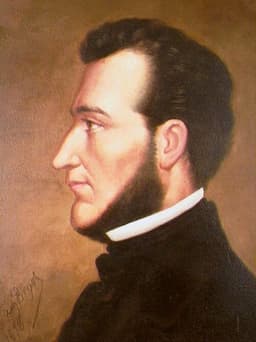
Francisco Morazan
General · Modern
58.0Total
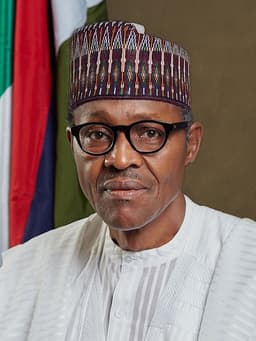
Muhammadu Buhari
General · Modern
51.5Total
Basic Information
Born
1792
1942
Died
1842
—
Era
Modern
Modern
Nationality
Honduras
Nigeria
Occupation
General
General
Civilization
Western
Other
Score Comparison
Military (10%)
52.5
22.6
Political (20%)
60.0
68.0
Influence (20%)
62.0
53.3
Legacy (20%)
50.0
43.3
Leadership (15%)
68.0
72.0
Strategy (15%)
55.0
41.0
TOTAL
58.0
51.5
Francisco Morazan — Complete Timeline
1824 AD
Abolition of slavery in Central AmericaReform◆ Major
As a key leader in the liberal movement, Moraz
AbolitionSlaveryLiberal Reform
Impact: regionalprogressive
1827 AD
Battle of La TrinidadWar◆ Major
Morazán led a liberal army to victory against conservative forces at La Trinidad, Honduras. This battle was a key turning point in the Central American civil war, allowing Morazán to consolidate power and eventually become president of the federation.
BattleLiberal VictoryCivil War
Impact: regional
1830 AD
Presidency of the Federal Republic of Central AmericaPolitical Action
Morazán was elected president of the Federal Republic of Central America, a union of Guatemala, El Salvador, Honduras, Nicaragua, and Costa Rica. He pursued liberal reforms including separation of church and state, free trade, and land reform, facing opposition from conservatives.
Federal RepublicLiberal ReformsCentral America
Impact: regionalconstructive
1842 AD
Execution by firing squadPolitical Action
After a failed attempt to restore the Federal Republic, Moraz
ExecutionEnd of FederationLiberal Defeat
Impact: regionaltragic
Muhammadu Buhari — Complete Timeline
1983 AD
1983 Nigerian coup d'étatPolitical Action
Major General Muhammadu Buhari led a military coup that overthrew the civilian government of President Shehu Shagari. Buhari cited corruption and economic mismanagement as justifications, and he became the head of state.
CoupMilitary RuleCorruption
Impact: nationaldestructive
1984 AD
War Against Indiscipline (WAI)Reform◆ Major
Buhari launched the War Against Indiscipline, a campaign to enforce discipline and order in Nigerian society. It included harsh penalties for minor offenses, such as queue-jumping, and was criticized for human rights abuses.
DisciplineSocial PolicyHuman Rights
Impact: nationaldestructive
1985 AD
Overthrow by Ibrahim BabangidaPolitical Action◆ Major
Buhari was overthrown in a palace coup led by his Chief of Army Staff, Ibrahim Babangida. Babangida cited Buhari's authoritarian style and failure to address the economy as reasons for the coup.
CoupOverthrowBabangida
Impact: national
2015 AD
Anti-corruption campaignReform◆ Major
Buhari launched a high-profile anti-corruption campaign, targeting government officials and recovering stolen assets. The campaign was praised internationally but criticized for being selective and politically motivated.
Anti-CorruptionReformGovernance
Impact: nationalconstructive
Election as President of NigeriaPolitical Action
Buhari won the 2015 Nigerian presidential election, defeating incumbent Goodluck Jonathan. This was the first time an opposition candidate had defeated a sitting president in Nigeria's history, marking a democratic milestone.
ElectionDemocracyOpposition Victory
Impact: nationalprogressive
Expert Analysis
Muhammadu Buhari vs Francisco Morazan
# The Iron General and the Liberal Dreamer
On a sweltering December morning in 1983, Muhammadu Buhari stepped before the cameras of Nigerian state television, his face a mask of military discipline, to announce that he had seized power from a civilian government he deemed hopelessly corrupt. Exactly 141 years earlier, on September 15, 1842, Francisco Morazán faced a firing squad in San José, Costa Rica, his hands bound, his last words reportedly a defiant cry for Central American unity. One man seized power to impose order; the other died trying to hold a dream together. Both were generals, both were reformers, and both discovered that the hardest battle a leader fights is not against enemies, but against the contradictions of his own nation.
Origins
Muhammadu Buhari was born in 1942 in Daura, a walled city in northern Nigeria, into a Muslim Fulani family with deep ties to the region’s traditional aristocracy. His father was a village chief, and Buhari grew up in a world where honor, hierarchy, and discipline were not abstract virtues but daily realities. When he joined the Nigerian Army in the 1960s, he entered an institution that promised order in a country still haunted by the scars of civil war and ethnic division. His formative years were shaped by military coups, oil booms, and the slow unraveling of democratic institutions—a crucible that forged a man who believed that only iron discipline could save his country.
Francisco Morazán, born in 1792 in Tegucigalpa, Honduras, came from a different world entirely. His father was a Creole merchant of French descent, and young Morazán grew up reading the Enlightenment philosophers—Rousseau, Voltaire, the revolutionaries of France and America. While Buhari learned the chain of command, Morazán learned the rights of man. The Spanish Empire was crumbling around him, and the air was thick with ideas of liberty, republicanism, and the possibility of a new society. He was a child of revolution, not of tradition.
Rise to Power
Buhari’s path to power was swift and surgical. On December 31, 1983, as Nigeria’s Second Republic staggered under charges of electoral fraud and economic collapse, Major General Buhari led a coup that toppled President Shehu Shagari. The coup was bloodless, the justification familiar: the civilians had failed, the military must save the nation. For Buhari, power was not something to be earned through votes but seized through duty. He was 41 years old, and he believed he had a mandate from history to clean house.
Morazán’s rise was far more arduous. He began as a local official in Honduras, then took up arms in 1827 after conservative forces invaded his home province. His victory at the Battle of La Trinidad in 1827 was not a coup but a battlefield triumph that turned him into the champion of Central America’s liberal movement. He did not seize power; he fought for it, inch by inch, from Guatemala to El Salvador, building a reputation as a brilliant tactician and an unwavering idealist. By 1830, when he was elected president of the Federal Republic of Central America, he had earned his authority through blood and fire.
Leadership & Governance
Buhari’s rule was a study in severity. His signature policy, the War Against Indiscipline, launched in 1984, was a campaign to enforce order through public humiliation, forced labor for minor offenses, and the imprisonment of journalists and political opponents. He jailed former ministers, ordered civil servants to stand at attention during the national anthem, and demanded that citizens queue in straight lines at bus stops. His score of 20.7 in military strategy reflects a leader who understood command but not complexity. His anti-corruption campaign, revived after his 2015 democratic election, was genuine but often selective, targeting rivals while sparing allies. He governed as a headmaster, not a statesman.
Morazán governed as a visionary. He abolished slavery in Central America in 1824, even before his presidency, and as president he promoted free trade, public education, and the separation of church and state. He tried to build a unified nation out of fractious provinces, a task that required not only military skill—his score of 65.4—but political dexterity. His political score of 72.0 reflects a man who understood that reform required persuasion, not just power. He granted amnesty to enemies, sought compromise with conservatives, and dreamed of a Central American republic modeled on the United States. But his liberalism alienated the Catholic Church and the landed elite, and his dream was always fragile.
Triumph & Tragedy
Buhari’s greatest triumph came not as a general but as a democratic candidate. In 2015, he won the Nigerian presidency in a free and fair election, defeating an incumbent for the first time in the nation’s history. It was a moment of profound hope: the old coup-maker had returned as a democrat. His tragedy was that he could not escape his own nature. His second term was marked by economic stagnation, rising insecurity, and a health crisis that left him absent for months. The man who had once promised to clean Nigeria ended his tenure with the country as divided and dysfunctional as ever.
Morazán’s triumph was the Federal Republic itself—a bold experiment in unity that, for a decade, held together Guatemala, El Salvador, Honduras, Nicaragua, and Costa Rica. His tragedy was that the union shattered. Civil war erupted, conservatives drove him into exile, and when he returned in 1842 to try again, he was captured and executed. He died at 50, betrayed by the very ideals he had championed.
Character & Destiny
Buhari was austere, stoic, and stubborn. He rarely smiled, never explained, and held grudges. His leadership score of 77.5 suggests a man who inspired loyalty through his integrity, but his rigidity made him unable to adapt. He saw governance as a moral crusade, not a negotiation. Morazán was romantic, eloquent, and relentless. He believed in progress with a faith that bordered on naivety. His legacy score of 68.9 reflects a man who left an idea, not an institution.
Legacy
In Nigeria today, Buhari is a contested figure: admired by many northerners for his honesty, despised by many southerners for his perceived bias. His War Against Indiscipline is remembered as a joke or a nightmare, depending on who you ask. Morazán is a national hero in Honduras, a symbol of Central American unity, but his republic is a footnote in history books.
Conclusion
What separates these two generals is not ability but imagination. Buhari saw his country’s problem as a lack of discipline; Morazán saw it as a lack of liberty. Both were right, and both were wrong. In the end, Buhari ruled a nation that outlasted him, while Morazán died for a nation that never was. The iron general and the liberal dreamer—each, in his own way, a prisoner of his time.
Rankings
🥇
Francisco MorazanLeader
Mil: 52.5Pol: 60.0Inf: 62.0
58.0
🥈
Muhammadu Buhari
Mil: 22.6Pol: 68.0Inf: 53.3
51.5
+6.5 behind
How This Comparison Works
Algorithm
Each figure is scored on 6 dimensions (0—100 scale) based on structured historical data: Military (10%), Political (20%), Influence (20%), Legacy (20%), Leadership (15%), Strategy (15%). The weighted total produces the final ranking.
Data Sources
Scores are computed from structured sub-indicators in the database. Scale factors adjust for era (Ancient ×0.85, Modern ×1.0) and civilization size (Eastern ×1.05, Other ×0.80) to account for differences in population and military scale.
Maximum 3 Figures
Comparisons are limited to 2—3 figures to ensure readability and statistical meaningfulness.
Error Margins
±5 points per dimension — Sub-scores are derived from historical records with inherent uncertainty. Two figures within 5 points on a dimension should be considered roughly equivalent in that area.
Total Score Accuracy
±3 points overall — The weighted combination of 6 dimensions produces a total score with approximately ±3 points of uncertainty. Differences of less than 3 points are not statistically significant— the figures are effectively tied.
Known Limitations
- Historical records are incomplete and uneven across civilizations
- Figures from oral-tradition societies may be underrepresented
- Occupation labels can misclassify multi-role figures
- Scores measure capability and impact, not moral character
- Quantitative scoring is a comparison tool, not absolute truth
Capability Radar
Military (10%) — Battles & Warfare
Battles
55
10
Win Rate
60
10
Expansion
40
5
Political (20%) — Governance & Reform
Reform
70
30
Diplomacy
45
25
Economy
50
20
Influence (20%) — Cultural & Global Reach
Cultural
45
25
Global
35
25
Legacy (20%) — Historical Impact
Historical
50
30
Longevity
40
20
Leadership (15%) — Power & Stability
Tenure
55
45
Stability
30
15
Strategy (15%) — Tactics & Innovation
Strategy
55
15
Tactics
50
15
Reform
45
20
Similar Comparisons
Comments & Discussion
IronMaxwell6/16/2026
Buhari’s "War Against Indiscipline" wasn’t reform—it was a military junta’s vanity project. He jailed journalists for laughing at him, enforced brutal public floggings, and signed a decree making it a crime to be late for work with no due process. Compare that to Morazán, who actually abolished slavery, introduced jury trials, and expanded public schooling across Central America. Buhari played at order; Morazán governed by idea. One was a drill sergeant; the other was a statesman.
烽火书生6/16/2026
说一个冷门事实:莫拉桑在1834年颁布的自由主义法典,规定所有公民必须接受初等教育,否则政府罚家长劳役。而布哈里在1984年只是下令让公务员走正步上下班。我尊重布哈里的反腐决心,但中央集权式的羞耻政治不是军政府专利——他抄的是殖民时代的家长式管理,而不是现代国家治理。莫拉桑至少还有一套像样的制度蓝图。
DataDrill6/16/2026
Let’s talk numbers. Buhari took over an oil-rich Nigeria with GDP growth averaging 3% in the early 80s—hardly catastrophic. Morazán inherited a shattered federation after the Central American civil wars, with coffee trade collapsing and treasury bankrupt. Yet Buhari’s austerity and foreign debt default choked off 2 million tons of grain imports by 1984, sparking a famine that killed thousands. Morazán’s land reforms actually boosted maize yields by 15% in Honduras alone. "Order" vs "chaos" is ju
南美之眼6/16/2026
布哈里和莫拉桑都输给了地方豪强。莫拉桑在1840年败给卡雷拉的农民军,是因为他的自由派改革得罪了教会和大庄园主;布哈里1985年被政变推翻,则是因为他的铁腕反腐动了军商圈子的蛋糕。两人都拿枪管直接怼既得利益——区别在于,莫拉桑是真心想建一个国家,布哈里更多是想清理门户。失败的浪漫与失败的管理主义,本质都是不懂分蛋糕的艺术。