Loading...
Francisco Morazan vs Yahya Khan
Francisco Morazan leads by 15.5 pts · 2 figures compared
…
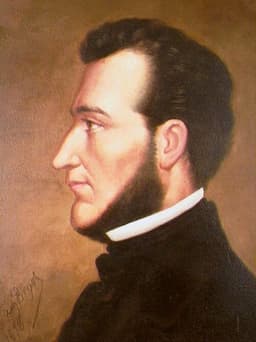
Francisco Morazan
General · Modern
58.0Total
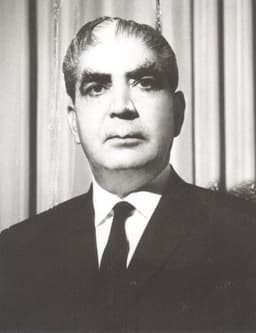
Yahya Khan
General · Modern
42.5Total
Basic Information
Born
1792
1917
Died
1842
1980
Era
Modern
Modern
Nationality
Honduras
Pakistan
Occupation
General
General
Civilization
Western
Indian
Score Comparison
Military (10%)
52.5
50.0
Political (20%)
60.0
25.0
Influence (20%)
62.0
50.2
Legacy (20%)
50.0
41.7
Leadership (15%)
68.0
51.9
Strategy (15%)
55.0
30.3
TOTAL
58.0
42.5
Francisco Morazan — Complete Timeline
1824 AD
Abolition of slavery in Central AmericaReform◆ Major
As a key leader in the liberal movement, Moraz
AbolitionSlaveryLiberal Reform
Impact: regionalprogressive
1827 AD
Battle of La TrinidadWar◆ Major
Morazán led a liberal army to victory against conservative forces at La Trinidad, Honduras. This battle was a key turning point in the Central American civil war, allowing Morazán to consolidate power and eventually become president of the federation.
BattleLiberal VictoryCivil War
Impact: regional
1830 AD
Presidency of the Federal Republic of Central AmericaPolitical Action
Morazán was elected president of the Federal Republic of Central America, a union of Guatemala, El Salvador, Honduras, Nicaragua, and Costa Rica. He pursued liberal reforms including separation of church and state, free trade, and land reform, facing opposition from conservatives.
Federal RepublicLiberal ReformsCentral America
Impact: regionalconstructive
1842 AD
Execution by firing squadPolitical Action
After a failed attempt to restore the Federal Republic, Moraz
ExecutionEnd of FederationLiberal Defeat
Impact: regionaltragic
Yahya Khan — Complete Timeline
1969 AD
Assumption of power after Ayub KhanPolitical Action◆ Major
Yahya Khan took over as President after Ayub Khan's resignation. He imposed martial law and promised a return to civilian rule through elections, but his regime was marked by political instability and the growing crisis in East Pakistan.
Martial lawSuccessionPolitical crisis
Impact: national
1970 AD
1970 general electionPolitical Action
Yahya Khan held Pakistan's first general election based on universal suffrage. The Awami League won a landslide in East Pakistan, while the PPP won in West Pakistan. The refusal to accept the results led to the Bangladesh Liberation War.
ElectionAwami LeaguePolitical crisis
Impact: nationaldestructive
1971 AD
Operation SearchlightWar
Yahya Khan ordered a military crackdown in East Pakistan to suppress the Bengali independence movement. The operation involved widespread atrocities, including mass killings and rape, leading to a humanitarian crisis and the Bangladesh Liberation War.
AtrocitiesBangladesh Liberation WarGenocide
Impact: regionaldestructive
Surrender in the Bangladesh Liberation WarWar
Pakistan's military surrendered to Indian forces in Dhaka, leading to the creation of Bangladesh. Yahya Khan's regime was discredited, and he resigned, handing power to Zulfikar Ali Bhutto. The defeat was a major national humiliation.
SurrenderBangladesh independenceDefeat
Impact: regionaltragic
Expert Analysis
Origins
Francisco Morazan was born on October 3, 1792, in Tegucigalpa, Honduras, into a criollo family of modest means. His father, Eusebio Morazan, was a merchant of French descent, and his mother, Guadalupe Quezada, managed the household. Morazan received a basic education in Latin, mathematics, and law, but was largely self-taught through extensive reading of Enlightenment philosophers such as Rousseau and Montesquieu. These influences shaped his liberal ideology, which emphasized individual rights, secularism, and federalism.
Yahya Khan was born on February 4, 1917, in Chakwal, Punjab, British India, into a Pashtun family with a military tradition. His father, Saadat Ali Khan, served as a police officer. Yahya attended the Indian Military Academy at Dehradun and was commissioned into the British Indian Army in 1938. He fought in World War II, including in North Africa and Italy, and after partition, he joined the Pakistan Army, rising through the ranks due to his administrative skills and loyalty to the regime.
Rise to Power
Morazan's rise began with his military service in the Honduran army, where he gained recognition for his leadership. In 1827, he led a liberal army to victory at the Battle of La Trinidad (November 11, 1827), defeating conservative forces. This victory propelled him into the national spotlight. He became President of the Federal Republic of Central America in 1830, an entity comprising Guatemala, El Salvador, Honduras, Nicaragua, and Costa Rica. His presidency was marked by liberal reforms, but he faced constant conservative opposition, leading to a civil war that he ultimately lost in 1839.
Yahya Khan rose to power after the resignation of President Ayub Khan in March 1969. As Commander-in-Chief of the Pakistan Army, Yahya imposed martial law and assumed the presidency. He promised a return to civilian rule and held Pakistan's first general election based on universal suffrage in December 1970. The Awami League, led by Sheikh Mujibur Rahman, won a landslide in East Pakistan, while the Pakistan People's Party won in West Pakistan. Yahya's failure to transfer power to the Awami League led to a political crisis.
Leadership & Governance
Morazan's leadership style was authoritarian but progressive. He implemented liberal reforms including the abolition of slavery in 1824, the establishment of secular education, and the separation of church and state. He curtailed the power of the Catholic Church and confiscated church lands. His governance was centralized despite his federalist ideals, leading to resentment from conservative factions. He scored 68.0 in leadership and 60.0 in political skill, reflecting his ability to enact reforms but inability to maintain unity.
Yahya Khan's leadership was marked by indecision and brutality. He scored 51.9 in leadership and 25.0 in political skill. He imposed martial law but failed to manage the political crisis after the 1970 election. Instead of negotiating, he ordered Operation Searchlight on March 25, 1971, a military crackdown in East Pakistan that resulted in widespread atrocities, including mass killings and displacement. His governance relied heavily on military force, ignoring democratic processes. His strategy score of 30.3 reflects his poor handling of the conflict.
Triumph & Tragedy
Morazan's greatest success was the abolition of slavery and the implementation of liberal reforms in Central America. He temporarily united the region under a federal system, promoting education and economic development. However, his greatest failure was the collapse of the Federal Republic in 1839 due to conservative revolts and internal divisions. He was executed by firing squad on September 15, 1842, after a failed attempt to restore the federation, marking the end of his dream of a united Central America.
Yahya Khan's greatest triumph was holding the 1970 election, which was a milestone in Pakistan's democratic history. However, his greatest failure was the Bangladesh Liberation War, which resulted in the loss of East Pakistan and the creation of Bangladesh. The war saw the surrender of 93,000 Pakistani soldiers to Indian forces on December 16, 1971, a humiliating defeat. Yahya resigned shortly after, his regime discredited. He is remembered for his role in the atrocities and the breakup of Pakistan.
Character & Destiny
Morazan was idealistic and determined, driven by Enlightenment ideals. His character was marked by courage and a commitment to liberal principles, but also by inflexibility and a lack of political pragmatism. He refused to compromise with conservatives, leading to his downfall. Historical assessments view him as a visionary but flawed leader who failed to build lasting institutions.
Yahya Khan was a product of the military establishment, loyal to the army's interests but lacking strategic vision. He was indecisive under pressure, as seen in his handling of the 1971 crisis. His reliance on military force over diplomacy led to disaster. Historians criticize his authoritarianism and the brutalities committed under his command. His destiny was shaped by his inability to adapt to democratic demands.
Legacy
Morazan's legacy is mixed. He is revered as a hero in Honduras and parts of Central America for his liberal reforms and efforts at unification. His image appears on Honduran currency, and his birthday is a national holiday. However, his federal republic failed, and the region remained fragmented. His ideas influenced later liberal movements, but his immediate impact was limited. He scores 62.0 in influence and 50.0 in legacy.
Yahya Khan's legacy is overwhelmingly negative. He is blamed for the secession of Bangladesh and the atrocities during the war. In Pakistan, he is often omitted from official histories, while in Bangladesh he is condemned as a war criminal. His regime's failure led to the rise of Zulfikar Ali Bhutto and the eventual democratization of Pakistan. He scores 50.2 in influence and 41.7 in legacy, reflecting his catastrophic impact.
Conclusion
Francisco Morazan had a greater long-term impact compared to Yahya Khan, despite his lower military score (52.5 vs 50.0) but higher total score (58.0 vs 42.5). Morazan's liberal reforms and vision for Central American unity, though unsuccessful in his lifetime, inspired future generations and left a positive cultural legacy. In contrast, Yahya Khan's actions led to the breakup of Pakistan and immense human suffering, with his legacy being one of failure and infamy. Morazan's ideological contributions outweigh Yahya Khan's destructive rule. Thus, Morazan emerges as the more significant historical figure.
Rankings
🥇
Francisco MorazanLeader
Mil: 52.5Pol: 60.0Inf: 62.0
58.0
🥈
Yahya Khan
Mil: 50.0Pol: 25.0Inf: 50.2
42.5
+15.5 behind
How This Comparison Works
Algorithm
Each figure is scored on 6 dimensions (0—100 scale) based on structured historical data: Military (10%), Political (20%), Influence (20%), Legacy (20%), Leadership (15%), Strategy (15%). The weighted total produces the final ranking.
Data Sources
Scores are computed from structured sub-indicators in the database. Scale factors adjust for era (Ancient ×0.85, Modern ×1.0) and civilization size (Eastern ×1.05, Other ×0.80) to account for differences in population and military scale.
Maximum 3 Figures
Comparisons are limited to 2—3 figures to ensure readability and statistical meaningfulness.
Error Margins
±5 points per dimension — Sub-scores are derived from historical records with inherent uncertainty. Two figures within 5 points on a dimension should be considered roughly equivalent in that area.
Total Score Accuracy
±3 points overall — The weighted combination of 6 dimensions produces a total score with approximately ±3 points of uncertainty. Differences of less than 3 points are not statistically significant— the figures are effectively tied.
Known Limitations
- Historical records are incomplete and uneven across civilizations
- Figures from oral-tradition societies may be underrepresented
- Occupation labels can misclassify multi-role figures
- Scores measure capability and impact, not moral character
- Quantitative scoring is a comparison tool, not absolute truth
Capability Radar
Military (10%) — Battles & Warfare
Battles
55
30
Win Rate
60
10
Expansion
40
10
Political (20%) — Governance & Reform
Reform
70
5
Diplomacy
45
10
Economy
50
10
Influence (20%) — Cultural & Global Reach
Cultural
45
10
Global
35
20
Legacy (20%) — Historical Impact
Historical
50
30
Longevity
40
10
Leadership (15%) — Power & Stability
Tenure
55
40
Stability
30
5
Strategy (15%) — Tactics & Innovation
Strategy
55
15
Tactics
50
20
Reform
45
5
Similar Comparisons
Comments & Discussion
No comments yet. Be the first to share your thoughts!